Trailering Into the Mountains
A trailer that feels manageable on a flat highway can become a stressful load on a narrow mountain road, especially when you are towing a wide machine, meeting trucks, or searching for a place to turn around. This guide explains how to prepare your vehicle, trailer, route, and arrival plan for Kentucky’s mountain riding areas so the trip starts safely before the wheels reach the trail.
Plan the route before loading
A route that looks short on a map may not be the easiest choice with a trailer. In eastern Kentucky, roads can climb, bend sharply, narrow near hollers, or pass through small communities where turning around is awkward. Planning is not just about reaching a park entrance; it is about choosing a route your tow vehicle and trailer can handle comfortably.
Choose roads for the whole rig
Start with the park or trail system’s official directions, then look at the last part of the drive closely. A highway route may be straightforward until the final miles, where you could encounter steep grades, tight curves, narrow bridges, or limited shoulders. If you are hauling a long trailer or a wide side-by-side, those details matter more than the quickest estimated drive time.
Think about the rig as one unit. A pickup and short utility trailer can manage places that may feel difficult in a long truck-and-enclosed-trailer combination. Before leaving, check the route for restricted roads, construction, and places where a trailer might need extra clearance. When in doubt, call the park or campground and ask which approach is appropriate for a tow vehicle and trailer. A local recommendation can save you from committing to a narrow road and having nowhere safe to turn around.
For a trip to Black Mountain Off-Road Adventure Area near Harlan or Leatherwood Off-Road Park near the Perry and Letcher County area, do not assume that every road shown on a general navigation app is a suitable approach for a trailer. Use official directions alongside your preferred navigation tool. An app such as onX Offroad can help you review riding-area information and plan your day, but it should not replace checking current access instructions with the destination.
Check conditions and access before departure
Mountain weather can change the drive as well as the ride. Heavy rain may leave gravel roads slick, wash debris onto pavement, or affect access to a trail system. Fog can reduce visibility on winding roads, while a hard freeze can leave shaded sections slippery even when lower elevations are clear. Check the forecast for both your starting point and the area around your destination.
Before you hitch up, confirm that the riding area expects visitors and that its access information has not changed. Parks may close trails or adjust operations because of weather, maintenance, or ground conditions. This is particularly important if you are making a long haul from Louisville, Lexington, or another part of the state. Check Kentucky Trail Conditions Before You Ride and Kentucky Trail Closures to Check First as part of your planning, then confirm details directly with the park when needed.
A map can show a road without telling you whether it is appropriate for your vehicle, whether a gate is open, or whether a parking area has room for your trailer. Use onX Offroad or another mapping tool to get oriented, but treat park notices and direct confirmation as the deciding information for access. Save the address, directions, and a backup contact method before you enter areas where cell service may become unreliable.
Prepare the tow vehicle and trailer
A safe mountain trip starts with a rig that is properly loaded and in sound condition. Problems that seem small in the driveway—loose straps, underinflated tires, or a trailer plug that works intermittently—can become much harder to deal with on a narrow road or in a busy staging lot.
Load the machine with balance and clearance in mind
Park on a firm, level surface before loading. Make sure the ramps are rated for the machine and secured against slipping, and use a spotter if the approach is steep or visibility is limited. Move slowly. A sudden throttle input or abrupt braking can shift the machine or cause a tire to lose its line on the ramp.
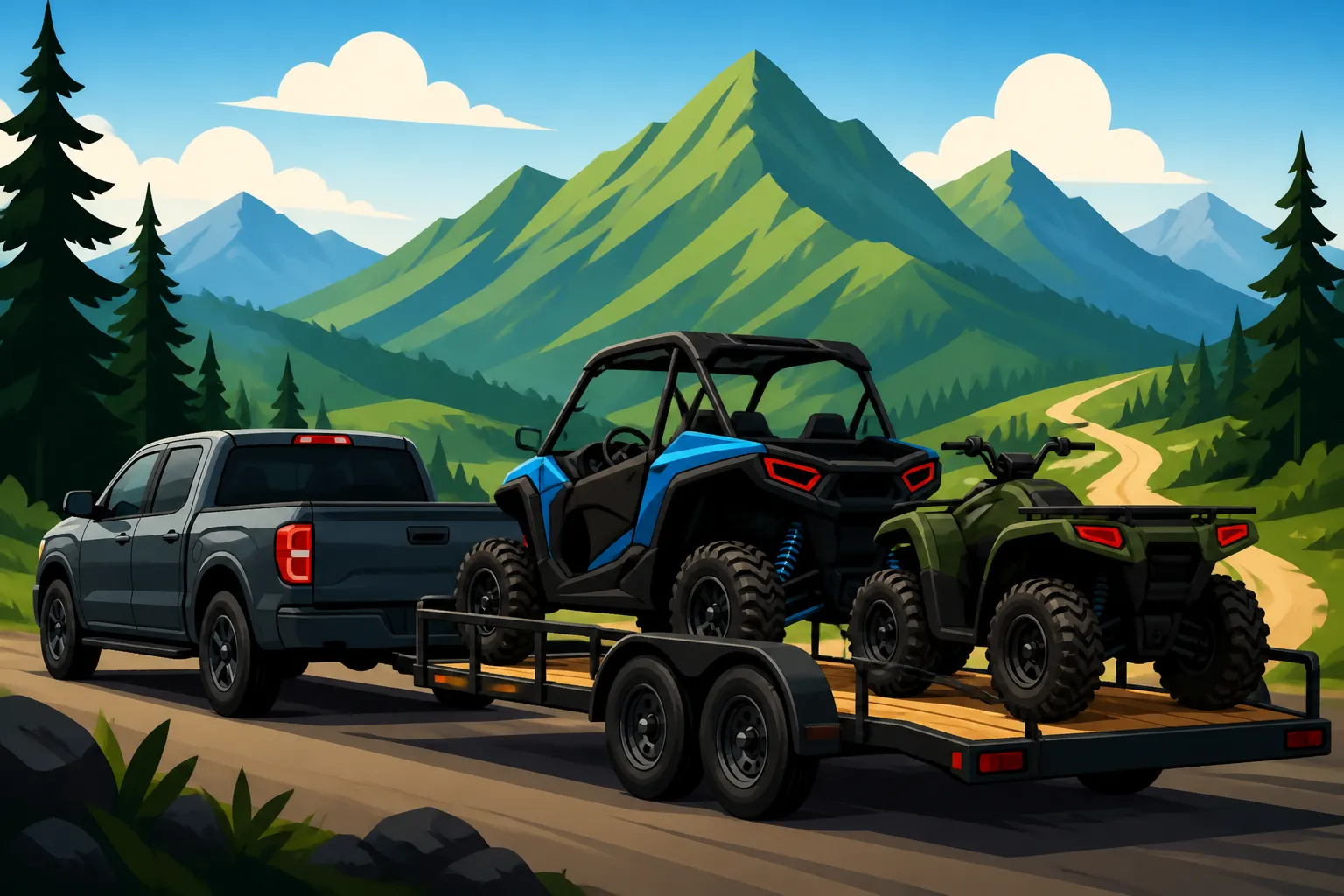
Once aboard, place the machine so the trailer remains balanced and stable. Follow the trailer and vehicle manufacturers’ loading guidance, and do not exceed the ratings for the trailer, hitch, tires, or tow vehicle. Secure the ATV or UTV at suitable frame or tie-down points, using straps in good condition. Recheck the tension after driving a short distance and again at stops. Suspension movement can loosen straps, especially on a rough approach.
For side-by-sides, check overall width and height against the trailer, ramps, garage openings, and any covered parking you plan to use. Accessories such as roofs, windshields, mirrors, racks, and spare tires can change clearance. If you have a particularly wide machine, review Kentucky Trails for a Wide Machine before picking a riding area, and call ahead about trailer parking and staging space.
| Before the trip | What to check | Why it matters |
|---|---|---|
| Tow vehicle | Tire condition, lights, mirrors, brakes, and towing capacity | Helps you control the load and see traffic around the trailer |
| Trailer | Tire pressure, wheel bearings, coupler, safety chains, and lights | Reduces the chance of a roadside failure |
| Machine | Tie-down points, fuel cap, loose accessories, and loading position | Keeps the ATV or UTV secure during the drive |
| Route | Grades, narrow sections, construction, and turnaround options | Helps avoid difficult maneuvers with a loaded trailer |
| Destination | Entrance, staging instructions, parking, and closures | Prevents arriving without a practical place to unload |
Check the trailer before entering the mountains
Do a walkaround before each trip. Inspect trailer tires for visible damage and check that they are inflated according to the manufacturer’s guidance. Confirm that the coupler is latched, safety chains are attached correctly, the breakaway equipment is connected when applicable, and the electrical plug is secure. Test the running lights, brake lights, and turn signals with another person if possible.
Braking deserves special attention. A heavy trailer pushes against the tow vehicle on descents, so use a controlled speed and leave more following distance than you would on a flat road. Avoid riding the brakes continuously down a long grade; follow the vehicle and trailer manufacturers’ recommendations for braking and gear selection. If you are unfamiliar with the route, take a conservative pace and use a safe pull-off when traffic builds behind you.
Carry basic roadside supplies, but do not assume every mountain road has a safe shoulder for repairs. A spare tire that fits the trailer, the tools needed to change it, a flashlight, reflective warning equipment, and a charged phone can help. Keep important items accessible rather than buried under riding gear. For navigation, download or save what you need before leaving reliable service. onX Offroad may help you review maps and riding-area context, but plan as though the phone could lose signal and keep the park’s directions available separately.
Arrive with a parking and unloading plan
The final approach can be the most demanding part of a trailering trip. A park entrance or campground may have different space for unloaded machines, passenger vehicles, and trailers. Arriving without knowing where to stage can create a bottleneck, particularly on a busy weekend when other riders are unloading.
Confirm where trailers can be parked
Ask the destination where trailers should go and whether vehicles may remain attached. Do not assume the first open-looking lot is suitable for long-term parking or unloading. Some areas may be reserved for staff, campers, day visitors, or emergency access. A trailer that blocks a lane can create a safety problem even if the lot looks quiet when you arrive.
Before you set out, look into Parking a Trailer at a Kentucky Trailhead and Overnight Parking at a Kentucky Park. Then confirm the current arrangement with the park or campground itself. Ask whether there is room to turn around, whether parking is on pavement or gravel, and whether you should unload before parking. Those questions are especially useful if your trailer is long, your machine is wide, or you are towing with a large vehicle.
At destinations such as Black Mountain or Rush Off-Road, treat the park entrance and designated staging area as separate parts of the plan. Follow posted signs and staff directions rather than unloading beside an access road. If the marked lot is full or the layout does not work for your trailer, do not improvise in a way that blocks traffic. Call or ask staff where they want you to go.
Make unloading calm and predictable
Once parked, take a moment to assess the space. Look for traffic, slopes, soft ground, and other vehicles moving through the staging area. Set the tow vehicle and trailer securely before lowering ramps. Keep bystanders clear of the loading path, and have one person guide the machine if visibility is limited. A crowded lot is not the place to rush because other riders are waiting.
Unload the machine only where permitted, then move it to the designated area before sorting helmets, packs, fuel, and other equipment. Keep ramps and straps out of travel lanes. If you are traveling with children or a group, decide beforehand who is responsible for watching the staging area and who handles the machine. A simple plan reduces the chance that someone steps behind a reversing vehicle or into a machine’s path.
Before you start riding, confirm where the approved routes begin and what rules apply to your machine and group. Carry the right permit or park documentation, and do not ride on public roads simply to move between parking areas and trails. For help understanding park-specific access and pass requirements, see Kentucky Trail Permits Explained and Why a Kentucky Park Permit Is Not a State Permit. Requirements can differ among riding areas, so a permit for one destination should not be assumed to cover another.
Make the trip easier for everyone in your group
A good trailering plan accounts for the people as well as the machines. Long drives, mountain roads, changing weather, and an early start can leave riders tired before the day begins. Building in time and assigning a few responsibilities ahead of departure helps the group stay organized.
Pack for the drive and the riding day
Separate driving essentials from trail gear. Keep vehicle documents, roadside supplies, water, snacks, and directions somewhere accessible from the cab. Secure loose equipment inside the trailer or vehicle so it cannot shift during braking. If you carry fuel, follow the rules of the destination and transport it safely in an appropriate container. Do not store fuel where heat, a loose lid, or movement could create a hazard.
Bring clothing for changing mountain conditions. A cool, foggy morning can turn into a warm afternoon, and a wet trail can leave riders damp long after they stop. Pack a dry layer and rain protection, and make sure helmets and eye protection are ready before unloading. If you are riding with children, plan extra time for fitting gear and reviewing basic group rules.
Avoid overloading the trailer with items you will not use. Excess weight can affect handling, braking, and tire loads. Place heavy equipment securely and keep frequently needed items within reach. If you are staying overnight, arrange lodging or camping before the trip rather than expecting to find space after arriving with a trailer. Camping Near Kentucky ATV Trails can help you think through the options around riding areas.
Build a practical backup plan
Decide what you will do if the weather turns, the park closes an area, or the trailer develops a problem. Identify a safe place to stop before entering a steep or narrow section, and know how you will contact the destination if your arrival is delayed. Share the route and expected arrival time with someone who is not traveling with you.
For longer drives, think about where you can check the trailer without blocking traffic. A wide, well-lit stop is more useful than a narrow roadside shoulder. If you hear a new noise, feel unusual swaying, or notice a warning light, pull over somewhere safe and investigate rather than continuing into mountain terrain. A tire or hitch problem is much easier to address before the road becomes winding and crowded.
Finally, leave room in the schedule. Rushing makes it easier to miss a turn, skip a tie-down check, or arrive at the trailhead flustered. A careful departure, a verified route, and a confirmed parking plan make trailering into Kentucky’s mountains more manageable—and let the riding day begin with less stress.
Disclaimer
This article is for general informational purposes only and does not constitute professional advice. Laws, prices and regulations vary by location and change over time. Consult a qualified professional for guidance on your specific situation.