Removing a Label and Breaking the Law
Removing an ATV’s age-warning label may seem like a minor fix for a scuffed or inconvenient decal, but in Kentucky it can break the law. The label also matters when deciding whether a young rider may use that specific machine. Here’s what the rule means, what to do if a label is damaged, and how to make a safer, more defensible riding decision.
What Kentucky’s Age-Label Rule Means
Kentucky law makes removing an ATV manufacturer’s age-restriction warning label unlawful, according to the Legislative Research Commission. That means the warning is not simply optional advice that an owner can peel off when it no longer suits the family. Keep it in place, readable, and attached to the machine.
The rule is tied to the label on the particular ATV. Manufacturers may put different age warnings on different machines, so don’t assume that a child who can ride one ATV is automatically suited to another. Check the warning on the exact machine the child would use, along with its owner’s manual and operating instructions.
Kentucky also sets an age restriction in law. Children under six are prohibited from operating an ATV, according to the Legislative Research Commission. The same agency says parents and guardians may not allow a minor under 16 to operate an ATV in violation of the manufacturer’s age-restriction warning label.
These rules work together. The law sets a baseline restriction for the youngest children, while the label on a machine supplies the manufacturer’s age warning that parents and guardians must respect. If the ATV’s label says it is not intended for a particular age group, removing that label does not make the machine appropriate for that rider or erase the restriction.
For a closer look at the relationship between state law and the manufacturer’s warning, see The Manufacturer’s Age Label in Kentucky Law and Why the Statute Points at the Label. If you are checking a rider’s eligibility more broadly, Kentucky Rules for Riders Under 16 and Kentucky Minimum Age to Ride an ATV address related age questions.
One important distinction: the rule discussed here concerns an ATV. A side-by-side or other UTV may be treated differently under applicable rules. Don’t assume an ATV age-label rule automatically answers every question about a UTV. Check the machine’s classification, its manufacturer’s safety instructions, and the rules that apply to the place where it will be operated.
Why the Label Matters When a Minor Rides
The warning label gives the person responsible for the ATV a direct, machine-specific safety cue. It can flag that the machine’s size, controls, or operating characteristics are not suited to a younger rider. A child’s height, confidence, or experience on a smaller machine does not change the manufacturer’s warning on a larger one.
Removing a label can also make a decision harder for anyone else who needs to assess the ATV. Another parent, a caregiver, or a person supervising a ride may not know what age guidance the manufacturer provided. Keeping the warning visible helps those adults make an informed choice rather than guess.
A label is not a substitute for supervision, instruction, or protective equipment. It is one part of a safe-use decision. Before allowing a minor to ride, consider whether the ATV is suitable for that rider, whether the rider can operate the controls safely, and whether an adult can supervise appropriately. For additional guidance, see Kentucky Supervision Rules for Minors and Teaching a Young Rider in Kentucky.
The label also helps prevent a common mistake: treating age as a single universal threshold. The legal minimum for operating an ATV does not necessarily mean that every ATV is suitable for every rider who meets that minimum. The manufacturer’s warning can be more restrictive for a particular machine. A rider’s age alone is not a reason to ignore the warning.
| Situation | Practical takeaway |
|---|---|
| The age label is attached and readable | Follow the warning for that specific ATV and check the owner’s manual. |
| The label is damaged or partly unreadable | Don’t guess at the missing warning; seek the correct information from the manufacturer or an authorized dealer. |
| The label has been removed | Do not treat its absence as permission for a minor to ride. Ask the manufacturer or dealer about the correct replacement and follow the applicable law. |
| The machine is a UTV rather than an ATV | Confirm which rules apply to that machine instead of assuming the ATV rule covers it. |
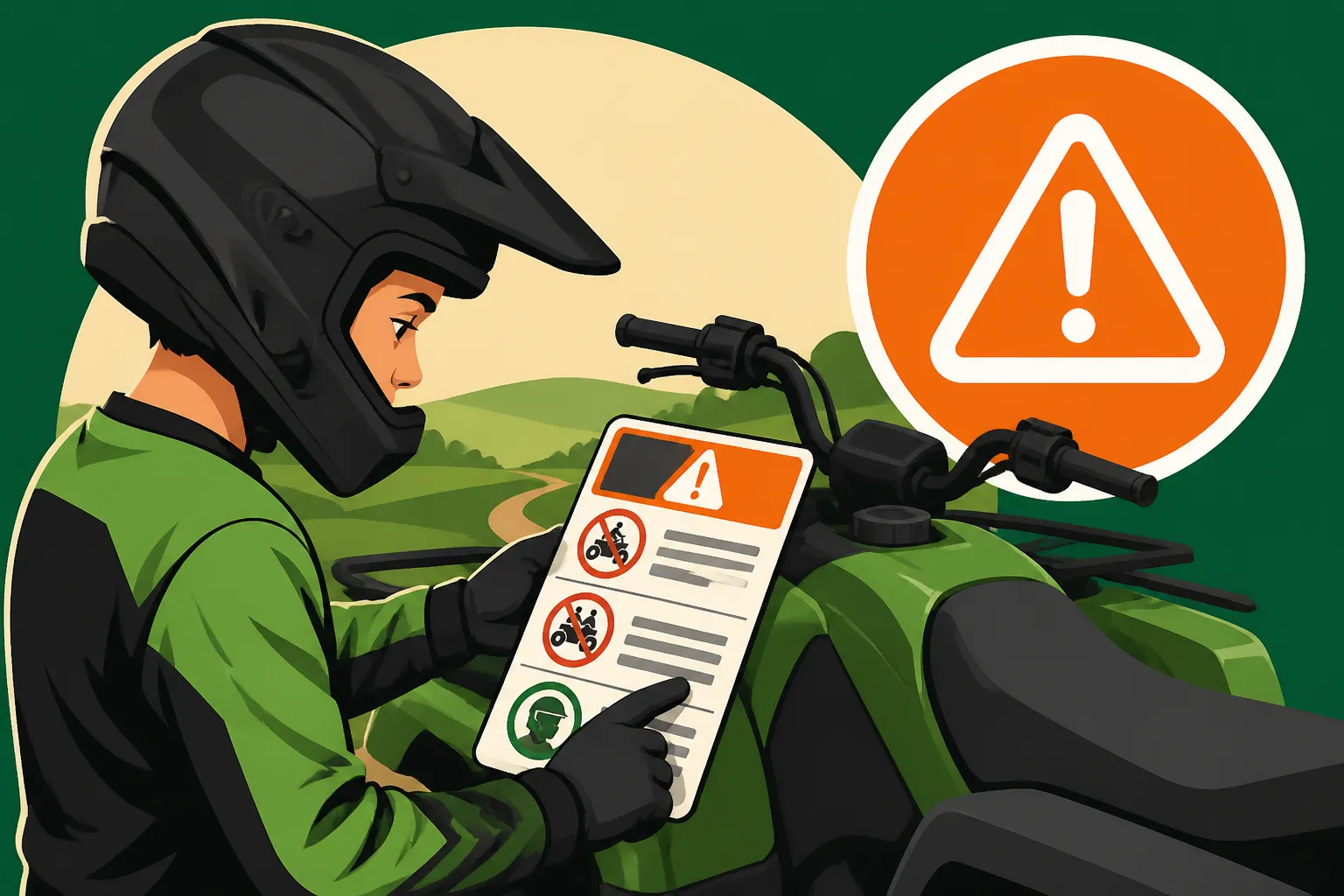
The safest approach is to treat the label as part of the machine’s safety information, not as decoration. If a warning seems overly cautious or confusing, get the manufacturer’s explanation rather than altering the label. For help interpreting the wording, Reading a Manufacturer’s Age Label can help you focus on the information that matters.
What to Do if a Label Is Missing, Damaged, or Wrong
A label can become unreadable through wear, weather, cleaning, or repairs. That does not make removal lawful, and it does not give an owner a reliable basis for deciding that a young rider is eligible. If the warning is damaged or missing, pause before allowing a minor to use the ATV.
A practical response is to identify the ATV by its make, model, and vehicle information, then contact the manufacturer or an authorized dealer to ask about the correct warning label and the age guidance for that machine. Use the information provided for the exact model rather than a generic label found online or on another ATV. Keep any manufacturer instructions with the owner’s paperwork.
If a label is still attached but hard to read, avoid scraping, painting over, or replacing it with a different warning. Ask the manufacturer or dealer whether an approved replacement is available and how to install it. A replacement should match the machine and preserve the manufacturer’s guidance; a label that merely looks similar may not communicate the right warning.
If someone has already removed the label, don’t assume that putting any age sticker back on resolves the issue. The important questions are whether the machine’s correct warning has been identified and whether the intended rider is permitted to operate it. Contacting the manufacturer or dealer can help establish the right information, but it does not change the underlying rule that removing the warning label is unlawful under Kentucky law, as stated by the Legislative Research Commission.
It is also sensible to keep a record of the manufacturer’s response and any replacement-label instructions. That can help prevent confusion among family members or other adults who share responsibility for the machine. The record is not a substitute for following the law or the label, but it can make the machine’s age guidance easier to verify.
Avoid relying on a seller’s verbal assurance that a child can ride if the label is missing. Ask for the machine’s documentation and confirm the manufacturer’s guidance for its model. If you cannot verify the warning, the cautious choice is not to let a minor ride until you can.
A Practical Check Before a Young Rider Uses an ATV
Before a minor rides, make the decision in a straightforward order. This can prevent a missing decal, a vague memory, or a seller’s claim from turning into a safety or legal problem.
- Confirm what the machine is. Make sure you are dealing with an ATV, rather than assuming the same rule applies to a UTV or another off-highway vehicle.
- Find the machine’s age warning. Read the label attached to the ATV and check the owner’s manual for matching guidance.
- Compare the warning with the rider’s age. The Legislative Research Commission says children under six may not operate an ATV, and that parents or guardians may not allow minors under 16 to ride in violation of the manufacturer’s age-restriction warning.
- Do not use a missing label as a workaround. If the warning cannot be read or is absent, contact the manufacturer or an authorized dealer before allowing a minor to operate the ATV.
- Consider the rider and the setting. Age eligibility does not, by itself, show that a rider can control a particular machine or that the location allows the planned ride.
- Keep adults consistent. Make sure everyone supervising the child understands the warning and agrees to follow it.
If a child is eligible under the label, that still does not mean the ATV is automatically a good fit. A responsible adult should consider the machine’s size and controls, the rider’s ability to follow directions, and whether supervision is suitable for the conditions. For questions about who may ride and what supervision involves, Kentucky Supervision Rules for Minors offers related information.
The label should remain on the machine even when an experienced adult is riding. Its purpose is not limited to the moment a child approaches the ATV; it keeps important manufacturer guidance available to future owners and other people who may operate or supervise the machine. If the ATV is sold or loaned, a visible, intact warning helps the next person understand the manufacturer’s intended age guidance.
If you are unsure whether a machine is an ATV or whether a specific rule applies to it, don’t solve that uncertainty by removing or ignoring a label. Verify the machine’s classification and check the relevant Kentucky requirements before riding. For the age-label question, the practical rule is simple: leave the warning attached, follow it, and confirm the right replacement information if it is no longer readable.
Disclaimer
This article is for general informational purposes only and does not constitute professional advice. Laws, prices and regulations vary by location and change over time. Consult a qualified professional for guidance on your specific situation.