Older Machines That Cannot Be Titled in Kentucky
It's incredibly frustrating, isn't it? You've got an older ATV or UTV, a machine that's been a workhorse for years or a recent passion project, and suddenly you're hearing whispers about titles in Kentucky. Maybe you're trying to sell it, or perhaps you just want to ensure everything is above board. The confusion around whether your trusty older quad needs a title, or even can get one, is a common headache for many riders here in the Bluegrass State. This guide is here to untangle that knot, walking you through Kentucky's specific rules for older machines and helping you understand if your ATV or UTV is one of those that simply can't be titled.
The Core Rule: Why July 15, 2010, Matters So Much
Kentucky's journey with titling ATVs and UTVs hasn't always been straightforward. For many years, these machines were treated much like lawnmowers or farm equipment – no formal title was required. This made sense in a state where ATVs are integral to farm work, hunting, and navigating rural properties. However, as the popularity of these machines grew, so did issues around ownership disputes, theft, and tracking. This led to a significant shift in the law, and understanding this pivot point is crucial for anyone with an older machine.
Understanding the Historical Context of Kentucky's ATV Title Law
Prior to a specific date, buying and selling an ATV or UTV in Kentucky was often a handshake deal, maybe with a basic bill of sale if you were really organized. The state didn't track these machines in the same way it did cars or trucks. Then, in 2010, new legislation came into effect, fundamentally changing how ATVs and UTVs were viewed from a legal standpoint. This wasn't just a minor tweak; it was a complete overhaul that introduced mandatory titling for most new purchases. The intention was to bring more clarity and security to ATV ownership, making it harder for stolen machines to be resold and easier for owners to prove their rights. It was a well-meaning change, but it left a lot of folks who already owned their machines scratching their heads.
The core of this change, and the date that will forever be etched in the minds of Kentucky ATV owners, is July 15, 2010. This is the effective date of the new law. If you've been wondering [Why Kentucky Titles Machines Bought After July 2010], this is the reason. It's not arbitrary; it marks a distinct line in the sand for how these vehicles are regulated in the Commonwealth. The frustration stems from the fact that many long-time owners never saw a need for a title before this date, and the new rules didn't necessarily provide a clear path for them.
What This Means for Machines Purchased Before the Deadline
So, what does that crucial date actually mean for your older ATV or UTV? In simple terms, if you purchased and took ownership of your machine before July 15, 2010, it is highly likely that your machine cannot, and does not need to be, titled in Kentucky. The law was generally not retroactive for vehicles already in private hands. This is why you'll often hear about [Machines Bought Before July 2010 in Kentucky] being handled differently.
This "grandfathering" clause was designed to prevent a massive, impossible task of titling every existing ATV in the state, many of which had no existing paperwork beyond an original sales receipt. So, for these machines, your proof of ownership typically relies on other documents, not a state-issued title. This can be a relief for some, knowing they don't have to jump through hoops.
However, it also creates a unique challenge. While your machine doesn't need a title, the lack of one can sometimes cause confusion, especially when interacting with others who might not be familiar with Kentucky's specific nuances. It also means if you ever sell the machine, you need to be prepared to clearly explain why there's no title to transfer. This is a common point of contention and something you'll want to address head-on.
Identifying "Older Machines" in the Eyes of Kentucky Law
When we talk about "older machines" in Kentucky, it's not about the model year of the ATV or UTV itself. What truly matters to the state is the specific date of purchase and ownership transfer. This distinction is absolutely critical and often a source of misunderstanding for many riders.
Distinguishing Between Purchase Date and Manufacturing Date
It's easy to get confused between when your ATV was made and when it was bought. An ATV manufactured in 2008, for instance, could have sat on a dealer's showroom floor until 2011. In that scenario, even though it's an "older model," its purchase date would fall after July 15, 2010, meaning it would require a title under Kentucky law. Conversely, a machine made in 2009 but purchased and owned by you in June 2010 would generally not require a title.
This distinction is especially important if you're looking at a "new old stock" machine from a dealership or if you've inherited a vehicle that was rarely used. The state isn't asking for the date on the VIN plate or manufacturer's sticker; they're looking for the day the machine legally changed hands and began its journey with its first owner. This focus on the transaction date rather than the production date simplifies things for the state, as it ties directly into when the new law became active for transactions.
So, when you're trying to figure out if your machine needs a title, dig out any sales receipts, bills of sale, or other acquisition documents. The date on that paperwork is your golden ticket to understanding its titling status. Without that clear record, it can be much harder to definitively prove your machine's pre-July 2010 status.
The Importance of a Clear Chain of Ownership
Regardless of whether your machine needs a title or not, having a clear and unbroken chain of ownership documentation is paramount. For machines purchased after July 15, 2010, this chain is typically established through the title itself, which records transfers of ownership. For those older machines that predate the titling requirement, other forms of documentation become your bedrock.
A robust bill of sale from the person you purchased the machine from is your best friend here. It should clearly identify the machine (make, model, VIN), the buyer and seller, the date of sale, and the purchase price. Even if your machine doesn't require a title, a well-documented sale provides proof of when you acquired it, which directly impacts its titling status in Kentucky. For example, if you bought a machine in 2009 and the original seller is long gone, having that dated bill of sale is crucial evidence.
If you don't have a bill of sale, or if the one you have is handwritten on a napkin and less than professional, it might be worth creating a more formal document, especially if you plan to sell the machine in the future. Services like LawDepot can provide templates for a professional [Kentucky ATV Bill of Sale Requirements], helping you ensure all necessary information is included. This ensures that any subsequent owners have clear proof of the machine's history and its "untitled" status, preventing future headaches. A well-crafted bill of sale essentially acts as the primary ownership document for these older machines.
Exceptions to the "No Title for Older Machines" Rule
While the general rule is that machines bought before July 15, 2010, don't need a Kentucky title, there are a couple of very specific scenarios where an older machine might, in fact, have one. These exceptions are important to understand, as they can change everything about how you prove ownership or interact with officials.
When a Security Interest Forced an Older Kentucky Title
This is perhaps the most significant exception to the pre-2010 rule. Even before the statewide titling mandate, if an ATV or UTV was purchased with a loan from a financial institution – a bank, credit union, or even a dealership that then sold the loan to a bank – that institution would typically require a title to be issued. Why? Because they needed a legal way to record their lien on the machine. Without a title, it would be difficult for them to prove their security interest in the event of default or if the machine was sold without their knowledge.
So, if your older machine was financed, there's a good chance it has a title, even if you acquired it well before July 2010. You'll want to check any old loan documents or past records. If you believe your machine might fall into this category, or if you're purchasing an older machine and the seller claims it has a title from before 2010, this is likely the reason why. For more details on this specific scenario, you can look up [When a Security Interest Forced an Older Kentucky Title]. This title would have been issued through the county clerk's office at the time of purchase, making it an official state document.
If you happen to have one of these older, titled machines, you'll treat it much like any other titled vehicle when it comes to transfer of ownership. The title itself is the primary document, and you'll go through the standard process of signing it over to a new owner at the county clerk's office.
Machines Imported or Previously Titled in Other States
Another layer of complexity comes into play if your "older machine" was acquired out of state and then brought into Kentucky. Titling laws for ATVs and UTVs vary wildly from state to state. Some states have always titled these machines, while others have never done so, or have different cutoff dates than Kentucky.
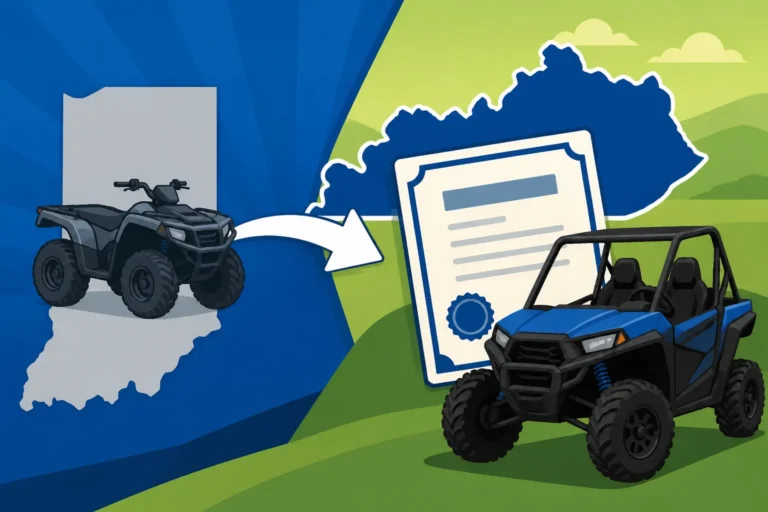
If you bought a machine in, say, Ohio or Tennessee, before Kentucky's 2010 rule came into effect, but that machine did have a title or registration in its original state, then Kentucky's rules might interact differently. The Kentucky Transportation Cabinet typically wants a clear ownership record when a vehicle enters the state. If it had a valid title from another state, even if it was issued before July 2010, Kentucky will generally accept that foreign title as a basis for issuing a new Kentucky title. This process is essentially how [Buying an Out-of-State Machine for Kentucky] usually works.
However, older machines, especially those manufactured before the universal adoption of standardized VINs, might present a challenge. Kentucky requires a [Kentucky's Seventeen-Character VIN Rule] for titling. If your imported machine has an older, shorter, or non-standard VIN, it might complicate the titling process, potentially requiring additional inspections or verification steps through the Kentucky State Police. It's a bit of a bureaucratic maze, and you might find yourself needing to prove the VIN's authenticity before a Kentucky title can be issued.
Proving Ownership Without a Title for Pre-2010 Machines
For the vast majority of older ATVs and UTVs in Kentucky – those acquired before July 15, 2010, and not subject to a lien – there simply isn't a state-issued title. This doesn't mean you don't own the machine; it just means your proof of ownership comes in a different form. Navigating this can be tricky, especially if you're used to the clear-cut process of vehicle titles.
The Role of a Bill of Sale for Machines Without Titles
When a state title isn't available, a well-documented bill of sale steps up as your primary evidence of ownership. This document becomes crucial for everything from proving the machine is yours if it's stolen, to demonstrating its legitimate status if you're ever stopped while riding on approved private land, or most importantly, when you go to sell it. It's your official record of the transaction and how the machine came into your possession.
A comprehensive bill of sale should include:
- Date of Sale: This is critical for establishing that the machine was acquired before Kentucky's titling mandate.
- Buyer and Seller Information: Full names, addresses, and signatures of both parties.
- Machine Description: Make, model, year, color, and most importantly, the Vehicle Identification Number (VIN).
- Purchase Price: The amount for which the machine was sold.
- "As-Is" Clause: Often included to protect the seller from future claims about the machine's condition.
Without a title, a flimsy bill of sale can cause significant headaches down the line. Imagine trying to explain to a potential buyer why there's no title, and then only being able to present a barely legible, undated scrap of paper as your proof. That raises red flags for everyone involved. For a solid template that covers all the bases, consider using a reputable service like LawDepot to generate a formal [A Kentucky Bill of Sale for an ATV]. This provides a level of professionalism and completeness that can give both buyers and sellers peace of mind.
Other Forms of Ownership Documentation and Their Limitations
While a bill of sale is king for untitled older machines, other documents can sometimes supplement or, in a pinch, serve as secondary proof of ownership. However, it's vital to understand their limitations, especially when dealing with official channels.
These might include:
- Canceled Checks or Bank Statements: If you paid for the machine by check or bank transfer, a record showing the payment to the seller on a specific date can help corroborate your acquisition.
- Old Registration Cards: If the machine was previously registered in another state that issued registrations but not titles, this could serve as a historical document, but Kentucky will likely still look for a bill of sale as primary ownership proof upon transfer.
- Maintenance or Repair Records: Receipts for work done on the machine, especially if they list the VIN and your name, can show a history of possession and investment.
- Affidavits of Ownership: In very rare cases, if all other documentation is lost, you might be able to create an affidavit sworn before a notary public, detailing how and when you acquired the machine. This is typically a last resort and may not be accepted in all circumstances.
The challenge with these secondary forms of documentation is their perceived lack of authority compared to a formal title or a robust bill of sale. A county clerk, for instance, might be hesitant to fully accept a stack of repair receipts as definitive proof of your legitimate ownership, especially if there's no clear chain of acquisition. When it comes to [Proving Kentucky ATV Ownership], the more direct and formal your documentation, the better. Always prioritize a comprehensive bill of sale, and keep it safe!
Navigating Sale and Transfer of an Untitled Older Machine
Selling or buying an older ATV or UTV in Kentucky that doesn't have a title can feel like walking through a minefield. Transparency, clear documentation, and managing expectations are key to a smooth transaction. Both sellers and buyers need to understand the unique legal landscape for these machines.
Selling an Older, Untitled ATV in Kentucky
When you decide it's time to part ways with your pre-2010 ATV or UTV that lacks a Kentucky title, your primary responsibility as a seller is transparency. Don't try to hide the fact that there's no title; instead, explain why there isn't one. Educate potential buyers about Kentucky's specific titling laws regarding the July 2010 cutoff. This builds trust and prevents misunderstandings later on. Remember, you're not just selling a machine; you're also selling its legal status. You can find more advice on [Selling an ATV in Kentucky] with these unique considerations in mind.
Your most important tool in this process will be a meticulously prepared bill of sale. This document is not merely a formality; it's the official record of the transfer of ownership from you to the buyer. Ensure it includes all the details we discussed earlier: the date of sale (reinforcing its pre-2010 status), full contact information for both parties, a complete description of the ATV (make, model, year, VIN), and the sale price. Both you and the buyer should sign and date two copies – one for each of you. This clear documentation protects both parties and serves as the buyer's future proof of ownership. Using a template from LawDepot can ensure you don't miss any critical details in [A Kentucky Bill of Sale for an ATV].
It's also important to manage the buyer's expectations regarding future sales or interactions with the county clerk. Make it clear that they, too, will own an untitled machine and will need to rely on that bill of sale for their own proof of ownership. If you can anticipate and answer their questions about the lack of a title, the sale is much more likely to go smoothly.
What a Buyer Needs to Know When Purchasing an Untitled Older ATV
If you're on the other side of the transaction, looking to buy an older ATV or UTV in Kentucky, encountering a machine without a title can be a source of anxiety. Your first instinct might be to walk away, fearing you're buying something stolen or illegitimate. However, understanding Kentucky's laws will empower you to make an informed decision. The most crucial piece of advice is to never, ever buy an older machine without a comprehensive, legitimate bill of sale. This document is your title. Without it, you truly have no proof of ownership.
Always verify the seller's claims. Ask them to explain why the machine has no title and confirm that it falls into the pre-July 2010 category. While you won't be able to get a Kentucky title for such a machine (unless it falls into one of the rare exceptions like a prior lien or out-of-state title), a robust bill of sale will serve as your primary proof of ownership. This means if you ever have to prove it's yours, or if you decide to sell it down the road, you'll be relying solely on that piece of paper. You can research [Should You Buy a Quad Advertised With No Title?] for more insights.
Before completing the purchase, make sure you thoroughly inspect the machine and verify the VIN. Cross-reference the VIN on the machine with the VIN on the bill of sale. While Kentucky doesn't have a statewide registration, some areas might have specific rules for riding on public land or trails that require proof of ownership. Having that bill of sale readily available is essential. Understanding these nuances will save you a lot of grief and ensure you're making a sound investment, even without the traditional title document.
Practical Considerations and Common Pitfalls
Even with a clear understanding of Kentucky's titling laws for older machines, daily riding and ownership can still present some practical hurdles. It's important to be prepared for these scenarios to avoid unnecessary stress or legal issues.
What Happens If You Ride an Untitled Machine in Kentucky
For an ATV or UTV that genuinely falls into the pre-July 15, 2010, category and therefore does not require a title in Kentucky, riding it on approved property is generally not an issue. The law doesn't penalize you for not having a title if one isn't legally mandated for your machine. However, this doesn't mean you'll never encounter questions. If you're stopped by law enforcement, especially if you're crossing a public road where permitted, or if there's a question about ownership, being able to quickly prove that the machine is legitimately yours is paramount. This is where your bill of sale becomes indispensable.
Problems arise if you're riding a machine that should have a title (i.e., it was purchased after July 15, 2010, or falls under an exception that requires a title) but doesn't. In that case, you could face penalties for failing to title the vehicle. This is a crucial distinction. Always carry your bill of sale or other strong proof of ownership when riding, especially in situations where you might encounter officials. Keep a copy in a waterproof bag on your machine, or even a digital photo on your phone, alongside your physical document. For general guidance on [Riding Without a Title in Kentucky], remember the context of why your machine is untitled.
Beyond law enforcement, ownership disputes can become incredibly messy without a title. If your machine is ever stolen, your ability to report it, provide clear identification (VIN), and ultimately recover it will heavily depend on the strength of your ownership documentation. An older, untitled machine with a clear bill of sale gives you a solid foundation; one without any verifiable paperwork leaves you extremely vulnerable.
When to Consult Your County Clerk or Legal Counsel
While this guide aims to be comprehensive, every situation has its unique quirks. If you're still unsure about your specific machine's titling status, or if you've run into an unusual circumstance, don't hesitate to seek official clarification. Your local [Titling at a Kentucky County Clerk] office is the primary point of contact for all titling and registration matters in Kentucky.
The clerks at these offices deal with these laws daily and can provide guidance based on your specific documentation. Be prepared to bring any existing paperwork you have – bills of sale, old loan documents, out-of-state titles – to help them assess your situation accurately. They can clarify if your machine truly falls into the "untitled" category or if there's an unforeseen reason it should have a title.
In more complex scenarios, particularly those involving disputed ownership, missing records, or inherited machines where the history is unclear, consulting legal counsel might be the wisest course of action. An attorney specializing in property or vehicle law can help you navigate the nuances, potentially assist in obtaining affidavits, or even help establish legal ownership if records are completely absent. While it's an added expense, clarity and peace of mind regarding your valuable property are often well worth the investment.
Disclaimer
This article is for general informational purposes only and does not constitute professional advice. Laws, prices and regulations vary by location and change over time. Consult a qualified professional for guidance on your specific situation.