Seventeen Characters on a Frame
Navigating the world of ATV and UTV titling in Kentucky can feel like trying to find your way through a dense holler without a map, especially when it comes to the Vehicle Identification Number (VIN). Many folks get tripped up when they realize their beloved machine might not have the specific type of VIN the state requires, leading to frustrating delays and confusion at the county clerk's office. This guide is here to untangle the complexities of Kentucky's 17-character VIN rule, helping you understand what it means for your machine and how to ensure a smooth titling process.
Understanding Kentucky's VIN Requirement
When you're trying to title an ATV or UTV in Kentucky, one of the first things the county clerk will look for is a valid Vehicle Identification Number (VIN). It’s not just any number; Kentucky specifically requires a 17-character VIN for most machines purchased after a certain date. This seemingly small detail can become a major hurdle if your ATV or UTV doesn't meet this standard, turning what should be a simple transaction into a bureaucratic headache.
Kentucky's insistence on a standardized, 17-character VIN isn't arbitrary. It's designed to create a clear, traceable record for every machine, much like how a Social Security number identifies a person. This system helps prevent theft, ensures accurate ownership records, and streamlines the process of buying and selling. For those of us who just want to hit the trails or work the farm, it can feel like extra red tape, but understanding its purpose can help you prepare properly.
Why Kentucky's Seventeen-Character VIN Rule Matters
The specific cutoff date that really changed the game for ATV and UTV titling in Kentucky was July 2010. If you purchased a machine after that date, Kentucky law generally mandates that it must have a 17-character VIN to be eligible for a title. This means if you bought your quad from a dealer or a private seller in, say, 2012, and it only has a shorter, older-style VIN, you're going to encounter a problem when you visit the county clerk.
This rule is a direct reflection of broader efforts to standardize vehicle identification across the country. A 17-character VIN isn't just a random string of numbers and letters; it encodes crucial information about the vehicle, including the manufacturer, make, model year, assembly plant, and sequential production number. Without this standardized identifier, the state has a much harder time verifying the machine's origin and ensuring it's not stolen or a "chop shop" special. It’s this lack of consistent data that makes older or non-standard VINs such a challenge. You can learn more about [Why Kentucky Titles Machines Bought After July 2010].
Locating the VIN on Your ATV or UTV
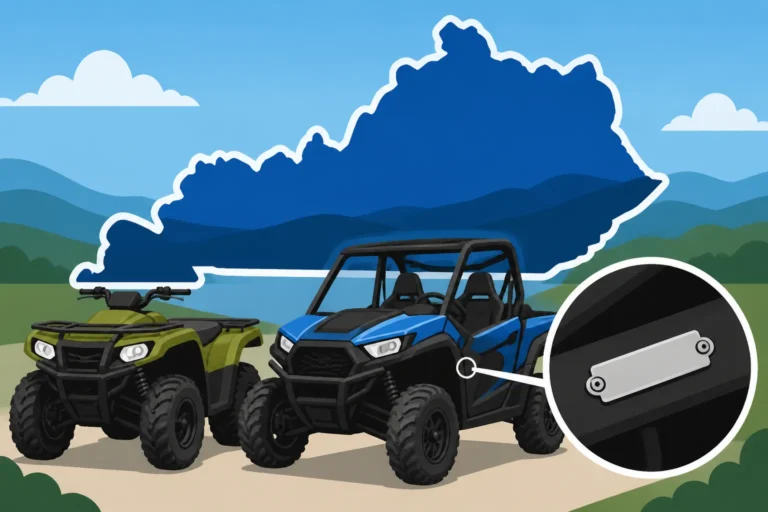
Finding the VIN on your ATV or UTV is usually pretty straightforward, but it can be tricky if you don't know where to look, or if the machine has seen a lot of hard use. The most common spot is on the frame itself, often near the steering column, on the front frame downtube, or sometimes on one of the main frame rails near the engine. Some manufacturers also place a VIN plate or sticker in an easily accessible spot, though these can sometimes become damaged or illegible over time.
Before you even think about heading to the county clerk's office, take a good, close look at your machine's VIN. Make sure it's clearly legible and, most importantly, that it has all 17 characters. Rust, mud, or even previous repairs can sometimes obscure parts of the VIN, rendering it unreadable. If you're having trouble, a wire brush and some patience can often reveal the numbers you need. It’s vital that the VIN on the machine matches exactly any ownership documents you have, such as a bill of sale or a previous title from another state.
What Happens If Your Machine Doesn't Have a 17-Character VIN?
This is where many Kentucky riders run into a wall. You've got an older, beloved ATV that's been in the family for years, or perhaps you bought a great deal on an imported UTV, only to find out it doesn't have the magic 17-character VIN. The county clerk's office, bless their hearts, operates strictly by the book, and if your machine doesn't fit the current titling requirements, they simply can't issue you a title. This can be incredibly frustrating, leaving you wondering if your machine is now essentially worthless on paper.
The problem isn't that the clerk doesn't want to help; it's that state law ties their hands. Without a compliant VIN, the system simply isn't designed to process the title application. This situation highlights a gap for many long-time ATV owners or those who purchase machines from non-traditional sources. It's a common point of confusion, and unfortunately, there isn't always a simple fix, but understanding the root cause is the first step.
Why an Older Machine May Have No Title in Kentucky
For machines bought before July 2010, the rules were much more relaxed. Many ATVs and UTVs from that era, especially those primarily used for farm work or recreation on private land, simply didn't require a title. Manufacturers often used shorter VINs or serial numbers, as the federal standardization for off-road vehicles wasn't as strictly enforced or universally adopted. Because of this, it's not uncommon to find an older quad that has never had an official title.
When you try to title one of these older machines now, the county clerk is still bound by current law, which looks for a 17-character VIN. If your older machine doesn't have it, and you're trying to title it for the first time, you're in a tough spot. It's important to differentiate between machines that never needed a title versus those that should have had one but didn't. In the former case, proving ownership usually relies on a robust [A Kentucky Bill of Sale for an ATV] and other supporting documents, but the lack of a modern VIN can still complicate things immensely.
Imported Machines and the Kentucky VIN Rule
Imported ATVs and UTVs present their own unique set of challenges when it comes to Kentucky's VIN requirements. Machines manufactured for markets outside of North America may adhere to different identification standards, resulting in VINs that don't conform to the 17-character format. This is particularly true for older imports or specialty machines that weren't originally intended for sale in the United States. While these machines might be perfectly legitimate and safe, their non-standard VIN can make titling in Kentucky nearly impossible.
When you bring an imported machine to the county clerk, they'll be looking for a VIN that not only has 17 characters but also follows the specific structural rules for North American VINs, which include coded information about the manufacturer and other details. If your imported machine has a shorter VIN or a VIN that doesn't follow the ISO standards, the clerk simply won't have a corresponding entry in their system to verify its legitimacy. This means you might possess a fantastic piece of machinery, but without a compliant VIN, it remains untitleable in Kentucky, severely limiting its resale value and official use.
Navigating the Titling Process with VIN Challenges
It's disheartening to find out your ATV or UTV doesn't meet Kentucky's VIN requirements for titling. However, there are still avenues to explore, even if they aren't always quick or easy. The key is to gather all possible documentation and understand the limited flexibility within the system. Your local county clerk's office is your primary point of contact, and their guidance will be invaluable, even if the news they deliver isn't always what you want to hear.
The process often involves proving the machine's legitimate ownership and, in some rare cases, exploring options for VIN verification or assignment, though these are much more common for cars than ATVs. It’s a process that demands patience and a thorough understanding of what Kentucky law does allow, rather than focusing on what it restricts. Remember, the goal is to establish a clear chain of custody and a unique identifier for your machine.
Proving Kentucky ATV Ownership Without a Standard VIN
If your machine lacks a 17-character VIN, especially if it's an older model, proving ownership becomes absolutely critical. While a title is the gold standard for proving ownership, its absence doesn't mean you have no claim. You'll need to gather every piece of paper you can: bills of sale, old registration documents (even from non-titling states), maintenance records, canceled checks from purchase, or even sworn affidavits from previous owners. The more documentation you have, the stronger your case.
When creating or presenting a bill of sale, ensure it's as detailed as possible. It should clearly identify both buyer and seller, the date of sale, the purchase price, and a thorough description of the ATV or UTV, including any existing VIN or serial numbers. Using a reputable service like LawDepot to generate a comprehensive bill of sale can give you a strong legal document, even for private sales of machines without a traditional title. This kind of documentation might not lead to a full title, but it is essential for proving your rights to the machine and can be critical for any potential future transactions. Don't forget, [Using a Bill of Sale From a Non-Titling State] can also be helpful.
Why a Kentucky Clerk Rejects an Engine Number
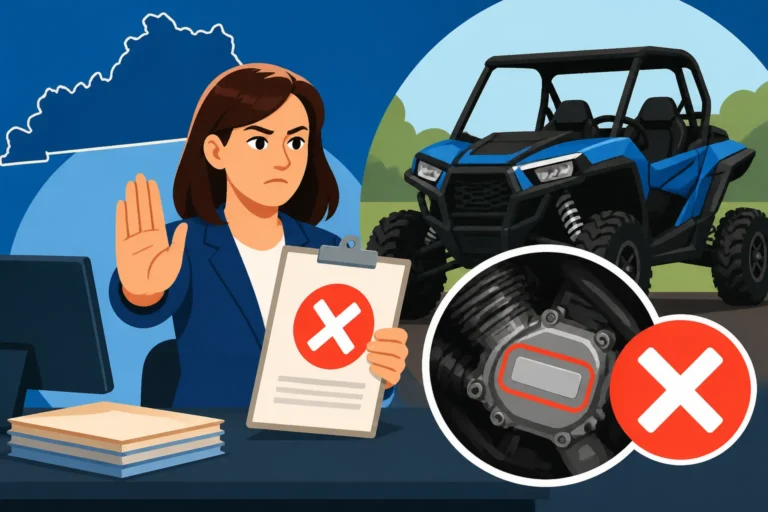
It's a common misconception that if your machine lacks a frame VIN, the engine number can serve as a substitute. Unfortunately, in Kentucky, this is generally not the case for titling purposes. State law specifically refers to the Vehicle Identification Number, which by definition, is typically found on the frame and not the engine. While an engine number is unique to that particular engine, it doesn't provide the comprehensive identifying information that a full VIN does, nor is it permanently affixed to the primary chassis in the same way.
The county clerk's office, therefore, has little discretion when it comes to accepting an engine number in place of a frame VIN. Their systems are set up to recognize and process the standardized VIN, and an engine number simply doesn't fit the criteria. This can be incredibly frustrating for owners of older machines where the frame VIN might be unreadable or absent, but the engine number is perfectly clear. It underscores the importance of having the correct identifying number on the primary structural component of the vehicle. This is why [Why a Motor Number Will Not Do in Kentucky] is such a critical point of understanding.
Essential Steps for a Smooth Titling Experience
To avoid unnecessary headaches and frustration, being proactive is your best strategy when dealing with ATV and UTV titling in Kentucky. The process can be straightforward if you have all your ducks in a row, especially regarding that crucial 17-character VIN. Don't wait until the last minute or assume everything will be fine. A little preparation can save you a lot of time and potential heartache.
Ultimately, a smooth titling experience hinges on understanding and adhering to Kentucky's specific requirements. This means knowing what's expected of your machine's identification number and having all your paperwork in order. If you're ever in doubt, a quick call or visit to your local county clerk's office before you finalize a purchase or start the titling process can provide invaluable clarity and prevent future issues.
Checking a VIN Before a Kentucky Purchase
One of the most critical pieces of advice for anyone buying an ATV or UTV in Kentucky is to thoroughly check the VIN before you hand over any money. If you're looking at a machine, locate the VIN on the frame and verify it's a full 17 characters and that it matches any documentation the seller provides, like a previous title or bill of sale. Take a photo of the VIN yourself. This simple step can save you from purchasing a machine that you won't be able to title, or worse, a stolen one.
Furthermore, if the VIN appears to be tampered with, scratched out, or is difficult to read, consider that a major red flag. A legitimate seller should have no problem allowing you to inspect the VIN closely. You can also use online VIN check services, even though they are primarily for cars, to at least verify the structure of the VIN and sometimes get basic information about the manufacturer and model year. For peace of mind, it's worth the extra effort to confirm the VIN's authenticity and compliance with Kentucky law. Always refer to [Checking a VIN Before a Kentucky Purchase] for more detailed steps.
What to Do If Your VIN is Damaged or Unreadable
Discovering that your ATV or UTV's VIN is damaged, rusted beyond recognition, or otherwise unreadable is a major problem, but it might not be a complete dead end. Your first step should be to thoroughly clean the area where the VIN is located. Sometimes, a wire brush and some solvent can reveal numbers you thought were gone forever. Take clear photos of the damaged VIN, even if it's partially legible, as documentation.
If the VIN remains unreadable, you'll need to contact your local Kentucky county clerk's office and explain the situation. They may direct you to local law enforcement for a VIN inspection, where an officer can attempt to verify the VIN or, in very rare and specific circumstances, assist in applying for a state-assigned VIN. This process is often complex and requires significant proof of ownership and a sworn affidavit. Be prepared for a potentially lengthy process, and always prioritize official channels to avoid any appearance of impropriety. A properly detailed bill of sale, perhaps generated using a reliable template from LawDepot, can be crucial for establishing ownership in these tricky situations.
| VIN Requirement Aspect | Kentucky Standard (Post-July 2010) | Common Challenges | Potential Solutions / Best Practices |
|---|---|---|---|
| VIN Length | 17 characters | Shorter VINs on older or imported machines | Document ownership thoroughly (e.g., LawDepot bill of sale), contact clerk for advice on older machines. |
| VIN Location | Permanently affixed to the frame | Rust, damage, obscure placement, only engine number found | Inspect thoroughly, clean area, photograph VIN, seek law enforcement verification if severely damaged. |
| Legibility | Clear and readable | Obscured by paint, rust, or physical damage | Clean area carefully, document condition with photos, consult clerk or law enforcement. |
| Matching Documents | VIN on machine matches title/bill of sale | Discrepancies between physical VIN and paperwork | Verify VIN before purchase, ensure all documents match, address discrepancies immediately with seller or clerk. |
| Purpose | Vehicle identification, theft prevention | Difficult to trace ownership, potential for fraud | Proactive VIN checks, secure bills of sale, understanding state requirements. |
Disclaimer
This article is for general informational purposes only and does not constitute professional advice. Laws, prices and regulations vary by location and change over time. Consult a qualified professional for guidance on your specific situation.