Kentucky Rules for Riding a Rented Machine
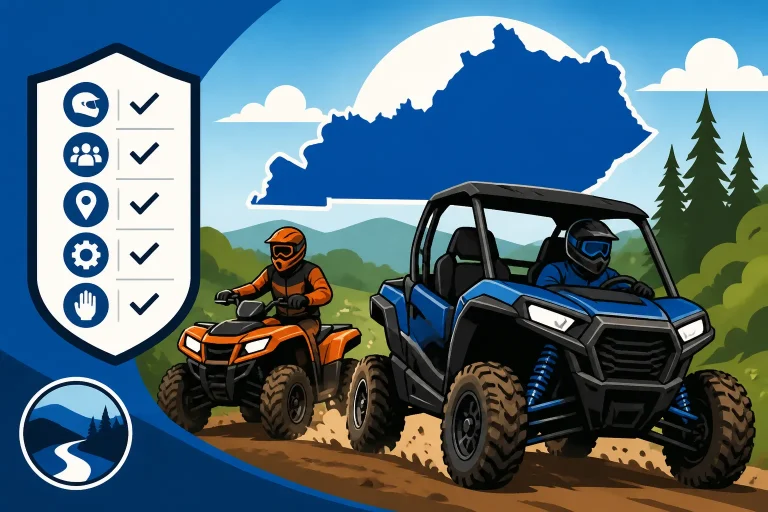
Renting an ATV or UTV can make a Kentucky trail trip easy to arrange, but the rental agreement is only one part of the rules. You may also need to meet age and supervision requirements, use the machine only where riding is allowed, and obtain the right park permit. Here’s what to check before pickup and while you ride.
The rental agreement does not replace Kentucky riding rules
A rental company can set conditions for who may operate its machine, where it may be taken, and how it must be returned. Those terms apply alongside Kentucky law and the rules of the trail system or property you plan to visit. Meeting a rental company’s age requirement, for example, does not automatically make every route legal for you to ride.
Before booking, ask the operator to explain the rules that apply to your specific machine and destination. A machine described as an ATV, UTV, side-by-side, or off-road vehicle may be treated differently depending on its design and where it is used. If you are unsure which rules apply, start with What Kentucky Counts as an ATV and check the relevant rules for your riding location.
Keep these separate questions in mind:
- May you rent and operate the machine? The company sets rental eligibility conditions, and state rules may also apply.
- May the machine enter the place you want to ride? A park, forest, private landowner, or event organizer can set access requirements.
- May you use a particular road or route? Road access is governed by separate rules and does not follow automatically from having a rental or trail permit.
- Who is responsible if something goes wrong? The contract may address damage, recovery, cleaning, late returns, and other charges.
A waiver or rental contract does not grant permission to ride on land where you are not authorized. Nor does it make a closed trail or prohibited road legal to use. Treat the company’s instructions as a starting point, then confirm the rules of the actual riding area.
For a broader overview of access requirements, see Kentucky Rules for a Visiting Rider and Do You Need a Permit for Kentucky Trails?. Visiting riders should not assume that a permit or registration from another state will satisfy a Kentucky park’s requirements. Each property or trail operator may have its own entry system.
Check permits and access before you load up
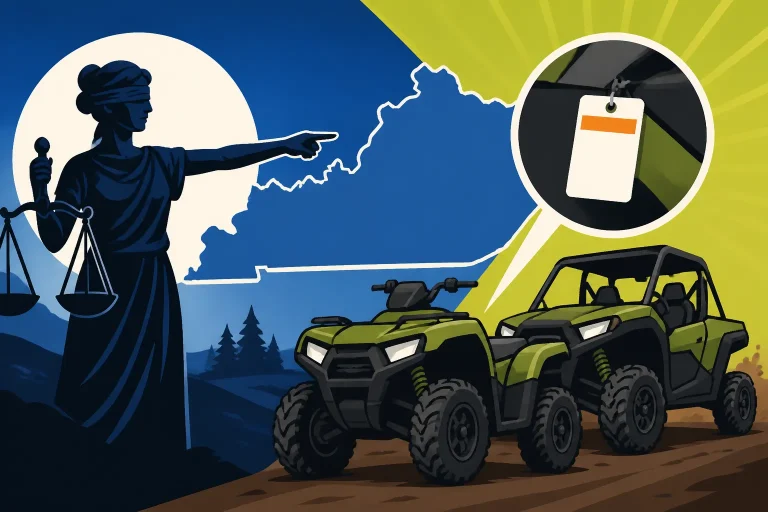
Kentucky does not have one statewide trail sticker that gives a rented machine access to every riding area. Permits are tied to particular properties or trail systems, and the rental price may or may not include the required permit. Ask the rental company directly rather than relying on a listing that says the machine is “trail ready.”
A permit might be sold for a rider, a machine, or another defined unit. The details vary by location. If you are riding with passengers, ask whether each person needs a separate permit. If you have booked more than one machine, confirm whether the permit covers each one. A rental company’s permission to use its vehicle is not the same as the park’s permission to enter.
| Before riding | What to confirm |
|---|---|
| Permit coverage | Whether the rental includes the permit for your planned riding area |
| Permit holder | Whether the permit is for each rider, each machine, or another unit |
| Passengers | Whether passengers need their own permit or other authorization |
| Allowed area | Which trails, roads, or sections are open to the rental machine |
| Rental restrictions | Whether the company limits where its machine may be taken |
| Current conditions | Whether weather, maintenance, or a temporary closure affects access |
If the rental does not include a permit, ask where and how to buy one, whether you need identification or other paperwork, and when the permit must be displayed or carried. For example, an off-road area may have its own gate procedures, seasonal hours, or restrictions on certain machines. Don’t assume a permit for one trail system works at another. Why One Park’s Permit Does Not Travel explains why access should be checked property by property.
Ask about closures on the day you plan to ride, particularly after heavy rain. A trail can be closed even if your rental and permit are in order. Check the park’s current notices or contact the operator before you tow a machine to the entrance. For more on the practical checks, see Kentucky Trail Conditions Before You Ride.
Private property requires its own permission. A rental agreement cannot substitute for the landowner’s consent, and a route shown on a map may cross land where you do not have access rights. If your planned ride includes leased or privately managed ground, confirm that the operator and landowner allow your rental machine on that property. Kentucky Landowner Permission Requirements covers that distinction.
Age, supervision, passengers, and safety
A rental company may impose a minimum age, require a particular license or experience level, or restrict who can drive. Ask about these terms before booking, especially if a teenager or child will ride. Rental eligibility is not the only consideration: Kentucky rules may also depend on the rider’s age and the manufacturer’s age recommendation for the machine.
Check the age label on the ATV or UTV and ask the rental operator to identify the machine’s intended age range. Don’t assume a young rider can operate a larger vehicle simply because an adult is present or the rental company has accepted the booking. State rules concerning age and supervision may still apply. For specifics, review Kentucky Rules for Riders Under 16 and Kentucky Supervision Rules for Young Riders.
Before taking a passenger, make sure the machine is designed to carry one and that the rental company permits it. A seat or handhold alone does not mean the vehicle is approved for an additional rider. In a UTV, every occupant should use the supplied seat and restraint as directed by the manufacturer. On an ATV, follow the vehicle’s passenger design and the company’s instructions; do not carry someone on a machine intended for one rider.
Safety equipment is another point to settle before pickup. Ask what the rental includes and whether you are expected to bring anything yourself. Confirm that helmets fit the people who will use them, and ask about eye protection, gloves, footwear, and any required protective gear. For a young rider, check the equipment as carefully as the machine size. A helmet that is available but does not fit properly is not a useful solution.
Have the operator explain the machine’s controls before you leave. At a minimum, know how to use the throttle, brakes, steering, gear selector, ignition, and emergency shutoff. For a UTV, ask about the seat belt, doors or side nets, and any rollover-protection features. If you have not used that type of machine before, request an orientation and a beginner-appropriate route.
Do not treat the rental as permission to ride beyond your ability. A heavy UTV can feel stable on a broad trail but handle very differently on a steep, narrow, muddy, or rocky section. Ask whether the rental has limits on steep climbs, water crossings, night riding, or particular trail ratings. If the route is unfamiliar or conditions have changed, choose an easier option rather than testing the machine on difficult terrain.
Roads, the rental contract, and a pickup checklist
A rental ATV or UTV is not automatically allowed on public roads. In Kentucky, road use is restricted and depends on the specific situation; trail access does not create a general right to ride on pavement. Do not ride from a campground to a trail entrance on a public road unless you have confirmed that the route and machine are lawful. Why Kentucky Roads Are Closed by Default and Kentucky Rules for ATVs on Public Roads explain why road permission must be checked separately.
A rental company may also prohibit road use even where a narrow legal exception could apply. Its contract can be stricter than the general rules. If you need to cross a road or use a permitted route, ask the company to identify the allowed location and conditions. Never assume that a short distance, a local road, or a connection between trails is acceptable without confirmation.
Read the contract before signing, with particular attention to the parts that affect your trip:
- Authorized drivers: Confirm which people may operate the machine and whether the company must approve each driver.
- Permitted riding areas: Check whether the rental may be used at your chosen park and whether specific routes are excluded.
- Permit responsibility: Find out whether the company or renter obtains the required trail permit.
- Damage and recovery: Ask what happens after a rollover, breakdown, puncture, or machine that cannot be driven back.
- Cleaning and fuel: Confirm the return condition, refueling expectations, and how the company handles mud or other cleanup.
- Timing and cancellation: Understand return deadlines and what happens if weather or a closure disrupts the booking.
- Passengers and equipment: Make sure the contract allows the intended occupants and that required gear is available.
Take a few minutes at pickup to inspect the machine with the staff member. Photograph existing damage, note any warning lights or loose parts, and ask how to report a problem during the ride. Make sure you know whom to call if the machine breaks down or you need help finding your way back. Keep the rental company’s contact details available rather than relying on cell service in a remote area.
A useful pre-ride sequence is:
- Confirm that every driver meets the company’s requirements and applicable age rules.
- Verify the machine’s passenger capacity and secure each occupant as instructed.
- Confirm the correct permit and that the planned trail is open to that machine.
- Review road restrictions, trail closures, and any rental-company area limits.
- Check helmets and other required equipment, then get a controls briefing.
- Photograph the machine’s condition and save the return and emergency instructions.
If the rental is for a guided tour, ask whether the guide’s route, permit, and safety briefing cover the whole group. A guided ride does not automatically remove individual age, equipment, or passenger requirements. Nor should you leave the group or follow a different route unless the operator clearly authorizes it.
The safest plan is to settle the details before you arrive: who may drive, what the rental includes, where you may ride, which permit is needed, and what happens if the trip is interrupted. Once those answers are clear, follow the park’s posted rules and the rental company’s instructions throughout the ride.
Disclaimer
This article is for general informational purposes only and does not constitute professional advice. Laws, prices and regulations vary by location and change over time. Consult a qualified professional for guidance on your specific situation.