Where to Camp Near Black Mountain
Camping near Black Mountain can make an ATV weekend easier, but the best spot depends on whether you want to roll out close to a trailhead, sleep in an RV, or stay in town and drive to the ride. This guide compares the main camping approaches around Evarts and Putney, explains what to confirm before booking, and helps you plan for a smoother trip.
Choose a campsite based on your riding plan
Stay close to the Putney trailhead
If your priority is getting to the trails quickly, start by checking camping options around Putney in Harlan County. The Harlan County Campground at the Putney Trailhead is a practical place to investigate because its location may reduce the amount of time you spend hauling between camp and the riding area. That convenience can matter after a long drive, especially when you are unloading several machines or traveling with children.
Before you book, ask the campground directly what its current setup accommodates. Confirm whether it has tent sites, RV spaces, electrical hookups, water, showers, restrooms, or a dump station rather than assuming those amenities are included. Also ask how far the campsite is from the trail access point and whether machines may be driven between camp and the trail system. “Near the trailhead” does not automatically mean you can ride from your campsite.
Putney is one of the access areas associated with Black Mountain Off-Road Adventure Area in Kentucky. If you want to compare how the two main approaches affect your ride, review Starting From the Evarts or Putney Trailhead. Your choice of starting point can shape the day’s logistics, so match your campsite to the access point you actually plan to use.
Consider Evarts and nearby communities
Evarts can be a useful base if your group prefers to camp or stay near town services and then travel to the trail access point. Depending on your needs, you might look for a private campground, a cabin, or another type of lodging in the wider Harlan County area. The tradeoff is that a more town-oriented stay may require extra planning for parking, trailer space, and the drive to the trailhead.
This option can work well for a mixed group. Riders can spend the day on the trails while family members who are not riding have a more familiar place to stay, with easier access to meals or basic supplies. Just remember that a machine and trailer take up more room than a standard vehicle. Ask about parking dimensions and where you can leave a trailer overnight before you commit.
A stay farther from the trailhead may also make sense if your riding plans include more than one destination. Think through your route and daily departure time before booking; a few extra minutes of driving each morning can feel significant when you are trying to get a group moving. For a wider look at what the area offers, Camping Near Kentucky ATV Trails can help you compare the trail-camp tradeoffs.
| Camping approach | Often suits | Confirm before booking |
|---|---|---|
| Camp near Putney | Riders prioritizing close access to the Putney area | Site type, amenities, machine rules, trailer parking, and distance to access |
| Camp or stay near Evarts | Groups wanting a town-based starting point | Drive to the planned trail access, parking space, and overnight trailer arrangements |
| Stay elsewhere in Harlan County | Groups combining riding with other activities or lodging preferences | Daily travel time, machine storage, and whether the route suits a truck and trailer |
| Camp at another riding destination | Riders building a multi-stop trip | Separate access rules, permits, and campsite availability for each destination |
Match your campsite to your equipment
Check trailer access and parking before you arrive
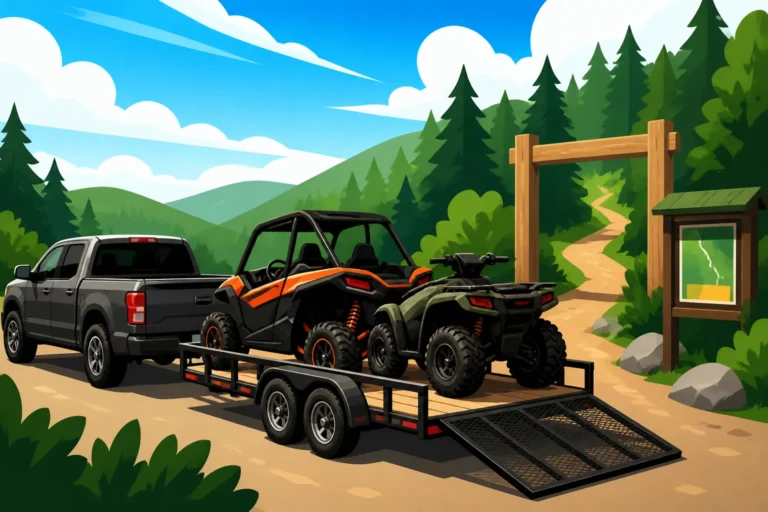
A campsite that fits a tent may not work for a full-size truck, an enclosed trailer, and two machines. Before booking, describe your entire setup—not just the number of people in your group. Ask whether the site has enough length and turning room, whether the road into the property is suitable for your tow vehicle, and whether you can leave the trailer parked while riding.
This is especially important on narrow or sloped roads in the mountains. A tight turn that is easy in a passenger car can become a stressful maneuver with a loaded trailer. If the campground cannot describe the approach clearly, ask for specific directions and whether there are restrictions on larger vehicles. Planning ahead is more comfortable than discovering at dusk that you have nowhere easy to turn around.
For a broader checklist, see Parking a Trailer at a Kentucky Trailhead and Trailering Into the Mountains. Those considerations apply even when you are parking at a campground rather than at the trailhead itself. If you plan to arrive early and unload before the busiest part of the day, Staging Early at Black Mountain offers another useful angle on organizing your arrival.
Verify the rules for machines at camp
Do not assume that a campground allows you to ride an ATV or UTV around the property. Ask where machines may be parked, whether they need to be trailered to the access point, and what rules apply to starting, warming up, or washing them. A quiet campsite can quickly become uncomfortable for neighbors if a machine is revving early in the morning or being rinsed late at night.
Ask about security and storage as well. Find out whether there is a designated place for machines, whether trailers can remain attached, and whether you should bring your own locks or covers. If you are carrying fuel, ask what storage rules apply and keep fuel away from cooking areas, tent fabric, ignition sources, and other guests.
Respecting campground rules helps protect the relationship between riders and local hosts. Even when a property welcomes off-road visitors, it may have quiet hours or limits on where equipment can be moved. Build those restrictions into your plan instead of treating them as a last-minute inconvenience.
Plan the details that make a camping trip easier
Confirm availability and amenities directly
Camping conditions and services can change, so contact the property before you travel. Ask whether reservations are required, what kind of site you are booking, and what is included. If you need electricity for an RV, a water connection, a shower, or a place to dispose of waste, confirm each item specifically. A vague description such as “full-service” can mean different things from one operator to another.
It helps to make a short call checklist. Confirm your arrival window, check-in process, cancellation terms, pet rules, quiet hours, campfire restrictions, and whether there is space for every vehicle in your party. If you are traveling during a busy riding weekend, ask whether late arrivals can still access the property and where you should park if the office is closed.
A campsite near a trail system is not necessarily a trail permit or a guarantee that a route is open. Review Camping at a Kentucky Trail Park and check the current rules for both the camping property and the riding area. Keep those as separate questions: where you can sleep, where you can ride, and what permissions or permits the ride requires.
Prepare for limited phone service and mountain travel
Do not depend on a strong cell signal to handle every part of your trip. Download directions and save the campground’s phone number, address, and check-in instructions before leaving an area with reliable service. It is also sensible to share the plan with everyone in the group, especially if drivers are arriving in separate vehicles.
A mapping tool such as onX Offroad can help you prepare by saving maps for offline use where available and reviewing your route before you lose service. Use it as a planning aid, not as a substitute for posted signs, official trail information, or instructions from the campground and riding area. Map coverage and road details can differ from what you encounter on the ground, so carry a backup plan.
Fuel and supplies deserve similar attention. Check where you can refuel along your route, and do not assume a convenient station will be open when you need it. Fuel Between Eastern Kentucky Towns is a helpful planning topic if your group is driving in from outside the immediate area. For communication planning, Cell Dead Zones in a Holler covers why it is wise to prepare before heading into the mountains.
Build a practical weekend plan
Choose the access point before you reserve
Start with the ride, then choose the campsite. Decide whether your group expects to use Putney, Evarts, or another access arrangement, and check the relevant trail information before making a reservation. Next, estimate the drive between your campsite and the access point, including time to unload, park, and get everyone ready.
If your group is arriving at different times, agree on a meeting place that is easy to find even if phone service is limited. Share the address and directions in advance, and identify a backup meeting point. One person arriving at a campground while another is waiting at a trailhead can create needless confusion if nobody has agreed on the plan.
Keep the first day realistic. After towing into the area, checking in, and unloading, a shorter first ride may be more enjoyable than trying to squeeze in a full day. That is particularly true if the group includes young riders or people who are unfamiliar with mountain trails. A calmer start gives everyone time to learn the terrain and settle into camp.
Pack for camp as well as the ride
Riding gear is only part of the packing list. Bring the items that make a campsite functional: bedding suited to the forecast, weather-appropriate layers, drinking water, a first-aid kit, food, lighting, and any equipment required by the type of site you reserved. For an RV, check the vehicle and connection needs against the campground’s facilities before departure.
Keep riding equipment organized so that helmets, eye protection, gloves, and any required permits are easy to find. Store dry clothing separately from muddy gear, and bring bags or containers for wet items. If you are traveling with a group, decide who is responsible for shared supplies such as tools, tire-repair equipment, chargers, and cooking equipment.
Finally, leave room in the plan for changing conditions. Rain, trail notices, campground rules, or a delayed arrival can affect the day. Check the trail status before loading, and have a backup activity or a flexible departure time. A little preparation makes it easier to enjoy the ride instead of spending the evening solving avoidable problems at camp.
Disclaimer
This article is for general informational purposes only and does not constitute professional advice. Laws, prices and regulations vary by location and change over time. Consult a qualified professional for guidance on your specific situation.