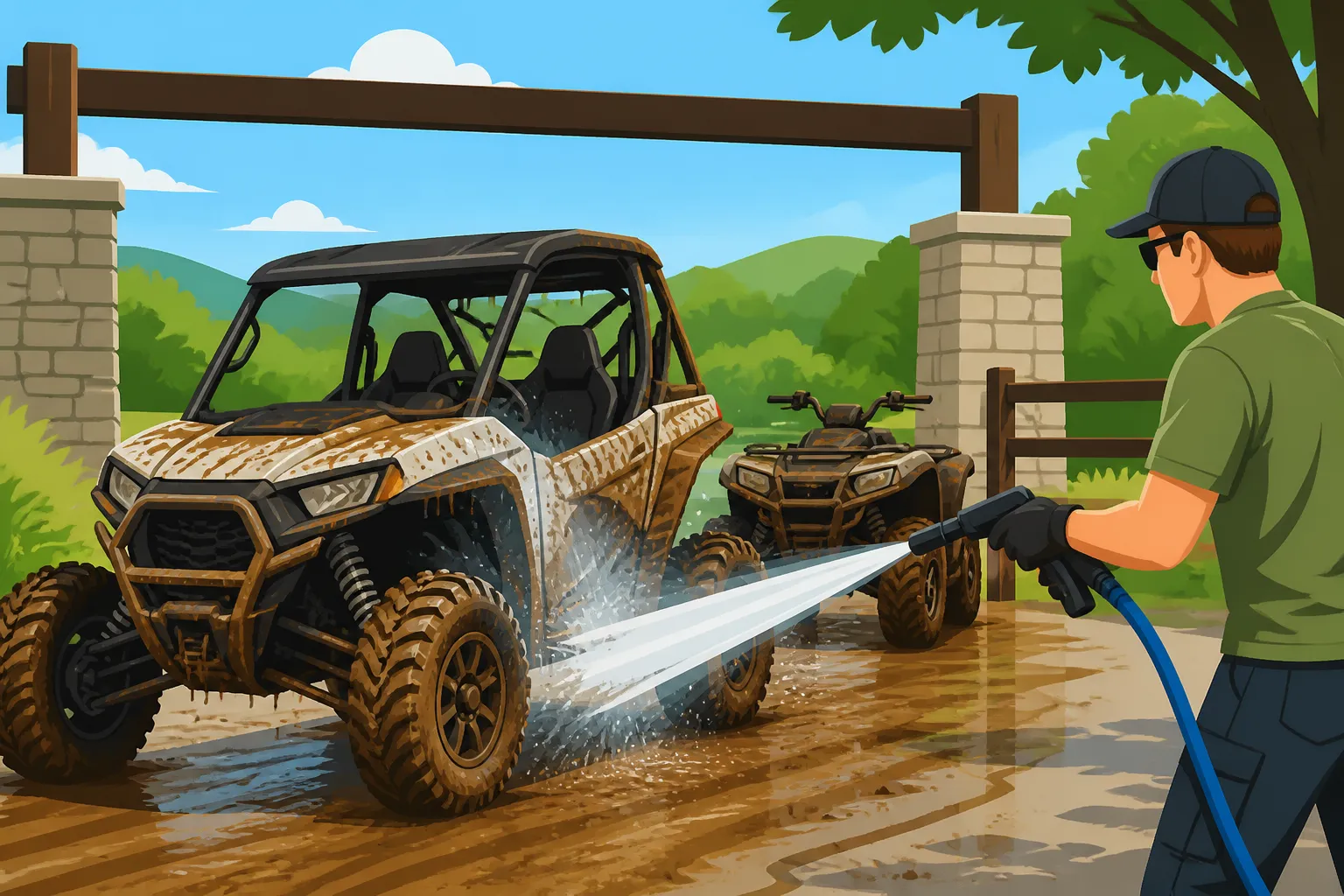
Washing Off at a Kentucky Park Gate
A muddy ride through eastern Kentucky can leave your ATV or UTV caked in red clay, coal-country grit, or wet leaves just as you reach the trailhead. Washing off at the park gate sounds convenient, but not every riding area has a wash station—or allows rinsing there. This guide explains what to do, what to bring, and how to avoid leaving a mess behind.
Check the park’s wash rules before you ride
Don’t assume there is a wash station
A wash bay can make the trip home much easier, especially if you’re hauling a muddy machine through Harlan, Perry, or Letcher County. But facilities and rules differ from park to park. Some locations may have a designated place to rinse equipment; others may have no wash area at all, or may restrict washing because of drainage, water access, or ground conditions.
That means the safest plan is to check directly with the park before loading your ATV or UTV. Ask whether washing is allowed, where it may happen, whether you need to bring your own water, and whether there are restrictions after heavy rain. If you’re heading to Black Mountain, Leatherwood, Rush Off-Road, or Turkey Bay, verify details for the specific site and visit rather than assuming that one park’s setup applies elsewhere.
A map app such as onX Offroad can help you orient yourself around the trail system and find your way back to a staging area. It should not be treated as confirmation that a wash station is open or permitted. Check the park’s own directions and current notices for facility information, and build a no-wash backup plan before you leave home.
Why wash rules matter beyond convenience
Rinsing a machine in the wrong place can push mud, fuel residue, grease, and cleaning products into a ditch, creek, or storm drain. That is a concern at any trailhead, but it matters especially in Kentucky’s steep hollers, where water can run quickly downhill after a storm. A rinse that looks harmless beside a parking lot may flow toward a drainage channel or nearby waterway.
Mud can also carry plant seeds and other material from one riding area to another. Cleaning your machine before traveling to a different trail system can help reduce the chance of spreading unwanted seeds or pests. If you rode through wet vegetation, thick clay, or a muddy creek crossing, take extra care to inspect the tires, skid plates, wheel wells, and undercarriage.
Conditions can change quickly. A park may restrict access or certain activities when the ground is saturated, even if the trail looked rideable earlier in the week. Check Kentucky Trail Conditions Before You Ride and Kentucky Trail Closures to Check First as part of your planning, then confirm park-specific rules directly.
What to ask when you call
A quick call can prevent an awkward conversation at the gate after a long ride. Ask whether there is a designated wash area, whether it is available to day visitors, and whether you need to bring water or cleaning supplies. If the answer is no, ask where the park recommends handling a muddy machine before you head home.
It can also help to ask what the park considers acceptable cleanup. A rule against washing may still allow you to knock loose clumps of mud off onto a designated gravel area, while another location may ask visitors not to clean equipment on site at all. Get the park’s instructions rather than guessing from what other riders are doing.
For Turkey Bay, check before you haul, particularly if rain is in the forecast or the ground has been wet. The park’s access decisions may depend on conditions, and a wash plan won’t help if the area is closed or operating under restrictions. See Call Before You Haul at Turkey Bay and Why Turkey Bay Closes on Saturated Ground when planning a visit.
Clean your machine without creating a second mess
Start with a simple post-ride inspection
Before you rinse anything, park in an approved area and let the machine cool. A hot engine, exhaust, or brake components should not be hit with cold water. Remove loose branches, leaves, and large mud clumps by hand or with a brush, following the park’s rules about where debris may be left.
Pay close attention to spots that trap material: the underside of fenders, wheel wells, footwells, skid plates, radiator guards, and the spaces around suspension components. Mud packed into those areas can hide damage or make a machine heavier than you realize. If you rode through deep mud, check that the radiator area is not obstructed and that the air intake has not collected debris. Follow your owner’s manual for inspection and cleaning guidance.
A rinse is not the same as a repair check. Look for loose fasteners, damaged boots, a bent guard, or a tire that has picked up a sharp object. If you noticed a new rattle or handling change on the trail, make a note before loading up. Cleaning is a good moment to spot problems, not proof that everything is mechanically sound.
Use low-pressure water and careful technique
If washing is allowed and a suitable wash area is available, use the gentlest approach that gets the job done. A high-pressure jet aimed close to seals, electrical connectors, wheel bearings, suspension pivots, or radiator fins can force water or debris where it does not belong. Keep the nozzle moving and avoid lingering on sensitive areas.
Use a cleaner intended for off-road vehicles if you need one, and follow its label. More detergent is not automatically better; runoff still needs somewhere to go. Avoid washing a machine directly beside a creek, ditch, storm drain, or other route where suds and oily residue could travel into waterways.
If the park has no approved wash area, don’t improvise with a hose in the parking lot unless staff says that is allowed. Instead, remove large clumps where permitted, use a tarp or a removable mat if the park allows it, and finish cleaning at home in a suitable location. A compact brush and a few rags can handle much of the loose material without sending a stream of runoff across the trailhead.
Make a short cleanup kit part of your ride gear
A small cleanup kit can save time at the end of a muddy day. Consider packing work gloves, a stiff brush, a plastic scraper, a few rags, and a bag for muddy items. A tarp can be useful for protecting a trailer floor, but first make sure it is secured so it cannot blow away or create a tripping hazard at the staging area.
A basic kit also helps when you discover mud packed around a hitch, tie-down point, or trailer ramp. Clear those areas before loading so straps sit correctly and the machine can be secured safely. If you carry cleaning products, keep them sealed and use them only where the park permits.
Think about the drive home, too. A muddy machine can drip onto a trailer, pickup bed, or public road. Lay down an appropriate liner if you use one, secure any loose gear, and check that mud has not obscured lights or license plates on the tow vehicle or trailer.
Choose a practical cleanup plan for your ride
Compare your options before you head out
The best cleanup method depends on the park’s rules, how muddy the machine is, and what you’ll do after the ride. A quick brush-off may be enough after a dry day on gravel. A machine that has been through deep mud may need a more thorough cleaning before it goes into a garage or onto a different trail system.
| Situation | Practical option | Check first |
|---|---|---|
| Light dust or loose dirt | Brush off the machine in an approved area | Where debris may be left |
| Mud packed into the undercarriage | Use a designated wash area if available | Whether washing is allowed and what equipment is provided |
| No wash area at the park | Remove loose clumps and clean at home | Whether any cleanup is allowed at the staging area |
| Driving to another park | Inspect tires, wheel wells, and underside before leaving | Park-specific biosecurity or cleaning guidance |
| Heavy rain or saturated ground | Recheck conditions and consider changing plans | Closures, restricted areas, and current access notices |
If you are riding several places in one trip, plan cleanup between parks rather than waiting until the final drive home. Mud from one trail system can be carried into another on tires and underbody panels. Kentucky Trail Parks on Leased Coal Land is useful context for understanding why individual riding areas may have distinct access rules and operating arrangements.
Use a mapping app such as onX Offroad to keep your route and return to the staging area organized, especially if you are exploring unfamiliar trail networks. Still, don’t rely on a map to tell you where washing is allowed. When planning your route, note the main entrance and parking area, then ask staff about wash facilities and the preferred exit procedure.
Protect your trailer and tow vehicle
A machine that looks clean from the seat can still drop clumps of mud once it is strapped down. Before loading, check the underside and tires, clear mud from the ramp where it could make footing slippery, and make sure tie-down straps are not resting on sharp debris. If you use a tarp or bed liner, secure it so it cannot shift during transport.
After loading, check that mud has not covered trailer lights, reflectors, or the tow vehicle’s license plate. Clean off anything that could fall onto the road. This is especially important if you are leaving a rough or wet access road and joining a faster highway route.
If your trailer has been parked on soft ground, look at the tires and hitch area before pulling out. A muddy ride can turn into a frustrating trip home if the trailer begins to slide or a ramp is left in an unsafe position. Parking a Trailer at a Kentucky Trailhead and Trailering Into the Mountains offer related planning considerations for arriving and departing safely.
Adapt to weather and trail conditions
Kentucky weather can change the cleanup plan in a hurry. A sunny morning may turn into a wet afternoon in the mountains, and a trail that was firm at the start of the ride may be slick by the time you return. Mud becomes heavier and harder to remove when it dries, but wet ground can also make it inappropriate to rinse or park in certain areas.
After a rainy ride, be especially thoughtful about where you put a machine and where rinse water would flow. Avoid driving through a soft shoulder just to reach a convenient spot. If park staff has closed a section or redirected traffic, follow the posted instructions rather than trying to reach a familiar staging place by another route.
If you use onX Offroad for navigation, save or review the route before entering areas where cell service may be limited. Treat that as a navigation aid, not a substitute for park signs, staff directions, or posted closures. For broader planning, Kentucky Riding After Heavy Rain and Kentucky Trail Etiquette on Narrow Benches can help you think through how weather and trail conditions affect both the ride and the people sharing the route.
Leave the gate area better than you found it
Keep shared spaces clear
A trailhead can get busy as riders return, load machines, and sort out gear. Don’t block an entrance, wash area, ramp, or lane while you clean. If you need more time, move to a place the park identifies as suitable for staging, and keep children and bystanders away from moving machines and trailers.
Take your trash with you, including muddy rags, empty bottles, and packaging. Don’t leave used cleaning products or debris beside a drain or in the parking area. If the park provides a waste container, use it only for items it accepts; otherwise, pack everything out.
Good gate etiquette is practical, not just polite. A clear staging area helps the next rider load safely and allows staff to manage traffic. On a busy weekend at a popular park, a few minutes spent keeping your gear contained can prevent a queue from forming behind you.
Have a backup plan for a very muddy machine
Sometimes the mud is too packed to deal with at the trailhead, or the park has no approved wash option. In that case, focus on safe transport: clear material that could fall onto the road, secure the machine properly, and keep the trailer and tow vehicle’s lights visible. Finish the more thorough cleaning later in a place where runoff can be managed appropriately.
If the machine is heavily coated, avoid letting thick mud dry around moving parts for days. Follow the manufacturer’s cleaning guidance when you get home, and inspect the undercarriage, tires, brakes, and cooling areas. If you are unsure whether a part was damaged during the ride, consult a qualified mechanic rather than assuming a rinse has resolved the issue.
Before the next trip, make cleanup part of your packing checklist. Confirm park rules, bring a brush and gloves, and decide where you will clean if the machine comes back muddy. If you’re heading to Turkey Bay, review Turkey Bay’s Season and Gatehouse Hours Explained alongside the park’s current notices so your arrival and departure plan does not depend on an assumption about facilities.
A little preparation keeps the end of the ride calmer. Check first, use only approved wash areas, avoid unnecessary runoff, and leave enough time to inspect and secure your machine before towing it home.
Disclaimer
This article is for general informational purposes only and does not constitute professional advice. Laws, prices and regulations vary by location and change over time. Consult a qualified professional for guidance on your specific situation.