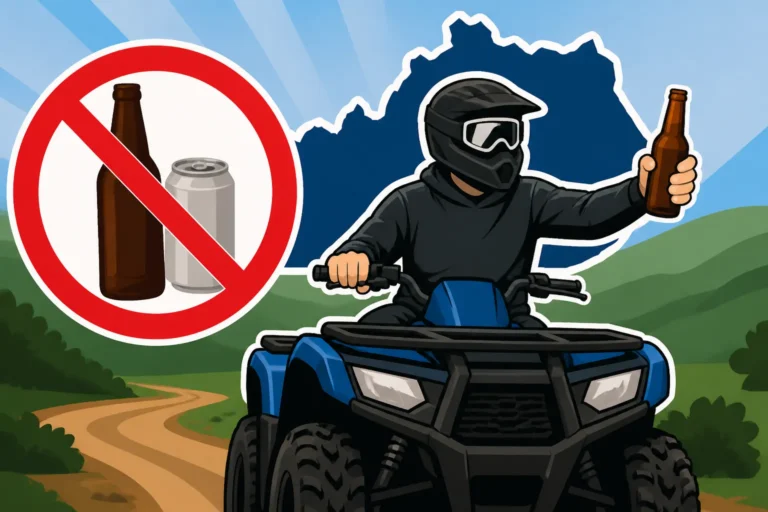
No Helmet on a Logging Job
It's incredibly frustrating when you're trying to do honest work out in Kentucky's beautiful, rugged landscape, and you're constantly worried about whether you're breaking the law, especially when it comes to something as simple as wearing a helmet. You might be operating an ATV or UTV as a vital tool for your logging business, and the last thing you need is a ticket for not wearing a helmet when you feel it's impractical or unnecessary for the specific task at hand. This guide is here to cut through the confusion and explain Kentucky's specific helmet exemption for those engaged in logging operations, helping you understand your rights and responsibilities.
The General Rule: Why Helmets Are Usually Required for Kentucky ATV Riders
Let's face it, ATVs and UTVs are powerful machines, and while they're incredibly useful and fun, they come with inherent risks. Kentucky, like many states, has laws designed to keep riders safe, and often, that means wearing a helmet. It's not just about compliance; it's about protecting yourself from serious injury.
Safety First: The Rationale Behind Helmet Laws
No one wants to think about an accident, but they happen. Helmets are designed to absorb impact and protect your most vital organ: your brain. When you're riding an ATV, even at lower speeds on what seems like familiar terrain, a sudden bump, a hidden rut, or an unexpected obstacle can throw you off. The ground is hard, trees are harder, and rocks are even harder. A helmet can be the difference between a minor concussion and a life-altering brain injury. States implement these laws out of a genuine concern for public health and safety, trying to minimize the devastating consequences of head trauma that often result from ATV accidents. It's a preventative measure, even if it sometimes feels like an inconvenience.
Who the Law Protects: Riders Under 16 and Public Land Use
Kentucky's helmet laws are particularly stringent for younger riders, and for good reason. Children and teenagers are still developing, and their judgment, reaction times, and physical capabilities might not be fully mature. The law generally mandates that anyone under the age of 16 must wear a helmet when operating or riding as a passenger on an ATV. This rule is pretty much universal across the board, regardless of where they're riding – be it private land or a designated trail system. Beyond age, if you're riding on public lands, such as state-managed trails or designated off-road parks, the expectation is almost always that you'll be wearing a helmet. These areas are often regulated more closely, and the rules are in place to ensure a baseline level of safety for all users. It’s important to familiarize yourself with [Kentucky Helmet Law for ATV Riders] and [Kentucky Helmet Rules for Riders Under 16] to avoid any issues.
Understanding the Logging Job Exemption in Kentucky Law
Now, here's where things get a bit more nuanced. Kentucky law recognizes that not all ATV use is recreational, and sometimes, these machines are essential tools for specific types of work. Logging is one of those specific instances where the helmet requirement might be relaxed under certain conditions.
What "Logging Job" Truly Means in the Eyes of the Law
When the law talks about a "logging job," it's not just a casual term. It refers to activities directly associated with the felling, cutting, skidding, yarding, loading, or transportation of timber products. This can include using your ATV or UTV to access remote parts of a logging site, haul small equipment, transport workers, or even scout timber stands. The key here is that the machine must be an integral part of an ongoing commercial or legitimate personal logging operation. Simply driving your ATV on your property where there happen to be trees, without actively engaging in timber harvest activities, doesn't qualify. It’s about the purpose and nature of the activity, not just the presence of trees. This means if you're taking a leisurely ride through the woods you own, even if you plan to cut timber there next month, you're likely still subject to the general helmet laws for recreational use.
When and Where the Exemption Applies
The logging exemption applies specifically when the ATV or UTV is being operated within the scope of the logging operation. This typically means on the private land where the logging is occurring, or on private roads used to access the logging site. The intent is to exempt professional loggers or those engaged in legitimate timber harvesting from the helmet requirement while they are actively working. It's designed for the working environment, where helmets, while still a good idea, might interfere with certain tasks or limit visibility in specific situations relevant to the job. However, this exemption doesn't magically extend to public roads or highways. If you're hauling your ATV to a logging site, or even crossing a public road between two parts of a logging operation, you need to be aware that other rules may apply. This is a critical distinction, and understanding [Kentucky Helmet Exemption for Logging Work] is paramount. For detailed guidance on specific logging access, it's helpful to also understand [Kentucky Rules for Riding a Logging Road].
The Importance of Proof: Documenting Your Logging Operation
While the law grants an exemption, law enforcement officers need a way to differentiate legitimate logging operations from recreational riding. If you're stopped and not wearing a helmet, you'll likely need to provide proof that you are, in fact, engaged in a logging job. This could mean having documentation on hand, such as logging permits, a business license, timber sale contracts, or even just being able to clearly articulate the specific logging tasks you are performing. In many rural areas, local law enforcement might already be familiar with ongoing logging activities and local operators, but it's always better to be prepared. Think of it this way: you're showing you're a professional using your machine for its intended work purpose, not just someone ignoring safety rules. While the farm exemption, as explained in [Kentucky's Farm Exception With No Mileage Cap], offers a similar work-related allowance, each exemption has its own specific context and requirements you'll need to clearly demonstrate if questioned.
Practical Considerations and Best Practices Even With an Exemption
Even with a legal exemption, safety should always be your top priority. The law might say you don't have to wear a helmet for a logging job, but that doesn't mean it's the safest choice. The logging environment is inherently dangerous, with heavy machinery, falling timber, and unpredictable terrain.
Safety Beyond the Letter of the Law
It's tempting to take advantage of an exemption, especially if a helmet feels cumbersome or hot on a long workday. However, the risks associated with logging work are substantial. Beyond head injuries, consider eye protection from flying debris, sturdy gloves to protect your hands, and robust boots with ankle support to prevent slips and falls. The logging environment is unforgiving, filled with jagged branches, uneven ground, and the ever-present danger of falling objects. Even a minor fall from an ATV on a logging site can result in severe injury if you're not adequately protected. Just because you don't have to wear a helmet doesn't mean you shouldn't. Many experienced loggers still choose to wear helmets or other head protection because they understand the critical importance of minimizing risk in their demanding profession. Prioritizing your well-being should always outweigh the temporary discomfort of protective gear.
Crossing Public Roads During a Logging Job
Here's a common dilemma: your logging operation might span both sides of a public road, or you might need to cross a short stretch of pavement to access different parts of your timberland. While the logging exemption typically applies when you're actively working on the logging site, that exemption often doesn't extend to public roads. When you venture onto public roadways, even for a brief crossing, you might fall under the general rules for ATV use on public thoroughfares, which typically require helmets. Kentucky's road rules for ATVs can be very strict, often limiting their use to specific scenarios like crossing a two-lane road at a ninety-degree angle for no more than [0.2 Mile and Not a Yard More]. It's crucial to understand these distinctions to avoid citations.
Furthermore, if your ATV or UTV is modified for heavy-duty logging work, you might be relying on robust components. SuperATV products, known for their durability and performance, such as heavy-duty axles, lift kits, or specialized tires, can provide the necessary reliability for navigating rugged logging terrain safely. However, even the toughest machine needs a careful operator. Always check local ordinances and state statutes regarding road crossings, as these can be a grey area. Don't assume your work exemption covers a quick hop across the asphalt. Also, remember that a standard driver's license is required for any vehicle operation on public roads, even a brief crossing, as detailed in [A License for Kentucky Highway Operation].
Other Exemptions and Clarifications
It's helpful to remember that logging isn't the only work-related exemption in Kentucky. Farmers often have similar allowances for using ATVs and UTVs in agricultural operations, and there are specific rules for mining activities as well. However, it’s vital to understand that each of these exemptions is distinct and applies only to its specific context. You can't claim a "farm exemption" if you're logging, and vice-versa. These are not blanket "work" passes. Each one is narrowly defined.
For example, you can learn more about specific exemptions by looking into [Kentucky Helmet Exemption for Farm Work] or [Kentucky Helmet Exemption for Mining Work]. The key takeaway is that these are targeted legislative decisions meant to accommodate specific industries, not to give a general pass on safety. For those using their UTVs in logging, accessories like SuperATV cargo racks, heavy-duty winches, or specialized skid plates can be incredibly useful for carrying tools, supplies, and navigating difficult terrain, directly enhancing the machine's utility for the job at hand. Always ensure your equipment is well-maintained and suited for the demanding environment of a logging site.
Helmet Requirement Comparison for Kentucky ATV/UTV Use
To make things a bit clearer, here's a quick comparison of when a helmet is generally required or exempt in Kentucky:
| Activity / Rider Type | Helmet Generally Required? | Conditions for Exemption / Special Rules |
|---|---|---|
| Recreational Riding | Yes | No general exemption for recreational riding, even on private land, for riders under 16. Over 16, typically recommended, and often required on public trails. |
| Logging Job (Operator) | No | Exempt if actively engaged in a legitimate logging operation on the logging site. Does not typically apply to public road crossings. |
| Farm Work (Operator) | No | Exempt if actively engaged in agricultural operations. |
| Mining Work (Operator) | No | Exempt if actively engaged in mining operations. |
| Rider Under 16 | Yes | Almost always required, regardless of activity or location (farm, logging, recreation), due to age-based safety laws. |
| Passenger | Yes | Generally required if the operator is required, and universally for passengers under 16. |
| Public Road Crossing | Yes | Generally required, as specific road-use rules apply, even if briefly crossing for work. Exemptions for work usually apply on-site, not on public roads. |
| Designated OHV Parks/Trails | Yes | Most public and private trail systems have strict helmet rules for all riders. Check specific park regulations. |
Remember, this table provides a general overview. Always consult the specific Kentucky statutes and local ordinances for the most precise and up-to-date information.
Disclaimer
This article is for general informational purposes only and does not constitute professional advice. Laws, prices and regulations vary by location and change over time. Consult a qualified professional for guidance on your specific situation.