A Factory Cage on a Kentucky SPV
It's an age-old dream for many of us who love our UTVs: the freedom to cruise down a paved road, connect trails, or just pop into town for supplies without the hassle of loading up a trailer every single time. But making your beloved side-by-side truly street-legal in Kentucky can feel like navigating a dense, unmapped holler, especially when you start hearing about "factory cages" and specific inspection requirements. This guide is here to shed some light on those rules, particularly the crucial role your UTV's factory-installed roll cage plays, and help you understand what it truly takes to get your machine approved as a Special Purpose Vehicle (SPV) for limited road use in the Bluegrass State.
Decoding Kentucky's SPV Law for Your UTV's Safety Cage
When Kentucky decided to offer a pathway for UTVs to gain limited street legality, it wasn't just about slapping a license plate on any off-road vehicle. Safety was, and rightly so, a paramount concern. That's where the specific requirements for your machine's structural integrity, especially its roll cage, come into play. It's not enough to just have a cage; the law looks for something quite specific.
What "Factory Cage" Really Means for SPV Eligibility
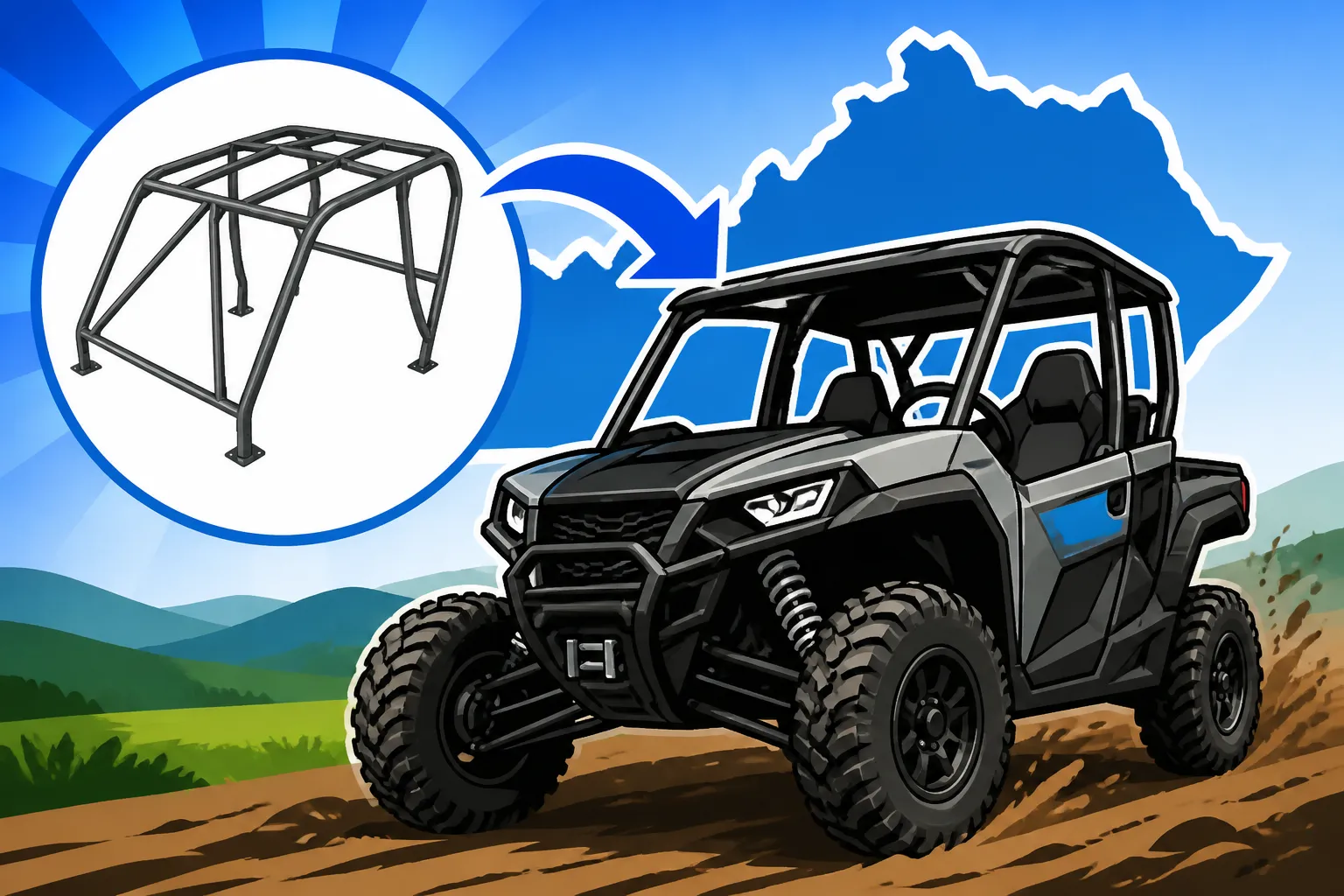
When the Kentucky statute talks about a "factory cage" for an SPV, it’s really emphasizing the original design and engineering intent of your side-by-side. This means the roll-over protective structure (ROPS) that came with your UTV when it rolled off the assembly line. These structures are designed and tested by the manufacturer to meet certain safety standards for occupant protection in the event of a rollover or collision. They've gone through rigorous testing, often involving crush resistance and impact absorption, to ensure they provide a certain level of protection.
The frustration often arises when a rider has an aftermarket cage or has made significant modifications to their factory cage. While these custom cages might be stronger or more robust in some extreme off-road scenarios, from a legal and inspection standpoint for SPV designation, the "factory" aspect is key. An inspector isn't equipped to certify the safety engineering of a custom-fabricated cage, nor are they typically allowed to. They're looking for the original, manufacturer-installed ROPS, which implies a known and tested level of safety. This focus on the original equipment simplifies the inspection process and ensures a baseline of safety that the state can trust. It's about maintaining a consistent standard across all machines seeking SPV status, ensuring that the critical structural component designed to protect occupants is up to manufacturer specification.
Why Your UTV's Roll Cage is Non-Negotiable for Street Legality
The roll cage on your UTV, whether it's the original or an aftermarket addition, is arguably its most critical safety feature, particularly when considering road use. On the trail, it protects against rollovers and low-speed impacts. On a paved road, however, the stakes can be higher due to increased speeds and interaction with other, much larger vehicles. A robust roll cage is essential for protecting occupants in a crash or rollover incident, which could involve concrete, guardrails, or other vehicles. Without a structurally sound and manufacturer-approved roll cage, the risk of serious injury or fatality skyrockets.
This is why Kentucky's SPV law specifically calls out the factory cage requirement. It's a proactive measure to ensure that machines venturing onto public roads have the foundational occupant protection system intact and up to the standards envisioned by the vehicle's original design. If your UTV's cage has been severely damaged, altered, or replaced with a non-OEM part, it could very well disqualify it from SPV status, regardless of how well other components meet the criteria. The state isn't just checking a box; they're trying to safeguard lives. It's a common point of contention for those who've heavily customized their machines, but the logic is rooted firmly in public safety. Think of it as the ultimate seatbelt for your entire body within the vehicle—it’s there to absorb and redirect forces in a crash, and for road use, it needs to be unimpeachable. This vital component is central to [Roll Cage and Seat Belt Rules for an SPV].
The Full Checklist: Equipping Your UTV Beyond the Cage for Kentucky Roads
While the factory cage is a cornerstone, it's far from the only item on the list when preparing your UTV for Kentucky's SPV designation. The goal is to make these off-road machines behave more like traditional street vehicles in terms of signaling, visibility, and basic operational safety. This comprehensive approach ensures that you're not just protected inside the machine, but that you can also safely interact with other traffic on the road.
Lighting, Signals, and Visibility Essentials
Driving on public roads means being seen and being able to communicate your intentions to other drivers. This goes beyond the basic headlights you might use on a trail. For an SPV, you're going to need a full suite of lighting and signaling equipment. First off, you'll need at least one, but preferably two, working headlights, capable of illuminating the road effectively. These aren't just for looking cool; they're legally mandated for visibility, especially during dawn, dusk, or in inclement weather. And speaking of being seen, you'll also need two taillights that are clearly visible from a distance, along with brake lights that illuminate brightly when you hit the pedal.
Perhaps the most significant additions for road use are turn signals. No more hand gestures or guessing games for drivers behind you. Your SPV must have both front and rear turn signals that are clearly visible and function properly, indicating your intentions to turn left or right. Finally, you'll need dual mirrors – one on each side of the vehicle – providing an unobstructed view of the roadway to the rear. This allows you to safely monitor traffic without constantly craning your neck. Many UTVs, even from brands like SuperATV, offer aftermarket kits specifically designed to integrate these road-legal lighting and mirror systems seamlessly, making the transition from trail to tarmac much easier. These items, along with others, are included in the [Kentucky SPV Equipment List].
Crucial Operational and Safety Components
Beyond lighting, there's a whole host of other operational and safety features your UTV must possess to be considered a legal SPV in Kentucky. These ensure that the machine handles predictably, can stop reliably, and provides basic information to the driver. Reliable brakes are non-negotiable. Your SPV needs to have fully functional service brakes on all wheels, and a parking brake capable of holding the vehicle stationary on an incline. This isn't just about passing inspection; it's about real-world safety when you're stopping at intersections or parking on uneven ground.
Your tires also come under scrutiny. They must be in good condition, free from excessive wear, and have at least 2/32nds of an inch of tread depth across the tread band. This ensures adequate traction on paved surfaces, especially in wet conditions. Another crucial addition is an illuminated speedometer. You absolutely need to know your speed, and it must be clearly visible to you at all times. This is vital for obeying posted speed limits, which are often capped for SPVs. A functional horn is also required, giving you a way to alert other drivers or pedestrians to your presence. And, of course, seatbelts for all occupants are mandatory and must be in proper working order. These are often factory-installed, but like the roll cage, their condition and proper function are paramount. Ensuring all these components are up to snuff is key for [Kentucky Street Legal UTV Requirements].
Navigating the Inspection and Ongoing Road Use in Kentucky
Once your UTV is equipped with its factory cage and all the necessary street-legal components, the next step is to officially get it recognized as an SPV. This involves an inspection process and understanding the rules that govern where and how you can actually ride it on public roads. It's not a free-for-all, but it does open up a new realm of possibilities for UTV enthusiasts.
Preparing for the Mandatory SPV Inspection
The SPV inspection in Kentucky is designed to be a comprehensive check of all the required equipment, with a particular focus on safety. This inspection is typically performed by a certified law enforcement officer, often at your local sheriff's office or state police detachment. Before you even head over, make sure every single item on the [Kentucky SPV Equipment List] is not just present, but fully functional. Double-check your headlights, taillights, brake lights, and especially your turn signals – front and rear. Test your horn. Ensure your speedometer illuminates and works accurately. Verify that your mirrors provide a clear rearward view and are securely mounted.
Crucially, the inspector will pay close attention to the roll cage. They're looking for that factory-installed structure, ensuring it hasn't been compromised by damage, rust, or unapproved modifications. Any signs of structural weakness or a non-factory cage could lead to immediate rejection. They'll also check your seatbelts for proper operation and condition. Don't forget your tires; they'll measure the tread depth. It's a good idea to bring your UTV clean and ready, with all your ownership documents handy. A pre-inspection checklist, even one you make yourself, can save you a frustrating trip back home. Some owners choose to install robust, compliant accessories from companies like SuperATV specifically for their reputation for quality and adherence to safety standards, which can ease the inspection process. Remember, passing this inspection is the gateway to getting your [Kentucky SPV Registration Cost] sorted.
Understanding Kentucky's Road Restrictions and Responsibilities
Even with a shiny new SPV designation, you can't just ride your UTV anywhere a car can go in Kentucky. The state law outlines specific limitations, and it's absolutely crucial to understand them to avoid fines or accidents. First and foremost, SPV operation is limited to roads and highways with a posted speed limit of 45 mph or less. You are generally prohibited from operating on interstates or federal highways, and many other roads with higher speed limits. Also, the state law acts as an "opt-in" system for local governments, meaning a city or county must specifically pass an ordinance allowing SPVs on their roads. Just because your UTV is an SPV doesn't mean it's welcome everywhere. You'll need to research [Kentucky Cities That Allow UTVs on Streets] before planning a ride.
Beyond where you can ride, there are also rules about how you ride. Your SPV must be operated during daylight hours only, unless it's specifically equipped with additional lighting for nighttime operation, which typically means a full headlight system (high/low beams) and possibly additional reflective elements. All occupants must wear seatbelts, and riders under the age of 16 are usually subject to specific helmet requirements, even on an SPV. You'll also need a valid driver's license to operate an SPV on public roads; a learner's permit typically isn't sufficient. Finally, you'll need to carry adequate liability insurance, often at the same level as a motorcycle. This is a critical point that many riders overlook, but it's essential for protecting yourself and others in case of an incident. Companies like SuperATV often have resources or partnerships that can help you find suitable insurance providers. Abiding by these rules is key to avoiding [Kentucky Fines for Illegal ATV Road Use].
Table of Kentucky SPV Equipment Requirements
To help you keep track, here's a quick reference table outlining the key equipment your UTV needs to meet Kentucky's SPV standards.
| Component | Requirement | Notes |
|---|---|---|
| Roll Cage (ROPS) | Factory-installed and in sound condition | Must be the original manufacturer-installed structure; no unapproved modifications or severe damage. Essential for occupant protection. |
| Headlights | At least one, but preferably two, capable of illuminating the road | Must be operational and provide sufficient light. |
| Taillights & Brake Lights | Two red taillights visible from the rear, with brake lights that activate when braking | Clear visibility is crucial for safety. |
| Turn Signals | Front and rear, clearly visible and operational | Mandatory for signaling turns on public roads. See [Turn Signals and Dual Mirrors on a Kentucky SPV]. |
| Mirrors | Dual rearview mirrors, providing clear view to the rear of the vehicle | Typically one on each side, securely mounted. |
| Speedometer | Fully functional and illuminated | Must be able to read your speed at all times. Refer to [An Illuminated Speedometer on a Kentucky SPV]. |
| Horn | Fully functional and audible | For warning other motorists or pedestrians. |
| Seatbelts | For all occupants, in proper working order | Required by law for all occupants, must function correctly. Part of [Roll Cage and Seat Belt Rules for an SPV]. |
| Brakes | Service brakes on all wheels and a functional parking brake | Must be effective and capable of holding the vehicle. |
| Tires | In good condition with at least 2/32nds of an inch of tread depth | Adequate tread is necessary for traction on paved surfaces. |
| Windshield (Optional) | If equipped, must be safety glass or approved clear plastic | Not strictly required for all SPVs, but if present, must meet safety standards. |
| Exhaust | Muffled to prevent excessive noise | State noise ordinances apply; spark arrestor also typically required for off-road but good to have for street. |
| License Plate Bracket | For mounting a standard size license plate, with illumination | Essential for displaying your SPV plate. |
| Insurance | Motorcycle-level liability insurance | Mandatory for street use. See [Motorcycle-Level Insurance for a Kentucky SPV]. |
| Driver's License | Valid operator's license | Required for operating any motor vehicle on public roads. Check [Kentucky Driver's License Rules for ATVs]. |
| Vehicle Inspection | Passed [The $25 Kentucky Inspection] by certified law enforcement | This is the official step to certify your UTV as an SPV. |
Disclaimer
This article is for general informational purposes only and does not constitute professional advice. Laws, prices and regulations vary by location and change over time. Consult a qualified professional for guidance on your specific situation.