Kentucky Rules for Riding a Farm Road
It's incredibly frustrating when you rely on your ATV or UTV for daily farm operations, only to hear whispers about strict road laws that could put a serious damper on your efficiency. You need to move feed across the street, check fences on an adjacent parcel, or get to a different field, and the thought of breaking the law or, worse, getting a ticket for simply doing your job is a real headache. This guide is here to untangle the specific rules and exemptions in Kentucky that allow farmers to use their all-terrain and utility vehicles on public roads as part of their essential farm work, helping you understand exactly what you can and cannot do.
Understanding Kentucky's Farm Exemption for ATVs and UTVs
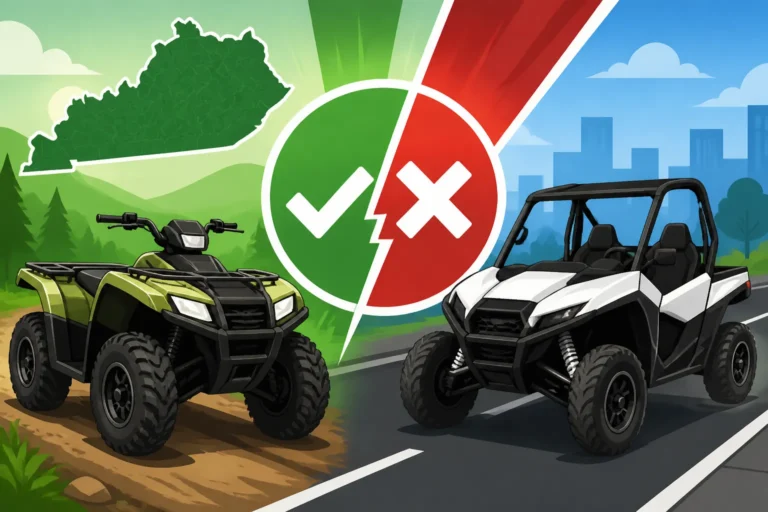
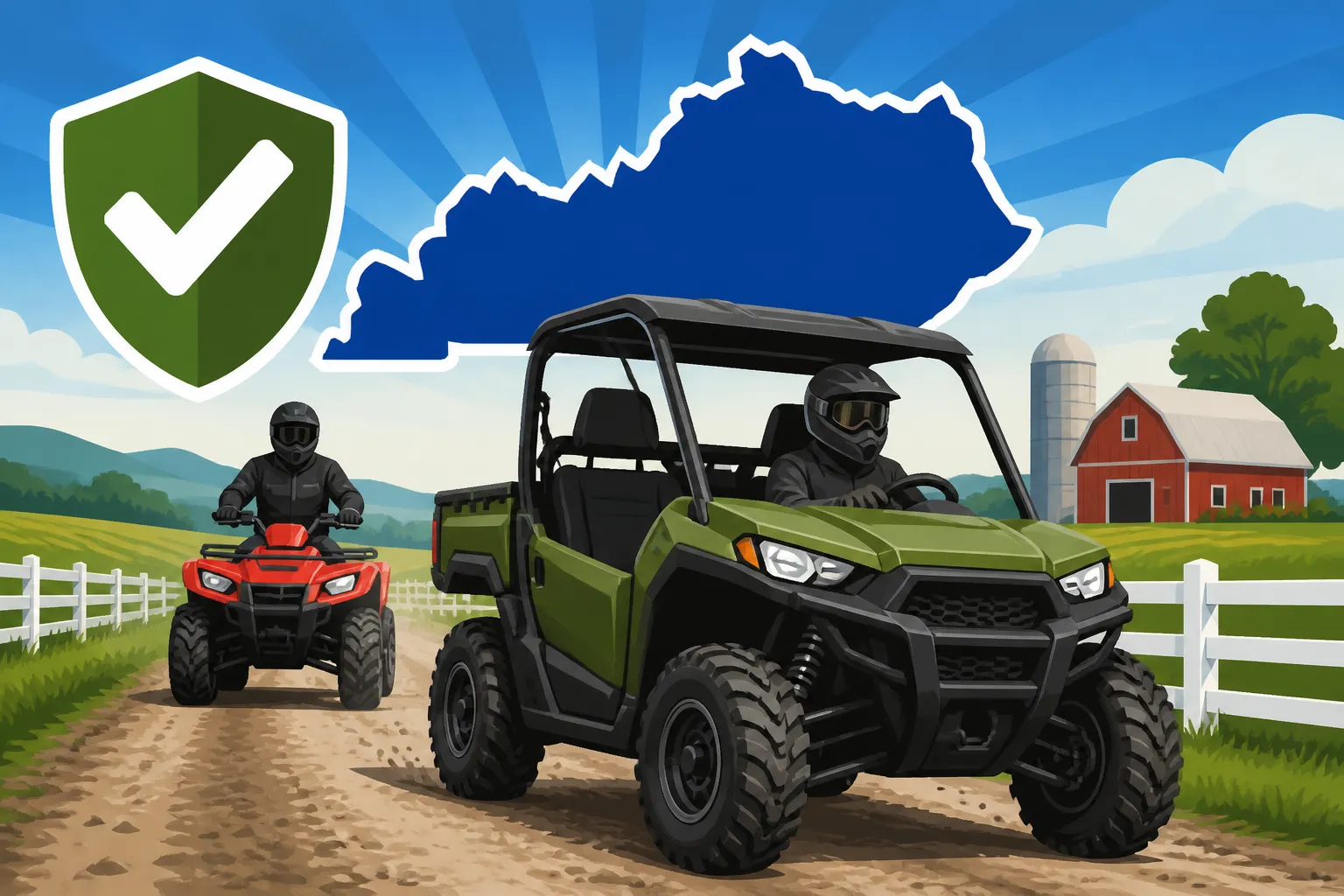
Kentucky law, like that in many agricultural states, recognizes the unique needs of its farming community. While the general rule is quite clear about ATVs and UTVs not being street legal for recreational use on public roads, there's a vital exemption carved out specifically for those engaged in legitimate farming operations. This isn't a loophole for joyriding; it's a practical provision to ensure farmers can efficiently manage their land and livestock.
The Core of the Exemption: Farm Work
At the heart of Kentucky's ATV/UTV road use exemption for farmers is the concept of "farm work." This isn't just a vague term; it refers to the actual, necessary tasks involved in operating a farm. Think about it: a farmer might need to haul a trailer full of hay bales from one field to another, even if that means briefly using a county road. They might be checking on livestock grazing in a pasture that borders a public right-of-way, or perhaps transporting tools and supplies to a distant barn. These are all legitimate examples of farm work.
The law specifically allows an ATV or UTV to be operated on public roads and highways when it's being used for "agricultural purposes" directly related to the operation of a farm. This means the machine's use must be integral to the farming business—not simply for convenience, but because it's the most practical or necessary way to accomplish a farm task. If you're using your four-wheeler to inspect crops, deliver feed to animals, perform maintenance on farm infrastructure, or even respond to an emergency on your property, you're likely falling within this exemption. It's about the function, not just the location.
Why This Exemption Matters for Farmers
Without this specific farm exemption, daily life for many Kentucky farmers would become significantly more challenging, if not impossible. Imagine having two parcels of land separated by a two-lane county road. If you couldn't use your ATV to cross or briefly travel that road to get from one field to the next, you'd be forced to load your machine onto a trailer, drive a truck, and then unload it again—a massive waste of time and fuel for a task that might take mere minutes. Farmers often deal with large properties, sometimes fragmented, and their ATVs and UTVs are indispensable tools for covering ground, inspecting crops, tending to animals, and moving equipment.
The exemption validates the reality that these machines are more than just recreational vehicles on a farm; they are workhorses. They save countless hours and considerable physical effort. This isn't about finding a way to skirt the rules for leisure; it's about enabling the agricultural backbone of Kentucky to operate effectively. It's a recognition that farmers shouldn't be penalized for using their essential equipment to traverse their own property or contiguous parcels, even if a public thoroughfare temporarily intersects their operations. This is a clear distinction from the general rules that prohibit recreational ATV riding on public roads, which carry significant penalties. [Kentucky Fines for Illegal ATV Road Use]
Navigating Public Roads as Part of Farm Operations
Even with the farm exemption, understanding how to legally and safely navigate public roads as part of your farm duties is crucial. It’s not a free pass to ride anywhere; it’s about making necessary connections between your farm properties. Kentucky's rules aim to balance farm efficiency with public safety on shared roadways.
Crossing Public Roads for Farm Business
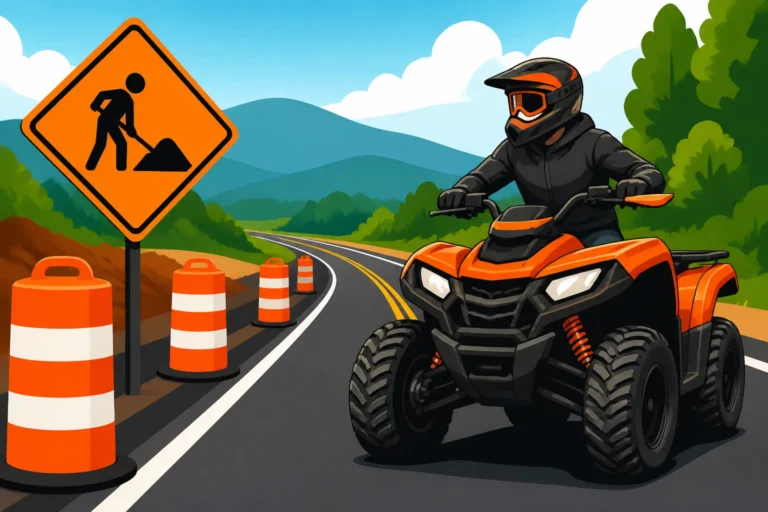
One of the most common scenarios for farm use involves simply crossing a public road. Perhaps your barn is on one side, and your primary pasture is on the other. Kentucky law allows you to do this as part of your farm operation. Unlike the general rule that limits non-farm crossings to 0.2 miles, the farm exemption typically removes this mileage cap, focusing instead on the purpose of the travel. This means you can cross a road at a right angle, as directly and safely as possible, to access another part of your farm. [Kentucky's 0.2-Mile Crossing Rule]
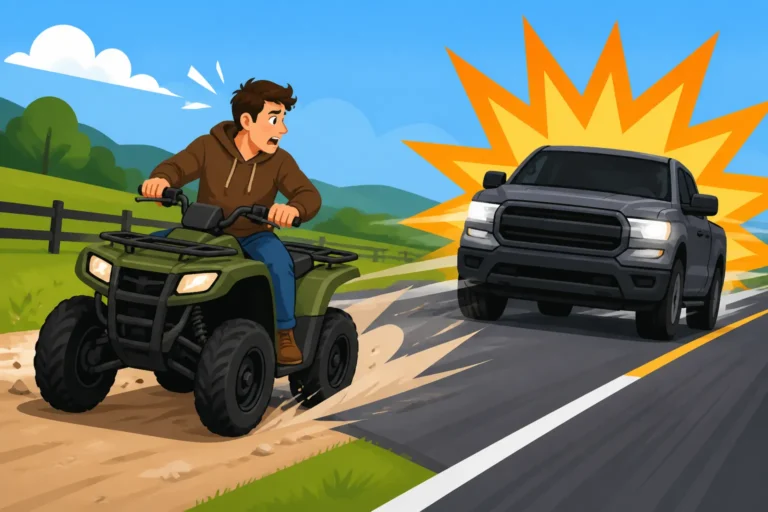
When performing such a crossing, extreme caution is paramount. Treat it as you would any other slow-moving farm equipment: yield to all oncoming traffic, signal your intentions if your machine has signals (or use hand signals), and make eye contact with drivers if possible. Your ATV or UTV is small compared to other vehicles, and visibility can be an issue, especially on winding rural roads or at dusk. Ensure your machine is visible, perhaps with a slow-moving vehicle triangle on the rear, even if not strictly mandated for every ATV. Remember, the goal is to safely complete a necessary farm task, not to blend into traffic.
Using Public Roads for Short Distances on the Farm
Beyond simple crossings, there are times when a short stretch of public road might be the only practical connection between two parts of your farm. Imagine you have a long, narrow farm, and the county road runs through the middle, with fields on both sides. Or perhaps you're [Hauling Feed Down a Holler Road] to a remote section of your property, and the public road briefly provides the only accessible route. In these instances, Kentucky's farm exemption acknowledges that using the public road for these "incidental" or "necessary connecting" distances is part of legitimate farm operations.
The key here is that the travel on the public road must be directly and unavoidably tied to your farm work. You aren't taking the scenic route; you're taking the only practical route to get your machine, supplies, or yourself from one part of the farm to another. [Kentucky's Farm Exception With No Mileage Cap] means that for genuine farm work, the state isn't setting an arbitrary distance limit for these connecting segments. However, this doesn't mean you can travel for miles down a major highway. It's about using the shortest, most direct route to complete the farm task. Law enforcement will often look at the overall context: Are you loaded with tools or feed? Are you moving between known farm parcels? Is the speed appropriate for a work vehicle? These factors help distinguish legitimate farm use from recreational riding.
Essential Requirements and Best Practices for Farm Road Use
While the farm exemption offers significant flexibility, it doesn't mean a complete disregard for safety or common sense. There are still considerations and best practices that can help you stay safe and on the right side of the law when operating your ATV or UTV on public roads for farm purposes.
Equipment and Safety Considerations
Even when legally operating for farm work, safety should always be your top priority. While Kentucky has a helmet law for ATV riders under 16 everywhere, and for all riders on public lands, the farm exemption typically provides relief from helmet mandates when engaged in farm work on private or public roads. [Why Farm Work Exempts a Kentucky Helmet] However, wearing a helmet is always a good idea, regardless of the law, especially if you're traveling at speeds where an impact could cause serious injury. Your head is worth protecting.
Visibility is another critical factor. Ensure your ATV or UTV has working headlights and taillights, especially if there's any chance you might be operating near dawn, dusk, or in inclement weather. [Daylight Only Under the Statute] is generally the rule for non-farm public road use, but farm work sometimes requires earlier starts or later finishes. Consider adding additional reflective tape to your machine or wearing bright, high-visibility clothing. Companies like SuperATV offer a wide range of lighting solutions, from LED light bars to auxiliary work lights, which can significantly enhance your visibility and your ability to see your surroundings during farm tasks. Mirrors are also an excellent addition for situational awareness on roads. Regularly check your tires, brakes, and steering to ensure your machine is in optimal working condition.
Proof and Documentation
When you're out on your farm, especially if your operations involve crossing or briefly traveling on public roads, it's a good idea to carry some basic documentation with you. While officers generally understand the farm exemption, having proof of ownership can prevent unnecessary delays or questions. This might include your ATV's title or a bill of sale. [Proving Kentucky ATV Ownership] can be as simple as having these documents readily accessible, perhaps in a waterproof pouch on your machine.
Regarding insurance, Kentucky does not typically mandate liability insurance for ATVs operated solely on private property. However, when you take your ATV or UTV onto a public road, even for farm purposes, you are introducing a potential liability risk. While not legally required under the farm exemption, carrying a general liability insurance policy for your farm operations or an umbrella policy that covers your vehicles could be a very wise decision. This helps protect you financially in case of an accident involving another vehicle or property damage. [Kentucky ATV Insurance Requirement] As for a driver's license, generally, you do not need one specifically to operate an ATV under the farm exemption on public roads, as it's considered farm equipment. However, if you possess a valid driver's license, it's always good practice to have it with you when operating any motorized vehicle. [Do You Need a Driver's License to Cross Pavement?]
Avoiding Misuse and Common Pitfalls
The farm exemption is a practical and necessary part of Kentucky law, but it's not without its boundaries. Understanding these limits is crucial to avoid misunderstandings with law enforcement and potential legal issues. The key often lies in the intent and nature of the activity.
The Line Between Farm Use and Recreation
This is perhaps the most critical distinction to understand. The farm exemption for ATVs and UTVs on public roads is strictly for "agricultural purposes." It is not a loophole for recreational riding, even if you happen to be traveling to a friend's house who also lives on a farm. Law enforcement officers are generally well-versed in distinguishing between a farmer actively working and someone out for a casual ride. If you're using your ATV to cruise down a county road for pleasure, even if your destination is a farm, you are likely in violation of Kentucky law regarding ATV road use.
The context of your travel is everything. Are you carrying tools, feed, or equipment? Is your destination a field, barn, or other part of your farm property? Are you wearing work clothes rather than recreational gear? These are all cues that help an officer determine if your use falls under the exemption. Trying to pass off a joyride as "farm business" is a risky endeavor and can lead to citations, fines, and potentially having your machine impounded. It's always best to be clear about your intentions and only use public roads when genuinely performing farm work.
Local Ordinances and Other Exemptions
While the farm exemption is primarily a state-level provision, it's always a good idea to be aware of any specific local ordinances in your county or municipality. While less common for farm exemptions, some local jurisdictions might have unique rules regarding specific types of roads or times of day. For example, some cities might have opted into allowing street legal UTVs, but these rules are usually distinct from the agricultural exemption and have their own stringent requirements for vehicle equipment and registration. [Why a Kentucky City Must Opt In] It's unlikely that a local ordinance would override the state's farm exemption, but staying informed about your immediate area's laws is always a smart move.
It's also important to distinguish the farm exemption from other limited road use exemptions. For instance, Kentucky law allows ATVs and UTVs for specific tasks like snow removal or emergency work, but these are separate categories with their own conditions. [Snow Removal Under Kentucky Law] Don't confuse these. The farm exemption is specific to agricultural operations. If you're considering using your ATV or UTV for anything other than direct farm work on a public road, make sure you understand the exact statute that permits it, as the general rule is still one of prohibition. For farmers, equipping their UTVs with attachments from SuperATV, such as plows or specialized cargo beds, can underscore the legitimate work-oriented nature of their machines.
| Aspect | General ATV/UTV Road Rules in Kentucky | Farm Exemption Road Rules |
|---|---|---|
| Purpose of Use | Prohibited for recreational use. | Strictly for agricultural purposes and farm operations. |
| Mileage Limit on Roads | Generally limited to 0.2 miles for crossing, or prohibited otherwise. | No specific mileage cap for necessary travel between farm parcels. |
| Helmet Requirement | Required for riders under 16 everywhere; all riders on public lands. | Generally exempt for riders engaged in farm work. |
| Driver's License | Not required to operate an ATV off-road. | Not generally required for operation under the farm exemption. |
| Registration/Titling | ATVs require a title but are not registered for road use. | ATVs still require a title. No special road registration for farm use. |
| Vehicle Equipment | Not generally equipped for street use. | Basic safety features (lights, brakes) highly recommended for visibility. |
| Enforcement Focus | Recreational use on roads is generally cited. | Focus is on legitimate agricultural purpose and safe operation. |
Disclaimer
This article is for general informational purposes only and does not constitute professional advice. Laws, prices and regulations vary by location and change over time. Consult a qualified professional for guidance on your specific situation.