Kentucky Lighting Requirements for ATVs
It can be incredibly confusing trying to figure out exactly what kind of lighting your ATV needs here in Kentucky. You might have a factory headlight and taillight, but is that truly enough for every situation you encounter, especially when you need to briefly touch a public road or head out after dark? This guide is here to cut through the confusion and clearly explain Kentucky's specific lighting requirements for ATVs and UTVs, ensuring you stay safe and compliant.
The Basics of Kentucky's ATV Lighting Laws
Let's start with the fundamental reasons why anyone should care about ATV lighting, and what generally comes standard on most machines. It's not just about what the law says; it's about real-world safety on the trail and beyond.
Why Lighting Rules Exist
Nobody wants to get into an accident, and that's precisely why lighting rules are in place. Imagine you're on a dusty trail in Eastern Kentucky, maybe near Black Mountain, and the sun is starting to dip below the ridge. If your machine's lights are dim, broken, or non-existent, you become a ghost in the fading light. This isn't just a hazard for you, but for any other rider, hiker, or even wildlife that might be sharing the path. Good lighting ensures you can see where you're going, react to obstacles, and more importantly, allows others to see you.
When you factor in even a momentary interaction with public roads—like crossing a rural county route to get to another section of trail—visibility becomes absolutely paramount. Cars and trucks are moving at higher speeds, and they simply aren't expecting an ATV to pop out. Proper lighting significantly reduces the risk of being overlooked in these critical moments. It's a small detail that can have massive safety implications for everyone involved.
General Requirements for Off-Road Use
For the most part, when you're strictly riding off-road on private land, designated trail systems like Leatherwood Off-Road Park, or a family farm, the lighting situation is largely a matter of personal safety and common sense rather than strict state law. Most modern ATVs come from the factory equipped with at least one headlight and one taillight, and for typical daylight off-road riding, this is often considered sufficient for basic visibility. The headlight helps you see obstacles on the trail, and the taillight ensures that anyone riding behind you can track your position, especially in dusty conditions or at dusk.
However, "sufficient" for basic off-road doesn't always translate to "sufficient" for safety, especially if you plan on riding into the evening or through heavily shaded areas. While Kentucky law doesn't specify lumen output for private land, riders often find that factory lights can be a bit underwhelming when the sun really goes down. Many experienced riders choose to upgrade their lighting even for strictly off-road use, adding things like LED light bars to illuminate more of the trail ahead. This is a choice driven by practicality and safety, not a specific legal mandate for off-road environments.
When Your ATV Needs More Than the Basics
Here's where the waters get a bit murkier, and where many riders find themselves scratching their heads. Kentucky has very specific, albeit limited, scenarios where an ATV needs more than just a basic headlight and taillight setup. These situations usually involve some interaction with public roads.
Crossing a Public Road
Kentucky law is quite clear, and very restrictive, about ATVs on public roads. Generally, they're not allowed. However, there's a specific exception for crossing a two-lane highway at a ninety-degree angle to get from one section of private property to another. This is the infamous [Kentucky's 0.2-Mile Crossing Rule]. For this very brief and specific maneuver, your ATV needs to be equipped for visibility.
What does that mean for lighting? According to the statute, during this ninety-degree crossing, your ATV must have at least one working headlight and two working taillights. Yes, two taillights, not just one. This requirement is specifically designed to make your machine as visible as possible to oncoming traffic during this quick dash across pavement. It's a critical safety measure, because even a short burst across the road is a high-risk situation. You can read more about this precise rule in [Crossing a Two-Lane at Ninety Degrees in Kentucky]. It's not about cruising down the highway; it's about minimizing risk during a necessary, but highly regulated, crossing.
Farm or Business Use on Roads
Kentucky law also provides exceptions for ATVs used in agricultural, mining, logging, or construction operations. If you're using your ATV for legitimate farm work—like hauling feed down a holler road to a remote pasture, or checking fences along a county road—you might be allowed on public roads for that purpose. The good news is that for bona fide farm use, there isn't a mileage cap like the 0.2-mile crossing rule. This is covered in [Kentucky's Farm Exception With No Mileage Cap].
However, this doesn't mean you can just roll out onto the road anytime. If your farm or business use occurs during daylight hours, your ATV generally only needs the standard factory lighting (headlight, taillight) to be legally on the road. The law states that you can only operate during [Daylight Only Under the Statute] unless your machine is fully equipped with lights for night operation. If you must operate for farm purposes after dark, your machine would need to meet more stringent lighting requirements, typically involving a working headlight and two taillights, and ensure they are fully operational and visible. For mining and logging operations, similar principles apply; while the work itself might be exempt from many rules, any time spent on a public road, even for transport between work sites, requires adequate lighting to ensure visibility to other vehicles.
Night Riding on Trails or Private Property
While Kentucky's statutes don't typically mandate specific lighting requirements for ATVs operated solely on private land or designated off-road trails (unless they're part of a park's specific rules), safety and common sense still prevail. If you plan to ride after the sun goes down, whether at a popular spot like Rush Off-Road or just on your own hunting lease, robust lighting becomes absolutely essential. Factory headlights, while adequate for daylight or dusk, often fall short for truly dark conditions.
This is where aftermarket upgrades shine, quite literally. Many riders invest in powerful LED light bars or auxiliary spotlights to supplement their factory lighting for night riding. These can dramatically improve your visibility, allowing you to see much further ahead, identify trail hazards, and navigate challenging terrain safely. Brands like SuperATV offer a wide array of lighting solutions, from compact pod lights to full-sized light bars, designed to handle the rigors of off-road environments. While not legally required for private land, enhancing your lighting for night rides is a smart investment in your safety and enjoyment. You can learn more about general rules for riding in the dark in [Kentucky Rules for Riding After Dark].
Street-Legal Special Purpose Vehicles (SPVs) – A Different Category
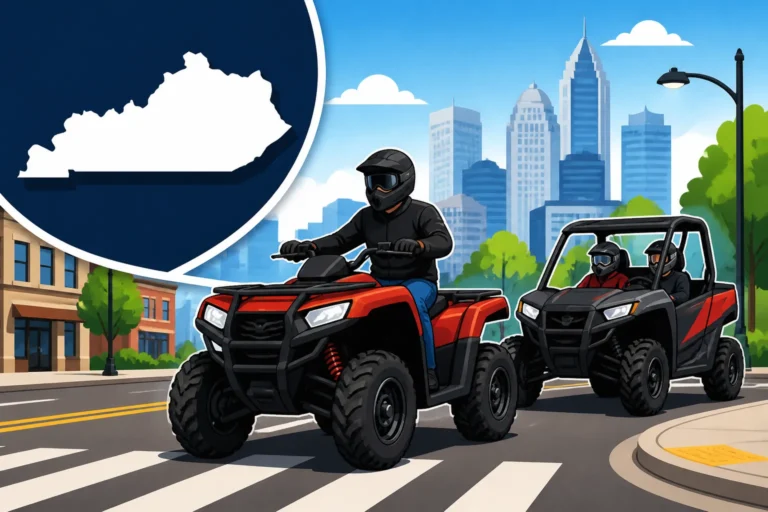
It's crucial to understand that a "street-legal ATV" in Kentucky isn't just an ATV with extra lights strapped on. Kentucky has a specific classification for what it calls "Special Purpose Vehicles" (SPVs), which are typically UTVs or side-by-sides that have undergone a rigorous inspection and met strict requirements to be allowed on some public roads. This is a very different animal from a standard ATV making a quick road crossing.
The SPV Distinction
Many people mistakenly believe that if they put a turn signal kit on their side-by-side, it's suddenly street legal everywhere in Kentucky. This couldn't be further from the truth. Kentucky's SPV law creates a distinct class of vehicles that are eligible for street use, but only in cities or counties that have "opted in" to allow them. Your typical quad or older ATV simply doesn't fit the bill for an SPV. These are generally newer UTVs that can be made to comply with a full list of safety and equipment standards, much closer to what a car or motorcycle needs.
The process of making an SPV street legal involves a state inspection and an annual registration with the county clerk, where you'll receive a special license plate. Without this specific designation, plate, and the local ordinance allowing it, your ATV or UTV is not street legal. It’s a complex area, and it's vital to understand the difference between simply driving on private property and operating an SPV on a public road. For a deeper dive into what makes these machines different, check out [Kentucky Street Legal UTV Requirements].
Comprehensive Lighting for SPVs
For an ATV or UTV to qualify as an SPV and be allowed on approved public roads, it needs to meet a full suite of lighting requirements that go far beyond what a standard ATV typically has. We're talking about a full complement of road-legal lights, much like what you'd find on a car.
Specifically, an SPV must have at least one headlight, but most commonly, they are equipped with two. More importantly, it must have two taillights and working brake lights. But here's the big one that separates an SPV from a regular ATV: turn signals. Yes, your SPV needs amber turn signals both front and rear, on both sides, to indicate turns. Many enthusiasts turn to aftermarket kits from brands like SuperATV to integrate these signals seamlessly. Additionally, the machine needs dual mirrors, but the lighting aspect is paramount. All these elements work together to ensure the vehicle is clearly visible and can communicate its intentions to other drivers on public roadways. Learn more about these specific requirements, including mirrors, in [Turn Signals and Dual Mirrors on a Kentucky SPV].
Other Related SPV Lighting
Beyond the main headlights, taillights, brake lights, and turn signals, there are a few other critical lighting elements that an SPV must possess to be fully compliant in Kentucky. These are often overlooked but are just as important for passing inspection and operating legally on public roads.
First, your SPV must have a white light that illuminates the rear license plate. This ensures your plate is visible after dark, a standard requirement for any road-going vehicle. Secondly, the vehicle must be equipped with an illuminated speedometer. This means the speedometer itself needs to be lit so that the operator can clearly see their speed at night. While many newer UTVs come with illuminated digital displays, older machines or those with simpler dashes might require an aftermarket solution. These smaller details are part of the comprehensive [Kentucky SPV Equipment List] that must be checked off before you can hit those approved streets. You'll need to make sure [One Headlight and Two Taillights in Kentucky] are burning, but also all the other minor lights.
Maintenance, Upgrades, and Staying Safe
Having the right lights is only half the battle; keeping them in working order and understanding their limitations are just as vital for both compliance and personal safety.
Regular Checks and Bulb Replacement
It's easy to take your ATV's lights for granted, especially if you primarily ride in daylight. But just like any other component on your machine, bulbs can burn out, wires can fray, and connections can get corroded, especially in the harsh environments ATVs operate in. Before every ride, especially if there's any chance you'll be out at dusk or in low-light conditions, take a minute to do a quick check: fire up your ATV, turn on the lights, and walk around it. Make sure the headlight (or headlights), taillight(s), and brake light (if equipped) are all working.
If you find a bulb is out, replace it promptly. Carrying spare bulbs appropriate for your machine's make and model is always a good idea, particularly if you're venturing far from home. A non-functional light can not only leave you in a dangerous situation but could also lead to a citation if you're on a road, even for a brief crossing. Neglecting these simple checks is a common oversight that can have frustrating, and potentially costly, consequences.
Aftermarket Lighting Considerations
Upgrading your ATV's lighting is a popular modification, and for good reason. Factory lights are often adequate, but rarely exceptional, especially when it comes to illuminating broad sections of trail or providing intense, long-range visibility. Aftermarket solutions, from powerful LED light bars to auxiliary floodlights and spotlights, can vastly improve your ability to see and be seen. Brands like SuperATV offer robust and weather-resistant lighting options that can turn night into day on the trails, allowing you to ride with more confidence and safety.
However, a word of caution: while these high-powered lights are fantastic for off-road use, they are generally not legal for use on public roads. The intense brightness and specific beam patterns of many off-road LED light bars can blind oncoming drivers, creating a significant hazard. If you have auxiliary lighting, ensure it is turned off and/or covered when operating on public roads, even for legal crossings. Always check local and state regulations regarding the use of aftermarket lighting on any public thoroughfare to ensure compliance and avoid potential fines.
Understanding "Daylight Only" and Night Riding
The "daylight only" restriction for basic road crossings or farm use is a critical point that often gets overlooked. It means exactly what it says: if your ATV only has basic factory lighting and isn't a fully equipped SPV, you generally cannot operate it on public roads between sunset and sunrise. This restriction is clearly outlined in statutes like [Daylight Only Under the Statute]. This isn't just a suggestion; it's a legal limit designed to prevent accidents involving machines that aren't fully illuminated for nighttime traffic.
Even if you're on private property or a designated trail system, riding after dark requires careful consideration. Without adequate lighting, you're not only risking personal injury from unseen obstacles but also potentially getting lost or stranded. If your plans involve any significant night riding, whether for utility or recreation, it's wise to invest in high-quality aftermarket lights and ensure all your factory lights are fully functional. Plan your rides to avoid getting caught out after dark without proper illumination, or outfit your machine specifically for it. Always adhere to [Kentucky Rules for Riding After Dark] if you're even contemplating riding when visibility is low.
| Use Case | Headlight(s) | Taillight(s) | Brake Lights | Turn Signals | License Plate Light | Illuminated Speedometer | Other Notes |
|---|---|---|---|---|---|---|---|
| Off-Road / Private Land | 1 (minimum) | 1 (minimum) | Not required | Not required | Not required | Not required | Factory lights often sufficient, but upgrades recommended for night riding. |
| Road Crossing (0.2 mi) | 1 (required) | 2 (required) | Not required | Not required | Not required | Not required | Must be daylight only. Strict 90-degree crossing rule. |
| Farm/Business Use (Road) | 1 (required) | 1 (required) | Not required | Not required | Not required | Not required | Daylight only unless fully equipped. No mileage cap for legitimate use. |
| SPV (Street-Legal) | 1 (required) | 2 (required) | Yes (required) | Yes (required) | Yes (required) | Yes (required) | Comprehensive requirements, inspection, and local opt-in needed. [A License for Kentucky Highway Operation] |
Disclaimer
This article is for general informational purposes only and does not constitute professional advice. Laws, prices and regulations vary by location and change over time. Consult a qualified professional for guidance on your specific situation.