Two Thirty-Seconds of Tread in Kentucky
Oh, the dream of taking your UTV from the dusty trail straight onto a paved road in Kentucky, making a quick run to the store or connecting two sections of your favorite riding area without the hassle of loading it onto a trailer. It sounds fantastic, doesn't it? But then reality hits with a mountain of regulations, confusing local ordinances, and specific equipment requirements that can make your head spin. One tiny, yet critical detail that often trips up even seasoned riders is the tire tread depth for Special Purpose Vehicles (SPVs) – specifically, that elusive "two thirty-seconds of tread in Kentucky" rule. This guide is here to untangle that knot, walking you through everything you need to know to get your UTV street-legal, keep it that way, and navigate the peculiarities of Kentucky's roads.
The Journey to Street Legality: Understanding Kentucky's SPV Status
For years, the notion of riding an ATV or UTV on a public road in Kentucky felt like a pipe dream, mostly relegated to farm work or very specific, brief crossings. We've all seen machines used for agricultural purposes zipping down a county road for a short stretch, and wondered why our recreational machines couldn't do the same. The rules were simply not built for it.
The Default Position: Off-Road Only
Historically, Kentucky law treated ATVs and UTVs almost exclusively as off-road machines. This meant that, by default, they were not permitted on public highways, roads, or shoulders. The rationale was simple: these machines weren't designed with the same safety features as conventional vehicles, and mixing them with cars and trucks on pavement was deemed too risky. Riders felt this deeply, often having to trailer their machines for even short distances between trails or to access services. It was a constant frustration, especially in areas where trails might be bisected by a county road, forcing a detour or a complicated loading/unloading ritual. For more on this, you might find [Kentucky Rules for ATVs on Public Roads] helpful.
Imagine you're out riding at Black Mountain, and you want to grab a quick bite at a local diner a mile down the road from the trailhead. Under the old rules, you'd have to load your machine onto a trailer, drive the mile, unload it, eat, reload it, and then drive back. It was an enormous deterrent for local businesses and a huge headache for riders. The state did make some allowances for agricultural use, allowing farmers to use their machines on roads for specific tasks, but this didn't extend to recreational riders.
The Emergence of Special Purpose Vehicles SPVs
Recognizing the growing popularity of UTVs and the desire for more flexible recreational use, Kentucky introduced legislation to create a category for "Special Purpose Vehicles" (SPVs). This was a game-changer, albeit one with a very specific rulebook. An SPV is essentially a UTV (or a side-by-side) that has been modified and inspected to meet certain safety standards, allowing it to be driven on certain public roads. It's not a blanket approval for every road, everywhere, but it opened up possibilities that simply didn't exist before.
The SPV designation isn't about making a UTV a car; it's about acknowledging its unique nature and finding a middle ground for limited road use. Think of it as a rigorous checklist that, once satisfied, grants you a special privilege. This legislative change was a direct response to rider demand and the evolving design of UTVs, which often come from the factory with many features that make them safer than older ATVs. It gave hope to many who dreamed of longer, more integrated rides that blended trails with scenic backroad stretches. However, it also brought a new set of responsibilities and a much steeper learning curve for owners.
Kentucky's SPV Inspection: What They Look At
So, you've decided to go for it and get your UTV designated as an SPV. This isn't just a matter of filling out a form; it requires a physical inspection by a qualified law enforcement officer. This inspection is thorough, designed to ensure your machine meets all the necessary safety standards to interact with regular road traffic. And yes, your tires are definitely on the checklist!
Tire Tread Depth: The "Two Thirty-Seconds" Rule
Here's where the specific requirement from our title comes into play: "Two Thirty-Seconds of Tread in Kentucky." When you present your UTV for an SPV inspection, the officer will meticulously check your tires. The law specifies that your tires must have at least 2/32 of an inch of tread depth across the entire width of the tire and that there are no visible breaks, cuts, or exposed cords.
Why is this specific measurement so important? Simply put, tire tread is crucial for traction, especially on wet or uneven paved surfaces. While off-road tires are designed to grip dirt and mud, they need sufficient tread to handle the different dynamics of a paved road. Two thirty-seconds of an inch might sound minimal, but it's a standard threshold for road vehicles to ensure adequate grip and prevent hydroplaning. If your tires are bald or excessively worn, you're not only a danger to yourself but to others on the road.
To check this yourself, you can use a tread depth gauge, which is widely available at auto parts stores. Many people also use the "penny test" – insert a penny into a tread groove with Lincoln's head upside down and facing you. If you can see the very top of Lincoln's head, your tread is likely below 2/32 inch and it's time for new tires. Don't show up for an inspection with tires that fail this basic test; you'll be turned away, costing you time and a potential re-inspection fee. Ensuring your tires meet the [Measuring Tread at Two Thirty-Seconds] standard is non-negotiable.
Other Critical Equipment Checks
Beyond the tires, the SPV inspection is a comprehensive evaluation of your UTV's safety equipment. The officer is looking for features that bring your off-road machine closer to street-legal vehicle standards. This includes:
- Lighting: Your UTV must have at least one headlight (showing white light), two taillights (showing red light), and stop lights that illuminate when the brakes are applied. All lights must be in good working order and visible from appropriate distances. For street use, often aftermarket lights are needed to ensure they meet road-specific brightness and beam patterns.
- Turn Signals: Yes, you need functioning turn signals, both front and rear. This is crucial for communicating your intentions to other drivers on the road. Many UTVs don't come with these from the factory, so you'll likely be looking at an aftermarket kit like those offered by SuperATV.
- Mirrors: You'll need at least two rearview mirrors, one on each side of the vehicle, providing a clear view of the road behind you. This is another common aftermarket addition.
- Horn: A working horn is a must for alerting other drivers to your presence.
- Windshield: While not always explicitly required to be glass, a safety glass windshield is often preferred and may be necessary for some interpretations of "roadworthy." It must be free of cracks that obstruct vision.
- Seat Belts: If your UTV has seats, it must have functional seat belts for every occupant. These should be securely mounted and in good condition. [Roll Cage and Seat Belt Rules for an SPV] outlines these details further.
- Speedometer: Your UTV needs a functioning speedometer that is illuminated if you plan to ride at night. Knowing your speed is vital for complying with posted limits and safe operation. You can learn more at [An Illuminated Speedometer on a Kentucky SPV].
- Fenders: All wheels must have fenders that cover the tire to minimize spray onto other vehicles.
Each of these items is scrutinized. An officer isn't just glancing; they're ensuring every component meets the legal standard for safety.
Why the Inspection Can Feel Like a Hurdle
For many UTV owners, the SPV inspection can feel like a significant hurdle. It's not just the cost of potential modifications, but the time and effort involved in sourcing and installing compliant parts. Imagine spending a weekend installing turn signals and a horn kit, only to find out your taillights aren't bright enough or your mirrors don't offer a wide enough field of view. It can be frustrating.
Furthermore, the interpretation of some rules can sometimes vary slightly from one county clerk's office or inspecting officer to another. While the core law is the same, how it's applied in practice might lead to minor differences in what's accepted. This is why doing your homework, calling ahead, and even seeking advice from other riders who have successfully navigated the process in your area can be invaluable. It's about bringing your machine up to a standard where it's truly ready to share the road, which is a big shift from its purely off-road origins. The whole point is to keep everyone safe, but the process can certainly test your patience. Checking [The $25 Kentucky Inspection] gives a good overview of the initial cost.
The Nitty-Gritty of SPV Equipment Requirements
Beyond the initial inspection, it's crucial to understand the ongoing equipment requirements for your SPV. These aren't just one-time checks; they're legal mandates for every time you operate your UTV on a public road in Kentucky. Neglecting any of these can lead to fines, a citation, or worse, an accident.
Lighting, Signals, and Visibility
Having proper lighting isn't just about avoiding a ticket; it's about being seen. On Kentucky roads, where you might encounter everything from speeding cars to slow-moving farm equipment, visibility is paramount.
- Headlights: You need at least one, but most modern UTVs come with two. They must emit a white light and be visible from a distance of 500 feet. If you've upgraded your lights for brighter trail riding, ensure they don't blind oncoming traffic on the road. Adjustable beams are a plus.
- Taillights: Two red taillights are required, visible from 500 feet to the rear. They must be on whenever your headlights are on.
- Stop Lights: Functioning stop lights (brake lights) are essential. They activate when you apply the brakes, signaling to drivers behind you that you're slowing down or stopping. Test these regularly; a burnt-out bulb is an easy fix but a dangerous oversight.
- Turn Signals: These are perhaps one of the most common aftermarket additions. They must flash yellow (amber) light to the front and rear when activated. Companies like SuperATV offer complete, easy-to-install turn signal kits specifically for UTVs, designed to meet these kinds of street-legal requirements. Remember, simply hand-signaling isn't an acceptable substitute for proper electrical turn signals when your machine is registered as an SPV. [Fitting Turn Signals for an Inspection] discusses this in more detail.
Ensuring all these lights are clean, functioning, and properly aimed is part of responsible SPV ownership. A quick walk-around before each road ride is a smart habit to develop.
Mirrors, Horns, and Essential Safety Gear
These components provide crucial information to the driver and help prevent collisions. They are not optional accessories for an SPV.
- Mirrors: As mentioned, you need at least two rearview mirrors, typically one on each side. These must provide an unobstructed view of the road to the rear of your machine. If your UTV primarily sees trail use, you might have small, foldable mirrors. For SPV status, you might need larger, more robust mirrors that offer a wider field of vision, similar to what you'd find on a car. [Fitting Dual Mirrors for an Inspection] highlights this.
- Horn: A functional horn, audible from a reasonable distance, is required. This isn't just for trail signaling; it's for alerting other motorists to your presence or potential hazards. A simple push-button horn is usually sufficient.
- Windshield: While Kentucky law is often interpreted to require a "safety glass" windshield for SPVs, always confirm the current regulations with your local county clerk's office. At minimum, a durable, clear windshield that doesn't distort vision is needed. It must be free from stickers or cracks that obscure your view.
- Wiper Blade: If you have a windshield, you must have at least one functioning windshield wiper to ensure clear visibility in inclement weather.
These items contribute significantly to your situational awareness and ability to react safely on public roads. Skimping on these can compromise your safety and lead to legal trouble.
Roll Cages, Seat Belts, and Passenger Safety
Safety for occupants is paramount, and SPV regulations reflect this by demanding robust protective features.
- Roll Cage: Most UTVs come from the factory with a sturdy roll cage, which is a fundamental safety feature designed to protect occupants in the event of a rollover. For SPV designation, this roll cage must be intact, undamaged, and securely bolted to the frame. Aftermarket modifications to the roll cage need to maintain or exceed the original safety standards.
- Seat Belts: Every occupant in an SPV must be secured by a seat belt. These must be properly installed, in good working condition, and used at all times on public roads. Check for frayed belts, worn buckles, or insecure mounts regularly. If your UTV has four seats, it needs four working seat belts.
- Passenger Capacity: Your SPV's passenger capacity is limited to the number of securely mounted seats with corresponding seat belts. You cannot carry more passengers than your machine is designed for, nor can you allow passengers to ride in cargo beds or on laps. This is a critical safety rule, especially with younger riders. [Roll Cage and Seat Belt Rules for an SPV] dives deeper into these specifics.
The spirit of these rules is to treat your SPV as a low-speed road vehicle when on pavement, meaning it must offer comparable occupant protection to minimize injury in case of an incident. It's about taking the responsibility of road sharing seriously.
Navigating Kentucky Roads: Where SPVs Can and Cannot Go
Even with a fully compliant SPV and all your paperwork in order, you can't just drive anywhere you please in Kentucky. The state has a unique approach to SPV road access, giving significant power to local municipalities. This is where many riders get confused or caught off guard.
The Local Opt-In System: City and County Control
Unlike some states where street legality might be a blanket state-level approval, Kentucky operates on an "opt-in" system for SPVs. This means that individual cities and counties have the authority to decide whether to allow SPVs on their local roads. By default, SPVs are not permitted on public roads unless the local governing body (city council or fiscal court) passes an ordinance specifically allowing them.
This creates a patchwork of rules across the state. You might be able to legally ride your SPV on county roads in one county, but cross into the next county, and suddenly you're breaking the law if they haven't passed a similar ordinance. This can be incredibly frustrating for riders planning longer trips or those who live near county lines. Before you hit the pavement, you absolutely must check the specific ordinances for every city and county you plan to ride through. Many towns have specific maps outlining approved streets. This is why [Why a Kentucky City Must Opt In] is such a crucial piece of information.
Imagine planning a weekend ride that crosses three counties. In County A, SPVs are allowed on all county roads with a speed limit under 45 mph. County B has opted in, but only allows SPVs on designated routes to connect trail systems. County C hasn't opted in at all, meaning no SPVs on any of their roads. You can see how quickly this becomes a logistical puzzle. Always call the county clerk's office or city hall to confirm current regulations, as these ordinances can change.
Speed Limits and Restricted Road Types
Even in areas that have opted in, there are usually significant restrictions on which roads and at what speed an SPV can be operated.
- Speed Limits: Most local ordinances that permit SPVs will also impose a maximum speed limit for their operation, often capping it at 35 mph or 45 mph, even if the posted speed limit for cars is higher. This is to ensure that SPVs, which are inherently slower and have different handling characteristics than cars, don't create a traffic hazard. [Kentucky Cities That Cap SPV Roads at 45 mph] gives examples of these local caps.
- Road Types: SPVs are generally prohibited from state highways, interstates, and other high-speed, multi-lane roads. They are typically restricted to county roads, city streets, and secondary roads. The idea is to keep SPVs on lower-traffic routes where speeds are naturally slower and the risk of high-speed collision is reduced. You won't be taking your SPV on I-75, no matter what.
Always pay close attention to posted speed limits and road signs. Riding an SPV on a restricted road, or exceeding the SPV speed limit on an approved road, will quickly negate your street-legal status and land you a ticket.
Crossing Rules and Exceptions
Kentucky law does provide some limited exceptions for ATV and UTV road use, even without full SPV status, but these are very specific and narrow in scope. These exceptions generally relate to agricultural use or crossing public roads.
- Farm Use Exception: Farmers can use ATVs and UTVs on public roads for agricultural purposes without SPV designation. This typically covers tasks like moving between fields, accessing farm equipment, or hauling feed. There are usually no mileage caps for farm use. [Why Kentucky's Farm Exception Has No Limit] provides more context.
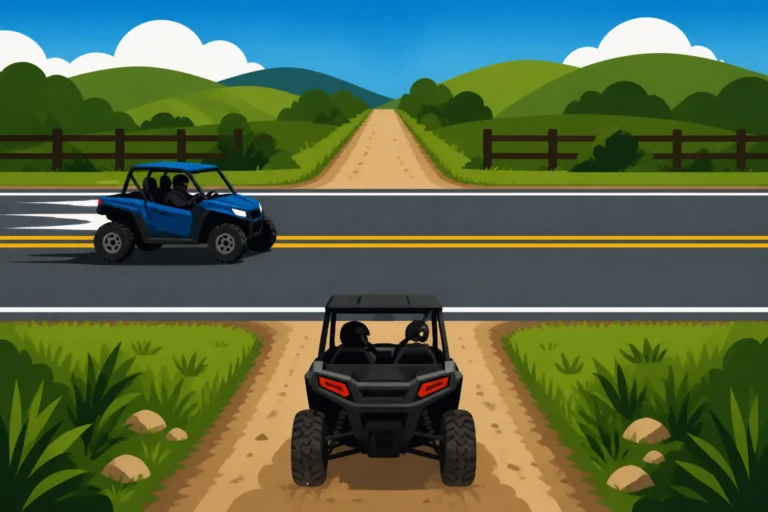
- Road Crossing: ATVs and UTVs (even non-SPVs) are generally allowed to cross two-lane public highways at an angle of approximately ninety degrees to the road. This crossing must be done quickly and safely, without impeding traffic, and usually within a 0.2-mile distance. This is for connecting trails or property, not for cruising down the road. [0.2 Mile and Not a Yard More] explains this crucial detail.
- Emergency & Construction: There are also limited exceptions for emergency personnel or those engaged in road construction/maintenance or snow removal, allowing them to use ATVs/UTVs on public roads when necessary for their duties.
These exceptions are not loopholes for recreational riding; they are specific allowances for essential activities. If you don't fit the criteria, you need an SPV designation (and local approval) to be on the road.
The Costs and Paperwork for Kentucky SPV Status
Getting your UTV street-legal isn't free, nor is it a simple walk-in-and-out process. There are fees, inspections, and insurance requirements that you'll need to account for. Understanding these financial and administrative hurdles upfront will save you headaches down the road.
Inspection, Registration, and Plate Fees
The process begins with the inspection and then moves to the county clerk's office for titling and registration.
- Inspection Fee: Expect a fee for the SPV inspection itself. While specific amounts can change, it's typically a modest charge, often around $25. This covers the officer's time and certification that your vehicle meets the equipment standards. This [Kentucky SPV Inspection Cost] is a one-time fee for initial approval.
- Title and Registration: Once your machine passes inspection, you'll take the signed inspection form, along with your proof of ownership (like a signed-over title or Manufacturer's Statement of Origin), to your local county clerk's office. Here, you'll pay for the title transfer (if applicable) and the initial SPV registration. The registration fee is an annual cost, similar to car registration, and usually includes the issuance of a special SPV license plate. For specific figures, always check with your local county clerk. [Kentucky SPV Registration Cost] can provide general information, but local offices will have the exact, current numbers.
- Sales Tax: If you're titling a newly purchased machine, you'll also be subject to Kentucky sales tax on the purchase price when you register it.
These costs are often layered, and it's easy for them to add up. Be prepared for these expenses in addition to the cost of any parts or modifications you had to make to your UTV to pass the inspection.
The Crucial Role of Insurance
Just like any other vehicle operating on public roads, your SPV must be insured. This isn't optional; it's a legal requirement to protect you and others in case of an accident.
- Minimum Coverage: Kentucky law requires specific minimum liability insurance coverage for all vehicles operating on public roads. For SPVs, this is generally at the level of motorcycle insurance. This means you'll need bodily injury liability, property damage liability, and possibly uninsured/underinsured motorist coverage. Do not assume your existing ATV/UTV trail insurance automatically covers road use; they are often separate policies.
- Proof of Insurance: You'll need to show proof of this insurance at the county clerk's office when you register your SPV and you should carry it with you whenever you're operating the machine on public roads. An officer can ask for it, just like with a car.
- Shop Around: Insurance rates for SPVs can vary significantly between providers. It's wise to shop around and get quotes from multiple insurance companies. Be very clear that you are seeking coverage for a Kentucky-registered Special Purpose Vehicle for on-road use. [Motorcycle-Level Insurance for a Kentucky SPV] further clarifies what you might expect.
Trying to save a few bucks by skipping insurance is a dangerous and illegal gamble. The financial consequences of an accident without insurance can be catastrophic.
Getting Your Paperwork in Order at the County Clerk
The county clerk's office is your final stop in the initial SPV process. Having all your documents in order will make the process much smoother.
- Inspection Form: The certified SPV inspection form, signed by the inspecting officer.
- Proof of Ownership: This is usually your existing Certificate of Title (if you're a used buyer) or a Manufacturer's Statement of Origin (for a new machine). Make sure the title is properly signed over to you, if applicable.
- Proof of Insurance: Your current insurance card or declaration page showing the required liability coverage.
- Photo ID: A valid Kentucky photo ID, such as your driver's license.
- Payment: Be ready to pay all applicable fees (registration, titling, sales tax).
It's always a good idea to call your specific county clerk's office ahead of time to confirm their exact requirements and current fees. This can prevent multiple trips and frustrating delays. The county clerk's office also handles your annual [Renewing a Kentucky SPV Plate Every Year], so it's a relationship you'll maintain.
Maintaining Your Street-Legal Machine in Kentucky
Getting your UTV registered as an SPV is a significant achievement, but it's not a "set it and forget it" situation. Maintaining its street-legal status and ensuring its safety on the road requires ongoing attention to your machine's condition and compliance with Kentucky law.
Ongoing Tire Maintenance for Compliance
The "two thirty-seconds of tread" rule isn't just for the initial inspection; it's a continuous requirement for every mile you drive your SPV on public roads.
- Regular Checks: Make it a habit to check your tire tread depth regularly, especially if your UTV sees a lot of road use or if you frequently transition between trails and pavement. Off-road driving can wear tires down faster, and you don't want to be caught with insufficient tread on a public road.
- Tire Condition: Beyond tread depth, inspect your tires for any cuts, bulges, or embedded objects that could compromise their integrity. A tire blowout at speed on pavement can be extremely dangerous.
- Proper Inflation: Maintain the manufacturer's recommended tire pressure for road use. Incorrect tire pressure affects handling, braking, and tread wear.
Remember, a traffic stop for a minor infraction could lead to a closer inspection of your SPV, and a worn tire could result in a citation or even having your SPV deemed unsafe for road use.
Keeping Up With Equipment Standards
All the equipment you installed or verified for your initial inspection needs to remain in good working order.
- Lights and Signals: Regularly test your headlights, taillights, brake lights, and turn signals. Bulbs can burn out, and wiring can come loose, especially on machines that experience a lot of vibration and exposure to the elements.
- Mirrors and Horn: Ensure your mirrors are securely mounted and provide a clear view. Test your horn occasionally to make sure it's still functioning properly.
- Safety Belts and Roll Cage: Inspect seat belts for wear and tear, and check that they latch securely. Visually examine your roll cage for any signs of damage or structural compromise.
If any equipment fails, replace or repair it immediately. Riding with faulty safety equipment not only puts you at risk but also means you're operating an unregistered SPV, which carries legal penalties. The [Kentucky SPV Equipment List] covers these in detail.
Annual Renewal and Re-Inspection Considerations
Your SPV registration, like car registration, needs to be renewed annually at your local county clerk's office.
- Annual Renewal: Be mindful of your registration expiration date. You'll need current proof of insurance to renew your SPV plate and stickers.
- Re-Inspection: While Kentucky law doesn't typically require a full annual re-inspection for SPVs (unlike some other states), it's always possible that law enforcement could pull you over and perform a spot check if they notice something amiss with your machine. The onus is on you, the owner, to ensure your SPV remains compliant with all equipment standards year after year.
Maintaining your SPV is an ongoing commitment to safety and legality. It ensures that the privilege of riding your UTV on Kentucky's approved roads remains available to you, and that you contribute to a safe environment for everyone sharing the pavement.
Table: Kentucky SPV Equipment Checklist
To help you keep track of all the requirements, here's a handy checklist for your Kentucky Special Purpose Vehicle:
| Requirement | Description | Status (Yes/No) | Notes |
|---|---|---|---|
| Tire Tread Depth | At least 2/32 inch across the entire tread width. No cuts/exposed cords. | Use a tread gauge or penny test regularly. | |
| Headlights | At least one (preferably two), white light, visible 500 ft. | Proper aim and brightness for road use. | |
| Taillights | Two red lights, visible 500 ft to the rear. | Must be on with headlights. | |
| Stop Lights | Activated by brake pedal, visible to the rear. | Test regularly. | |
| Turn Signals | Front and rear, amber/yellow, flashing. | Often an aftermarket install. | |
| Rearview Mirrors | At least two, one on each side, clear view to rear. | Larger mirrors may be needed for road visibility. | |
| Horn | Audible from a reasonable distance. | Simple push-button often suffices. | |
| Windshield | Clear, unobstructed, often required to be safety glass. | Free of cracks; may need a wiper. | |
| Windshield Wiper | At least one, if windshield is present. | Functional for clear visibility in rain. | |
| Seat Belts | For every occupant, securely mounted, good condition. | Must be worn on public roads. | |
| Roll Cage | Intact, undamaged, securely mounted. | Standard on most UTVs. | |
| Speedometer | Functional, illuminated for night riding. | Necessary for obeying speed limits. | |
| Fenders | Covers all wheels to prevent spray. | ||
| Proof of Insurance | Motorcycle-level liability coverage for road use. | Carry in vehicle; show at registration renewal. | |
| Valid Registration & Plate | Current SPV plate and sticker. | Renew annually at county clerk. | |
| Local Ordinance Check | Confirm SPVs allowed on specific roads/counties. | Critical for legal road access. |
This list isn't exhaustive for every minor detail but covers the major points that will be checked during an SPV inspection and what you'll need to maintain. Keep it handy as you prepare your machine!
Disclaimer
This article is for general informational purposes only and does not constitute professional advice. Laws, prices and regulations vary by location and change over time. Consult a qualified professional for guidance on your specific situation.