A License for Kentucky Highway Operation
Navigating the rules for riding your ATV or UTV on Kentucky's public roads can feel like trying to solve a puzzle with half the pieces missing. Many riders are frustrated by the conflicting information and the sheer confusion over what's actually legal, especially when it comes to needing a driver's license. This guide is here to clear the air, breaking down Kentucky's requirements for operating off-road vehicles on highways, including the specific licensing you'll need for proper road use.
Understanding Kentucky's General Stance on ATVs and Roads
Let's be brutally honest: Kentucky generally wants your ATV or UTV off the pavement. The state’s default position is that these machines are designed for dirt, trails, and rough terrain, not for cruising down Main Street or even connecting between two different fields on a county road. This can be incredibly frustrating, especially if you live in a rural area where a quick hop on the road is the most practical way to get from point A to point B. It feels like common sense should prevail, but the law has very specific boundaries.
The Default Rule: Off-Road Vehicles Belong Off-Road
Most ATVs and UTVs, as they come from the factory, simply aren't street-legal in Kentucky. The law classifies them as off-road vehicles, and that classification comes with significant restrictions. This isn't just about safety; it's about how these machines are manufactured, titled, and insured. They lack many of the standard features found on cars or even motorcycles that are deemed necessary for safe highway operation, such as robust braking systems, full lighting packages, and rearview mirrors. Because of this, casually riding your un-modified ATV on a state highway or even a less-trafficked county road is typically against the law. You might see others doing it, especially in more remote areas, but that doesn't make it legal or safe, and it certainly won't help you if a deputy pulls you over. This fundamental rule is the starting point for all discussions about ATVs and roads in Kentucky.
Brief Crossings and the 0.2-Mile Exception
Now, Kentucky law isn't entirely without a shred of practicality. There's a specific, often-misunderstood provision that allows for brief crossings of public roads. This is known as the [Kentucky's 0.2-Mile Crossing Rule]. If you need to cross a paved road to get from one section of your private property to another, or to access an adjacent trail, you might be able to do so, provided you meet strict conditions. This isn't an invitation to ride down the road for a fifth of a mile; it means literally crossing it. The machine must be operated at an angle of approximately ninety degrees to the road, essentially taking the shortest path across. It also must be done during daylight hours, and the operator must possess a valid driver’s license.
This 0.2-mile rule is designed for very specific, short-distance maneuvers, not for traveling any significant length down a roadway. Imagine you have a large property divided by a public road, and your barn is on one side while your pasture is on the other. This rule allows you to cross the road directly to get from one to the other, provided you're licensed and it's daytime. Don't push this limit; [How Far 0.2 Mile Really Gets You] is surprisingly short when you're thinking about a casual ride. It’s important to remember that this is an exception to the general rule, not a loophole to extend your trail ride onto public thoroughfares.
The Farm Exemption: Practicality for Rural Kentucky
Kentucky is a deeply agricultural state, and the lawmakers recognized that farmers often need to use their ATVs and UTVs for legitimate farm work. This led to a crucial exemption that many rural residents rely on, but it’s still hedged with specific conditions. It’s not a free pass to ride your machine anywhere just because you live in the country; it’s specifically tied to agricultural operations.
No Mileage Cap, But Still Restrictions
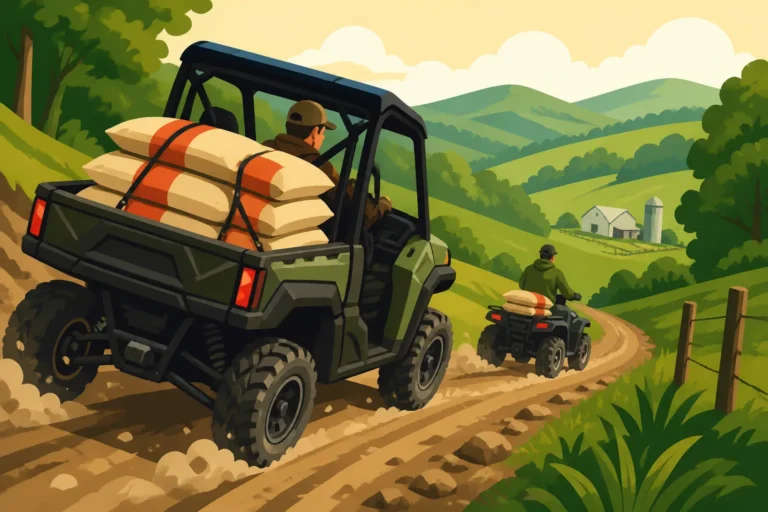
One of the most appealing aspects of the farm exemption is that it has [Kentucky's Farm Exception With No Mileage Cap]. Unlike the brief 0.2-mile crossing rule, if you’re genuinely using your ATV or UTV for agricultural purposes, you can operate it on public roads for longer distances. This means hauling feed down a holler road to a remote pasture or moving equipment between fields. The spirit of this law is to enable farmers to do their job efficiently without constant worry of legal repercussions for legitimate agricultural travel.
However, this freedom isn't absolute. The exemption is tightly bound to the "farm use" designation. The operator must still have a valid driver's license. The machine should typically be equipped with basic safety features like headlights and taillights, especially if you're out near dawn or dusk, though the law often specifies [Daylight Only Under the Statute] for general ATV use on roads. You also need to consider visibility; a slow-moving ATV with farm implements could be a hazard on a busy road. The "no mileage cap" doesn't mean "no common sense." Always prioritize safety and visibility, even when legally exempt.
Distinguishing Farm Use from Recreational Riding
This is where many people get into trouble. Just because you own land and occasionally perform chores on it doesn't automatically qualify all your ATV riding as "farm use." The law distinguishes between genuine agricultural activities and recreational riding. If you’re heading out to check fences, move livestock, or transport tools for planting, that's clearly farm use. But if you’re riding your UTV down a county road with friends on a Saturday afternoon, simply for enjoyment, that's recreational, and the farm exemption does not apply.
Enforcement officials are generally familiar with what constitutes legitimate farm work in their districts. They understand that a farmer needs to get around. However, they also know when a rider is attempting to stretch the definition. Attaching a utility trailer with hay might look like farm use, but if you're pulling that trailer to a hunting camp for a weekend of leisure, it's not. The key is the purpose of the ride. Be honest with yourself about why you’re on the road. Misrepresenting recreational use as farm use can lead to tickets and fines, even if you live on a large property.
Kentucky's Special Purpose Vehicle SPV Law: The Path to Pavement
For those who genuinely want to operate their UTVs on public roads in a more continuous, legal fashion, Kentucky offers a pathway: the Special Purpose Vehicle (SPV) designation. This isn't just a simple registration; it's a comprehensive process that transforms your UTV from a purely off-road machine into one that's legally equipped and permitted for road use on certain public roads. The journey to SPV status involves modifications, inspections, and specific paperwork, reflecting the state's intent to regulate these vehicles for safety.
What Qualifies as an SPV in Kentucky?
Kentucky's SPV law, which built upon previous efforts like [Kentucky's 2025 Special Purpose Vehicle Law], is specifically designed for certain types of UTVs (often called side-by-sides) that can meet stringent equipment and safety requirements. Crucially, the law generally excludes traditional ATVs (quads) from this designation because they lack the necessary enclosed cab or roll cage structure and usually require a straddle-style riding position. An SPV is typically a UTV that has been modified to meet specific safety standards that bring it closer to a conventional automobile or motorcycle.
The vehicle must be originally manufactured for off-highway use, have four or more wheels, and be capable of speeds exceeding 20 mph. It also must possess a compliant Vehicle Identification Number (VIN) to be eligible for titling and registration. The intent here is to allow modern, often larger, and more stable UTVs to operate on roads where deemed safe and appropriate by local authorities. It's a recognition that some of these machines, with proper modifications, can be made safer for limited road use.
Essential Equipment for SPV Status
Becoming an SPV in Kentucky is largely about bringing your UTV up to a defined set of safety standards, which means adding or upgrading specific equipment. This isn't a suggestion; it's a mandate. Your UTV must be outfitted with:
- Headlights and Taillights: At least one headlight and two taillights, which must be illuminated whenever the vehicle is in operation on a public road, regardless of daylight. This goes beyond the basic lights found on many stock UTVs.
- Turn Signals: Both front and rear, clearly visible and functioning.
- Brake Lights: Activated by the brake pedal, showing when you're slowing down.
- Dual Mirrors: One on each side of the vehicle, providing a clear view of traffic to the rear. This is crucial for navigating roads safely. Many riders turn to aftermarket suppliers like SuperATV for high-quality, durable mirrors that can withstand trail riding while still meeting road requirements.
- Horn: A functioning horn for signaling.
- Windshield: A safety glass windshield that meets federal motor vehicle safety standards, often requiring a wiper system.
- Speedometer: An illuminated speedometer, clearly visible to the operator.
- Tires: Tires designed for highway use, with a minimum of [Two Thirty-Seconds of Tread in Kentucky]. Off-road knobbies are generally not acceptable.
- Roll Cage and Seat Belts: The vehicle must have a factory-installed or properly engineered roll cage and seat belts for all occupants, which must be worn.
Meeting these requirements can involve significant upgrades to your machine. It’s an investment, but it's what differentiates a trail machine from an SPV capable of legal road operation.
The SPV Inspection and Registration Process
Once your UTV is equipped to meet all the necessary standards, it needs to pass an inspection. This is generally performed by a certified inspector, often associated with a dealership or a state-authorized inspection station. This inspection, which typically has a [Kentucky SPV Inspection Cost] of [The $25 Kentucky Inspection], is thorough, checking every required item from lights to tires. Without passing this inspection, your UTV cannot be registered as an SPV.
After a successful inspection, you'll take the inspection certificate, your vehicle's title, and proof of insurance to your county clerk's office. This is where you’ll complete the registration process and pay the [Kentucky SPV Registration Cost], which is typically [The $10 Kentucky SPV Registration]. The county clerk will issue you a special SPV license plate, which must be displayed on the rear of your vehicle. This plate signifies that your UTV is now legally registered as an SPV in Kentucky, allowing it to operate on designated public roads. Remember, this registration must be renewed annually.
The Crucial Question: What License Do You Need?
This is often the core of the confusion for many riders: "Do I need a special license to drive my ATV or UTV on Kentucky roads?" The answer depends entirely on whether your machine is a standard off-road vehicle operating under an exception or a fully designated Special Purpose Vehicle (SPV). The state's approach is designed to ensure that anyone operating a motor vehicle on public roads has demonstrated basic driving competency.
Standard Driver's License for SPVs
If you’ve gone through the process of making your UTV a legal Special Purpose Vehicle (SPV) in Kentucky, you will need a standard, valid Kentucky driver's license to operate it on public roads. There is no specific "ATV license" or "UTV endorsement" required beyond your regular driver's license. The state views an SPV, once registered and equipped, much like any other motor vehicle for licensing purposes, albeit with specific restrictions on where it can be ridden. This means if you have a Class D Kentucky operator's license (the standard license for cars and light trucks), you are qualified to drive your SPV.
This is a point of relief for many, as it avoids the need for a separate motorcycle endorsement or a specialized test. However, it also means that if your driver's license is suspended or revoked for any reason, you cannot legally operate your SPV on public roads. The state is essentially saying, "If it's going to be on the road, you need to be a qualified driver." This also applies to the brief [Kentucky's 0.2-Mile Crossing Rule] and the [Kentucky's Farm Exception With No Mileage Cap]; in both these scenarios, a valid driver's license is a non-negotiable requirement.
Age Requirements and Supervision for Road Use
Age is a critical factor when discussing highway operation, whether for a standard vehicle or an SPV. For operating a registered SPV on Kentucky public roads, the driver must meet the minimum age for a standard driver's license. This generally means being at least 16 years old and holding a valid, unrestricted driver's license. Learner's permits or intermediate licenses typically come with restrictions that might not align with the independent operation of an SPV on public roads. It's essential to check the specific conditions of any provisional license.
For traditional ATVs and UTVs that are not SPVs, Kentucky law is very clear about minors and public roads. Generally, riders under 16 are prohibited from operating ATVs on public roads, even under adult supervision. The rules for minors operating ATVs are complex, often tying back to the manufacturer's age recommendations and requiring direct adult supervision on private land. This is why [Kentucky Rules for Riders Under 16] are so stringent. Even if a child has completed an ATV safety course and is proficient on trails, that proficiency does not translate into a legal right to operate the machine on public pavement. The licensing requirements for SPVs are another layer of protection, ensuring that only experienced, licensed drivers are behind the wheel on shared roadways.
Insurance, Enforcement, and Local Ordinances
Getting your SPV properly equipped and registered is a significant step, but it's not the final one. Just like any other vehicle on the road, an SPV comes with insurance mandates, and its operation is subject to the watchful eye of local law enforcement and specific city or county ordinances. Ignoring these additional layers can quickly lead to legal trouble, regardless of your SPV status.
Mandatory Motorcycle-Level Insurance for SPVs
Once your UTV is registered as an SPV, it's no longer just an off-road toy in the eyes of the law; it's a vehicle operating on public roads, and as such, it must carry appropriate insurance. Kentucky law requires [Motorcycle-Level Insurance for a Kentucky SPV]. This isn't just basic liability coverage; it's the same type and amount of coverage typically mandated for motorcycles, which often means higher minimums than for standard ATVs used solely off-road.
This insurance is crucial. It protects you and others in the event of an accident on a public road, covering damages and injuries. Without this specific type of insurance, even a fully compliant and registered SPV cannot legally be operated on Kentucky highways. When you go to renew your SPV registration, you'll need to provide proof of current, valid insurance. Make sure your insurance provider is aware that your UTV is registered as an SPV for road use to ensure you have the correct policy. [Kentucky SPV Insurance Requirement] is not something to overlook; the consequences of an uninsured accident can be devastating.
The Role of Localities: Opting In or Out
This is perhaps one of the most confusing aspects of Kentucky's SPV law. While the state provides the framework for SPV registration, it does not automatically open all public roads to SPVs. Instead, it places the decision in the hands of local governments – counties and cities. For an SPV to be legally operated on a particular road, the local jurisdiction responsible for that road must "opt in" or pass an ordinance specifically allowing SPVs. This is why [Why a Kentucky City Must Opt In] is so important.
This means that even if your UTV is a fully registered SPV, you cannot assume you can ride it on every road in Kentucky. You might be perfectly legal to ride through a specific county that has passed an enabling ordinance, but cross into a neighboring county or city that hasn't, and you could immediately be in violation of the law. Before planning a route that involves public roads, it is absolutely essential to check with the specific county clerk’s office or city hall of every jurisdiction you intend to traverse. Some localities might cap roads at 45 mph for SPVs, while others might allow them on all but state highways. The rules can be highly granular, so always do your homework.
Consequences of Operating Without Proper Licensing or SPV Status
Ignoring Kentucky's laws regarding ATV and UTV operation on public roads can lead to a cascade of negative consequences. For riders who operate an unregistered or non-SPV machine on a public road, or for those who ride an SPV without a valid driver's license or proper insurance, the repercussions can be severe. First and foremost, you're likely facing significant fines for illegal road use. Law enforcement officers, particularly in areas with high ATV traffic, are often well-versed in these regulations.
Beyond the initial citation, there can be more serious implications. Operating without insurance can lead to additional hefty fines, suspension of your driver's license, and even seizure of your vehicle in some cases. If you're involved in an accident while operating illegally, your insurance company will likely deny coverage, leaving you personally liable for all damages and medical expenses, which could amount to hundreds of thousands of dollars. Furthermore, repeated offenses could lead to more stringent penalties, making it difficult to obtain future vehicle registrations or even maintain your driver's license. The message is clear: playing by the rules is not just about avoiding a ticket; it's about protecting yourself, your finances, and your freedom to ride. [Kentucky Fines for Illegal ATV Road Use] are not trivial.
Practical Tips for Responsible Highway Operation
Even when you've done everything right – your UTV is an SPV, you're licensed, insured, and riding in an "opted-in" area – responsible operation is key. Sharing the road with cars, trucks, and motorcycles requires a different mindset than trail riding. Being prepared, staying vigilant, and adhering to safe practices are paramount for your safety and the longevity of your riding privileges.
Pre-Ride Checks and Staying Informed
Before you even turn the key of your SPV for a highway journey, a thorough pre-ride inspection is crucial. Just as you’d check your machine for a demanding trail ride, ensure all your road-specific equipment is in perfect working order. Are your [Turn Signals and Dual Mirrors on a Kentucky SPV] functioning? Are your headlights and taillights clean and bright? Is your horn working? Check your tire pressure and tread depth, especially if you’ve recently been off-road with different pressures. These simple checks can prevent roadside breakdowns or, worse, accidents caused by equipment failure.
Staying informed about local ordinances is an ongoing task. What was legal last year might have changed. A new city council might have opted out of the SPV program, or expanded it. Before you head out, especially if riding in an unfamiliar county or city, make a quick call to the county clerk or check their official website. Knowing the local speed limits for SPVs, permissible road types, and any time-of-day restrictions can save you a lot of headaches. It also helps to be aware of the general road conditions you'll encounter; a UTV handles differently on wet pavement than a car. Products from companies like SuperATV, known for their aftermarket accessories, often include parts designed for improved visibility and safety on roads, which can be a good investment even if not strictly required by law.
Navigating Different Road Types and Conditions
Riding an SPV on public roads demands heightened awareness and defensive driving techniques. Remember, your UTV is smaller and less visible than most other vehicles, and drivers might not be expecting to see it on the pavement. Always assume you are not seen, and be prepared to take evasive action. Maintain a safe following distance, use your turn signals well in advance, and make eye contact with other drivers at intersections whenever possible.
Different road types present different challenges. On main highways, be mindful of traffic speed. While your SPV might be capable of higher speeds, it often lacks the stability and protection of a car. Stick to the right-hand side of the lane, allowing faster traffic to pass safely. On rural, winding roads, be particularly cautious around blind curves and hillcrests. Your machine's narrower stance and higher center of gravity can make it feel different than a car, especially in crosswinds or uneven pavement. For the safest operation, always be sober, alert, and focused solely on the task of driving. Even on what seems like a deserted [Holler Road in Perry County], unforeseen hazards like loose gravel, wildlife, or farm equipment can appear suddenly. Being a responsible SPV operator on Kentucky's roads is about respect for the law, for your machine, and most importantly, for the safety of everyone sharing the pavement.
| Feature / Requirement | Standard ATV/UTV Road Use | Special Purpose Vehicle (SPV) |
|---|---|---|
| Primary Use | Off-road recreation, farm work | Road use (select roads), off-road recreation |
| Driver's License | Required for any road use (e.g., crossing, farm exemption) | Required (standard Class D Kentucky) |
| Age Requirement | 16+ for any road use | 16+ for road use |
| Registration | Off-road title only | SPV plate and registration required (annual) |
| Inspection | Not required for road use | Required ([The $25 Kentucky Inspection]) |
| Insurance | Often optional for off-road use; basic liability for farm use | Mandatory motorcycle-level liability insurance |
| Required Equipment | Basic lights for farm use/crossings | Headlights, taillights, brake lights, turn signals, dual mirrors, horn, windshield, illuminated speedometer, road-approved tires, roll cage, seat belts |
| Road Restrictions | Limited to 0.2-mile crossings, farm use | Permitted only on roads in "opted-in" cities/counties; often speed/road type limits |
| Night Riding | Generally restricted to daylight for road use | Permitted on approved roads with proper lighting |
| Statewide Validity | Exceptions are statewide, but limited | Depends on local ordinances (not statewide approval for all roads) |
Disclaimer
This article is for general informational purposes only and does not constitute professional advice. Laws, prices and regulations vary by location and change over time. Consult a qualified professional for guidance on your specific situation.