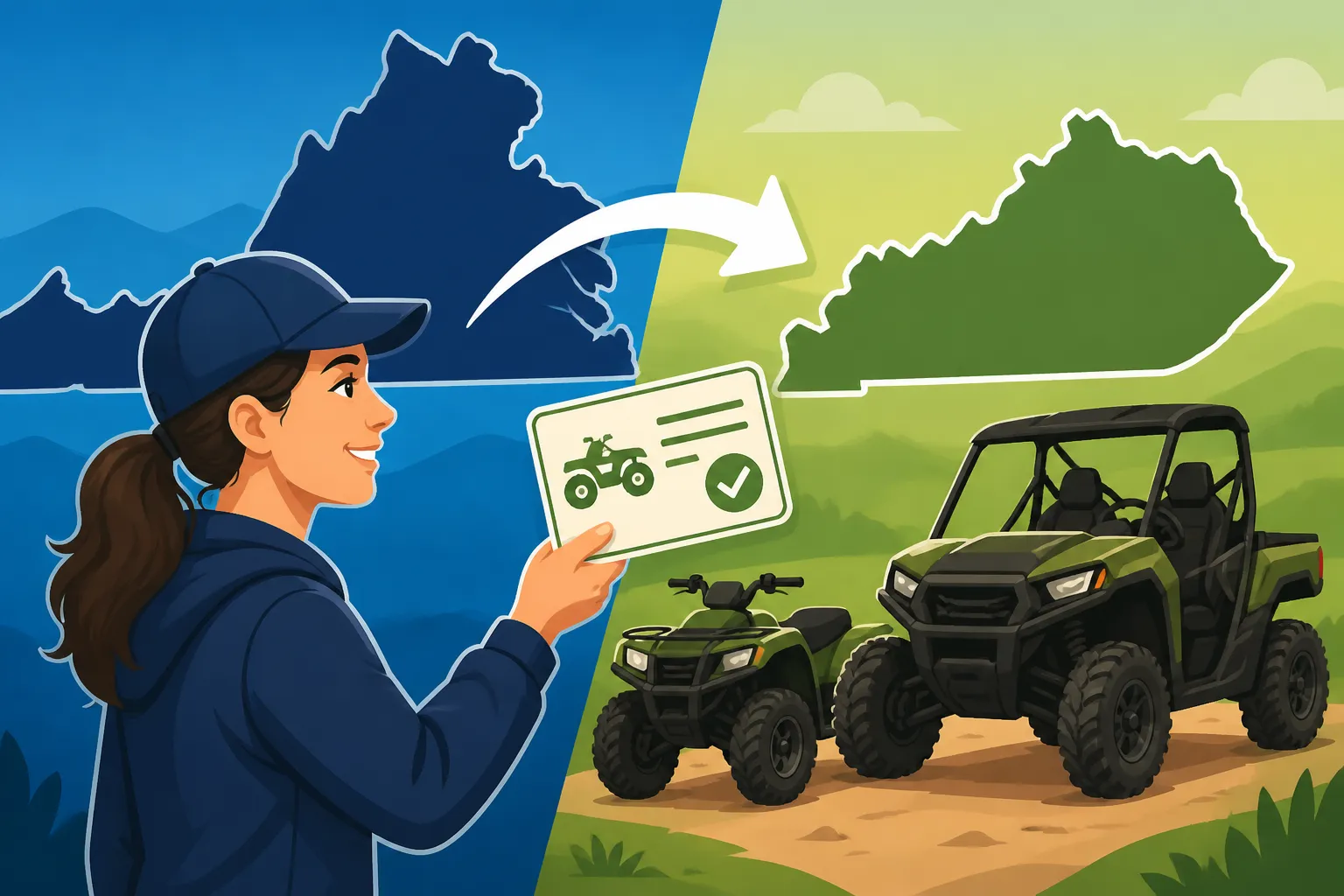
A Virginia Rider Buying a Kentucky Permit
A Virginia rider can bring an ATV or UTV to Kentucky, but a Virginia registration or permit is not a universal ticket to ride. Kentucky does not use one statewide trail pass for every riding area. The practical solution is to identify where you plan to ride, then check that area’s permit, access, and machine rules before you haul.
A Virginia permit does not automatically cover Kentucky trails
A permit, registration, title, and trail pass do different jobs. A Virginia document may help show that a machine is properly documented under Virginia rules, but it should not be treated as permission to ride a Kentucky trail. Likewise, a Kentucky trail permit does not necessarily establish ownership or authorize road use.
Kentucky has no single statewide trail sticker that grants access to all public and private riding areas. Each destination may have its own operator, land manager, permit system, and conditions. That means the key question is not simply, “Do I need a Kentucky permit?” It is, “What does the place where I plan to ride require?”
For a visiting rider, that distinction matters. A destination might require a permit for each machine, charge or register riders individually, or use a pass tied to a particular trail system. Some places may have different requirements for passengers, camping, or other activities. Requirements can also change with the season or with temporary closures.
Before buying anything, confirm:
- The exact riding area and its current operator or land manager.
- Whether a permit is required for your machine, each rider, or both.
- Whether a passenger needs a separate permit or registration.
- Whether the permit covers only one location or also nearby trails.
- Whether your machine’s type, size, or equipment affects access.
- Whether the trail system is open on the dates you plan to visit.
A Virginia registration may be relevant to paperwork or other rules, but it does not necessarily substitute for the destination’s trail permit. For more on that distinction, see Does Kentucky Honor Out-of-State Registration? and Kentucky Rules for a Visiting Rider.
| What you have or need | What it generally addresses | What it does not automatically provide |
|---|---|---|
| Virginia registration or other Virginia paperwork | Documentation or compliance under Virginia rules | Permission to ride a particular Kentucky trail |
| Ownership documents | Evidence that you own or are authorized to use the machine | A trail pass or permission to enter private land |
| Kentucky trail permit or pass | Access under the rules of the issuing area | Statewide access or permission to ride on public roads |
| Park reservation or camping arrangement | A place to stay or a booked service, if offered | An ATV or UTV permit unless the operator says it is included |
This is why a rider should not rely on a permit from one Kentucky location for another. A pass for one managed trail system does not become a general Kentucky pass just because both destinations are in the same state. Why Kentucky Has No Statewide Trail Sticker explains the basic system, and Why One Park’s Permit Does Not Travel covers the practical consequence.
Identify the permit for your specific riding area
Start with the destination, not with a search for a generic “Kentucky ATV permit.” Kentucky riding areas can be managed by different organizations, and their access systems are not interchangeable. A private off-road park, a federal recreation area, and a national forest trail may each have separate rules and ways to obtain permission.
If your plan includes more than one riding area, treat each stop as a separate permit check. Do not assume that a pass bought at the first location covers the second, even if the places are close together or your group will ride there on the same trip.
Turkey Bay
For a trip to Turkey Bay OHV Area, check the current information for that area before leaving Virginia. The permit process, operating schedule, access conditions, and any ground-related closures can affect whether a planned ride is possible. Confirm whether the pass is purchased in advance or at the site, what it covers, and whether each machine or rider needs a separate permit.
The area’s permit is specific to its own rules. It should not be assumed to cover another Kentucky trail system. For details about that particular pass, see How the Turkey Bay OHV Permit Works. Also check Kentucky Trail Closures to Check First before loading the trailer; a permit cannot make a closed area available.
Daniel Boone National Forest
If your itinerary includes OHV trails in Daniel Boone National Forest, verify the applicable pass and trail requirements with the official forest information. A forest pass may have different terms from a permit at a privately operated park, and the pass may apply only to designated routes or areas. Confirm the authorized routes, current access notices, and how to obtain the required pass.
The fact that a machine is registered in Virginia does not answer whether it meets the requirements for a specific forest route. Nor does a forest pass necessarily allow riding anywhere within the forest. The practical details are covered in Buying and Using the Daniel Boone Forest OHV Pass.
Private parks and other managed areas
For a privately operated park, consult the operator directly. Ask what the admission or trail permit covers, whether it is issued per person or per machine, whether passengers need their own credentials, and whether any additional rules apply to your vehicle. If lodging, camping, or a rental is part of the trip, ask whether the booking includes trail access or whether permits are separate.
Do not assume that a reservation, waiver, or payment for one service is also a riding permit. Ask for the exact terms, preferably before traveling. Where an operator’s rules are not clear online, a phone call can help avoid arriving with the wrong permit or a machine that cannot use the intended trails.
For a broader overview of when a permit is needed, see Do You Need a Permit for Kentucky Trails?. The answer depends on where you plan to ride and who controls access.
How to buy the right permit before you haul
A few checks before departure can prevent a wasted trip. Permit purchase methods and availability vary by destination, and a pass may have restrictions on dates, machines, riders, or locations. Use the following process rather than relying on a pass description from another park or an old trip report.
- Choose the exact riding area. Record the official name and the entrance or trailhead you expect to use. “Riding in Kentucky” is too broad to identify the right permit.
- Find the current official rules. Use the land manager’s or park operator’s information, not just a general travel listing or a social media post. Look for permit instructions, hours, closures, and machine restrictions.
- Ask what the permit covers. Confirm whether it applies per machine, per rider, per day, or for a longer period. Ask specifically about passengers and additional machines.
- Check where and when you can buy it. Find out whether advance purchase is required, whether on-site sales are available, and what payment or documentation the operator accepts. Do not assume that a permit can be bought at the gate.
- Confirm the machine is eligible. Ask about vehicle type, width or other restrictions, required equipment, and which routes are open to that type of machine. This is particularly important when bringing a UTV to a trail system described mainly for ATVs.
- Check for recent changes before departure. Weather, trail conditions, maintenance, or operating schedules can affect access. Recheck close to the trip, especially if you are traveling a long distance.
- Keep proof of the permit available. Follow the operator’s directions for displaying or presenting it. Keep any confirmation or receipt with your trip documents, but do not assume a phone image is accepted unless the site says it is.
When contacting an operator, a concise question is more useful than asking only whether “Virginia permits are accepted.” For example: “I’m bringing a Virginia-registered UTV to your area. Which permit do I need, what does it cover, and are there machine or passenger requirements?” This prompts the destination to address both access and vehicle eligibility.
If the trip includes several destinations, make a small permit checklist for each one:
| Trip stop | Permit or pass to confirm | Questions to ask |
|---|---|---|
| First trail system | The system’s own current permit | Does it cover the machine, rider, or both? |
| Second trail system | A separate pass if required | Is the first pass valid here? |
| Camping or lodging | Separate booking or access terms | Does the reservation include trail access? |
| Forest or public-land route | The designated land manager’s requirements | Which trails are open and authorized? |
This approach is especially useful when a group has several machines or passengers. The cost structure and purchase process can vary by operator, so check current figures and terms directly with the issuing location rather than relying on old online discussions.
What a Kentucky trail permit does not settle
Buying the right permit is an important step, but it is not a blanket exemption from other rules. A trail pass does not automatically make a machine street legal, grant permission to cross private property, or authorize riding on routes that are closed or not designated for OHV use.
Keep these questions separate:
- Trail access: Does the permit let you enter and ride the specific area?
- Machine eligibility: Is your ATV or UTV allowed on the routes you intend to use?
- Ownership and documentation: Do you have the paperwork needed to show lawful possession if asked?
- Road use: Are you allowed to operate or cross a public road under the applicable rules?
- Landowner permission: Do you have authorization for any private property not covered by the trail operator?
- Safety and conduct: What local rules cover helmets, passengers, hours, speed, or riding behavior?
A permit answers only the questions included in its terms. For example, a pass to use a particular trail area does not necessarily authorize riding beyond its boundaries. Stay on routes the operator identifies as open and permitted, and follow posted signs or instructions from staff.
Virginia riders should also avoid assuming that familiar requirements from home apply unchanged in Kentucky. Local trail rules may add conditions, and different land managers can set different requirements. Check the destination’s rules for your specific vehicle and group, including any age or passenger conditions.
Before leaving, keep the permit instructions, access confirmation, and relevant contact details together. If a gate is closed or a route is restricted, do not treat possession of a permit as permission to bypass the restriction. Check the operator’s current notices and ask for an allowed alternative if one is available.
The safest plan is straightforward: use Virginia documents for the purposes they actually serve, obtain the permit required by each Kentucky riding area, and verify that the machine and route are eligible. A little confirmation before departure is usually easier than sorting out a permit mismatch at the trailhead.
Disclaimer
This article is for general informational purposes only and does not constitute professional advice. Laws, prices and regulations vary by location and change over time. Consult a qualified professional for guidance on your specific situation.