Kentucky Engine Size Rules for Young Riders
Kentucky parents often look for a simple engine-size chart to decide whether a child can ride an ATV or UTV. The important check is usually the machine’s age recommendation, not a universal cc limit. Here’s how to read that label, understand the supervision issue, and make a safer decision before riding.
Kentucky’s engine-size rule is not a simple cc chart
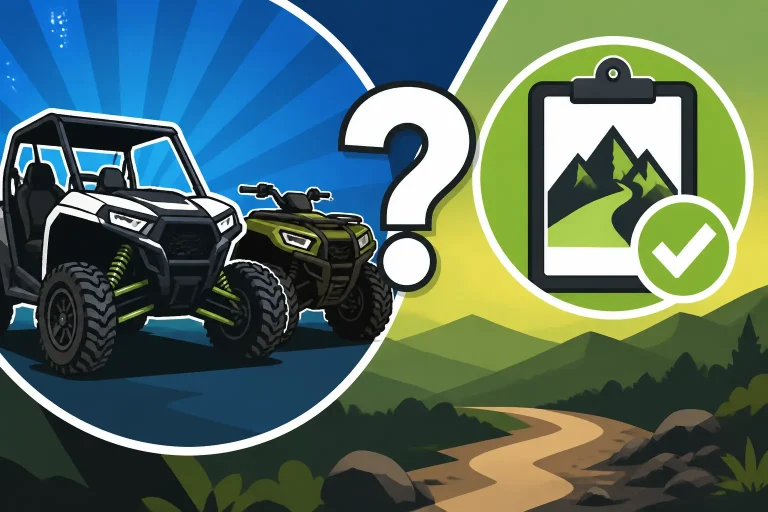
Engine displacement, measured in cubic centimeters (cc), matters when choosing a youth ATV. But Kentucky’s rules for young riders are not best understood as a statewide table that assigns one maximum engine size to every age. The manufacturer’s age recommendation is a key part of the decision.
A machine’s age label connects the model’s design and size to the age group the manufacturer considers appropriate. That recommendation may reflect more than engine displacement: vehicle weight, speed, throttle response, braking, and the rider’s ability to control the machine can all matter. Two ATVs with similar engine sizes may have different recommended age ranges.
That distinction can prevent a common mistake: assuming a child can ride any machine below a certain cc figure. A smaller engine does not automatically make a machine suitable for a young rider, and a child’s age or experience does not erase the manufacturer’s recommendation.
| What you’re checking | What it tells you | What it does not tell you |
|---|---|---|
| Engine size in cc | A basic measure of engine displacement | Whether the ATV is appropriate for a particular child by itself |
| Manufacturer’s age label | The age group the manufacturer recommends for that model | That all legal and trail requirements have been met |
| Child’s age and ability | Whether the rider may be ready to control the machine | Permission to ignore the age recommendation |
| Adult supervision | Whether a young rider is being supervised as required | A substitute for a suitable machine, training, or protective gear |
Read the label on the specific vehicle, rather than relying on a general online chart or the seller’s description. If the label is missing, damaged, or hard to interpret, check the owner’s manual and ask the manufacturer or an authorized dealer for guidance. The model name alone may not be enough; a manufacturer can sell several versions with different engines and age recommendations.
For an overview of how the age recommendation fits into Kentucky’s rules, see The Manufacturer’s Age Label as Kentucky’s Age Rule. The practical point is straightforward: do not treat engine size as a stand-alone permission slip.
How to match a young rider to an ATV or UTV
Start with the exact machine, then consider the child. A child who is tall or strong for their age may still lack the judgment, coordination, or hand strength needed to control an ATV safely. Riding experience helps, but it does not change the manufacturer’s age recommendation.
Find and read the label
Look for the manufacturer’s age recommendation on the ATV and check the owner’s manual. If you are buying a used machine, ask the seller to show you the label and the manual. If either is missing, do not guess based on the ATV’s appearance or engine size.
A seller might describe a machine as a “youth quad” or say that a child of a certain age has ridden it before. Those descriptions are not a replacement for the label. The same goes for a parent’s judgment that the machine seems manageable. If the child is younger than the model’s recommended age, choose a different machine.
For a deeper explanation of what the label means in practice, see Reading a Manufacturer’s Age Label. Do not remove or disregard the label to make a machine seem suitable for a younger rider. The recommendation is part of the information needed to make a responsible choice.
Check fit and control, not just engine size
A young rider should be able to sit comfortably, reach the controls, and operate the brakes without stretching or shifting into an unstable position. The child should also be able to understand basic instructions and respond calmly when the machine needs to stop or turn.
A machine that is too large or heavy can be difficult to control even at low speed. A rider may struggle to steer it, stop it on uneven ground, or keep it balanced. A smaller ATV that fits properly can still be unsafe if the rider cannot use the controls reliably.
Before a ride, make sure the child understands how to start and stop the machine, where to ride, and what to do if they lose control or encounter an obstacle. Practice should take place in an appropriate, open area away from roads, steep slopes, traffic, and other riders. An adult should assess the child’s ability to operate the particular machine, rather than assuming that skill transfers from one ATV to another.
Treat a UTV as a separate decision
A UTV is not simply a larger ATV with a seat beside the driver. It has different controls, weight, handling, and passenger considerations. If a young person will drive a UTV, check the manufacturer’s age guidance for that exact model and confirm the applicable rules before riding.
Do not assume that a child who can ride a youth ATV is ready to drive a UTV. A passenger’s ability to sit securely and follow instructions is a different question from whether the child can operate the vehicle. Check the model’s manual for seating, restraint, and age guidance, and confirm that the intended passengers are permitted.
Supervision and other rules still matter
The manufacturer’s age recommendation is only one part of the decision. Kentucky has rules for young riders that include supervision requirements. Parents and guardians should confirm the current state requirements before a child rides, and should check any additional rules imposed by a trail system, event, or private property owner.
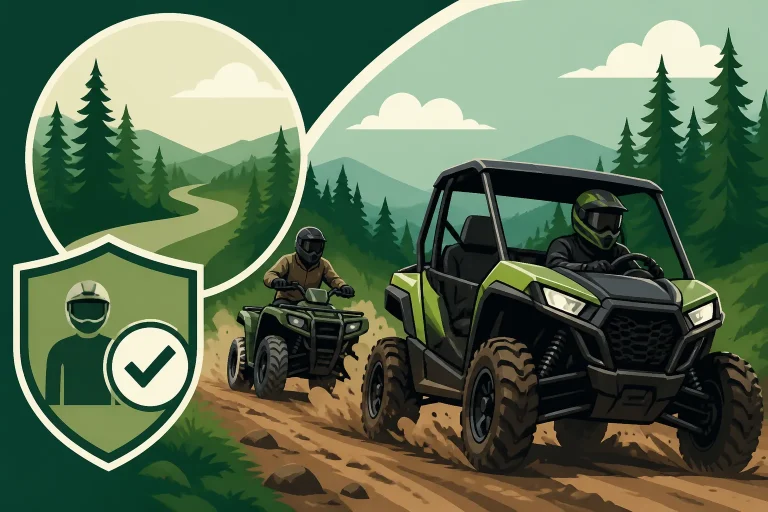
Direct supervision is not the same as letting a child ride out of sight while an adult waits elsewhere. An adult supervising a young rider should be close enough to watch what is happening and respond promptly. The adult should also understand the machine and the route, and be prepared to stop the ride if conditions or the child’s control become unsafe. For more on the state’s supervision rules, see Kentucky Parental Supervision Rules Explained.
Supervision does not make an age-inappropriate machine suitable. Nor does a parent’s permission override a manufacturer’s age recommendation. If a child is too young for a particular model, the sensible response is to select a model intended for the child’s age group, not to rely on an adult standing nearby.
Protective equipment and riding conditions matter too. Use a properly fitted helmet and other appropriate protective gear, and follow the rules that apply where the machine will be used. Trail systems can set their own conditions for young riders, passengers, and permitted vehicles. A child who is allowed to ride on private land may still be subject to different requirements at a managed park or public riding area.
Kentucky does not require a rider certificate as a substitute for these checks. A course can help a young rider build knowledge and habits, but completing one does not make a child eligible to operate a machine that is not appropriate for their age. The distinction between training and legal eligibility is explained in Why Kentucky Uses No Rider Certificate.
A practical checklist before a child rides
Use this sequence before buying, borrowing, or renting a machine for a young rider:
- Identify the exact model. Record the make, model, and year if available. Do not rely only on a broad description such as “kids’ ATV.”
- Read the age label and manual. Confirm the manufacturer’s recommendation for that specific machine. If the information is missing or unclear, contact the manufacturer or an authorized dealer.
- Compare the recommendation with the child’s age. If the child is younger than the recommended age, do not treat a smaller engine, adult supervision, or prior experience as an exception.
- Check physical fit and ability. Make sure the child can reach and use the controls, understand instructions, and stop the machine reliably.
- Confirm supervision and location rules. Check Kentucky requirements and the rules of the property, park, or event where the child will ride.
- Prepare for the ride. Use a properly fitted helmet and suitable protective gear. Choose a controlled riding area and set clear limits on speed, distance, and where the child may go.
- Reassess as conditions change. A new machine, unfamiliar terrain, tiredness, weather, or a group of faster riders can make a ride unsuitable even if the child has handled the vehicle before.
If you are considering a used youth ATV, include the age label and manual in your inspection. A machine with no ownership paperwork or unclear identifying information may raise separate buying and titling questions; Buying a Used ATV in Kentucky covers issues to check before completing a purchase.
When renting, ask the operator which machine is suitable for the child and what age and supervision rules apply. Do not assume that a rental is automatically appropriate because it is available or because an adult will ride along. Confirm the rules before booking, especially if the young person will drive rather than ride as a passenger.
The most useful answer to “What engine size can my child ride?” is therefore not a single number. Check the manufacturer’s age recommendation for the exact model, assess the child’s fit and control, and confirm the supervision and location rules. If those checks point in different directions, choose the safer option and get clarification before riding.
Disclaimer
This article is for general informational purposes only and does not constitute professional advice. Laws, prices and regulations vary by location and change over time. Consult a qualified professional for guidance on your specific situation.