Titling a Dealer Demo in Kentucky
You've just found what seems like the perfect ATV or UTV – maybe it's got a few hours on it, a tiny bit of trail dust, but the price is right, and it still smells new. Buying a "dealer demo" machine in Kentucky can feel like navigating a legal gray area between a brand-new vehicle and a typical used one, and it's easy to wonder how the heck you go about getting it titled. This guide is here to cut through the confusion and walk you through the process, ensuring you hit the trails legally and without unnecessary headaches.
What Exactly is a "Dealer Demo" in Kentucky?
When a dealership calls a machine a "demo," it immediately flags it as something a little different from a shiny, untouched unit fresh off the delivery truck. It's not truly new, in the sense that it's seen some action, but it's also not usually a private sale where someone else held the title. This in-between status can sometimes make people scratch their heads when it comes to the paperwork.
The Grey Area of New vs. Used
Let's be honest, it feels a bit weird, doesn't it? You're buying a machine that has a few miles on the odometer or some hours on the meter, maybe a scuff or two, but the dealer is treating it largely like a new sale for titling purposes. The core difference here is that a "demo" hasn't had a private individual as its titled owner yet. The dealership themselves haven't typically titled it in their name in Kentucky; they hold it as inventory under a Manufacturer's Certificate of Origin (MCO). So, while it's been "used" for demonstration or staff purposes, when you buy it, you're generally considered the first retail owner for the purposes of titling and registration.
This distinction is crucial because it means you won't be dealing with a signed-over title from a previous private owner. Instead, you'll be initiating the very first title application for that specific machine in Kentucky. It can be a bit of a mental leap – you feel like you're buying a used machine, but the paperwork often aligns more with a new purchase. It's one of those nuances of vehicle sales that can make you wonder if you're missing something, but rest assured, it's a standard practice for how these machines are handled.
Why Dealers Use Demo Models
From a dealer's perspective, having a demo model makes perfect business sense. How else are potential buyers going to truly experience the machine's capabilities? It allows customers to take a short spin, feel the power, test the suspension, and get a real sense of what they're buying before committing to a significant purchase. Demos are also often used for dealer staff training, promotional events, or as a loaner machine for service customers.
This strategic use, however, means the machine accrues a few hours or miles. It's still meticulously maintained by the dealership, usually still covered by the original factory warranty (though it's always wise to confirm this directly with the dealer), and often sold at a slight discount compared to a truly brand-new, untouched unit. The slight use means a dealer can offer a more attractive price, moving inventory while still providing a "like-new" experience. Understanding why a dealer has demos helps to demystify how they handle the sale and subsequent titling process. It’s a win-win: you get a slightly discounted machine, and the dealer gets to showcase their product.
The Paperwork Puzzle: Key Documents for a Demo Title
Even though a demo machine might have seen a little action, the titling process leans heavily on documents typically associated with a new vehicle. This is where you'll need to gather your wits and your papers, making sure everything is in order before you head to the County Clerk's office.
Manufacturer's Certificate of Origin MCO
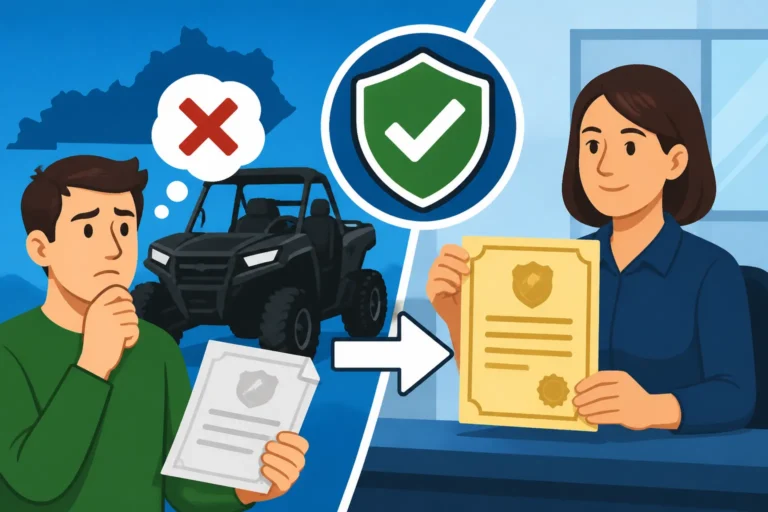
The Manufacturer's Certificate of Origin, or MCO, is essentially the birth certificate for your ATV or UTV. It's the document that proves the machine's existence and its initial transfer from the manufacturer to the dealer. For a demo machine, the dealer will typically still be holding the original MCO. When you purchase the demo, the dealer will then "assign" the MCO over to you, the first retail purchaser. This assignment is usually a section on the back of the MCO itself, where the dealer formally signs it over to you.
The MCO will contain vital information about your machine, including its Vehicle Identification Number (VIN), make, model, year, and engine size. It's paramount that you receive the original MCO from the dealer and that it's correctly signed over to you. Without it, you simply cannot title the machine in Kentucky. Make sure to double-check that the VIN on the MCO matches the VIN stamped on the machine itself. This might seem like a small detail, but discrepancies here can lead to significant delays and frustration at the clerk's office. Think of it as the foundational document upon which your entire titling process rests.
The Bill of Sale and Its Importance
Beyond the MCO, a comprehensive bill of sale from the dealership is absolutely essential. This document serves as a detailed record of your transaction, outlining the buyer, seller, machine details, purchase price, and date of sale. It acts as your proof of purchase and is critical for calculating sales tax and establishing ownership. A good bill of sale from a reputable Kentucky dealer will clearly state that the machine is a "demo" and list all relevant financial figures, including any trade-in value that might reduce your taxable amount.
It might feel like just another piece of paper, but trust me, the County Clerk will scrutinize this. Ensure it includes:
- Your full legal name and address.
- The dealer's name and address.
- The full VIN of the ATV or UTV.
- The purchase price you paid.
- The date of the sale.
- Signatures from both you and an authorized representative of the dealership.
If you ever find yourself needing a general template for legal documents or want to understand what goes into a solid legal agreement, resources like LawDepot can be useful for looking at examples of comprehensive bills of sale or other agreements. While your dealer will provide the specific one for your transaction, having a general understanding of legal documentation can be empowering. This document, alongside the MCO, forms the backbone of your application to the state. For more on what this crucial document should look like, consider reviewing [A Kentucky Bill of Sale for an ATV].
Sales Tax Considerations for Demos
Ah, sales tax. This is often where the reality of the purchase truly sets in. In Kentucky, you will pay sales tax on the purchase price of your dealer demo ATV or UTV. This tax is typically collected by the County Clerk at the time you apply for your title. The amount is calculated based on the final sales price after any discounts or trade-in credits have been applied. So, if you traded in an old machine, make sure that value is clearly itemized on your bill of sale, as it can reduce the amount of sales tax you owe.
Many folks are surprised by this cost, especially if they haven't bought a vehicle recently, or if they assumed the dealer would handle it separately. It's vital to factor this into your budget when buying a demo machine. The last thing you want is to arrive at the clerk's office, ready to get your title, only to discover you don't have enough to cover the sales tax. This is a non-negotiable part of the titling process. You can find more specific information on this topic in [Kentucky ATV Sales Tax at Titling]. Always ask your dealer for a clear breakdown of all costs associated with the purchase, including an estimate for the sales tax you'll pay at the clerk's office, so there are no surprises.
The Titling Process at the County Clerk's Office
Once you have your key documents in hand, the final step is to visit your local County Clerk's office. This is where all those papers come together, and you officially apply for your Kentucky title. Don't procrastinate on this step; Kentucky has a [Kentucky's Fifteen-Day Titling Deadline] from the date of purchase.
Form TC 96-182: Your Essential Application
The form you'll need to fill out is the Kentucky Application for Certificate of Title/Registration, known as Form TC 96-182. This is the standard form for titling vehicles in Kentucky, and your dealer might even pre-fill some sections for you, which is always a welcome convenience. However, it's your responsibility to review it carefully for accuracy before you sign it. You'll need to provide your personal information, details about the ATV or UTV, and affirm the purchase price for sales tax calculations.
Pay close attention to filling out every field completely and accurately. Any missing information or errors can cause delays. If you're unsure about any section, it's always better to leave it blank and ask the clerk for clarification when you submit your documents. Remember, the clerk is there to help guide you through the process, but they can't correct errors you've already made without potentially slowing things down. For a more detailed walkthrough of this form, refer to [Kentucky Form TC 96-182 Explained].
What to Expect at the Counter
When you walk into the County Clerk's office, be prepared with all your documents and your identification. You'll need:
- The original, properly assigned Manufacturer's Certificate of Origin (MCO).
- Your detailed bill of sale from the dealer.
- Your completed and signed Form TC 96-182.
- Your valid Kentucky photo ID.
- Payment for the title fee and the applicable Kentucky sales tax.
The clerk will meticulously review all your paperwork to ensure consistency and accuracy. They'll check that the VINs match across all documents, confirm the MCO is correctly assigned, and verify the purchase price for tax purposes. Once everything checks out, you'll pay the necessary fees. You'll typically be given a temporary registration or a receipt that serves as proof you've applied for the title, and your official title certificate will be mailed to you later, usually within a few weeks. The staff at your local [Titling at a Kentucky County Clerk] office are experienced in handling these transactions, so don't hesitate to ask questions if something is unclear.
Special Considerations and Potential Hiccups
While titling a dealer demo is generally straightforward, there are a few scenarios and nuances that can arise. Being aware of these can help you proactively address any issues and ensure a smooth process.
Dealer-Specific Rules and Practices
While the state laws for titling are uniform across Kentucky, individual dealerships sometimes have their own internal procedures for handling demo sales. For instance, some dealers might offer to handle the entire titling process for you, taking your documents to the County Clerk on your behalf, especially for new machines. Others might simply hand you the MCO and bill of sale and expect you to complete the titling yourself. It’s absolutely crucial to clarify this with your dealer before you finalize the purchase. Don't assume anything.
Ask specific questions: "Will you submit my paperwork to the County Clerk, or am I responsible for that?" "What documents will I walk out with today?" A reputable dealer will be transparent about their process and help guide you. If they offer to handle the titling, make sure you understand when and how you'll receive your proof of application or temporary paperwork, and when to expect your permanent title in the mail. This upfront communication can save you a lot of guessing and potential frustration later on.
Older Demos and Titling Challenges
Most dealer demos are relatively new machines, used for a season or two at most before being sold. However, on rare occasions, you might come across an "older" demo that's been on the lot for an extended period. This can sometimes introduce a tiny wrinkle, though it's less common now. Historically, [Why Kentucky Titles Machines Bought After July 2010] became a significant benchmark. If, for some extremely unusual reason, a dealer had a machine that predated that rule and had never had an MCO processed through the state system, it could lead to complications. However, for any modern demo, this is almost certainly not a concern, as the MCO system is well-established.
The primary challenge with any demo, regardless of age, remains the integrity of the MCO and the bill of sale. Always ensure the VIN on all paperwork perfectly matches the machine. [Kentucky's Seventeen-Character VIN Rule] is strict, and any deviation or missing characters will cause an immediate rejection at the clerk's window. If you're looking at a demo that seems unusually old, or if anything about its history feels murky, don't hesitate to ask the dealer for a full explanation and documentation. It's always better to be overly cautious than to find yourself with a machine you can't legally title.
Here's a quick comparison to help visualize the titling process for different types of ATV/UTV purchases:
| Feature | Brand New Machine (from dealer) | Dealer Demo Machine | Used Machine (private sale) |
|---|---|---|---|
| Initial Ownership Proof | Manufacturer's Certificate of Origin (MCO) | MCO, assigned by dealer | Previous Owner's Kentucky Title |
| Titling Entity | You (first retail owner) | You (first retail owner) | You (transfer from previous owner) |
| Bill of Sale Required | Yes, from dealer | Yes, from dealer | Yes, from private seller |
| Sales Tax | Paid at County Clerk | Paid at County Clerk | Paid at County Clerk |
| Form TC 96-182 | Yes, for new title | Yes, for new title | Yes, for title transfer |
| VIN Verification | Usually not needed | Usually not needed | Potentially, if out-of-state or issues |
| Warranty Status | Full manufacturer warranty | Typically full or remaining | Usually none (unless transferable) |
This table highlights that for titling purposes, a dealer demo aligns much more closely with a brand-new machine than a privately sold used one. The dealer is simply passing on the MCO to its first retail owner, which is you.
Disclaimer
This article is for general informational purposes only and does not constitute professional advice. Laws, prices and regulations vary by location and change over time. Consult a qualified professional for guidance on your specific situation.