Renting Near Harlan, Kentucky
Renting Near Harlan, Kentucky
A rental can make a Harlan-area ride possible without hauling your own machine, but the details matter: where you can ride, what the rental includes, and how you reach the trail system. This guide explains how to compare ATV and side-by-side rentals near Harlan, plan around Black Mountain, and avoid common booking and trail-day surprises.
Start With the Riding Area, Not the Rental Listing
Harlan is a useful base for exploring Kentucky’s coal-country trails, especially the Black Mountain Off-Road Adventure Area near Evarts. But “near Harlan” does not automatically mean a rental is located at the trailhead, includes access to a particular trail system, or can be ridden on every nearby road. Confirm the pickup location and the authorized riding area before you book.
Black Mountain is a managed off-road area, not a network of public streets. A rental agreement may limit where you can take the machine, and park access may involve its own rules or permit. Ask the rental provider whether the machine is approved for the park you plan to ride, whether the permit is included, and whether you must collect the machine from a shop, campground, or staging location. For a broader look at the area and trip styles, see Riding Black Mountain for a Weekend.
Understand the distance between Harlan, Evarts, and pickup
A listing that says “Harlan” may refer to a broad service area rather than a storefront in town. The rental operator might be closer to a trailhead, require you to meet at a specific site, or deliver only to certain locations. Before paying a deposit or arranging lodging, get the actual pickup address and ask how long the transfer to the riding area takes.
Also check whether the rental begins when you pick up the machine or when you reach the trail. If transportation or delivery is separate, clarify who handles it and whether the machine can be driven on the connecting route. Do not assume that a short trip on a public road is allowed just because the rental is close to the park. Kentucky road rules for off-highway machines are different from trail rules, and a rental company’s permission cannot make an otherwise prohibited road ride legal.
If your lodging is in Harlan, Cumberland, or another nearby community, check the route to the rental counter and the trailhead separately. The closest rental listing may not be the most convenient if it requires a lengthy transfer, an early check-in, or a return before the park closes.
Match the machine to the trails and your group
An ATV is a single-rider machine, while a side-by-side has a seat and controls for a driver and one or more passengers, depending on its configuration. A side-by-side can be more practical for a family or a group that wants to travel together, but its width, turning needs, and handling may make some narrow or technical routes less comfortable. An ATV is more compact, though each rider generally needs a separate machine.
Do not choose by engine size or appearance alone. Ask the rental operator which trails are appropriate for the specific machine and the experience level of your group. If one rider is new, a less demanding route and a machine that is easy to control may be a better fit than a high-powered vehicle selected only for its capacity. A wide machine also needs enough room on the trail and at any passing point.
| Your priority | What to compare | Question to ask |
|---|---|---|
| Riding solo | ATV availability, fit, and controls | Does the rental include a machine sized for my experience and body size? |
| Riding with a passenger | Side-by-side seating and passenger rules | How many occupants may ride, and does each need a permit? |
| Taking children | Age limits, approved seating, and restraints | What are the operator’s minimum ages and child-seat requirements? |
| Trying technical trails | Machine capability and route suitability | Which trails do you recommend for this model and skill level? |
| Keeping logistics simple | Pickup point, delivery, and park access | Where do I collect the machine, and how does it reach the riding area? |
| Riding for more than one day | Rental duration, overnight storage, and return terms | May the machine stay at my lodging, and where must it be returned? |
The machine should fit the least experienced rider in the group, not just the most confident one. If people have different abilities, ask whether the operator recommends separate vehicles or a route with easier alternatives. A group that sticks together can only move as quickly as its slowest rider, and steep or narrow trails leave little room to sort out a poor vehicle choice after the ride begins.
Compare Rentals, Tours, and Included Services
A self-guided rental gives you control over your route and pace, but it also leaves you responsible for navigation, trail decisions, and staying within the permitted riding area. A guided ride can reduce the planning burden and may suit first-time visitors who want help choosing a route. The trade-off is less freedom over timing and itinerary, with the tour operator setting the route and pace.
When comparing providers, treat the listing as a starting point, not the complete contract. Confirm the exact machine, included equipment, meeting place, riding area, and return process directly with the operator. Listings can be outdated or written for a wider region. If you find an option through Viator or another booking marketplace, verify the details with the local operator before relying on them, especially for pickup, trail access, and what happens if conditions change.
Self-guided rental or guided tour?
A self-guided rental may be a good choice if your group has relevant experience, can follow trail signs or maps, and is comfortable managing its own time. Ask whether the operator provides a map, orientation, route suggestions, or a way to contact staff if the machine develops a problem. “Self-guided” does not necessarily mean you can ride anywhere you like.
A guided outing can be a better match if you are unfamiliar with the area, would rather not navigate, or want an operator to choose a route suited to the group. Ask what “guided” means: whether the guide rides ahead, follows behind, or meets the group at set points; whether the route is fixed; and how long the actual ride lasts. Clarify whether the booking is private or shared with other customers.
Tours are not automatically beginner-friendly. A guide may still take a group over challenging ground, and the operator may require riders to have a certain level of experience. Be honest about your comfort with steep climbs, loose rock, mud, narrow benches, and changing trail surfaces. Ask for a realistic description rather than relying on a dramatic photo or a vague “all skill levels” claim.
What the advertised rental may leave out
The word “rental” does not tell you whether a booking includes a trail permit, helmet, fuel, passenger access, damage protection, delivery, or park admission. Ask for a written breakdown before you reserve. If permits are separate, make sure you know where and when to buy them and whether they are issued per rider, per machine, or on another basis. Park-specific rules can differ, so never assume a permit from one riding area works at another.
For questions about this distinction, see Kentucky Rentals That Include the Permit. A rental company may handle the machine while a park or land manager controls access. Those are separate services unless the booking terms clearly say otherwise.
For rental basics statewide, Renting an ATV in Kentucky and Renting a Side-by-Side in Kentucky can help you compare vehicle types and booking arrangements. If you are narrowing the search to the local trail system, also review Kentucky Rentals Near Black Mountain and confirm directly that the provider is currently serving the dates you want.
Be careful with broad marketplace listings
A marketplace listing can make it easier to compare dates or find guided experiences, but the seller may be a local business and the platform may not control trail access or day-of operating decisions. Read the cancellation terms and check who is responsible for communicating weather closures, late arrivals, machine issues, and refunds.
If a listing uses broad location language, ask where the ride actually begins. A tour described as being near Harlan could meet outside town or serve a different part of the region. Ask for the precise meeting point before booking travel or lodging. Also check whether the advertised duration includes check-in, fitting safety equipment, instruction, and a vehicle orientation. The time spent riding may be shorter than the total booking window.
Book With the Right Questions
A smooth reservation starts with a clear picture of your group and the day you want. Share the number of riders and passengers, ages, relevant experience, preferred machine type, and any mobility or fit concerns. Ask the operator to recommend a vehicle and route rather than booking the largest or most powerful option by default.
Do not rely on a social media post or an old directory entry for current availability. Contact the business using its current official details, verify the dates, and request written confirmation of the terms. Demand can be higher on weekends, holidays, and popular riding periods, so make arrangements early if your group needs multiple machines or a particular seating configuration. Availability can still change; a reservation confirmation should say what is held for you and what happens if the operator cannot provide it.
Questions to ask before paying
- Where exactly do we meet? Get the address, arrival instructions, and any parking or check-in details.
- Where may we ride? Confirm the authorized park or trail system and whether the rental can be used there.
- What is included? Ask about permits, entry, fuel, helmets, goggles, instruction, maps, and any other equipment.
- What does the booking cover? Confirm the start and end times, late-return rules, and whether the reservation is for the specific vehicle or a vehicle class.
- What are the rider and passenger requirements? Check age, license, supervision, and seating rules for every person in your group.
- What happens if weather closes the area? Ask whether the operator reschedules, issues a refund, or applies another policy.
- What happens if the machine has a problem? Get the contact method, expected response, and instructions for stopping safely.
- What damage or cleaning charges may apply? Ask what is considered normal wear, reportable damage, or excessive mud.
- Can we bring our own gear? Confirm approved helmets, goggles, boots, and any equipment the operator requires.
- What is the return procedure? Confirm where to return the machine, whether it must be refueled, and what to do if you are delayed.
These questions matter even when the listing looks comprehensive. Terms such as “full day,” “permit included,” or “guided ride” can be interpreted differently by different providers. A direct answer in writing is more useful than assuming that a familiar phrase means the same thing everywhere.
Understand deposits and payment holds
A rental deposit or card hold is not necessarily the same as the rental charge. The operator may use it to cover potential damage, cleaning, missing equipment, or other obligations in the contract. The amount and release timing depend on the provider, so check current terms directly rather than budgeting from an old listing or another company’s policy.
Use a payment method you can monitor and save your reservation confirmation, contract, and any messages about included services. At pickup, follow the operator’s instructions for documenting the machine’s condition. If you notice damage, missing gear, or a warning light, point it out before leaving and make sure the issue is recorded. Taking clear photos may help establish the condition at handover, but it does not replace the rental company’s required inspection process.
Review cancellation and weather terms
Mountain weather can change quickly, and rain can affect both ride comfort and trail conditions. A forecast that looks acceptable days ahead does not guarantee the park or operator will be running as planned. Ask who makes the closure decision, how the operator will contact you, and whether your booking is moved, refunded, or subject to another policy.
Separate a customer cancellation from an operator cancellation. The rules may differ if you change your mind, arrive late, or cannot travel compared with a closure caused by unsafe conditions or a machine becoming unavailable. Keep the relevant contact information accessible on the ride day. If your schedule is tight, ask whether the company allows you to arrive early and what happens if a check-in delay cuts into the booked period.
Check Rider Requirements, Safety Gear, and Insurance
A rental operator can set requirements that are stricter than the minimum rules that apply in a particular setting. Age, driving experience, license, passenger, and supervision policies may vary by machine and provider. Ask about every person in the group, including passengers and minors. Do not assume a child can ride because a machine has a passenger seat or because the child has ridden somewhere else.
Kentucky’s rules can also vary by where and how a machine is operated. Trail riding is not the same as riding on a public road, and a rental company cannot authorize road use that is not allowed. Before planning a route that connects to a road or another property, ask the operator whether the route is permitted and check the applicable rules. For a closer look at booking requirements, see Kentucky Rental Age and License Rules.
Fit and use the protective equipment correctly
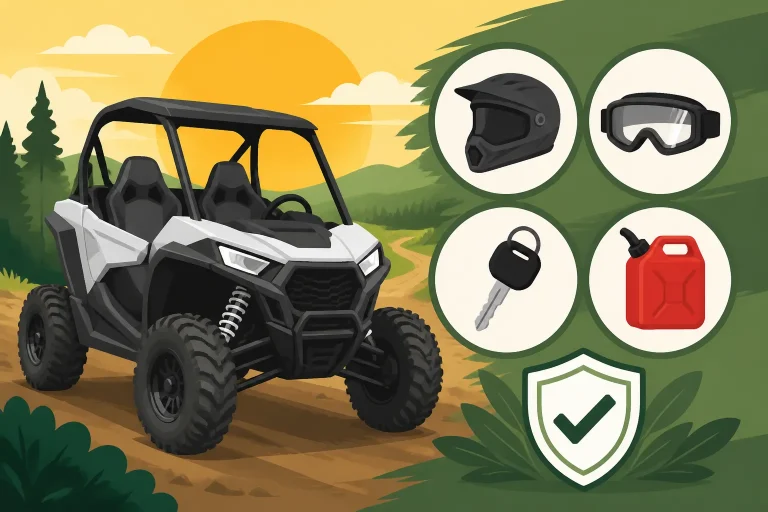
Ask what protective equipment is provided, what condition it is in, and whether you may bring your own. A helmet should fit securely and be appropriate for the activity; a loose or poorly fastened helmet can shift when you need it. Goggles can help protect your eyes from dust, grit, and branches. Sturdy footwear, gloves, long sleeves, and clothing suited to the weather can make a long ride more comfortable and reduce minor scrapes.
If children are riding as passengers, verify that the vehicle has a suitable seat and restraint for them and that the operator permits their age and size. Do not carry a passenger in a seat not designed for one. Ask how the operator wants passengers to enter and exit, where they should place their hands and feet, and what they should do when the vehicle is moving over uneven ground.
A quick orientation is not a substitute for practice. Before leaving the staging area, make sure the driver understands the controls, brakes, gear selection, parking procedure, and emergency shutoff. Ask questions before the ride starts. If a rider is uncertain after the briefing, do not feel pressured to set out on a difficult route.
Read the insurance and damage terms
Rental coverage can be more limited than customers expect. A waiver or damage protection option may have exclusions, a deductible, or conditions that are easy to miss, such as where the vehicle may be driven, who may operate it, or what happens after a rollover. Liability coverage, damage to the rental machine, injury, and damage to another person’s property are different issues; a contract may address them separately.
Ask what coverage is included, what is optional, and what circumstances could leave you responsible for a loss. Check whether your personal auto or recreational vehicle policy applies to a rented off-road machine rather than assuming it does. If you use a credit card with rental benefits, verify the coverage terms with the card provider; benefits for road vehicles may not apply to off-road rentals. For a more detailed checklist, see Kentucky Rental Insurance and Waivers.
Treat safety rules and contract restrictions as part of the ride plan. Do not let an unlisted driver take the controls, carry more people than the machine is designed for, or leave the authorized trail system. Those choices can create safety risks and may also affect the contract or coverage.
Plan the Ride Around Conditions and Time
Trail conditions can change with rainfall, temperature, traffic, and maintenance. A route that felt manageable in dry weather may become slippery or difficult after rain. Ruts, loose stone, standing water, mud, and reduced visibility can slow a group down. Check current conditions and closures with the operator or park before setting out; a map or listing saved earlier may not reflect the latest notice.
Ask the rental company what routes fit your experience and the day’s conditions. Make sure your group understands trail markings and where it is allowed to go. If a trail is closed, do not bypass the closure by riding around a gate or crossing onto adjacent land. Closure signs and barriers are there for a reason, and a rental agreement does not grant permission to use closed routes.
Build a realistic schedule
Allow time for check-in, paperwork, vehicle fitting, safety instruction, and any permit or park-entry process. Add time for a slower pace if your group includes beginners or children. The total booking length may include these tasks, so ask how much riding time you can reasonably expect and whether the rental clock starts at check-in or departure.
Plan a turnaround time rather than using every minute to push farther into the trail system. Leave a margin for breaks, a wrong turn, a minor mechanical issue, or a slower return. The operator’s closing time and return deadline matter as much as your intended route. If the group is unfamiliar with the area, a shorter loop is often a better first outing than trying to cover the maximum distance.
Bring water and weather-appropriate layers, and keep personal items secured. Dust, rain, and rough surfaces can damage phones or make them difficult to use. Ask whether the rental includes a storage compartment and whether you can safely carry a small bag. Do not depend on a phone signal for navigation or emergency contact in a remote area; ask the operator what communication options are available and what to do if you become separated.
For practical planning around trail status, Kentucky Trail Conditions Before You Ride is a useful companion. Conditions can change during the day, so check again before leaving the staging point if the operator or park posts updates.
Ride within the group’s limits
Set simple group rules before departure. Agree on who leads, who rides last, how riders will wait at junctions, and what to do if someone loses sight of the group. Keep a pace that allows every rider to follow safely. Do not pressure a new rider to attempt a climb, descent, water crossing, or technical section they do not understand.
On a narrow trail, avoid stopping where another rider cannot see you or where the vehicle blocks a blind turn. Give other trail users room, follow posted direction and speed limits, and stay on the marked route. If the group encounters a difficult feature, stop at a safe place and ask the guide or rental operator for advice rather than improvising around it.
Never assume a creek, mud hole, or slope is shallow or stable because it looks that way from the edge. A machine can lose traction, become stuck, or tip on uneven ground. Ask the operator which features to avoid and what recovery options exist. Do not attempt a risky recovery without proper equipment and training.
Have a plan for a breakdown
Before departure, find out how to reach the rental operator from the trail and what information to provide if the machine stops working. Ask whether the company offers trail-side assistance, what areas it covers, and whether a recovery charge can apply. The answer may depend on where the machine is located and why it needs help.
If a machine develops a problem, stop in a safe place, keep the group together, and follow the operator’s instructions. Do not continue riding if steering, brakes, tires, or another safety-critical part seems compromised. Report an issue promptly rather than waiting until the return. If a rider is injured or the situation is urgent, use the appropriate emergency response rather than treating the rental company’s support line as emergency services.
It is also sensible to know how the provider handles fuel. Ask how much is supplied at pickup, whether the machine must be returned at a particular fuel level, and what happens if the group runs low on the trail. The operator may have specific rules for carrying extra fuel; do not bring a fuel container unless the company says it is allowed and explains how it must be secured.
Put Together a Harlan Rental Trip
A rental outing is easier when travel, lodging, pickup, and riding are planned as separate pieces. First decide which trail area you want to visit. Then find a rental provider that confirms access to that area and has an available machine for your group. After that, choose lodging and transportation based on the actual meeting point and return requirements.
For a one-day trip, arriving in the area the night before can reduce the risk of a late check-in after a long drive. If you are staying near a trailhead, verify whether the lodging is close to the rental pickup location as well as the riding area. “Near the trails” and “near the rental counter” are not necessarily the same thing. Check parking arrangements if you are bringing a truck or trailer, and do not leave a rental machine overnight at your lodging unless the provider explicitly permits it.
For a multi-day trip, confirm whether you can keep the machine between riding days, where it must be stored, and whether the rental terms change outside the operator’s business hours. A machine left unattended may be subject to security requirements or restrictions. Ask before you book lodging that assumes you will have the rental vehicle at the cabin or campsite.
Sample planning sequence
- Choose a riding area and check whether it is open to the type of machine you want to rent.
- Contact rental providers and confirm their current service area, available dates, vehicle configuration, and pickup location.
- Ask what the booking includes, especially trail access, permits, gear, fuel, and instruction.
- Confirm rider ages, passenger arrangements, and operator requirements for your whole group.
- Review the contract, payment hold, damage terms, cancellation policy, and weather procedure.
- Book lodging and transportation around the confirmed pickup and return points.
- Recheck trail conditions and operating notices before leaving for the area.
- Arrive with enough time for check-in, orientation, and any park or permit requirements.
- Follow the operator’s route guidance and return the machine on time in the condition required by the agreement.
This sequence avoids a common planning mistake: reserving lodging or travel first and discovering later that the rental provider is far away, unavailable for the dates, or unable to serve the intended trail system.
Decide whether to rent or bring your own machine
Renting makes sense when you do not own a suitable machine, do not want to tow one, or want to try the area before planning a larger trip. It can also simplify maintenance and storage. The trade-offs are booking restrictions, operator rules, added costs beyond the base rental, and less freedom to change the plan at the last minute.
Bringing your own machine can give you more control over fit, setup, and schedule, but it requires transport, preparation, and responsibility for the vehicle. You will still need to confirm park access, permits, and trail conditions. A personal machine does not give you permission to ride on closed trails or public roads. For a rented machine, the provider may add a specified return point, time, and route restriction.
When comparing the two, look beyond the advertised rental charge. Include any required permit, protective gear, transportation to the trail, fuel, potential card hold, and lodging. Providers set their own pricing and terms, so verify the current total with each business rather than relying on an old quote, review, or social media post.
What to do if you cannot find a suitable listing
If search results show few options, contact local operators or lodging businesses serving the riding area and ask whether they can identify current rental providers. A directory entry does not prove a business is operating, renting the machine you need, or serving your dates. Confirm directly before making a nonrefundable travel commitment.
You can broaden the search to nearby communities, but compare the extra drive with any delivery or pickup arrangement. A rental company farther away may not deliver to Harlan or the trailhead. Ask about the machine’s permitted transport method: it may need to be trailered rather than driven from the shop. Do not use a public road to connect separate riding areas unless the route and machine are legally authorized for that use.
If no provider can confirm the vehicle, date, and trail access you need, consider changing the dates, choosing a guided option, or postponing the ride. A vague promise that a machine will be “available somewhere nearby” is not enough to build a dependable trip around.
Frequently Asked Questions
Can I rent an ATV or side-by-side directly in Harlan?
Possibly, but rental locations and service areas can change. Confirm the current pickup location, dates, machine type, and authorized riding area with the operator. A listing that says “near Harlan” may not mean pickup is in town.
Does an ATV rental automatically include access to Black Mountain?
No. Machine rental and trail access may be separate. Ask whether the operator’s rental is approved for the area, whether a permit or entry fee is included, and what you need to obtain separately.
Is a guided tour better than a self-guided rental?
It depends on your experience and preferences. A guide may help with route choice and navigation, while a self-guided rental offers more control over your pace. Ask about the route difficulty, group format, and actual riding time before deciding.
Can a rental side-by-side be driven on local roads?
Do not assume so. Road use is subject to separate rules, and the rental contract may prohibit it even where a particular use might otherwise be allowed. Confirm the legal route and the operator’s permission before using any public road.
What should I verify before paying a deposit?
Confirm the meeting point, machine, riding area, included permit and gear, rider requirements, payment hold, damage terms, cancellation policy, weather procedure, and return deadline. Get important details in writing.
Disclaimer
This article is for general informational purposes only and does not constitute professional advice. Laws, prices and regulations vary by location and change over time. Consult a qualified professional for guidance on your specific situation.