Guided ATV Tours in Kentucky
A guided ATV tour can make a Kentucky off-road trip easier to plan, especially if you do not own a machine or know the trails. The challenge is that “guided tour” can mean anything from a short ride behind an instructor to a full-day outing on a remote trail system. Here’s how to compare the experience, ask the right questions and arrive prepared.
What a Guided ATV Tour Includes
A guided ATV tour is a scheduled ride led by an operator or guide. Depending on the business and location, the booking may include the machine, a helmet, a safety briefing, a guide who rides with the group, and access to a particular trail or riding area. Some tours use ATVs; others use side-by-sides, also called UTVs. The listing should say which type you are booking.
The word “guided” does not guarantee that every part of the trip is bundled. A tour might include the vehicle and guide but charge separately for access, protective gear, fuel, or other items. An operator may also offer a self-guided rental at the same location, where you ride without a guide after an orientation. Read the details rather than relying on the name of the product.
A guide can be especially useful for a first visit. They may explain how the controls work, choose a route suited to the group, point out hazards, and help keep riders together. They can also describe local terrain and make decisions if weather or trail conditions change. That does not mean a guide can remove the risks of off-road riding: a machine can still tip, slide, strike an obstacle or become stuck.
Before reserving, look for clear answers to these questions:
- Is the tour on an ATV, a UTV, or a choice of both?
- Does each booking provide one machine, or is the price per rider or per vehicle?
- Does a guide ride with the group, lead from a separate machine, or follow behind?
- Is the ride on private land, a managed off-road park, or another permitted route?
- Are helmets and any other protective equipment included?
- Are access permits included, if the route requires them?
- How long are the riding portion and the full appointment?
- What happens if the route is closed or conditions are unsuitable?
These details matter because tour formats differ. A two-seat UTV ride may be a good fit for a passenger who does not want to drive, while an ATV tour usually puts a rider in control of their own machine. Some providers may offer both formats; others may specialize in one. For more on the distinction, see Kentucky Guided UTV Tours.
A tour can also be a convenient way to try off-roading before deciding whether to rent independently or buy a machine. If you are comparing a guided experience with an unguided booking, Kentucky Rentals Versus Buying a Machine can help frame the choice. For a rental rather than a guided outing, Booking a Kentucky ATV Rental covers questions to settle before you reserve.
Where Guided Tours Take Place
Kentucky has several kinds of riding country, and the setting shapes the experience. A tour in the Red River Gorge area may be described differently from a ride in eastern Kentucky’s coal country or at an established off-road park. Do not assume that a scenic location name tells you exactly where the machine will go. Ask the operator for the actual riding area and the kind of terrain included.
Red River Gorge country
The Red River Gorge is known for rugged scenery and outdoor recreation, but a tour advertised as being near the Gorge is not automatically a ride inside a particular protected area. Operators may use private land, designated routes, or other approved riding areas nearby. Confirm the start point, the route boundary and whether the tour includes trail access or simply begins in the region. To compare the off-road experience with the tour format, see Guided Tours in Kentucky’s Red River Gorge.
Eastern Kentucky and coal country
Eastern Kentucky rides may involve steep climbs, rocky surfaces, narrow benches, former industrial roads or muddy sections, depending on the location and current conditions. These descriptions are not a promise that every tour includes every feature. Operators choose routes based on the group, equipment, weather and access rules.
Ask whether the tour is suitable for a new rider and whether the route has exposed edges, difficult climbs or sections where a machine may need extra clearance. If the group has a mix of abilities, the operator should be able to explain whether everyone follows the same route or whether there are options. A guide can help with navigation, but a difficult route can still be physically demanding.
Off-road parks and managed riding areas
Some tours operate at or near established riding areas. In that case, ask whether the tour price includes any required park or trail access, whether the guide stays with the group for the whole ride, and whether the route is limited to marked trails. Do not assume that a permit included with one operator applies to independent riding at another location. Rules and access arrangements can vary from site to site.
If a tour is advertised at a named park, check the operator’s directions and meeting instructions. The business may meet at a gate, a staging area, a nearby office or another designated point. Confirm whether you need to arrive early for check-in and whether the riding time begins at the appointment time or after orientation and fitting.
Match terrain to the group
Choose based on the least-experienced rider, not just the most confident one. A group that includes first-timers, younger riders or passengers may prefer a slower introduction over a long, technical route. A seasoned rider may want more varied terrain, but should not assume a beginner tour can be altered on the day.
| Tour setting or style | What it may suit | What to confirm |
|---|---|---|
| Introductory ride | First-timers who want time to learn controls | Pace, route difficulty, practice time and group size |
| Scenic guided outing | Riders prioritizing views and a steady experience | Actual route, stops, riding time and photo opportunities |
| Rugged trail ride | Confident riders seeking more challenging terrain | Climb difficulty, obstacles, machine type and route options |
| UTV tour | Passengers or groups who prefer a shared vehicle | Seating, driver requirements, passenger rules and seat belts |
| Park-based tour | Visitors who want a managed riding location | Access arrangements, permit inclusion, closures and meeting point |
For a wider look at operator options and tour styles, browse Kentucky Rental Companies Worth Calling and [Kentucky Tours for Beginners]. Treat listings as a starting point, then verify the details directly with the business running the ride.
Choosing Between an ATV, UTV and Tour Style
An ATV and a UTV are not interchangeable experiences. An ATV is generally ridden by one person who straddles the seat and steers with handlebars. A UTV has a steering wheel and seats for more than one occupant, though seating capacity and layouts vary. A tour operator’s vehicle is the one you should plan around, not the generic “off-road tour” wording in a listing.
When an ATV may fit
An ATV can suit someone who wants to operate an individual machine and is comfortable balancing and steering over uneven ground. It also means each rider needs to be capable of following instructions and managing their own vehicle. Ask whether the operator requires prior experience, offers a practice area, or assesses riders before allowing them onto the route.
Do not equate “small” with “easy.” A compact machine still has weight, momentum and moving parts, and a trail can be slippery, rutted or steep. If you have never ridden, say so when booking. A responsible operator can tell you whether a particular outing is appropriate or suggest a less demanding option.
When a UTV may fit
A UTV can be a better fit for a passenger who would rather not drive or for people who want to ride together. The driver still needs to meet the operator’s requirements and take responsibility for controlling the vehicle. Passengers need to follow the guide’s instructions, remain seated as directed and use the safety equipment provided.
Confirm who is permitted to drive, how passengers are assigned, whether children can ride, and whether the machine has the number of seats your party needs. Never assume that a child can be added to a booking simply because the vehicle has an open seat. Age, height, seating and restraint rules may depend on the operator, the vehicle and the riding area.
Guided ride versus self-guided rental
A guided tour usually prioritizes instruction, route leadership and a planned group experience. A self-guided rental may offer more independence, but the renter may need to navigate, understand the rules and stay within permitted boundaries. A rental can include a short orientation without being a guided tour, so ask who accompanies riders once they leave the staging area.
| Consideration | Guided tour | Self-guided rental |
|---|---|---|
| Route knowledge | Guide leads or supports the group | Rider may need to follow a map or stay within set limits |
| Pace | Usually set by the guide and group | More control, within rental terms |
| Instruction | Often includes an orientation and ongoing guidance | Typically includes an orientation; confirm what support continues |
| Independence | Lower; group follows the planned outing | Higher, subject to the rental route and contract |
| Best question to ask | How close does the guide stay? | Where may we ride, and how do we get help? |
For a family or group with mixed experience, a guided outing can reduce the number of decisions the group must make on the trail. It does not automatically make the ride suitable for everyone. Be candid about comfort, mobility concerns and riding experience when contacting the operator. Kentucky Tours for Families offers more questions to consider when children or several generations are involved.
If the trip involves younger riders, review Kentucky Rental Age and License Rules and ask the tour business for its own current requirements. Legal rules and operator policies are not necessarily the same: a business may set stricter limits than the minimum that applies elsewhere.
How to Compare Operators and Book the Right Tour
A good listing tells you what the experience actually includes. A vague description can leave important issues unresolved until you arrive. Compare tours using the same questions, then confirm the answers with the company that operates the ride. A marketplace listing may help you find options, but the operator’s current rules and instructions should govern your plan.
Check the operator, not just the booking page
Look for the business name, location, contact information and a clear description of the ride. Confirm that the provider will be operating the tour on the date you want and that the route is available to that booking. If you find a listing through Viator or another booking platform, use it to identify the offering, then read the specific inclusions and contact the operator if a key detail is unclear. Availability, policies and tour content can change.
Polaris Adventures may also be relevant when you are looking for a branded off-road experience, but a brand name alone does not tell you which local operator, machine, route or terms apply. Confirm who conducts the tour, where it starts and what the booking includes. The same approach applies to any marketplace, manufacturer program or local business.
Check recent details rather than relying on a saved screenshot or an old social media post. If the listing does not state whether you receive an ATV or a UTV, whether a guide accompanies you, or what equipment is provided, ask before paying.
Compare the booking details
Use the following checklist when you contact a provider:
- Identify the machine. Ask for the vehicle type, seating arrangement and whether you will drive or ride as a passenger.
- Clarify what the cost covers. Ask whether the booking is charged per person, per machine or per group, and whether access, equipment, fuel or other items are separate. For named companies or products, verify current amounts with the provider.
- Confirm the ride duration. Ask how much time is spent riding, how much time is reserved for check-in and instruction, and whether stops count toward the advertised duration.
- Ask about the route. Find out what terrain to expect, whether the route can change, and what the guide does if a section is unsuitable.
- Check group size. A large group can feel different from a small guided ride. Ask how many machines may be on the outing and whether the guide stays at the front, rear or alongside riders.
- Confirm age and driver requirements. Ask about minimum ages, license requirements, passenger limits and any height or size restrictions.
- Review equipment. Confirm what is supplied, what you may bring and whether gear must meet any particular standard.
- Read the waiver and damage terms. Understand your responsibilities if the machine is damaged, becomes stuck or needs recovery.
- Ask about weather and closures. Confirm how the operator handles heavy rain, unsafe conditions, route closures, cancellation and rescheduling.
- Get meeting instructions. Check the exact address, arrival time, parking arrangements and what to do if you are delayed.
Costs are best compared by looking at the full outing, not just the headline figure. One provider may include equipment or access while another may list those separately. Ask about taxes, optional add-ons, deposits, damage protection and any possible cleaning or recovery charges. Do not assume a damage waiver covers every type of damage or replaces a deposit; read the actual agreement. Kentucky Rental Insurance Options has more on coverage questions to raise before a ride.
A booking marketplace can make it easier to compare dates and descriptions, but it may not show every local requirement. If an answer matters to your group, get it in writing from the operator. Keep the confirmation and instructions accessible on the day.
Book early when timing matters
Popular weekends, holidays and seasonal trips can be busy, but availability varies by area and operator. Reserve early if you need several machines, a specific vehicle layout or a tour that accommodates a particular age or mobility need. Before booking a nonrefundable experience, check the weather policy and cancellation terms.
When comparing dates, account for the drive to the meeting point and time for check-in. Trail areas can be farther from a town or lodging than a map makes them feel, especially when the final approach is on local roads. Avoid scheduling a ride so tightly that a delay leaves your group rushing through the safety briefing.
If you want to visit more than one location, do not assume one tour operator’s booking, permit or instructions cover another park. Confirm each arrangement separately. Kentucky Rentals That Include the Permit explains why access should be checked rather than presumed.
Safety, Rider Requirements and Trail Etiquette
A guided tour can provide instruction and route support, but riders remain responsible for listening, using equipment correctly and following the operator’s rules. Take the briefing seriously even if you have ridden elsewhere. Controls, machine response, terrain and group procedures can differ from what you are used to.
Before the ride
Tell the operator about your experience level and any practical concern that could affect safe participation. That includes difficulty getting on and off a vehicle, discomfort with steep or uneven terrain, or uncertainty about riding as a passenger. The operator may be able to recommend another format or tell you that the tour is not a suitable match.
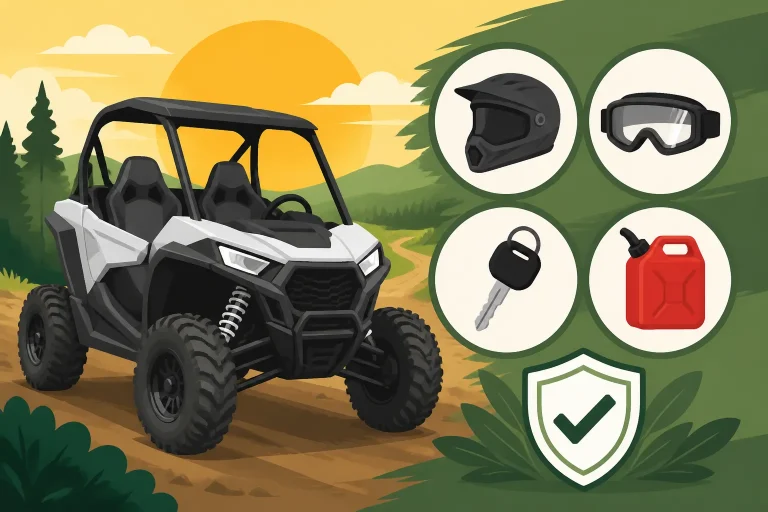
Wear clothing that can handle dirt, weather and contact with vegetation. Sturdy closed-toe footwear is a sensible choice; sandals and loose items can be a poor fit around moving parts and rough ground. Eye protection matters where dust, branches or flying debris may be present. Follow the operator’s equipment instructions and do not replace required safety gear with casual clothing.
Listen for the guide’s explanation of:
- Throttle, braking and steering controls
- How to stop and where to wait
- Safe following distance
- Hand signals or other group communication
- What to do if a machine stalls or a rider falls behind
- Rules for passing, turning around and crossing obstacles
- The procedure for an emergency or mechanical problem
Ask questions before the group moves out. It is safer to pause at the staging area than to guess at a control or trail instruction once underway.
During the ride
Keep the spacing and pace the guide sets. Do not pass the guide or another rider unless the operator explicitly permits it. Stay on the authorized route, avoid cutting corners and do not ride beyond the group’s limits to keep up. If you feel uncomfortable, signal the guide and stop in the way you were shown.
Mountain and wooded terrain can change quickly. Loose rock, mud, ruts, water, steep slopes and limited sightlines may appear on the same outing. Rain can make a familiar route much harder, and a guide may alter or shorten the ride for safety. Do not pressure the group to continue through a section that the guide has identified as unsuitable.
Leave enough space to react to the machine ahead. Dust may reduce visibility, and a rider can stop suddenly. On narrow sections, wait for the guide’s direction rather than trying to pass. Stay aware of passengers and other members of the group, and never use a phone while operating a vehicle.
Know the limits of the tour
A guide’s presence does not make a route public or grant riders permission to leave the designated area. Ask where the tour is authorized to ride and follow the boundaries. If your plan includes continuing on your own after the tour, check whether the rental agreement permits it and what additional access rules apply.
Do not assume a tour makes an ATV or UTV street legal. Off-road access and public-road use are different questions. A guided ride should stay within the operator’s approved route and instructions; do not ride on public roads unless the provider specifically explains the legal basis and requirements for that use. For broader context, see Kentucky Rules for ATVs on Public Roads.
Trail etiquette is part of safety. Yield where directed, avoid blocking a narrow route, keep noise and speed under control, and take rubbish out with you. Do not disturb wildlife or damage vegetation, trail markers or private property. A guide may give local instructions that go beyond general expectations; follow them even if another trail system has different practices.
What to Wear, Bring and Expect on the Day
A little preparation makes check-in calmer and helps you focus on the ride. The operator’s instructions take priority because equipment and access rules differ. Call if you are unsure whether an item is allowed or supplied.
Clothing and protective gear
Dress for the forecast and the terrain, not just the temperature at the parking area. Riding can feel cooler at speed, while humid weather and physical effort can make a warm day uncomfortable. Bring layers that you can adjust, and choose clothes that you do not mind getting dusty or muddy. Avoid loose straps, dangling accessories and anything that could catch on the vehicle.
Confirm whether the operator provides helmets and eye protection. Ask about fit and whether you may bring your own approved equipment. If you wear glasses, check whether they fit comfortably beneath the helmet and work with the eye protection. A tour’s gear may be limited, so do not wait until arrival to disclose a sizing or fit issue.
For a fuller clothing checklist, see Kentucky Tours and What to Wear. That topic is useful for both ATV and UTV outings, where weather and trail conditions can affect comfort even when riders spend most of the time seated.
Practical items
Ask the operator what may be carried on the machine. Small, secured essentials can be useful, but a bag that swings, catches or interferes with controls is not worth bringing. Consider a secure place for identification, booking details and any needed medication. Keep valuables minimal, and check whether phones or cameras can be carried safely.
A phone may not have reliable service in every hollow or remote riding area. Do not rely on it as your only way to contact the guide. Follow the group’s communication plan and stay with the guide. If the operator allows photos, stop only where and when it is safe to do so.
Arrival and check-in
Plan to arrive by the time the operator specifies, not at the scheduled departure minute. Check-in may include reviewing documents, signing a waiver, being fitted for equipment, learning controls and taking part in a practice session. If someone in your party is late, ask in advance whether the group will wait or whether late arrival means missing the ride.
Bring any required identification or driver documentation, and make sure the booking name matches the person checking in. Read the waiver before signing, including terms about damage, injury, recovery and cancellations. If you do not understand a term, ask the operator to explain it before the ride begins.
If your reservation is for a UTV, confirm which person is expected to drive and whether another qualified adult can take over. If the vehicle has more seats than the number of riders, do not assume that an extra person can join without changing the booking. Likewise, do not assume a child can ride without advance approval.
Weather and changing conditions
Rain may make a route muddy or unsafe; dry conditions can mean more dust. High heat, storms, poor visibility or a closure may change the plan. Ask how the operator communicates a cancellation or change and whether the business offers a refund, rescheduling or another remedy under its terms. Do not treat a forecast alone as confirmation that the tour is canceled; wait for the operator’s instructions.
Pack for the conditions without overloading yourself. A dry layer or rain shell may be useful, but only if it can be secured and does not interfere with riding. Follow the guide’s advice about water and breaks, particularly on a longer outing. If you feel unwell or overwhelmed, tell the guide rather than trying to push through silently.
Common Booking Mistakes to Avoid
The most preventable problems usually come from assumptions: assuming an ATV when the booking is for a UTV, assuming access is included, or assuming a beginner can ride any route. Resolve those uncertainties before the reservation is final.
Booking by location name alone
A tour advertised near a popular destination may start elsewhere or use a separate riding property. Check the meeting location and route rather than planning around a broad regional label. Allow enough time for the actual drive and any check-in requirements.
Confusing a tour with a rental
A tour normally has a guide or planned group route; a rental may not. A rental provider may offer some instruction without accompanying riders. Ask whether the guide rides with you throughout the experience and what support is available if you lose your way or have a mechanical issue. If you are seeking a rental format, Renting an ATV in Kentucky covers the broader process.
Assuming all costs are included
A listing may omit or separately charge for access, gear, fuel, optional protection or other services. Ask for the total expected charge and what could be added. Do not rely on a general phrase such as “everything included” without seeing what that covers.
Failing to discuss age and passenger rules
Every person in the group should meet the operator’s conditions. Ask about the driver’s age, passenger age, height, seat assignment and any license requirement. Do not book first and hope to resolve a child’s eligibility at the staging area. Operator requirements may be stricter than a general legal rule, so confirm with the business.
Treating a guide as a guarantee of easy terrain
A guided tour can still involve challenging ground. Ask for a plain-language description of hills, rocks, mud, water crossings and exposure. “Beginner-friendly” is not a precise difficulty rating, and the phrase may mean different things to different operators. Explain what your group has and has not ridden before.
Ignoring cancellation and damage terms
Weather, closures and mechanical problems can affect a trip. Understand who makes the decision to cancel, how you will be notified and what happens to your booking. Separately, find out how the operator handles damage, cleaning, towing and recovery. A damage waiver, if offered, may have exclusions or conditions.
Assuming another permit or registration applies
A permit or access arrangement tied to one park or operator may not work somewhere else. A machine’s title or registration is also not the same thing as permission to ride a particular trail. Ask the tour company what is handled for the booked outing and what, if anything, you need to obtain yourself. For background on separate park access, see Kentucky Trail Permits Explained.
Frequently Asked Questions
Do I need ATV experience for a guided tour in Kentucky?
Not always. Some operators offer introductory rides, but each business sets its own requirements and route difficulty. Tell the operator you are new to riding and ask whether the tour includes practice time and a suitable route.
Is a guided ATV tour the same as a UTV tour?
No. An ATV is generally operated by a rider using handlebars and a straddle seat. A UTV has a steering wheel and seats for more than one person, though layouts vary. Confirm the vehicle type before booking.
Are helmets included?
Some operators provide helmets, but inclusions vary. Ask what protective equipment is supplied, whether eye protection is included, and whether you can bring properly fitting gear of your own.
Can children join a guided tour?
Possibly, but age, size, seating and supervision requirements vary by operator and vehicle. Ask before booking and provide the ages of everyone in the group. Do not assume a child may drive or ride as a passenger.
Does the tour price include trail access?
It depends on the operator and location. Ask whether access or permits are included, and whether any other charges apply. Confirm the answer for the exact tour and date rather than assuming a permit applies across different parks.
Disclaimer
This article is for general informational purposes only and does not constitute professional advice. Laws, prices and regulations vary by location and change over time. Consult a qualified professional for guidance on your specific situation.