Kentucky’s Farm Exception With No Mileage Cap
Navigating the roads of Kentucky with an ATV or UTV can feel like trying to solve a complicated puzzle, especially when you just need to get from one part of your property to another. Many folks get frustrated by the strict rules about riding these machines on public roadways, often feeling like they're hemmed in. This comprehensive guide is here to shed light on one of the most useful exceptions to those rules: Kentucky's farm exception, specifically focusing on its incredible lack of a mileage cap.
Understanding Kentucky's General Stance on ATVs on Roads
Kentucky has a pretty firm stance when it comes to ATVs and UTVs on public roads: generally, they're not allowed. This isn't just a suggestion; it's a legal reality that catches many new owners or visitors off guard. The idea behind these laws is primarily public safety, as ATVs and UTVs are designed for off-road conditions and often lack the safety features or road-handling characteristics of conventional vehicles. For many riders, this general prohibition means that getting from one trail system to another, or even just crossing a paved road, becomes a significant logistical challenge.
Why Most Roads Are Off-Limits by Default
Think about it from the perspective of a state trying to manage traffic and ensure everyone's safety. ATVs and UTVs, while incredibly versatile and fun, aren't built for highway speeds, don't always have turn signals, brake lights, or mirrors that meet road vehicle standards, and their tires are designed for traction on dirt, not grip on asphalt. This fundamental design difference is why [Why Kentucky Roads Are Closed by Default] for these machines. It’s not an arbitrary rule; it's rooted in the very nature of these vehicles and the potential hazards they pose when mixed with cars, trucks, and motorcycles on public thoroughfares.
Imagine pulling your utility vehicle out onto a busy state route where cars are traveling at 55 miles per hour. The speed differential alone is a huge safety concern. Not to mention, the handling characteristics on pavement, especially at speed or during sudden maneuvers, can be unpredictable for a machine designed to be agile on uneven terrain. This default closure is the baseline that all exceptions work from, making those exceptions all the more valuable when you find one that applies to your situation.
The Brief 0.2-Mile Crossing Rule
While most roads are off-limits, there is a very narrow exception that some folks try to rely on: the 0.2-mile crossing rule. This rule allows an ATV or UTV to cross a two-lane highway or county road at a ninety-degree angle, provided it's done safely and during daylight hours. However, the key here is the extreme brevity of the allowance. It's strictly for crossing, not for riding along the road for any appreciable distance.
Many riders mistakenly believe this gives them a little leeway to connect trails or access a nearby store, but the truth is far more restrictive. [0.2 Mile and Not a Yard More] means precisely that. If you exceed that minuscule distance, even by a few yards, you could find yourself facing a citation. This rule highlights just how limited general road access is for ATVs and UTVs in Kentucky, which makes the farm exception stand out even more as a beacon of practicality for those who truly need it. It's a fleeting permission, barely enough to span a couple of driveways, let alone facilitate actual work or transit between fields.
The Heart of the Matter: Kentucky's Farm Exception
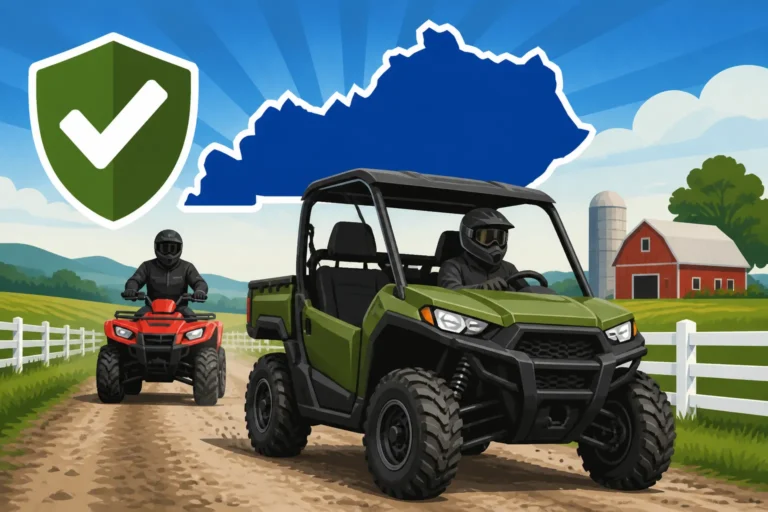
Now, let's talk about the game-changer for many landowners and agricultural workers in Kentucky: the farm exception. This particular provision in Kentucky law offers a significant departure from the general prohibition on ATVs and UTVs on public roads. Unlike the restrictive 0.2-mile crossing rule, the farm exception carves out a much broader allowance, recognizing the vital role these machines play in modern farming operations. It understands that a farmer often needs to traverse public roads to move between fields, access different parts of their property, or perform tasks directly related to their agricultural livelihood.
The existence of this exception isn't just a convenience; it's a necessity. Imagine trying to manage a sprawling farm that's bisected by a county road, or having multiple plots of land a few miles apart. Without the ability to use your ATV or UTV on these connecting roads, you'd be forced to load your machine onto a trailer for every short trip, a time-consuming and inefficient process that simply isn't feasible for daily farm work. This exception reflects a practical understanding of rural life and the tools essential to it, providing a legal pathway for productive and efficient farm management.
The Core Principle: Defined Farm Use
At its heart, the farm exception is built on the principle of "farm use." This isn't just a casual term; it's the defining characteristic that separates permissible road use from illegal riding. The law specifically states that ATVs and UTVs can be operated on public roads for agricultural purposes only. This means the machine's primary function during its time on the road must be directly tied to farming, ranching, or other recognized agricultural activities. It's not about recreational riding; it's about work.
This specific focus means that you can't just slap a "farm use" label on your machine and go joyriding down the highway. The intent and action must align with genuine agricultural tasks. Whether you're hauling supplies, checking fences, moving livestock, or inspecting crops, the activity must be a bona fide part of your farming operation. This legal specificity helps prevent abuse of the exception, ensuring it benefits those for whom it was truly intended: the hard-working agricultural community of Kentucky. Understanding and adhering to this core principle is paramount to staying on the right side of the law.
Why Kentucky's Farm Exception Has No Mileage Limit
Here's where the farm exception truly shines and becomes an invaluable tool for Kentucky farmers: it has no mileage cap. Yes, you read that right – no mileage cap. This is a stark contrast to the minuscule 0.2-mile crossing rule that applies to general use. For anyone involved in agriculture, this lack of a limit is incredibly liberating and practical. It means that if your farm property extends for miles along a county road, or if you manage several separate parcels of land some distance apart, you can legally drive your ATV or UTV on those public roads to get your work done.
This "no limit" provision directly addresses the reality of modern farming, where properties can be vast and segmented, and tasks might require traveling significant distances. [Why Kentucky's Farm Exception Has No Limit] is rooted in the understanding that a farmer's work doesn't stop at an arbitrary invisible line on a map. If you're [Hauling Feed Down a Holler Road] to a remote pasture or [Clearing Snow From a Neighbor's Lane] as part of a cooperative effort, the law allows you to do so without constantly worrying about exceeding a set distance. This flexibility is what makes the farm exception such a powerful and functional tool for the agricultural sector in Kentucky. It truly supports the continuous and expansive nature of farm operations.
Defining "Farm Use" in Kentucky Law
Understanding the letter of the law is crucial when relying on Kentucky's farm exception. The term "farm use" isn't left to broad interpretation; it generally refers to activities directly associated with the production of agricultural products, livestock, or the maintenance of agricultural land and facilities. This includes, but isn't limited to, tasks like transporting crops, feed, or equipment, inspecting fields or livestock, repairing fences, or moving between different plots of farmland. The emphasis is always on the purpose of the travel being agricultural in nature.
It's important to remember that this exception isn't a loophole for recreational riding. Taking your UTV out for a Sunday drive, even if you happen to live on a farm, would likely not fall under "farm use" unless there was a direct and demonstrable agricultural purpose for that specific trip. Law enforcement officers are generally familiar with these distinctions, and they'll be looking for reasonable indicators that your machine is indeed being used for its intended agricultural purpose. This clarity helps prevent the misuse of the exception and ensures its integrity for genuine farm operations.
Examples of Permissible Farm Activities
Let's get practical. What does "farm use" actually look like on the road? Imagine a farmer needing to move a portable welder from the main barn to a fence line three miles down the county road to fix a broken section. This is clear farm use. Or perhaps transporting bags of fertilizer or seed from a storage shed across a state highway to an outlying field. Checking on cattle in a pasture that's only accessible by crossing a short stretch of public road also qualifies. These are all routine, necessary tasks in the daily operation of a farm.
Another common scenario involves transporting tools or supplies between different agricultural buildings or fields that are separated by public roadways. A farmer might use their ATV to carry posts, wire, or fencing tools for a new fence installation. Similarly, checking irrigation systems that run along a public right-of-way, or simply moving between fields to plow, plant, or harvest, all fall squarely within the bounds of legitimate farm use. Even tasks like [Hauling Feed Down a Holler Road] to a secluded livestock feeder or [Clearing Snow From a Neighbor's Lane] as part of a mutual aid agreement between farmers can fit, as long as it's directly supporting an agricultural operation. The key is that the journey facilitates a tangible farming activity, demonstrating that the machine is a tool, not a toy, on that particular trip.
What is Not Considered Farm Use
Just as important as knowing what is allowed is understanding what falls outside the "farm use" definition. This is where many people run into trouble. Taking your side-by-side to the local hardware store for personal items, even if you stop to grab a bag of feed, generally won't be considered farm use for the entire trip. The incidental nature of the farm purchase doesn't necessarily transform a personal errand into an agricultural one for the duration of the journey. Similarly, using your ATV to drive into town for a meal, or to visit friends, regardless of whether those friends also farm, would likely not be permissible under the exception.
Recreational riding, even if it starts and ends on your farm property, is definitely not covered. If you're simply out exploring, riding for pleasure, or taking a scenic route, you're stepping outside the bounds of the farm exception. Also, transporting hunting equipment to a distant hunting lease, or driving to a fishing spot, even if those activities occur on land you own or manage, doesn't qualify as "farm use" in the traditional sense. The intent must be genuinely agricultural, focused on the production or maintenance aspects of farming, not leisure or other non-farming activities. Always be honest with yourself about the primary purpose of your trip when invoking this exception.
No Mileage Cap: Freedom and Flexibility for Farmers
The most liberating aspect of Kentucky's farm exception for ATVs and UTVs is undoubtedly the absence of a mileage cap. For farmers, this isn't just a minor detail; it's a fundamental recognition of how modern agriculture operates. Farms aren't always neat, contiguous blocks of land. They can be sprawling, with fields separated by miles of public road, or consist of multiple parcels scattered across a county. The ability to travel these distances on an ATV or UTV for farm-related tasks without worrying about an arbitrary mileage limit is a huge boon to efficiency and productivity.
This freedom allows farmers to manage their operations with a level of flexibility that would be impossible under stricter road use laws. It acknowledges that moving equipment, checking on distant livestock, or transporting supplies might require covering significant ground. Without this allowance, many simple, everyday tasks would become overly complex, time-consuming, and expensive, often requiring the use of a truck and trailer for trips that an ATV could otherwise handle with ease. This "no cap" rule truly embodies a practical approach to supporting Kentucky's agricultural backbone.
The Practical Implications for Farm Operations
Imagine you have cattle grazing in a pasture several miles from your main barn, accessible only by a winding county road. Under the general 0.2-mile crossing rule, you'd have to load your ATV onto a trailer, drive it to the pasture entrance, unload it, check the cattle, load it back up, and drive back. Now, picture doing that twice a day for a week. That's an enormous amount of wasted time and fuel. With the farm exception's no mileage cap, you can simply hop on your ATV, drive down the road to your pasture, conduct your checks, and return. This saves hours of labor and countless gallons of fuel over the course of a season.
Furthermore, this flexibility extends to tasks like monitoring crops across various fields, transporting smaller implements like post-hole diggers or sprayers, or even just surveying the perimeter of your property after a storm. For example, if you're a SuperATV user, you might have installed a heavy-duty winch or a specialized cargo bed on your UTV to make these tasks even easier. Being able to drive your equipped machine directly to where the work is needed, without worrying about distance, dramatically streamlines operations. It moves the farm from a collection of isolated plots to a cohesive, manageable unit, connected by the convenience of your ATV or UTV.
Contrasting With Limited Road Use Rules
To truly appreciate the "no mileage cap" aspect of the farm exception, it's helpful to compare it directly with other road use provisions, or the lack thereof. Most ATVs and UTVs in Kentucky are severely restricted from public roads. The primary alternative, as we discussed, is the brief [Kentucky's 0.2-Mile Crossing Rule]. This rule is so restrictive that it barely allows for a quick dash across a two-lane road, let alone any meaningful travel. It's designed for minimal interruption, not for facilitating any kind of journey.
Then there are the emerging rules for "Special Purpose Vehicles" (SPVs), outlined in [Kentucky's 2025 Special Purpose Vehicle Law]. While these rules offer a pathway for making UTVs street legal under specific conditions (requiring titling, registration, inspection, and extensive equipment modifications like turn signals, mirrors, and specific tires), they often come with their own set of limitations, such as speed restrictions, specific road types, and a requirement for a driver's license and insurance. The farm exception, however, sidesteps all of these complexities and costs for agricultural use. It's a clear, straightforward allowance for an essential function, free from the detailed equipment lists and distance anxieties of other road use options, demonstrating its unique value for the farming community.
What Machines Qualify for the Farm Exception
It's not just any four-wheeler or side-by-side that automatically qualifies for the farm exception. While the law generally applies to "all-terrain vehicles" (ATVs) and "utility vehicles" (UTVs), there are often underlying definitions and characteristics that determine if a machine fits the legislative intent. Kentucky has a pretty clear definition for what it considers an ATV, which typically involves things like handlebars for steering, a straddle-style seat, and being designed for off-road use. UTVs, or side-by-sides, while not always explicitly defined as ATVs in every statute, are generally understood to be covered under the broader spirit of the farm use exception due to their utility in agricultural settings.
The key is that the machine must be a genuine ATV or UTV, designed for off-highway use, and not a modified golf cart, a traditional farm tractor, or a homemade vehicle that doesn't fit conventional definitions. The focus remains on its utility for farm work rather than its recreational capabilities. If your machine fundamentally functions as an off-road utility vehicle, chances are it will be considered eligible for the farm exception, provided all other conditions are met.
The ATV Definition Under Kentucky Law
Kentucky law defines an all-terrain vehicle (ATV) with specific characteristics. Typically, these machines are described as having three or four wheels, a seat designed to be straddled by the operator, and handlebars for steering. They are generally built for off-road use and often have low-pressure tires. This definition is important because it delineates what kind of vehicle falls under the general ATV rules, and consequently, what kind of vehicle can benefit from the farm exception. For instance, a traditional motorcycle or a street-legal dirt bike would not be considered an ATV under this definition, and thus would not automatically qualify for the farm exception.
This strict definition helps clarify which machines are intended to be covered by the specific regulations and exceptions. While many side-by-sides might technically have a steering wheel and bucket seats, rather than handlebars and a straddle seat, their utility nature often places them in a similar category for farm use. The spirit of the law recognizes the practical application of these machines on a farm. Even if a UTV isn't a traditional "ATV" by the narrowest definition, its functional equivalence for farm tasks means it's usually considered under the same umbrella for this specific exemption. If you're unsure if your particular model fits the [What Kentucky Counts as an ATV] or is considered a utility vehicle, it's always wise to check the specific statute or consult with a local county clerk.
Considerations for UTVs and Side-by-Sides
When it comes to UTVs and side-by-sides, the farm exception is particularly relevant because these machines are often purpose-built for utility work. They typically feature cargo beds, towing capacity, and seating for multiple passengers, making them incredibly valuable tools on a farm. While Kentucky's statutory definition of an ATV might focus on straddle seats and handlebars, UTVs are widely accepted as falling under the spirit of the farm exception due to their obvious utility in agricultural settings. The very nature of a UTV is to provide practical assistance, whether it's hauling tools, feed, or personnel across challenging terrain.
Farmers frequently outfit their UTVs with various accessories to enhance their work capability, such as heavier duty tires, cargo box liners, or even small plows. Companies like SuperATV offer a wide range of accessories that can turn a standard UTV into an even more indispensable farm workhorse. The key takeaway here is that if your UTV is primarily used for farm tasks—like hauling fencing supplies, monitoring fields, or transporting small equipment—it's highly likely to be covered by the farm exception when driven on public roads for those specific purposes. The focus remains steadfastly on the machine's agricultural function and not its make or model per se, as long as it fits the general category of an off-road utility vehicle.
Navigating Public Roads Under the Farm Exception: Practical Considerations
While the farm exception offers incredible flexibility, it's not a free-for-all. There are still practical considerations and implied rules of the road that you absolutely must observe to ensure safe and legal operation. Remember, you're sharing the road with other vehicles that might be traveling at much higher speeds. This means exercising extreme caution, making your presence known, and generally acting as a responsible, visible road user. The exception is granted for utility, not for ignoring common sense or safety protocols.
Even though it's a farm vehicle, it's still operating in a public space, and that comes with responsibilities. Failing to adhere to basic safety practices not only puts you at risk but also jeopardizes the continued viability of this valuable exception for the entire farming community. Think defensively and always assume other drivers might not see you, especially if your machine is smaller or slower than typical road traffic.
Daylight Only Operation and Visibility
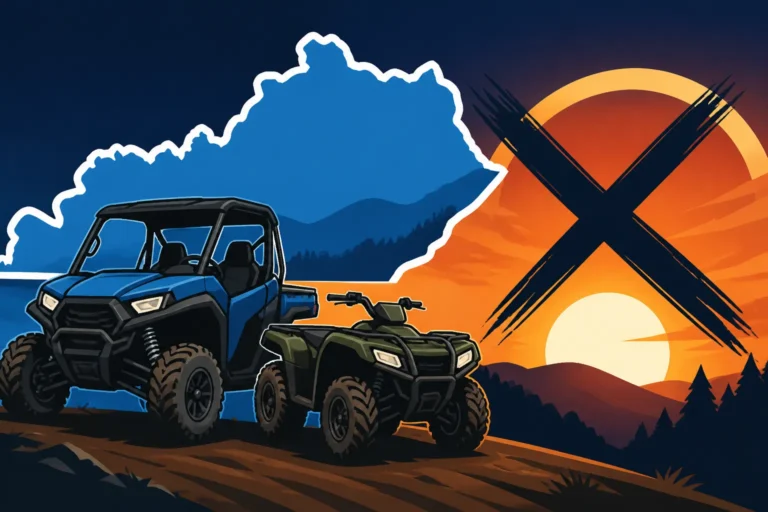
One critical aspect of operating an ATV or UTV under the farm exception on public roads is the "daylight only" rule. The statute specifically permits these machines to be operated on public roads for farm use during daylight hours. This is a non-negotiable safety measure. Driving an ATV or UTV, which often lacks the comprehensive lighting systems of a car, on a public road after dark poses a significant hazard to both the operator and other drivers. Visibility is severely reduced, and the risk of an accident skyrockets.
Therefore, any farm-related travel on public roads with your ATV or UTV must be conducted between sunrise and sunset. This means planning your tasks accordingly and making sure you're off the public roadway before dusk settles in. Even with aftermarket lights or high-visibility clothing, the law is clear: [Daylight Only Under the Statute]. This particular requirement is an absolute, and it’s something law enforcement will be looking for if you’re pulled over during twilight or night hours. Ensuring you have adequate headlights and taillights, even for daytime use, is also a smart move, enhancing your visibility to other motorists.
Basic Road Safety and Etiquette
Operating an ATV or UTV on a public road, even under the farm exception, demands a heightened sense of road safety and etiquette. These machines are slower than most road traffic and handle differently. Always stay to the far right side of the lane, allowing faster vehicles to pass safely. Use hand signals if your machine doesn't have turn signals, clearly indicating your intentions to turn or stop. And while not explicitly required by the farm exception, wearing a helmet is always a wise decision for your personal safety, especially on public roads.
Be mindful of traffic, particularly at intersections and blind curves. Yield to oncoming traffic and be predictable in your movements. Never assume other drivers see you. In fact, assume they don't see you and act accordingly. Drive at a safe speed that allows you to maintain control and react to unexpected situations, remembering that your machine isn't designed for highway speeds. While the farm exception gives you legal passage, it doesn't exempt you from the fundamental rules of the road or the common courtesies expected of any driver. Always prioritize safety for yourself and others sharing the road.
Potential Pitfalls and Misinterpretations of the Farm Exception
While the farm exception is a fantastic resource for agricultural operations in Kentucky, it's not without its nuances and potential for misinterpretation. Many folks, eager to utilize their ATVs and UTVs, might stretch the definition of "farm use" or overlook other critical aspects of the law, inadvertently putting themselves at risk of citations or fines. It's vital to remember that exceptions to general rules are often narrowly construed by legal authorities, and any deviation from the explicit or implied conditions could negate the protection the exception offers.
Understanding these pitfalls is just as important as knowing the benefits of the exception itself. It allows you to anticipate potential challenges and ensure your operations remain fully compliant. Don't let enthusiasm for the exception overshadow the need for meticulous adherence to its specific conditions. A little caution and clear understanding can save you a lot of headache down the road.
The "Slippery Slope" of Recreational Use
One of the biggest pitfalls with the farm exception is the "slippery slope" into recreational use. It's easy to blur the lines, especially if your farm work sometimes feels like recreation. However, the law is clear: the road use must be for agricultural purposes only. If you finish hauling hay and decide to take a scenic detour through town "just because," you've likely stepped outside the bounds of the exception. The moment your primary purpose shifts from a legitimate farm task to leisure or personal errands, you lose the protection of the farm exception.
This can be a tricky area, particularly for those who live on farms and use their ATVs or UTVs for a mix of work and leisure on their own property. When you transition to a public road, the "work" aspect must be paramount. Law enforcement officers are trained to discern intent, and if your machine is equipped more for trail riding than farming (e.g., no cargo, mud tires, fancy graphics, and you're not carrying anything related to farm work), it might raise questions. Always ask yourself: "Is this specific trip, right now, for a direct agricultural purpose?" If the answer isn't a clear "yes," then it's best to avoid the public road.
Driver's License and Insurance Considerations
Interestingly, the Kentucky farm exception for ATVs and UTVs on public roads does not explicitly require the operator to possess a driver's license. This is a common point of confusion. While typically you need a license to operate a motor vehicle on public roads, the farm exception carves out a specific allowance for these machines, recognizing their role as farm implements rather than conventional road vehicles. However, just because it's not explicitly required for this specific exception doesn't mean it's a free pass in all other scenarios or that it's a good idea to operate without one.
On the flip side, insurance is another area to consider. While the farm exception doesn't mandate specific ATV/UTV insurance for road use under this exception, having [Kentucky ATV Insurance Requirement] is always a good idea. Operating any vehicle, especially one on a public road, carries inherent risks. If you're involved in an accident, your general farm liability insurance might not cover personal injury or property damage caused by an ATV on a public road. It's always prudent to check with your insurance provider to understand your coverage options and ensure you're adequately protected, even when operating under a legal exception. Prudence dictates being prepared for unforeseen events, regardless of statutory requirements.
Ensuring Compliance and Best Practices for Farm Use
To truly leverage the benefits of Kentucky's farm exception for your ATV or UTV, it's not enough to simply know it exists. You need to actively practice compliance and adopt best practices that not only keep you within the legal boundaries but also ensure your safety and the smooth operation of your farm. This involves a combination of legal understanding, practical preparation, and common sense. Thinking ahead and preparing your machine and yourself for public road travel, even for short farm-related trips, can make all the difference.
By consistently applying these principles, you reinforce the legitimacy of your farm use and help maintain the integrity of this valuable exception for the entire agricultural community. It’s about being a responsible operator who understands the spirit and the letter of the law.
Keeping Documentation Handy
While the farm exception doesn't typically require a specific "permit" for road use, it's an excellent best practice to keep documentation on hand that can quickly demonstrate your legitimate farm operations. This could include a copy of your farm registration, proof of land ownership, or even a simple letter explaining your farm's activities. In the event you're stopped by law enforcement, being able to articulate and provide evidence of your agricultural purpose can go a long way in avoiding misunderstandings.
Think about it: if an officer sees an ATV on a public road, their first assumption might be that it's illegal. Being able to calmly explain you're operating under the farm exception and back it up with a few pieces of paper can quickly clarify the situation. This also extends to your machine's ownership. Having your ATV's [Proving Kentucky ATV Ownership] in the form of a title or a bill of sale can confirm the machine belongs to you and isn't stolen. While not strictly mandated for the exception itself, this level of preparedness signals responsibility and transparency, which can only work in your favor.
Maintaining Your Machine for Road Use
Even though your ATV or UTV is an off-road machine, if you're going to use it on public roads under the farm exception, you need to maintain it to a standard that ensures safety for road conditions. This means regular checks of your tires, brakes, and lights. Ensure your tires have adequate tread and are properly inflated. Brakes should be responsive and effective. While specific road-legal lighting isn't required for the farm exception, having functional headlights and taillights is crucial, especially for enhancing your visibility to others during [Daylight Only Under the Statute] operation.
Consider adding accessories that improve road visibility, such as a bright orange safety flag, reflective tape, or even upgrading to brighter headlights and LED taillights. Companies like SuperATV offer a range of lighting options that can significantly improve your machine's presence on the road. While not legally mandated for the farm exception, these proactive measures demonstrate a commitment to safety and responsible operation. A well-maintained machine is not only safer but also less likely to draw unwanted attention from law enforcement, reinforcing the legitimacy of its farm use.
Education and Community Awareness
Finally, one of the most effective best practices is to educate yourself and those around you about the nuances of the farm exception. Share this knowledge with other farmers, employees, and even family members who might operate your ATVs or UTVs. A shared understanding helps ensure consistent compliance across your operation. This also extends to community awareness. Many non-farming residents might not be aware of the farm exception and may view all ATVs on roads as illegal.
While you don't need to mount a public awareness campaign, operating responsibly and safely helps foster a positive perception. When ATVs and UTVs are seen as legitimate farm tools being used cautiously, it supports the continued acceptance of this vital exception. Attending local agricultural meetings or county clerk information sessions can also keep you up-to-date on any potential changes or clarifications to the law regarding [Kentucky Rules for Riding a Farm Road] or general ATV/UTV use. Staying informed and promoting responsible use helps protect this valuable allowance for everyone in Kentucky's agricultural sector.
Disclaimer
This article is for general informational purposes only and does not constitute professional advice. Laws, prices and regulations vary by location and change over time. Consult a qualified professional for guidance on your specific situation.