Tire Choice for Kentucky Rock and Mud
Kentucky’s trails can shift from slick clay to exposed rock, roots, and rutted climbs in a single ride, so a tire that works beautifully in one section may feel wrong in the next. This guide explains how to choose ATV or UTV tires for Kentucky terrain, balance traction against handling, and prepare for changing trail conditions.
Understand the terrain before choosing tires
Expect rock, clay, roots, and changing conditions
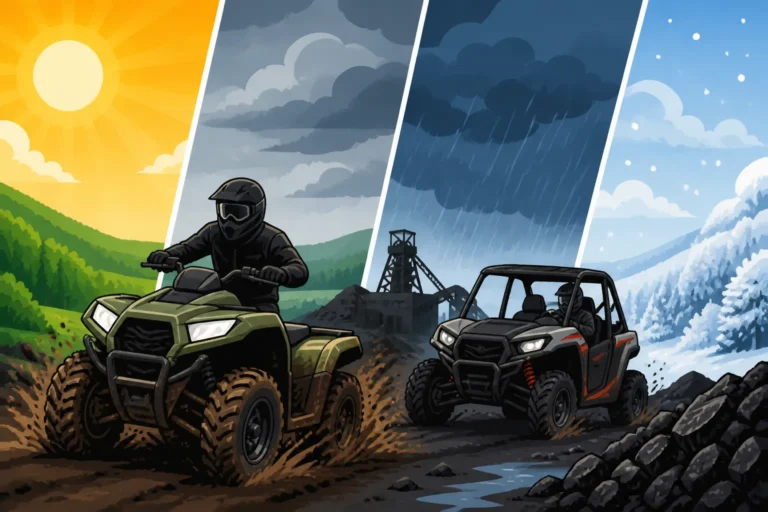
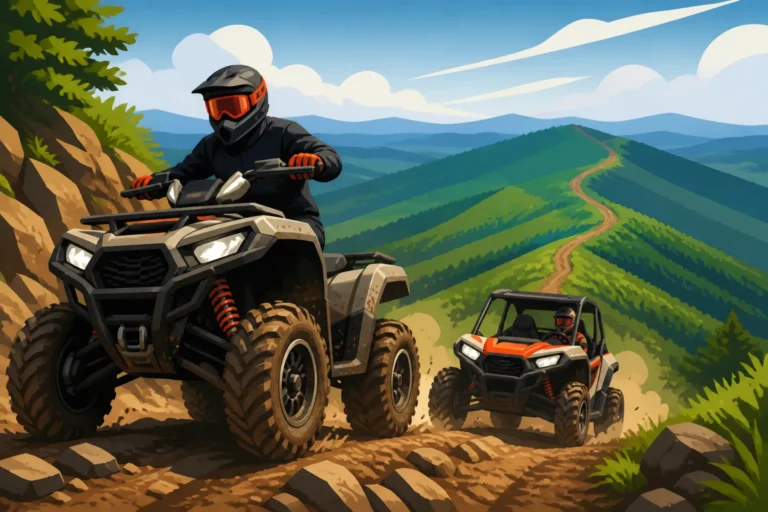
Kentucky riding is rarely one consistent surface. A route near Harlan or the Red River Gorge may include rocky ledges, loose gravel, packed earth, and muddy hollows. On a wet day, even a familiar trail can feel different: clay may coat the tread, roots can become slick, and small drainage crossings may turn into soft, churned-up sections.
That mix is why choosing a tire based only on the word “mud” or “rock” can lead to disappointment. A very open tread may clear sticky mud well but feel harsh or skittish on hard ground. A tough rock-oriented tire may hold up to sharp edges but pack with clay if its tread cannot release it. Before buying, think about the trails you ride most often, the season, your machine’s setup, and how much road or hard-packed ground your tires encounter between obstacles.
It helps to read local trail information as part of tire planning. Guides to Kentucky Trails With Rock and Kentucky Trails With Mud can help you picture the surfaces you are likely to meet. Check the trail’s difficulty and current condition too; Kentucky Trail Difficulty Ratings and Kentucky Trail Conditions Before You Ride provide useful context when you are deciding whether your usual tire setup is suitable.
Match the tire to your typical ride, not one dramatic obstacle
It is tempting to choose tires for the most intimidating feature you have seen in a video: a deep mud hole, a sharp ledge, or a steep climb. But most rides involve many ordinary sections between those challenges. A tire that performs impressively in one mud pit may be tiring, noisy, or difficult to control for the rest of the day.
Consider a weekend ride with a group of mixed experience levels. If most of the route is firm trail with occasional muddy dips, a balanced all-terrain tire may be more practical than an extreme mud tire. If your regular riding involves soft, wet ground and deep ruts, a more open tread may make sense, provided you are comfortable with its trade-offs on rock and hardpack. Riders who spend substantial time crawling over rough rock may put more weight on carcass durability, predictable grip, and controlled tire movement.
| Tire style | Often suits | Possible trade-offs |
|---|---|---|
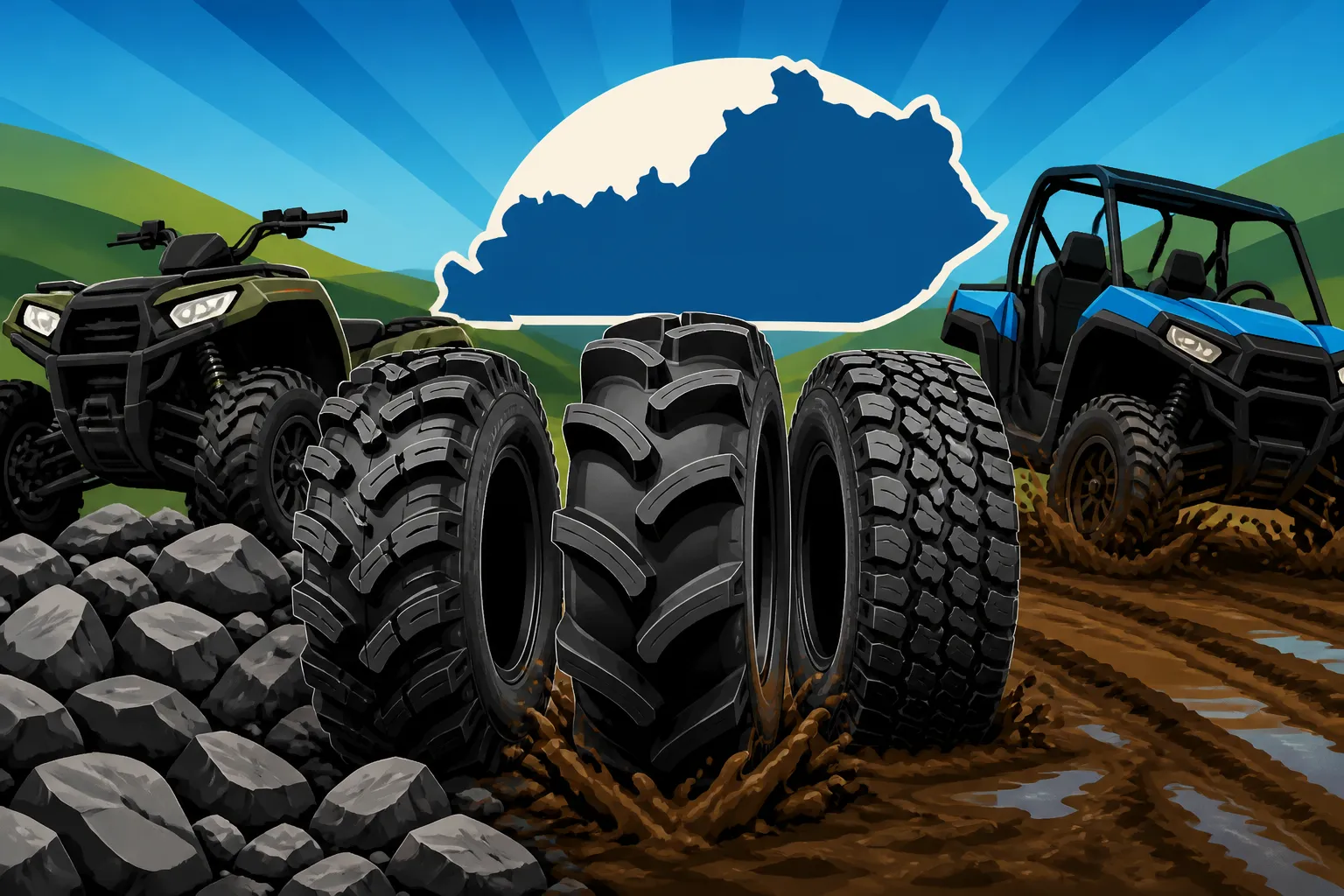
| All-terrain | Mixed hardpack, gravel, roots, and occasional mud | May not clear deep, sticky mud as well as a dedicated mud tread |
| Mud-oriented | Soft ground, wet clay, and deeper ruts | Can feel rougher or less settled on hard surfaces |
| Rock-oriented or crawler-style | Slow, technical rock riding and uneven ledges | May be less effective when the tread fills with thick mud |
| General-purpose trail tire | Varied recreational riding | May not excel at either extreme |
These are broad categories, not guarantees. Tire construction, compound, tread spacing, machine weight, and riding style all affect how a tire feels. A heavy side-by-side carrying passengers and gear may behave differently from a lightweight ATV on the same trail.
Choose a tread that balances mud clearing and rock grip
What an open tread does well in mud
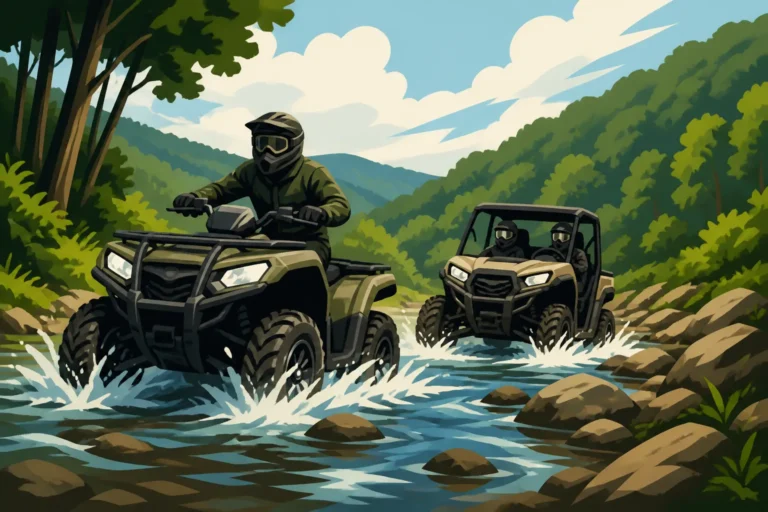
Mud-oriented tires commonly use more open tread spacing and pronounced lugs. The gaps give soft material room to move out as the wheel turns, which can help the tire keep biting instead of becoming a smooth, mud-coated circle. That can be useful on soft climbs, churned ground, and trails where wet clay is common.
The trade-off is that a very aggressive tread can feel less comfortable on firm surfaces. On hardpack or exposed rock, the lugs may make the ride feel more abrupt, and steering can feel less composed than with a milder tread. Some riders also find that aggressive tires encourage them to keep pushing into conditions where turning around would be the wiser decision. Traction is helpful, but it does not eliminate the risks of deep water, hidden holes, unstable slopes, or a machine becoming stuck.
A trail that has just had heavy rain deserves extra caution regardless of tire choice. Mud can conceal rocks and ruts, and spinning tires may dig deeper, damage the trail, or make recovery harder. Before heading out, review Kentucky Riding After Heavy Rain and follow posted closures and park guidance. A suitable tread is not permission to ride saturated ground.
What matters when you ride over rock
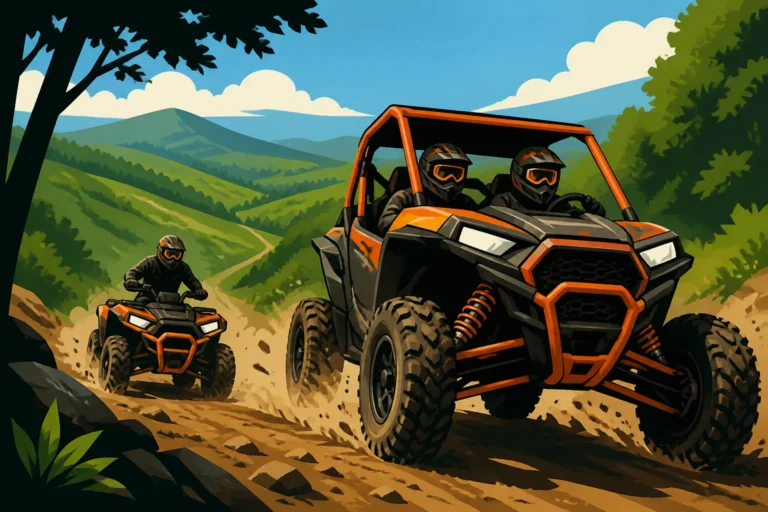
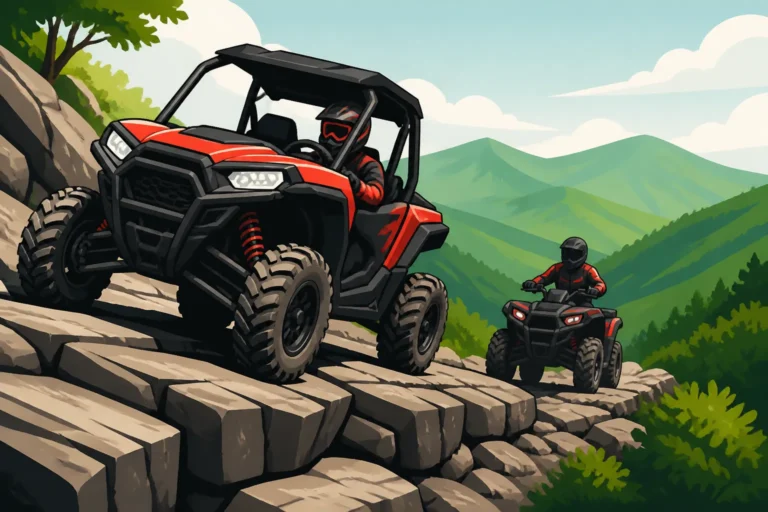
On rocky terrain, look beyond how tall the tread looks. The tire’s construction and resistance to cuts or punctures matter, as do its shape and ability to conform to uneven ground at an appropriate pressure. Slow, controlled contact is usually more useful than simply having the most aggressive lugs available. A tire that grips predictably can make it easier to ease over a ledge without spinning or bouncing.
Rock-focused riding also puts more emphasis on choosing a suitable line. An exposed sharp edge can threaten a sidewall, while a nearby smoother path may let the tire roll over the feature with less strain. A passenger’s weight, cargo, and machine setup affect how much load each tire carries. If your machine is heavily loaded, check the manufacturer’s guidance and tire load information rather than assuming a setup that works for a lightly loaded machine will work the same way.
For a route with both rock and mud, look for a compromise rather than expecting one tread design to dominate every surface. If you regularly ride areas such as Black Mountain Off-Road Adventure Area in Kentucky or Leatherwood Off-Road Park in Kentucky, review the route information and conditions for the specific ride you are planning. Terrain can vary within a park, and a familiar name does not tell you whether the trail is currently dry, slick, or rutted.
Set up and inspect tires for the ride
Use pressure guidance that fits your machine
Tire pressure can change how an ATV or UTV responds, but there is no single pressure that is right for every machine, tire, load, and trail. Start with the vehicle manufacturer’s instructions and the tire maker’s recommendations. Account for passengers, tools, cargo, and the type of riding you plan to do. Do not treat the maximum pressure printed on a tire as a recommended riding pressure; it is not a substitute for the guidance specific to your setup.
Check pressure with a dependable gauge before the ride, ideally when the tires are cool. If you make a change, do it conservatively and stay within the relevant manufacturer limits. Too much pressure can reduce the tire’s ability to conform to uneven terrain. Too little can increase the risk of damage, instability, or the tire shifting on the wheel. On a side-by-side, changing load from a solo ride to a full passenger load can also affect handling and tire behavior.
A simple routine prevents a lot of roadside frustration. Confirm pressure at home, inspect all tires for cuts or embedded debris, and recheck after any repair or significant change. If the machine starts handling differently, stop in a safe spot and inspect it instead of assuming the trail is to blame. A tire that looks fine from a distance may have a puncture, damaged sidewall, or object lodged in its tread.
Carry basic repair and recovery gear
A tire choice cannot prevent every flat. Pack a repair kit that suits your tire type, a pressure gauge, and a way to reinflate the tire. Learn how to use the repair supplies before you need them on a narrow trail or far from the staging area. A plug kit, for example, only helps when the damage is repairable and located in a suitable part of the tire; sidewall damage is a different problem and may require a safer recovery plan.
For rocky or muddy rides, consider how you will recover a machine if a tire loses air or traction. Travel with a group when appropriate, carry communication equipment suited to the area, and avoid attempting a recovery that could put people in the path of a slipping machine or loaded winch line. On a steep, narrow bench, a poorly planned recovery can create more danger than the original problem. Give other riders room and follow Kentucky Trail Etiquette on Narrow Benches.
Navigation and preparation matter too. A trail map can help you understand where you are and plan a return route if conditions worsen. Apps such as onX Offroad can be part of a navigation setup, but use them alongside information from the trail operator and posted signs. Save or carry the route information you need before entering an area where your phone may lose service. Kentucky Trail Maps Worth Carrying is a useful companion when planning what to bring.
Make the final choice for your machine and riding style
Compare the complete setup, not just the tread pattern
Before buying, confirm that the tire is appropriate for your machine’s wheel size and intended use. Check clearance, load suitability, and any relevant guidance from the vehicle manufacturer. A tire that is too large or otherwise unsuitable can create fitment or handling issues. If you are considering a substantial change, ask a qualified dealer or mechanic to confirm compatibility rather than relying on appearance alone.
Think through a normal ride from start to finish. Do you spend most of the day on firm trail, with a few muddy stretches? Are you repeatedly climbing over rock? Do you ride with passengers and cargo? Do you need one set of tires for several kinds of trips? Your answers are more useful than choosing a tire simply because a friend has it or because it looked capable in a short clip.
It can also help to ask other riders about the exact setup and conditions they use. Ask what machine they have, whether it is loaded, what kind of ground they ride most, and what trade-offs they notice. “These tires work great” is less helpful than “they clear mud well on my loaded side-by-side, but they feel rough on hard trail.” The details make the recommendation meaningful.
Use a quick pre-ride decision check
Before loading the machine, take a few minutes to compare the planned route with your tires and equipment:
- Identify the main surfaces. Is the ride mostly hardpack, rock, wet clay, or a true mixture?
- Check the conditions. Recent rain can change both traction and whether a trail is open or appropriate to ride.
- Account for the load. Passengers, gear, and accessories affect how the machine behaves.
- Inspect the tires. Look for cuts, low pressure, lodged debris, and uneven wear.
- Pack for a problem. Bring a gauge, repair supplies, inflation equipment, and a practical recovery plan.
- Set a conservative limit. If the route is beyond your machine, tires, or experience, choose a different trail or turn around.
Use onX Offroad or another navigation tool to help plan your route, but confirm access, closures, and local requirements with the area operator. Conditions can change after a map is saved, and a digital route cannot tell you whether a particular climb is slick at the moment you reach it. OnX Offroad can support route planning; it should not replace trail signs, sound judgment, or official park guidance.
The best Kentucky ATV or UTV tire is the one that fits the terrain you actually ride, the machine you own, and the compromises you are willing to accept. For many riders, a balanced tread and careful setup are more useful than chasing maximum performance in mud or rock alone. Reassess your choice when your usual trails, load, or riding season changes.
Disclaimer
This article is for general informational purposes only and does not constitute professional advice. Laws, prices and regulations vary by location and change over time. Consult a qualified professional for guidance on your specific situation.