Rush Off-Road Trails Open at 6 a.m.
Arriving at Rush Off-Road before sunrise can make for a longer day on the trails, but an advertised 6 a.m. opening does not automatically mean every gate, service, or route is ready at that moment. This guide explains how to plan an early arrival, what to confirm before unloading, and how to make the most of your riding time near Rush, Kentucky.
What a 6 a.m. opening means at Rush Off-Road
Trail access is different from every park service being open
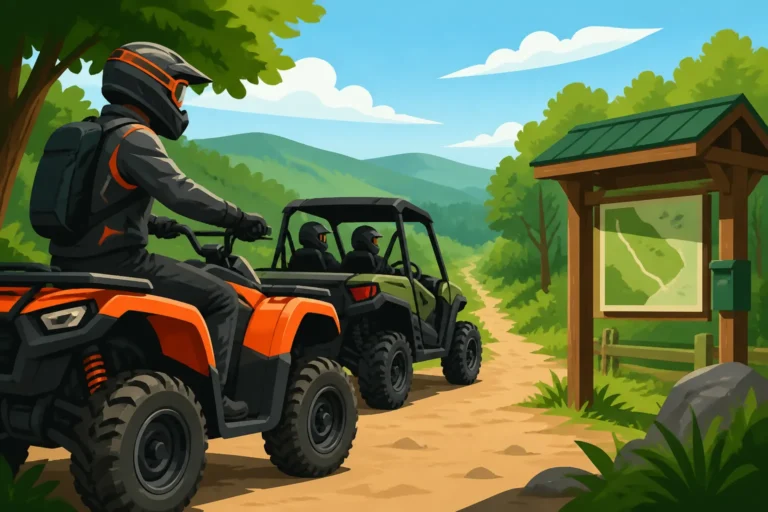
A 6 a.m. trail opening is useful for riders who want to get moving early, avoid losing morning hours to the drive, or ride before the day gets hotter. But trail access and the availability of offices, check-in points, rentals, fuel, food, or other services are separate details. A posted opening time for the trails does not necessarily mean every service is operating at that same hour.
That distinction matters if your plan depends on collecting a permit, picking up a rental machine, or asking staff about a route before you ride. A rider who has already handled the necessary paperwork and knows where to stage may be ready to roll early; someone arriving without a plan could spend part of that first hour waiting or sorting out logistics.
Before leaving home, confirm the park’s schedule and entry instructions for the day you plan to visit. Check whether early access requires advance arrangements, whether there are day-specific changes, and where riders should go when they arrive before the main office or staffed area opens. For broader context, see [Rush Off-Road's Daily Hours] and [Kentucky Trail Conditions Before You Ride].
The opening time does not promise that every route is available
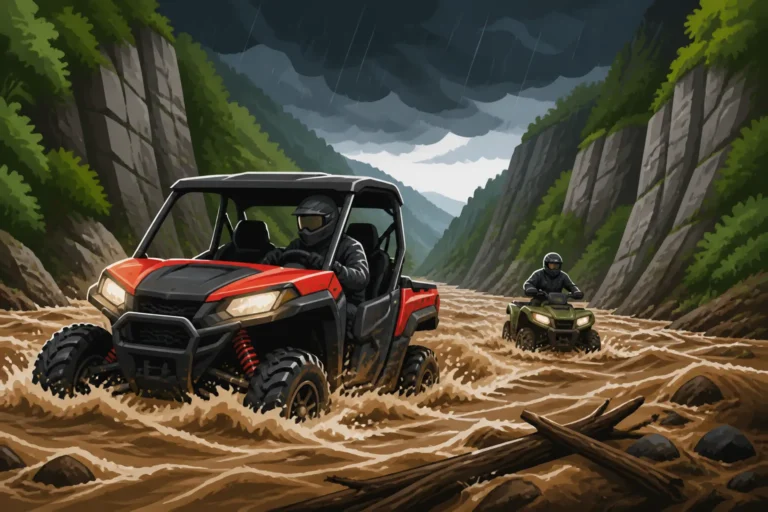
Even when the park is open, individual trails can be affected by weather, maintenance, surface conditions, or temporary closures. This is especially important after heavy rain. A route that looked straightforward on a map may be muddy, slick, or closed to protect the trail surface. Conditions can also differ across the park, so a dry staging area does not tell you what a shaded section or lower-lying trail will be like.
Treat the posted opening as a chance to begin riding, not as a guarantee that every route you hoped to use will be available. Check park notices close to your visit, and pay attention to signs and gate information when you arrive. If you have driven a long way, it is frustrating to discover that your preferred loop is unavailable only after unloading, so a quick check before departure can save time and disappointment.
Carry a backup plan. Choose a second route that fits your group’s experience and machine size, and be prepared to shorten the ride if weather or conditions change. The related guide [Kentucky Trail Closures to Check First] can help you think through what to verify before committing to a route.
How to plan an early arrival
Check the details before loading the trailer
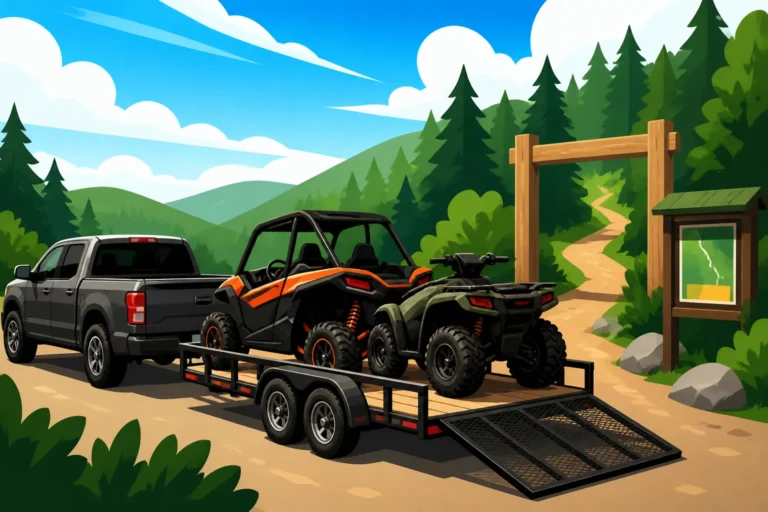
An early start is easiest when the practical details are settled the night before. Confirm the park’s operating information, entry process, riding rules, and any permit requirements. Make sure everyone in your group knows where to meet and what time you expect to arrive. If you are traveling with several machines, decide in advance who is towing each trailer and who is responsible for the paperwork.
For a first visit, allow extra time for locating the entrance, staging, securing your trailer, and getting everyone ready. A tight schedule can turn a quiet early morning into a scramble: one person is searching for a document, another is looking for gloves, and the driver is trying to keep the trailer moving while the group reorganizes. A small amount of preparation makes the early opening genuinely useful.
| Before you leave | Why it matters |
|---|---|
| Confirm the day’s opening and access instructions | Schedules or entry procedures may vary |
| Check for trail notices and closures | A planned route may be unavailable |
| Confirm permit or check-in steps | Early access may not mean staffed services are open |
| Fuel the machine and tow vehicle | Nearby fuel stops may not match your riding schedule |
| Pack water, protective gear, and basic supplies | You may spend several hours away from the staging area |
| Choose a primary route and a backup | Conditions and group pace can change the plan |
If you are bringing a map app, download or save the information you will need before entering areas with weak cell coverage. Some riders use onX Offroad to review route information and keep a digital map available, but a phone should not be your only navigation plan. Keep the park’s own map or posted route information handy as well, and follow closures even if a digital map still displays a trail.
Decide when your group will actually start riding
The time you reach the entrance is not always the time your group begins moving. Unloading, checking equipment, organizing helmets, reviewing the route, and making sure passengers understand the plan all take time. If you want to be riding shortly after the 6 a.m. opening, aim to have those tasks mostly handled before arrival.
For example, a family towing two machines might pack helmets, goggles, gloves, water, and snacks in separate, easy-to-reach bags the night before. At the staging area, each rider can check their own gear instead of searching through a crowded truck bed. A group of friends can assign one person to confirm route conditions while another handles the trailer. These simple roles help an early start feel calm rather than rushed.
Be realistic about how long it takes your group to get ready. If a rider is new to the park or inexperienced on the machine, leave room for a slower start and a safety check. Starting early should give you flexibility, not pressure to race through setup or ride faster than the group is comfortable with.
Choosing a route and staying oriented
Match the route to the people and machines in your group
A route that feels easy to one experienced rider may be tiring or intimidating to someone who is new to off-road riding. Before choosing a loop, think about the least experienced rider, the machine’s width and capability, the group’s fuel range, and how much time you want to spend away from the staging area. A short, familiar route can be a better first outing than a long loop chosen only because the park opened early.
It also helps to agree on a group pace and regrouping points. On a ride with mixed experience levels, the lead rider should avoid getting so far ahead that the rest of the group cannot see where the route changes. The last rider should know who is behind them, and the group should have a clear plan for what to do if a machine stops or someone needs a break.
If you want to explore beyond a familiar loop, use maps as a planning aid rather than a substitute for local instructions. onX Offroad can be one way to review available route information before the ride, but compare what you see with the park’s current map and posted guidance. Do not assume an app’s displayed line means a route is open or suitable for your machine that day.
Use maps and park information together
A map is most useful when you review it before the ride, not while the group is waiting at a confusing junction. Identify the route you intend to follow, note obvious decision points, and agree on a turnaround plan. If cell reception is inconsistent, save map information for offline use where available and carry a paper or park-provided map as a backup.
onX Offroad may help riders orient themselves and review route details, but digital maps can be incomplete or out of step with temporary trail changes. Check signs at intersections, respect barriers, and follow the park’s directions if they differ from what your phone shows. Keeping both official park information and a separate navigation aid available gives you more than one way to stay on course.
For a practical checklist on map preparation, read [Kentucky Trail Maps Worth Carrying]. If your group includes riders on different types of machines, you may also find [Rush Off-Road Loops a Stock Machine Can Handle] useful when deciding how ambitious to make the day.
Making the most of the riding day
Protect the early hours without overpacking the schedule
Starting at 6 a.m. can give you more usable riding time, but it is still worth planning breaks, food, water, and a reasonable return time. A long day on an ATV or UTV can be tiring even when the weather is pleasant. Riders may underestimate the fatigue that comes from vibration, concentration, dust, and repeated changes in terrain.
Build in time to stop, check on the group, and reassess conditions. If a route is taking longer than expected, turn around or choose a shorter option rather than trying to complete the original plan at any cost. A good day is not measured by how many trails you cover; it is one where everyone finishes safely and the machines make it back without unnecessary strain.
Before setting out, top off fuel as appropriate for your machine and planned ride, and know where you can refuel if needed. Do not assume that a nearby business will be open early. The guide [Fuel Between Eastern Kentucky Towns] offers useful planning context for riders organizing a trip in the region.
Keep your group, equipment, and trail manners in mind
Start with a quick equipment check: tires, controls, lights if applicable, brakes, fuel, and any items that may have shifted during transport. Make sure riders have helmets and suitable clothing, and that passengers understand how to stay seated and communicate. A few minutes spent checking equipment at the start is preferable to discovering a problem well into a ride.
On narrow trails, ride at a pace that allows you to react to changing terrain and other users. Give the group room to stop without creating a pileup, and be considerate when meeting other riders. Stay on marked routes, avoid widening muddy sections, and do not treat an early opening as an invitation to ride beyond the posted rules. [Kentucky Trail Etiquette on Narrow Benches] offers more on sharing tight trail sections responsibly.
If you are traveling with a large group, agree on a simple communication plan before leaving the staging area. Decide what everyone should do if the group gets separated, and choose a clear place to regroup. This is particularly helpful when riders have different experience levels or are unfamiliar with the park.
A 6 a.m. opening can make a visit to Rush Off-Road feel like a full day of riding, especially when you arrive prepared. Confirm the park’s access details, check trail conditions, choose routes suited to your group, and bring a backup navigation option. For more trip-planning context, see [Riding Rush Off-Road for a Day] and [Kentucky Trail Closures to Check First].
Disclaimer
This article is for general informational purposes only and does not constitute professional advice. Laws, prices and regulations vary by location and change over time. Consult a qualified professional for guidance on your specific situation.