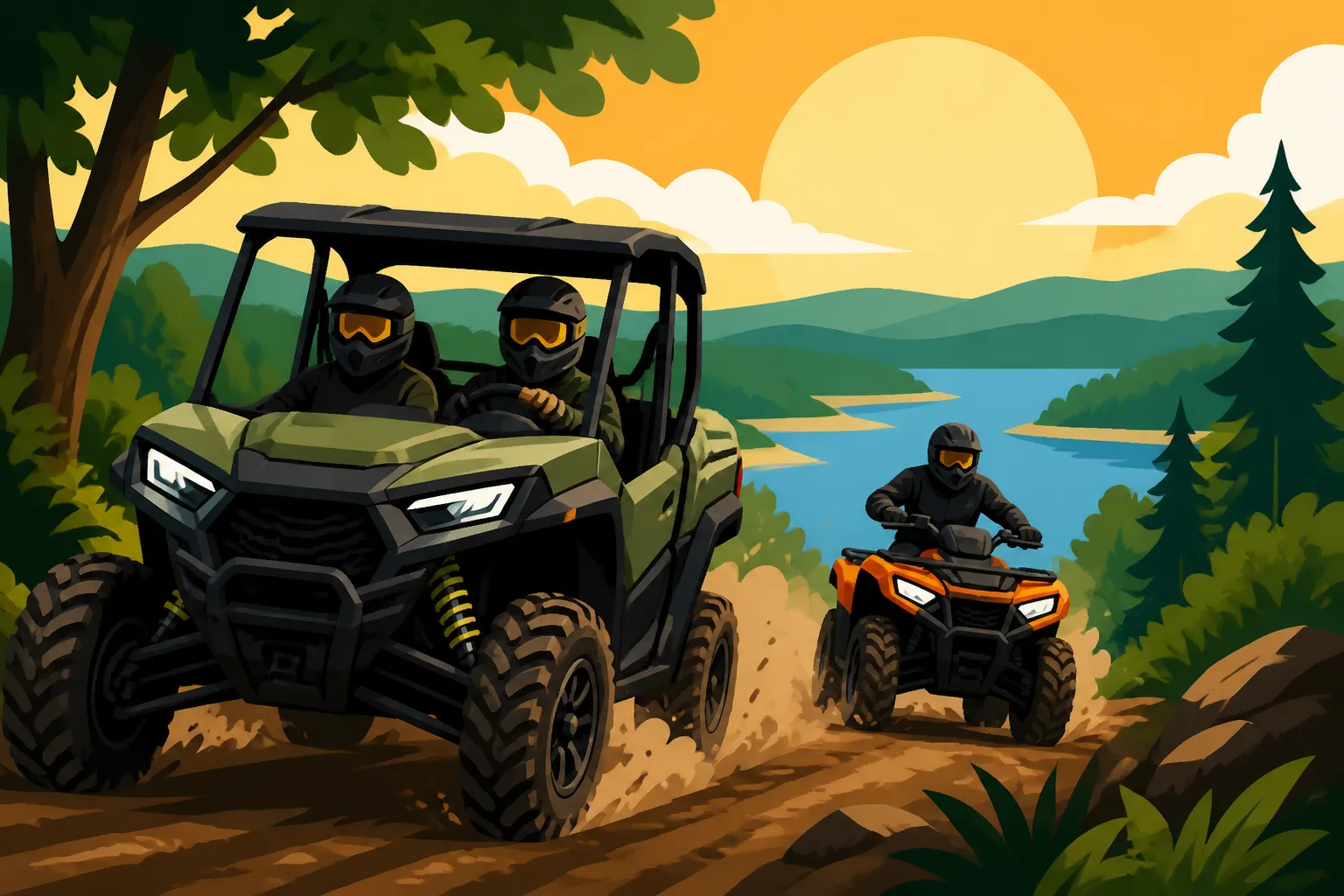
Riding Turkey Bay at Land Between the Lakes
A Turkey Bay ride can turn frustrating quickly if you arrive without checking trail access, permit requirements, or recent rain conditions. The OHV area sits within Land Between the Lakes in western Kentucky, where wooded routes and changing terrain reward a little planning. This guide covers what to expect, how to prepare your machine and group, and what to check before hauling in.
What to expect at Turkey Bay
A wooded riding area with varied terrain
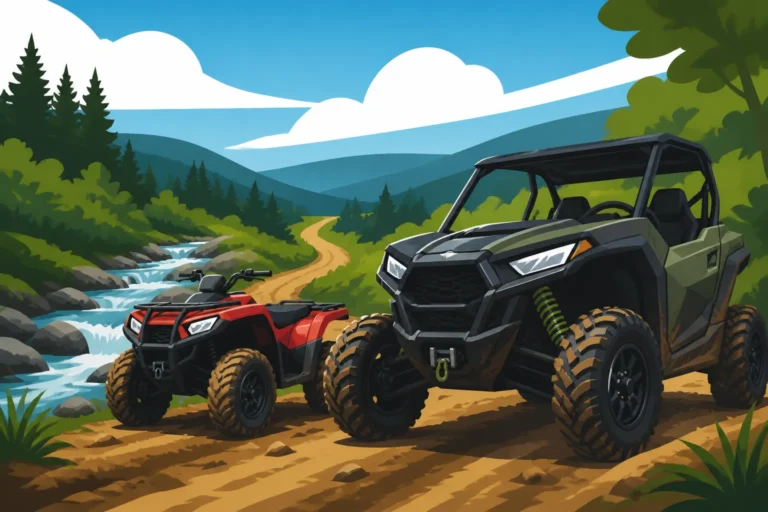
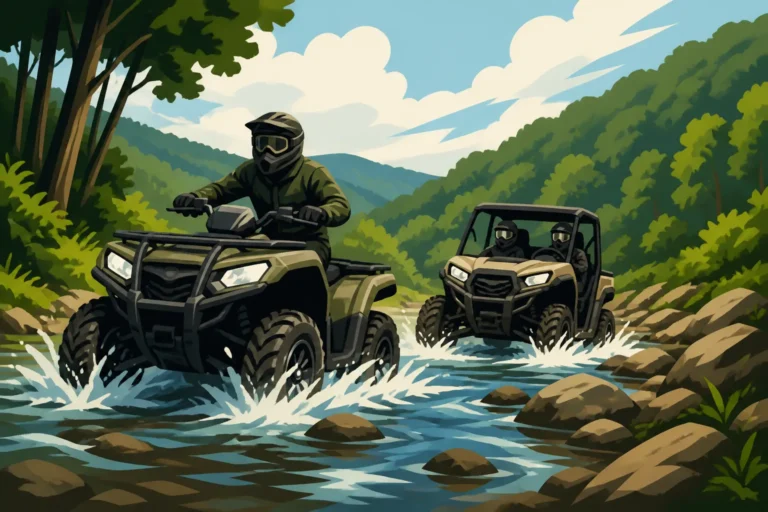
Turkey Bay OHV Area is part of Land Between the Lakes National Recreation Area, the large recreation corridor between Kentucky Lake and Lake Barkley. Its marked routes pass through wooded country and can include dirt, rocks, hills, and muddy sections. Conditions vary with weather and maintenance, so a route that felt manageable on a dry day may be much more demanding after rain.
The trail network is often described as roughly 100 miles, but that does not mean every route is open or suitable for every machine on a given day. Follow the current area map and posted signs rather than relying on an old map, a remembered route, or a line displayed in an app. For an overview of the area and its trail system, see [Turkey Bay OHV Area in Western Kentucky] and [Turkey Bay's 100 Miles in Kentucky].
Expect to share the area with other riders and, depending on the route, encounter narrow stretches, uneven ground, and limited room to pass. Ride at a pace that lets you stop within the distance you can see. On a blind bend or hillcrest, keep to the marked route and assume another machine could be coming toward you.
Choosing a route for your group
A route that is enjoyable for one group can be stressful for another. A newer rider may feel comfortable on a broad, relatively even trail but struggle with loose rocks, steep grades, or deep mud. A side-by-side may need more room to turn and pass than a smaller ATV. Match the day’s plan to the least experienced rider and the least capable machine in the group.
Before setting out, agree on a route, a turnaround point, and a check-in plan. If riders become separated, having a shared destination and a simple regrouping rule can prevent a short gap from turning into a long search. Keep the group close enough to communicate, but leave space between machines so dust, sudden stops, or debris do not create a chain reaction.
A navigation app such as onX Offroad can help you review a route and keep track of your position, but it should be a backup aid, not permission to leave marked trails. Save relevant map information before riding if your phone may lose service, and carry the current area map as well. Compare app information with signs and official notices at the riding area.
Turkey Bay planning at a glance
| Planning question | What to do before riding |
|---|---|
| Are the trails open? | Check current notices and gate information before loading |
| Has the area had heavy rain? | Look for closure or saturated-ground updates |
| Which route suits the group? | Choose by rider experience, machine size, and conditions |
| Is a permit required? | Confirm the current rules and display or carry it as directed |
| Will navigation work? | Download maps if useful, and bring a paper or official map |
| What if someone has trouble? | Agree on regrouping points and carry basic recovery supplies |
Prepare before you haul
Check access, hours, and permits
A long drive with a trailer makes a last-minute closure especially aggravating. Before leaving, check the latest gate information, operating schedule, and any alerts for Turkey Bay. Seasonal schedules can differ, and severe weather or ground conditions may affect access. [Turkey Bay's Season and Gatehouse Hours Explained] and [Call Before You Haul at Turkey Bay] are useful starting points for what to verify.
Confirm the current permit rules directly through the managing authority before your trip. Requirements can depend on where you ride and the type of access you are using, and a permit for one riding area should not be assumed to cover another. Check how permits are obtained, whether each rider or machine needs one, and what instructions apply to displaying or carrying it. For broader context, read [How the Turkey Bay OHV Permit Works] and [Why One Park's Permit Does Not Travel].
Also confirm where to enter and park, and whether the facilities you plan to use are available. Do not assume that a nearby campground, boat launch, or recreation site provides the same access as the OHV area. If your plans include an overnight stay, check the campground’s own rules and availability separately.
Check the weather and ground conditions
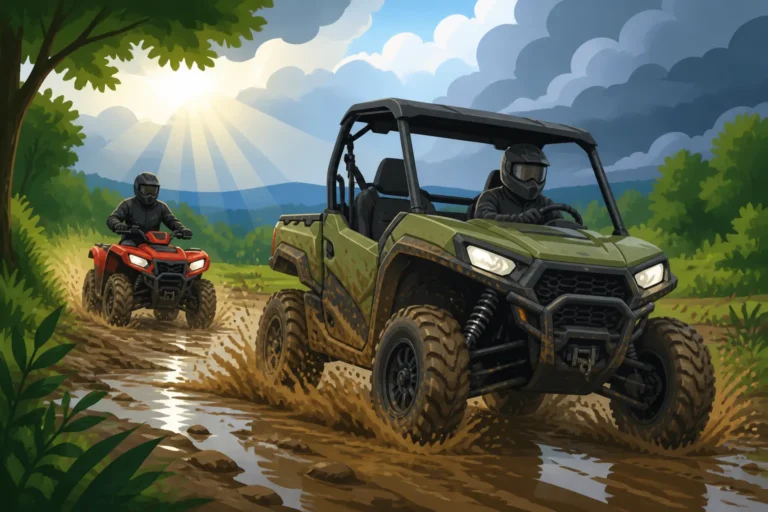
Rain changes the ride at Turkey Bay. Wet soil can make climbs slippery, lower traction on turns, and hide ruts or soft spots under leaves. It can also damage trails when machines continue through saturated ground. The area may restrict riding when conditions are poor, so check notices before you go and respect closures even if a route looks passable from the entrance.
If you are already on the trails when rain starts, avoid turning a difficult section into a recovery problem. Slow down, use smooth throttle, and do not repeatedly spin the tires in one spot. If a trail becomes unsafe or appears closed, turn around only where it is safe to do so and follow posted directions. [Why Turkey Bay Closes on Saturated Ground] explains why wet-weather restrictions matter beyond convenience.
Use a route plan that can shrink if the weather worsens. That may mean choosing a shorter loop, setting an earlier turnaround time, or deciding in advance that the group will stop if visibility or traction deteriorates. A flexible plan is more useful than trying to complete a full day’s itinerary at any cost.
Inspect machines and pack for small problems
A quick inspection can prevent a minor issue from becoming a long walk back to the staging area. Check tires for damage and suitable pressure, look for loose fasteners, test the brakes and lights, and make sure the machine has enough fuel for the planned route with a sensible reserve. On a side-by-side, check seat belts and any cargo restraints before loading gear.
Bring water, weather-appropriate layers, basic first-aid supplies, a charged phone, and a tool kit suited to your machine. A tow strap or other recovery equipment can help, but only if someone in the group knows how to use it safely. Keep loose cargo secured and avoid placing heavy items where they can shift during a climb or abrupt stop.
If your group uses onX Offroad, check the map before leaving the parking area and save what you need while you have a reliable connection. Keep your phone protected from dust, rain, and impacts. A printed map or other offline navigation backup is still sensible because batteries fail, devices get damaged, and coverage can be inconsistent in wooded areas.
Ride safely and respect the trail
Stay on marked routes and manage speed
Marked routes help keep riders away from unsuitable ground and reduce damage to surrounding land. Do not create a shortcut around mud, a closed gate, or a difficult obstacle. Riding off route can harm vegetation, worsen erosion, and put you somewhere that is not part of the approved riding area. If a marked section is blocked or unsafe, use the official route guidance rather than making your own.
Ride at a speed appropriate to visibility, surface, and traffic. Dust can hide another machine, while leaves and standing water can conceal rocks or ruts. Keep a steady following distance, use extra caution near intersections, and slow before blind curves instead of braking sharply halfway through them. If you stop, move fully out of the travel path where possible and make sure approaching riders can see you.
Use onX Offroad or another map app to help orient yourself, not to override a trail sign or closure notice. App data may not reflect a temporary restriction or a route change. When map details and posted information disagree, follow the posted rules and ask staff if the situation is unclear.
Ride with a group plan
Before starting, choose a lead rider and a sweep rider, especially if the group includes children or first-time visitors. The lead can set a manageable pace and watch for route signs; the sweep can make sure nobody is left behind. Agree on simple signals for stopping and regrouping, and tell everyone what to do if the group gets separated.
Take breaks before people are exhausted. Fatigue can make riders less attentive, and the last stretch of the day is not the time to push through a difficult hill just to reach the parking area. If someone feels uncomfortable on a section, let them say so without pressure. Turning around is often the safest choice, not a failure to finish.
If a machine breaks down, keep the group together and move people to a safe place away from the trail. Avoid attempting a recovery that exceeds your equipment or experience. If you cannot resolve the problem safely, use the appropriate contact or assistance process for the area rather than putting riders at risk.
Leave the area in good condition
Pack out trash, secure fuel and gear, and use designated parking and staging spaces. Do not ride around a barrier or enter a route marked closed, even if other tire tracks suggest someone has done so. Trail conditions depend partly on how visitors treat them, and repeated misuse can make erosion and closures worse for everyone.
Be considerate at the gate and in shared facilities. Keep noise and speed under control near parking areas, give other groups room to load and unload, and avoid blocking access roads. A little patience matters when several trailers arrive or leave at once.
Build a practical Turkey Bay day
A simple pre-ride sequence
Use this order to keep the planning manageable:
- Check current Turkey Bay access notices, gate information, and any weather-related restrictions.
- Confirm the current permit rules and make sure your group has what it needs.
- Review the trail map and choose a route that suits the least experienced rider and the largest or least capable machine.
- Check fuel, tires, brakes, lights, recovery gear, water, and communication devices.
- Agree on a lead rider, sweep rider, regrouping points, and a turnaround time.
- At the area, read the posted rules and check for updates before unloading or entering the trails.
- Reassess conditions during the ride and shorten the plan if weather, fatigue, or trail conditions call for it.
That sequence helps catch the most common avoidable problems: arriving during a closure, choosing a route beyond the group’s comfort level, or discovering a machine issue after the ride has begun.
When to adjust or cancel the plan
A change of plan is sensible if the area is closed, the ground is saturated, visibility is poor, or your group lacks the equipment needed for the intended route. The same goes for a rider who is tired, uncomfortable, or dealing with a machine that is not operating properly. Continuing simply because you made the drive can turn a disappointing day into a dangerous one.
Keep a second option in mind, but do not assume another nearby trail system will accept the same permit or have the same conditions. Check its rules independently. If Turkey Bay is unavailable, a different riding area may still require separate access arrangements, and driving there without checking first can lead to another wasted trip.
The best Turkey Bay outing is not necessarily the longest one. It is a ride where the group understands the conditions, stays on authorized routes, and returns with enough energy to load safely. Leave room in the schedule for a slower pace, a break, or an early finish. Those choices make the day more enjoyable for beginners and experienced riders alike.
Disclaimer
This article is for general informational purposes only and does not constitute professional advice. Laws, prices and regulations vary by location and change over time. Consult a qualified professional for guidance on your specific situation.