Kentucky Riding in Summer
Summer in Kentucky can turn a fun ATV or UTV ride into a draining one fast: humid air, exposed coal-country trails, sudden storms, and long stretches without cell service all change how a day unfolds. This guide covers how to plan a safer summer ride, choose suitable conditions, manage heat and rain, and prepare for Kentucky’s varied riding areas.
Plan Around Kentucky Summer Weather
Start early and build in a real rest plan
An early start can make a noticeable difference on a warm, humid day. You’ll often have cooler air, less direct sun, and more flexibility to pause or shorten the ride before the hottest part of the afternoon. At places such as Black Mountain Off-Road Adventure Area near Evarts and Putney, a morning departure also gives your group time to handle a slow climb, a mechanical issue, or an unexpected trail detour without rushing toward sunset.
Plan breaks as part of the ride, not as a reward you take only when everyone is already worn out. Pick shaded places where the group can stop safely, drink water, cool down, and check on each other. In a side-by-side, the cab may feel more protected from dust and branches, but it can still get hot, especially when moving slowly or climbing. An ATV rider has more exposure to sun and wind, but that does not guarantee they’ll notice how much they are sweating.
Set a turnaround time before you leave. A common mistake is to keep adding “just one more trail” because the group feels fine at noon, then realize later that everyone still has a long ride back to the staging area. Agree on a point where you’ll reassess conditions and be willing to head back early. A shorter ride that ends comfortably is better than a late, overheated return.
Check forecasts and trail notices before loading
A forecast for the nearest town is only part of the picture. Mountain hollers, ridgelines, and open areas can experience different wind, cloud cover, and rainfall. Check the forecast for the riding area and look again before you leave home. If storms are possible, think about where you’ll be when they arrive, not only whether rain is expected at some point in the day.
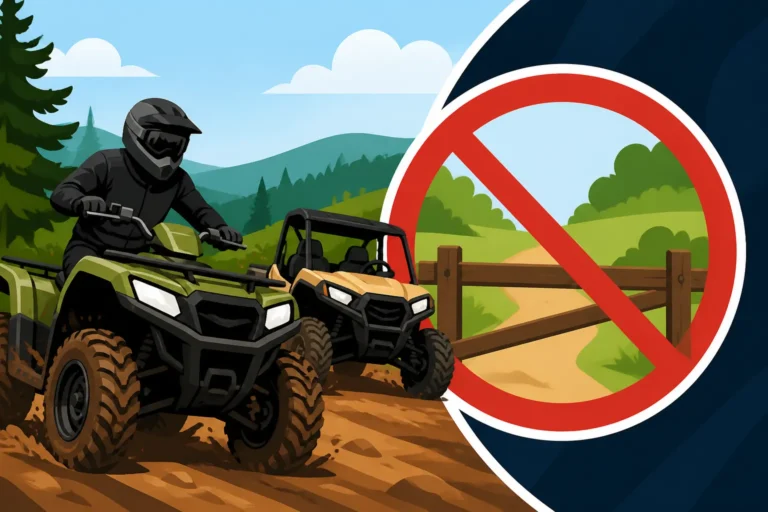
Contact the park or land manager before hauling a machine. Conditions, access, and operating information can change, and a trail that was suitable after a dry stretch may be unpleasant or unsafe after heavy rain. For a useful pre-trip checklist, see [Kentucky Trail Conditions Before You Ride] and [Kentucky Trail Closures to Check First]. If rain has recently moved through, [Kentucky Riding After Heavy Rain] can help you think through how wet ground affects both traction and trail surfaces.
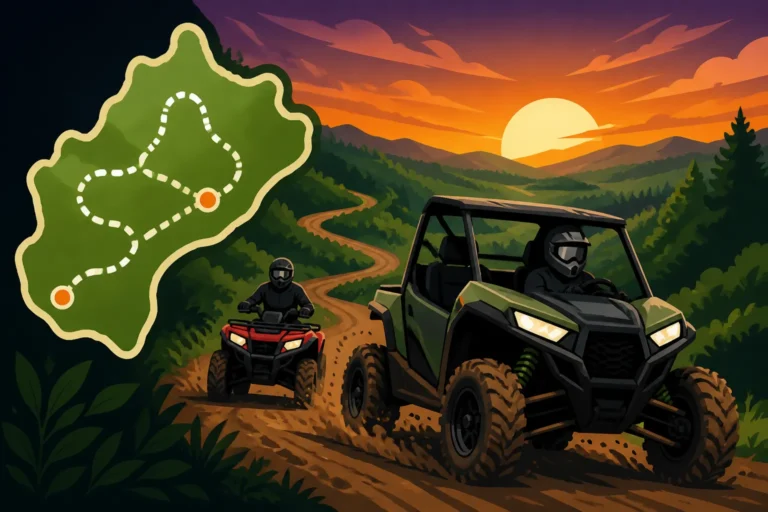
Use a map to make your plan, but do not assume it replaces a current notice from the riding area. onX Offroad can help riders review mapped routes and think through where they intend to go, while the park’s own information is still the right place to check access and local conditions. Save the route or relevant map area before setting out if you expect limited service. A map is most useful when you review it before you need it.
Keep Heat and Dehydration From Taking Over the Ride
Recognize the early signs of heat stress
Heat problems do not always begin dramatically. A rider may become unusually quiet, irritable, clumsy, or slow to answer questions. Someone who keeps saying they are fine may still be struggling, especially if they are focused on keeping up with the group. Watch for headache, dizziness, nausea, weakness, heavy sweating, or a sudden loss of coordination. If a person seems confused, collapses, or becomes difficult to wake, treat it as an emergency and get help rather than continuing the ride.
Make water easy to reach, and encourage the group to drink before anyone feels badly thirsty. Carry more than you expect to use, particularly if your route is remote or has limited places to stop. Sports drinks or salty snacks may be useful for a long, sweaty outing, but they do not replace water or a sensible break schedule. Avoid relying on a small bottle tucked deep in a pack that nobody wants to stop and retrieve.
If someone is showing signs of heat illness, stop in a safe place, get them out of direct sun, loosen unnecessary layers, and start cooling them with available water and airflow. Do not leave the person alone while others continue riding ahead. If symptoms are severe or do not improve promptly, seek emergency assistance. In a remote area, know how your group will communicate its location, and keep the machine accessible for an evacuation if needed.
Dress for heat without giving up protection
Summer clothing choices involve a frustrating trade-off: heavy gear can feel miserable, but exposed skin is vulnerable to sun, branches, grit, and falls. Wear riding gear that offers protection while allowing airflow, and use gloves, eye protection, sturdy footwear, and a helmet appropriate to the machine and riding area. A lightweight long-sleeved layer can protect against sun and brush without leaving arms uncovered all day.
Choose gear with the actual route in mind. A dusty open road, a shaded forest trail, and a rocky coal bench can feel very different, even on the same outing. Sunglasses are not a substitute for riding goggles if dust or debris is likely. Keep a dry layer available for a storm or a sweaty stop; wet clothing can become uncomfortable once the ride slows or the air cools.
Use sunscreen on exposed skin and reapply according to its directions, especially after sweating. A neck covering can reduce sun exposure, but make sure it does not interfere with your helmet fit, vision, or ability to breathe comfortably. If a passenger rides in a UTV, check that they have suitable gear too. Their position may feel protected, but heat, dust, and sun can still reach them.
Prepare for Afternoon Rain and Changing Trail Conditions
Treat storms as a route-planning problem
Kentucky summer storms can develop quickly, and a brief heavy downpour can make a narrow trail feel entirely different. Rain may reduce visibility, loosen dirt, slick rock, or turn a gentle creek crossing into a hazard. In a steep-sided valley, water can gather and move through a low spot faster than riders expect. Read [Flash Flooding in a Narrow Valley] before you plan a route through hollers or creek-bottom terrain.
If thunder is nearby, do not treat a ridge, open bench, or exposed clearing as a good place to wait it out. Move toward a safer area if you can do so without crossing hazardous ground, then follow local guidance and your group’s emergency plan. Avoid riding through standing water when you cannot judge its depth, current, or the condition of the trail beneath it. A familiar crossing can change after a storm, and water can conceal debris or a washed-out edge.
Set a weather decision point before the ride. For example, the group can agree that if thunder is heard, visibility drops, or rain begins to affect traction, everyone turns toward a planned exit rather than continuing deeper into the trail system. This removes some of the pressure to debate the decision while already wet, tired, and separated. Route choices should leave you with a way out, not just a destination.
Protect the trail and your machine after rain
Wet trails can be tempting because they look like a chance for a more exciting ride, but the added mud can damage trail surfaces and create ruts that linger. Follow posted closures and stay on marked routes. Cutting around a muddy section can widen a trail, damage vegetation, or send riders into an unsafe area. If a section is too slick or waterlogged for your machine and experience, turn back rather than forcing a line.
Mud and water also make routine checks more important. Before riding, confirm that tires are in good condition and that the machine’s brakes, lights, throttle, and steering work properly. After a wet stretch, check for mud packed around controls or cooling areas, and pay attention to unusual noises or handling changes. A UTV carrying passengers or cargo may behave differently in slippery conditions than an unloaded machine.
Clean the machine after the ride, especially if mud has accumulated around moving parts or electrical connections. Use care around sensitive components and follow the manufacturer’s maintenance guidance. If you have crossed water deeper than expected, do not assume the machine is fine simply because it restarted. Check for signs of water intrusion and address any concerns before the next ride.
Choose a Summer Riding Area That Fits Your Group
Match terrain and ride length to the least experienced person
Kentucky offers very different riding experiences, from forested routes to rocky, steep terrain and former mining landscapes. Black Mountain near Harlan, Rush Off-Road in eastern Kentucky, Leatherwood in the Hazard area, and Turkey Bay in Land Between the Lakes each require riders to pay attention to the area’s rules, trail conditions, and suitability for their machine. Do not choose a route based only on a dramatic overlook or a mileage figure. Consider heat, elevation changes, surface, exposure, and the abilities of the least experienced rider.
A group that includes children, first-time riders, or someone returning after a long break should begin with a conservative route. A beginner may be perfectly capable on a familiar, moderate trail but struggle when the route adds steep rock, deep ruts, or a long climb in the heat. Discuss the hardest terrain before leaving the staging area. If riders disagree about what feels manageable, choose the easier option and keep the group together.
Use the park’s maps and guidance to understand how routes connect and where you can return to the staging area. onX Offroad can be one tool for reviewing mapped routes in advance, but it should not be treated as permission to ride outside an authorized area or as confirmation that a trail is open. Carry the park’s information as well, and follow signs and staff instructions on site.
Plan for fuel, service gaps, and limited cell coverage
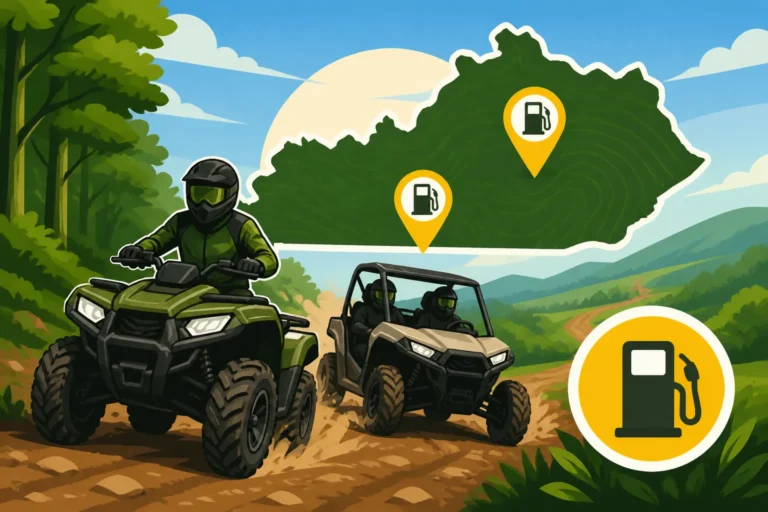
Remote riding areas can make small oversights more complicated. A machine that starts the day with a low fuel tank may not have enough for a longer-than-planned loop, particularly if the route involves repeated climbs or slow, technical riding. Estimate fuel conservatively and know where the group can turn back. For trips in eastern Kentucky, review [Fuel Between Eastern Kentucky Towns] before you set out; do not assume a convenient fuel stop will be open or close to the trailhead.
Cell service can be unreliable in mountain hollers and wooded areas. Tell someone outside the group where you plan to ride and when you expect to check in. Agree on what they should do if they do not hear from you. Keep a charged phone in a protected place, but do not rely on it as your only navigation or emergency tool. [Cell Dead Zones in a Holler] offers more context for planning around weak coverage.
Download or save maps before arrival if your navigation tool supports offline use. onX Offroad may help you review route information ahead of time, but bring a backup plan, such as a printed park map or another offline map source. Identify the staging area, planned exit points, and any major junctions before moving. A map is easier to interpret when you are rested and parked than when the group is separated on a trail.
| Summer riding concern | Why it matters | Practical preparation |
|---|---|---|
| Heat and humidity | Fatigue and dehydration can build gradually | Start early, carry accessible water, and schedule shaded breaks |
| Afternoon storms | Rain can reduce traction and change creek crossings | Check the forecast, set a turnaround rule, and avoid uncertain water |
| Remote terrain | Fuel and cell service may be limited | Plan fuel conservatively, share your route, and save maps offline |
| Mud and wet surfaces | Ruts and slick sections can damage trails or cause loss of control | Follow closures, stay on marked trails, and turn around when conditions exceed your skill |
| Sun and insects | Long exposure can lead to sunburn, bites, or distraction | Use suitable clothing, sunscreen, eye protection, and repellent |
Look After Your Group and the Trail
Check on riders before they have to ask
A good group ride is not a race to the next junction. Keep the group close enough to communicate at stops, and agree that the lead and sweep riders will pause at major turns. On a narrow trail, do not assume that the people behind you saw which direction you took. A quick regroup can prevent a rider from continuing alone into unfamiliar terrain.
Ask direct questions during breaks: Is anyone dizzy? Does anyone need water? Is a machine handling strangely? People often downplay discomfort because they do not want to slow everyone down. Make it clear before the ride that speaking up is expected and will not be treated as a nuisance. If someone is tired, overheated, or uneasy about the terrain, adjust the plan rather than pressuring them to continue.
Bring basic supplies appropriate to your route and group, including a first-aid kit, a way to communicate, and tools suited to your machine. Check that each rider knows where the supplies are and who is carrying them. For a family ride, make sure children know to stay with the group and tell an adult if they feel unwell, need a break, or notice a problem.
Reduce insects, litter, and avoidable trail impacts
Ticks are part of summer trail preparation, especially when riders stop near brush or walk through tall grass. Use repellent according to its label, wear clothing that helps limit exposed skin, and check yourself and your group after the ride. Pay attention to areas where ticks can be easy to miss, such as behind knees, around waistbands, and along the hairline. See [Ticks on a Kentucky Summer Trail] for more practical prevention ideas.
Carry out everything you bring in, including food wrappers, drink containers, and broken straps or parts. Do not leave trash at trailheads or toss it into a ditch because the machine is muddy and the ride is over. Stay on designated routes, respect private property boundaries, and avoid disturbing wildlife or vegetation to create a shortcut. Good trail etiquette matters even more in busy summer periods, when one group’s careless choice can affect many other riders.
Before leaving home, review [Kentucky Trail Maps Worth Carrying] and check the rules for the specific riding area. A state forest, a private off-road park, and a recreation area may have different access requirements and operating practices. A permit or pass for one place does not automatically authorize riding somewhere else. Keep your plan flexible, follow local signs, and be prepared to change the day’s route if conditions are unsafe.
Disclaimer
This article is for general informational purposes only and does not constitute professional advice. Laws, prices and regulations vary by location and change over time. Consult a qualified professional for guidance on your specific situation.