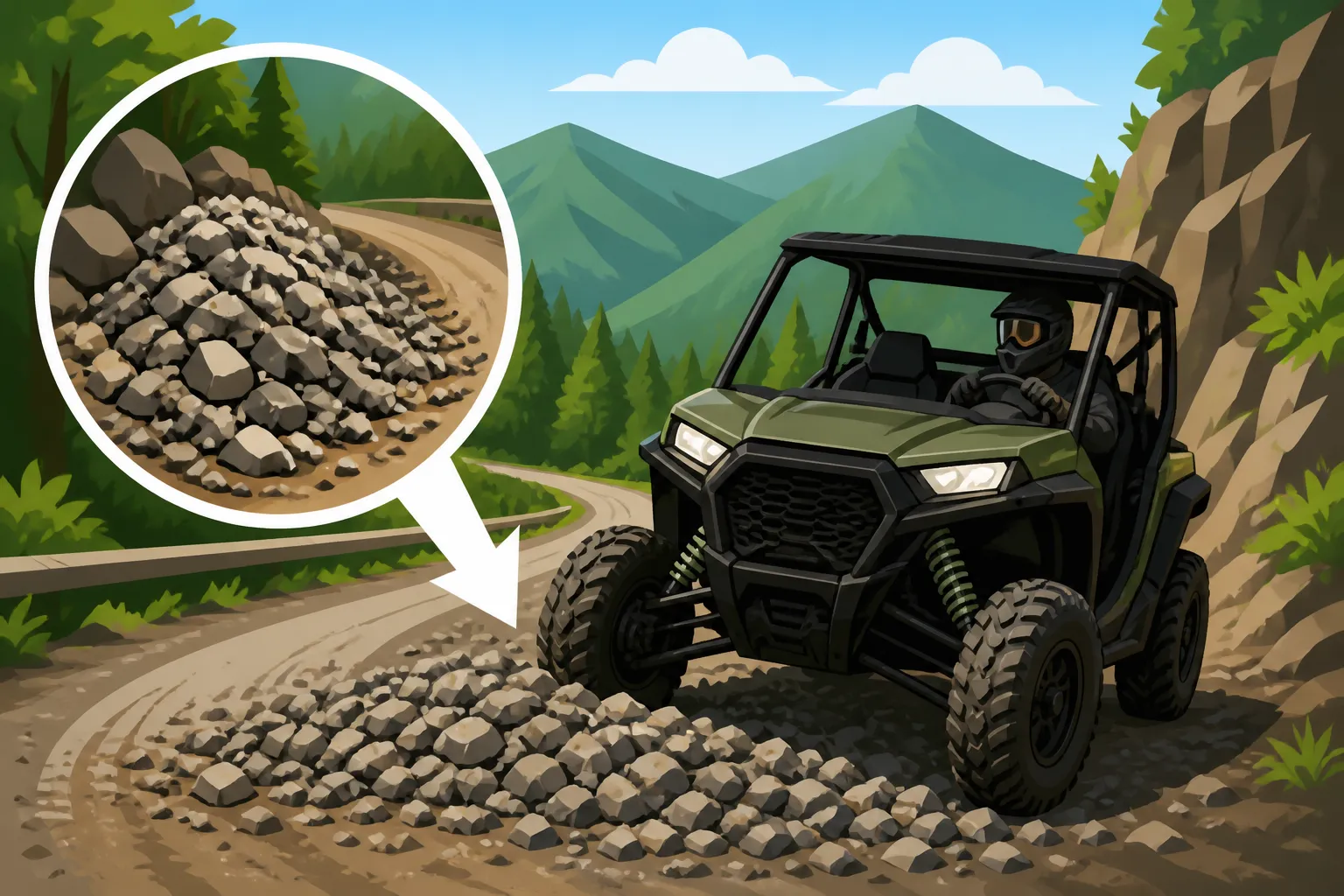
Gravel Washed Onto a Mountain Road
You’ve just topped a rise on a familiar mountain path, maybe on your way to a hunting camp, a favorite fishing spot, or just enjoying a scenic ride, and suddenly, the terrain ahead looks… different. A recent heavy rain has turned what was once a passable gravel road into a jumbled mess of loose rock, mud, and debris. It’s frustrating, it’s dangerous, and it’s an all-too-common reality for ATV and UTV riders exploring Kentucky’s beautiful, rugged backroads. This guide will walk you through understanding why these conditions arise, how to safely navigate them, and what you can do to protect yourself and your machine.
The Reality of Mountain Roads and Washed-Out Gravel
Kentucky’s landscape, particularly in the eastern coalfields and the rolling hills to the west, is defined by its dramatic elevation changes and a network of roads that range from well-maintained state routes to barely-there tracks. These unpaved, often informal, mountain roads are a lifeline for many rural communities and a playground for off-road enthusiasts. However, they are also constantly at the mercy of Mother Nature.
Why it Happens: The Forces of Nature in Kentucky's Mountains
Our mountains are carved by water. Rain, especially the heavy, sustained downpours Kentucky is known for, has an incredible power to reshape the land. On steep inclines and declines, water flows with immense force, carrying loose soil, rocks, and whatever else is in its path. When this happens on an unpaved road, the finer gravel and dirt can be washed away, leaving behind larger, jagged rocks and deep ruts. This isn't just about a little puddle; we're talking about significant erosion that can turn a smooth surface into a minefield of hazards. Imagine a sudden cloudburst turning a gentle stream crossing into a raging torrent that excavates chunks of the roadbed. It happens more often than you might think, especially in the hollows and on the ridge roads where drainage isn't always optimal.
The Hidden Dangers for ATV and UTV Riders
Encountering washed-out gravel isn't just an inconvenience; it presents several serious dangers for anyone on an ATV or UTV. First, loss of traction is a primary concern. Your tires, even knobby off-road ones, can struggle to find grip on loose, shifting gravel, leading to slides or loss of control, especially on inclines or declines. Then there's the risk of punctures or tire damage from sharp, exposed rocks. What looked like a small stone can be the tip of a much larger, buried hazard. Beyond that, the uneven terrain can throw your machine off balance, leading to rollovers or riders being ejected. Imagine hitting a deep rut hidden under a thin layer of loose gravel – it’s a jarring, unpredictable experience that can quickly turn serious. Finally, ground clearance becomes critical. A machine with lower clearance might high-center on a pile of rocks, leaving you stranded or damaging critical undercarriage components.
Navigating Kentucky's Backroads: Legalities and Practicalities
Riding on roads in Kentucky with your ATV or UTV is a nuanced subject, made even more complex when you factor in the informal nature of many mountain paths. It's not always as simple as paved vs. unpaved.
Understanding Kentucky's Road Rules for ATVs
Let's be clear: in Kentucky, ATVs and UTVs are generally not street legal. The default rule is that they are prohibited from public roads, highways, and even most county roads. [Why Kentucky Roads Are Closed by Default] is a good read if you want to dive deeper into the overarching restrictions. There are very specific, narrow exceptions, such as crossing a two-lane road at a ninety-degree angle for a maximum of 0.2 miles, or for specific farm, mining, or logging work under certain conditions. These rules, however, primarily pertain to official, maintained roads. Many of the "mountain roads" we're discussing fall into a gray area that requires both legal awareness and practical common sense. You can be ticketed for [Kentucky Fines for Illegal ATV Road Use] if you aren't careful.
The Unofficial Nature of Many Mountain "Roads"
The term "mountain road" in Kentucky can mean a lot of things. It might be an old logging track, a private access road for a handful of homes, a utility corridor, or even just a well-worn path that locals have used for generations. Often, these paths are not officially designated or maintained by county or state highway departments. This means there's no regular gravel grading, no ditching, and no official signage. They exist because people use them, and their condition is entirely dependent on weather, erosion, and the occasional local with a bulldozer. For riders, this means you can't assume any level of maintenance or predictability. [Kentucky Rules for Riding a Holler Road] often touch on these informal routes.
When a "Road" Becomes a Trail (and Vice Versa)
This blurred line is where many riders get into trouble, both legally and practically. A path that starts out as a somewhat maintained gravel road can quickly devolve into what is essentially an off-road trail, especially as you climb into higher elevations or venture deeper into a holler. Conversely, some trails might briefly use an old roadbed. The key distinction, from a legal standpoint, often comes down to whether the path is open to the public for conventional vehicle travel and whether it's maintained by a government entity. If you're on a path that is clearly not a public road, even if it looks like one, you're generally considered to be riding off-road. Be mindful of [Kentucky Fines for Riding Off the Trail] if you inadvertently stray onto prohibited areas. Always operate with permission if on private land.
Essential Gear and Techniques for Riding Troubled Roads
Riding through washed-out gravel requires more than just luck; it demands preparation, the right equipment, and honed skills. Don't just point and shoot; approach these conditions with respect.
Tire Choice and Traction: Your First Line of Defense
Your tires are the only thing connecting your machine to the ground, and their importance cannot be overstated when facing loose, uneven gravel.
- Aggressive Tread Patterns: For this type of terrain, you want tires with an aggressive, open tread pattern. These deeper, more widely spaced lugs can dig into loose material, providing better bite and clearing mud and small stones more effectively. Standard, less aggressive tires might float on top of the gravel, leading to unpredictable slides.
- Durable Construction: Sidewall strength is crucial. Sharp rocks are notorious for puncturing and tearing lesser tires. Look for tires with reinforced sidewalls or those designed for rocky, abrasive conditions. Brands like SuperATV offer heavy-duty tire options that are specifically built to withstand the rigors of extreme off-road terrain, providing an extra layer of confidence when you encounter unexpected hazards like sharp, loose gravel.
- Proper Tire Pressure: This is often overlooked but incredibly important. Running slightly lower tire pressure (within manufacturer recommendations for off-road use) can increase your tire's contact patch, allowing more tread to grip the loose surface. However, don't go too low, or you risk damaging the tire or popping it off the bead. Experiment safely to find what works best for your machine and the conditions.
Rider Skills for Loose and Uneven Terrain
Even the best tires won't save you if your riding technique isn't up to par.
- Standing Up: Whenever possible, stand on your foot pegs. This lowers your center of gravity, allows your legs to act as natural shock absorbers, and gives you a better view of the terrain immediately ahead. It also allows you to shift your weight more effectively to maintain balance and traction.
- Gentle Throttle and Steering Inputs: Avoid sudden, jerky movements. On loose gravel, aggressive throttle can cause your rear wheels to spin out, leading to a loss of control. Similarly, sudden steering can cause the front wheels to wash out. Think smooth, controlled, and deliberate actions. Feather the throttle, letting the machine slowly find traction.
- Anticipation and Line Choice: Look far ahead. Scan the path for the least treacherous line. Often, the edges of the road, or a slightly higher section, might have more stable ground. Avoid fresh washouts and deep ruts if possible. If you must go through, plan your entry and exit. Your [Kentucky ATV Safety Course Requirements] might have covered some of these basics, but practice makes perfect for specific terrain challenges.
- Braking Technique: On loose surfaces, heavy front braking can cause a tuck or a slide. Use both front and rear brakes gently, favoring the rear to help settle the machine and maintain control. Engine braking can also be a valuable tool for controlling your descent on slippery slopes.
Machine Preparedness: Lights, Suspension, and Protection
Your machine needs to be ready for the beating these roads can dish out.
- Adequate Lighting: If there's any chance you'll be out around dusk or in shaded hollers, good lighting is non-negotiable. Washed-out gravel can be even more deceptive in low light. Ensure your headlights are working perfectly, and consider adding auxiliary lights for better visibility. [Kentucky Lighting Requirements for ATVs] state you need proper illumination. Don't forget, [Daylight Only Under the Statute] applies to many road sections, but trails can still be dark.
- Suspension Tune: A well-maintained suspension system is key to absorbing impacts and keeping your tires in contact with the ground. Ensure your shocks are in good condition and consider adjusting them for heavier loads or more aggressive riding if your machine allows. For those looking to upgrade, aftermarket suspension components can offer improved travel and dampening characteristics, making rough terrain much more manageable. Some riders opt for lift kits, often available from manufacturers like SuperATV, which increase ground clearance and can help prevent high-centering on large rocks and debris.
- Undercarriage Protection: Skid plates and A-arm guards are invaluable. These protect vital components like your oil pan, differentials, and CV joints from being damaged by rocks and debris. A single sharp impact can ruin a ride and lead to costly repairs. SuperATV, for instance, offers robust skid plate systems designed for various ATV and UTV models, providing crucial protection against the harsh realities of washed-out gravel.
- Winch: A winch is a lifesaver if you get stuck, high-centered, or need to clear a large obstruction. Even if you're riding with friends, a winch makes recovery much safer and easier.
Staying Safe and Responsible on Gravel-Strewn Paths
Beyond the machine and skills, a responsible mindset is your best tool for tackling unpredictable mountain roads.
What to Do When You Encounter Washed-Out Gravel
Your first reaction should be to slow down immediately and assess the situation. Don't just barrel into it.
- Stop and Evaluate: If possible, pull over to a safe, stable spot. Get off your machine and walk a short section of the washed-out area if it looks particularly bad. Look for the least hazardous line, assessing the depth of ruts, the size of rocks, and the stability of the ground.
- Engage 4WD: If your machine has it, engage four-wheel drive. This provides crucial traction and control on loose, unstable surfaces.
- Use Low Gear: Select a low gear. This gives you better control over your speed and allows the engine to do more work, reducing your reliance on brakes.
- Maintain Momentum (Carefully): While you want to go slow, you don't want to stop in the middle of a tricky section. Maintain just enough momentum to keep your wheels rolling and prevent them from digging in.
- Look Where You Want to Go: Keep your eyes focused on your intended path, not on the hazards. Your body and machine will naturally follow your gaze.
- Ride With a Buddy: Seriously, this is one of the best safety measures. If you get stuck or run into trouble on a remote, washed-out road, having another person or another machine can be invaluable for recovery and assistance.
Reporting Road Hazards in Rural Kentucky
While many mountain "roads" are unofficial, some might actually fall under the purview of a county road department, even if they're unpaved. If you encounter a particularly dangerous washout on what appears to be a public right-of-way, you can attempt to report it.
- Identify the Location: Be as precise as possible. Use landmarks, GPS coordinates, or mile markers if available. "That one road past the old church" might not be enough.
- Contact the Local County Road Department: Call your county clerk's office or look up the specific county road department's contact information. Explain the hazard clearly and concisely.
- Patience is Key: Be aware that rural road maintenance budgets are often stretched thin, and it might take time for repairs to happen, especially on less-traveled routes. Don't expect immediate action, but reporting it is the first step toward potential improvement.
Advocating for Better Road Maintenance
For those who frequently use these routes, becoming an advocate can make a difference.
- Attend Local Meetings: Town hall meetings or county fiscal court meetings are places where you can voice concerns about local infrastructure.
- Join Riding Clubs: Many ATV/UTV clubs actively work with local authorities or land managers to maintain trails and, sometimes, access roads. They often have better communication channels and resources to address these issues.
- Support Responsible Riding: Demonstrate that ATV/UTV riders are responsible users of the land. This builds goodwill and can lead to more opportunities for legal riding and better-maintained access. This also includes respecting private property. Always ensure you have permission to ride on private land to avoid [Kentucky Trespass Rules for Riders].
Navigating washed-out gravel on Kentucky's mountain roads is a true test of a rider's skill and preparedness. By understanding the challenges, equipping your machine correctly, honing your riding techniques, and approaching every ride with a sense of responsibility, you can continue to enjoy the wild beauty of Kentucky's backcountry safely.
Disclaimer
This article is for general informational purposes only and does not constitute professional advice. Laws, prices and regulations vary by location and change over time. Consult a qualified professional for guidance on your specific situation.