Showing a Title and an Insurance Card
We've all been there: out enjoying a ride on a beautiful Kentucky day, feeling the wind, maybe tackling a new trail, when suddenly, you see those flashing lights in your rearview. Or perhaps you're just making a quick crossing of a county road to get to another section of trail. The immediate thought is usually, "What do they want?" This guide is here to demystify what Kentucky law enforcement might ask to see when it comes to your ATV or UTV, specifically focusing on your title and proof of insurance.
The Basics: When You Might Be Asked for Documents
It can feel a little jarring, especially if you're used to just riding on private land without a second thought. But the moment your wheels touch a public road, even briefly, or you find yourself interacting with law enforcement for any reason, the rules of the game shift. You become subject to regulations that aim to ensure accountability and safety for everyone.
Crossing or Riding on Public Roads
Kentucky's rules for ATVs and UTVs on public roads are pretty strict by default. Most public roads are simply off-limits. However, there are very specific, limited exceptions that allow you to operate your machine on pavement. These exceptions aren't carte blanche for joyriding down the highway; they're usually tied to essential activities or very short distances. For instance, you might be allowed to cross a road at a ninety-degree angle for no more than 0.2 miles, which really doesn't get you very far. Then there's the special case of farm vehicles, which have more leeway to travel short distances for agricultural purposes without a strict mileage cap. And, of course, Kentucky has established a pathway for some UTVs and side-by-sides to become [Street Legal UTV Requirements], if they meet stringent equipment and inspection standards, becoming what's known as a Special Purpose Vehicle (SPV).
The moment you engage in any of these permitted road uses, you're operating in a public domain. This means that if a law enforcement officer observes you, they have every right to ensure you're doing so legally and safely. It’s during these encounters that they'll want to verify your ownership and, if applicable, your compliance with insurance mandates. It’s not about mistrust; it’s about upholding the law and ensuring everyone is operating within established guidelines.
Law Enforcement Stops and Compliance
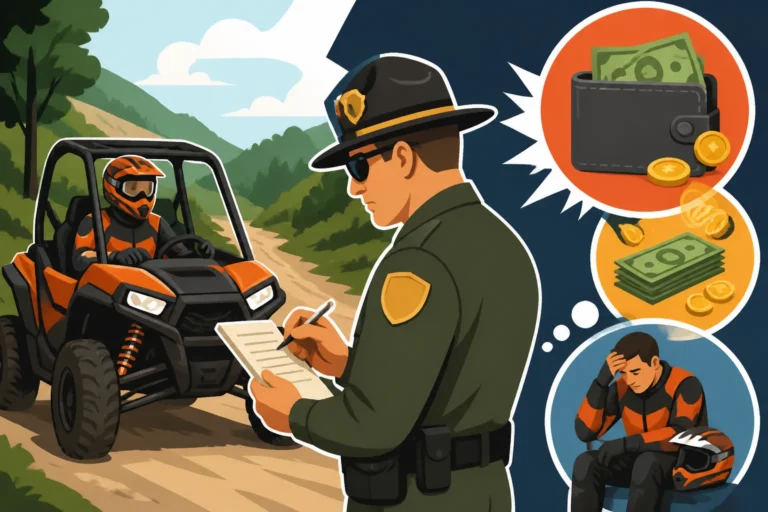
Imagine you're trying to get from one section of your favorite trail, maybe at Black Mountain Off-Road Adventure Area, to another, and you have to use a short stretch of county road. You think you’re doing everything right—you’re following the 0.2-mile crossing rule, perhaps you're riding in daylight only, and you're being super careful. But then the blue lights flash. It’s a moment that can make anyone's heart skip a beat, even if you know you haven't done anything wrong. When an officer stops you, whether it's for a perceived infraction or just a routine check in an area known for ATV activity, their first priority is usually identification and verification.
They want to see who you are and that the machine you're operating is legally yours. This is where your title comes into play. It’s your proof of legal ownership. If you're on a road, especially if it's an SPV, they'll also be looking for proof of insurance. Having these documents readily available and in order can make a world of difference in how smoothly the stop goes. It shows you’re a responsible owner and operator, which can often lead to a much quicker and more positive interaction. Keep these documents in a waterproof bag in a secure compartment on your machine, just like you might with your trail maps from SuperATV.
Accident or Incident Reporting
Let's hope this never happens, but accidents are a part of life, especially when you’re out adventuring. Whether it’s a fender bender with another rider in a parking lot, or something more serious involving a vehicle on a road during a permitted crossing, an accident immediately elevates the need for proper documentation. Law enforcement will be called, and they will absolutely require to see your title and proof of insurance.
In the event of an accident, your title proves legal ownership, which is crucial for determining liability and for any insurance claims that follow. Your insurance card, especially if the incident occurred on a public thoroughfare or involved another vehicle, is paramount. It demonstrates that you have the required coverage to address damages or injuries. Without these documents, you could face significant legal and financial hurdles. It’s a situation where "better safe than sorry" truly applies. Ensuring your documents are always up-to-date and accessible can save you a world of trouble during an already stressful situation.
Understanding Kentucky's ATV Title Requirements
Kentucky has a somewhat unique approach to ATVs and UTVs compared to some other states. They don't register them in the way they do cars or trucks, which can sometimes lead to confusion. However, titling is a completely different beast, and it's absolutely essential.
Why a Title Matters in Kentucky
For any ATV or UTV purchased new after July 15, 2010, Kentucky law explicitly requires a title. This is a crucial distinction. Many riders, especially those new to the state or used to other states' rules, often assume that because there's no yearly registration sticker or license plate for ATVs, there's no formal paperwork needed. This is a common misconception that can lead to headaches. [Why Kentucky Titles Machines Bought After July 2010] explains this further.
The title serves as the official proof of ownership. It legally links you, the individual, to that specific machine. This isn't just about showing an officer you own it; it’s vital for a whole host of other situations. If your machine is stolen, the title is what you’ll use to report it and prove to your insurance company that it was, in fact, yours. When you decide to sell your machine, the buyer will need that signed-over title to transfer ownership into their name. Without it, the sale becomes complicated, often impossible, and certainly less legitimate. Think of it as the birth certificate for your ATV – it establishes its identity and who it belongs to.
What Your Title Proves (and Doesn't)
Your Kentucky ATV title is a powerful document, but it's important to understand its scope. It primarily proves legal ownership. It contains key information like the Vehicle Identification Number (VIN), the make, model, and year of your machine, and your name and address as the owner. This is the official record that the machine belongs to you. It's what the county clerk's office keeps on file, and it’s what law enforcement uses to verify your right to possess the machine. The [Kentucky Form TC 96-182 Explained] is used in this process.
What it doesn't prove, however, is street legality. Just because you have a title doesn't mean your ATV or UTV can be driven on public roads freely. As we discussed earlier, street legality is a separate set of hurdles involving specific equipment requirements, inspections, and obtaining a special purpose vehicle (SPV) registration. Many people get these two concepts confused, assuming a titled machine is automatically street-legal. They are distinct. Your title is about ownership; street legality is about permission to operate on public roads. A perfectly titled machine might still get you a ticket if you're riding it illegally on a public road without meeting the SPV requirements or fitting into a specific exemption like farming.
Physical vs. Digital Proof
This is a point of frequent frustration and misunderstanding for many riders. In our digital age, it’s natural to think that a photo of your title on your smartphone would be sufficient proof. After all, it clearly shows all the information, right? Unfortunately, when it comes to official documents like a vehicle title, most Kentucky law enforcement officers and county clerks will require the original physical document or a certified copy from the county clerk’s office.
Why? Because digital images can be altered, and they don't carry the same legal weight as a physical, embossed document. The officer needs to see the original to confirm its authenticity, check for any signs of tampering, and ensure it's truly current. If you're stopped and only have a photo, you might find yourself facing a citation or being required to produce the physical title at the county clerk’s office within a certain timeframe. It's an inconvenience nobody wants. So, while it's tempting to snap a picture and leave the original safe at home, always carry a physical copy, or better yet, a certified duplicate, if you're venturing out. You can also explore accessories from SuperATV that offer secure, waterproof storage options for your critical documents on your machine.
Navigating ATV/UTV Insurance in Kentucky
Insurance can feel like a labyrinth of policies and clauses, but for ATV and UTV riders in Kentucky, it's a critical component of responsible ownership, especially if you ever plan on touching public roads. It's not always mandatory, but it's almost always a good idea.
When Insurance is Legally Required
Let's cut right to the chase: For a standard ATV or UTV used exclusively on private property or designated off-road trails (like those at Leatherwood Off-Road Park), Kentucky generally does not require you to carry liability insurance. This is a common point of confusion. You're not legally mandated to have it just to hit the trails.
However, this changes dramatically if you intend to operate your UTV or side-by-side as a Special Purpose Vehicle (SPV) on Kentucky roads. If your machine undergoes the necessary inspections, meets the stringent equipment requirements (like turn signals, specific lighting, mirrors, etc.), and is registered as an SPV, then insurance becomes absolutely mandatory. The state requires liability insurance coverage similar to what's mandated for motorcycles. This is because SPVs are granted the privilege of sharing public roads with cars and trucks, and with that privilege comes the responsibility to be financially accountable in case of an accident. [Motorcycle-Level Insurance for a Kentucky SPV] delves into this requirement. If you’re riding an SPV and you're stopped on a public road without valid insurance, you could face significant fines and penalties, and your machine could even be impounded.
The Benefits of Voluntary Insurance
Even if you never plan to convert your UTV into an SPV or take your ATV on a public road, carrying insurance is still a seriously smart move. Think beyond the legal mandates. Accidents happen, machines get stolen, and things break. Standard homeowner's insurance policies often have very limited, if any, coverage for recreational vehicles, especially if they're being used off your property.
Voluntary ATV/UTV insurance can provide a crucial safety net. It can cover:
- Property Damage: If you accidentally damage someone else's property while riding, your liability insurance can kick in.
- Bodily Injury: Should you cause an accident that injures another person, your policy can help cover their medical expenses, preventing a potentially devastating financial hit to you.
- Theft: ATVs and UTVs are unfortunately prime targets for theft. Comprehensive coverage can help you replace your machine if it's stolen from your garage or a trailhead parking lot.
- Collision: If you wreck your machine, collision coverage can help pay for repairs or replacement, even if it’s a single-vehicle accident on a trail.
- Uninsured/Underinsured Motorist: While less common for ATVs on trails, if you're ever involved in an incident with another ATV/UTV rider who doesn't have insurance, this coverage can protect you.
Considering the investment many of us make in our machines, and the potential costs of an accident, a good insurance policy is often a small price to pay for peace of mind. It allows you to ride with confidence, knowing you're protected against unforeseen circumstances, whether you're navigating rocky terrain with your SuperATV lift kit or cruising through a field on your farm.
What an Insurance Card Shows
When an officer asks for proof of insurance, they're looking for an official document—typically a physical insurance card or sometimes a digital version if your provider offers a state-approved app—that contains specific information. This card acts as quick verification that your machine is covered.
Key details an officer will check for on your insurance card include:
- Your Name: To ensure you are the policyholder or an authorized operator.
- Policy Number: The unique identifier for your insurance coverage.
- Policy Effective Dates: To confirm the policy is current and hasn't expired.
- Vehicle Information: The make, model, year, and crucially, the VIN of your ATV or UTV. This links the insurance policy directly to your specific machine.
- Insurance Company Name: The provider of your coverage.
- Coverage Type: While they might not delve into every detail, the card will indicate basic liability coverage.
It's absolutely critical that the VIN on your insurance card matches the VIN on your machine exactly. Any discrepancy can raise red flags and lead to further questioning, or even a citation. Before every ride, especially if you're going to be on public roads, take a moment to double-check your insurance card, ensuring all the information is accurate and that the policy is active.
Best Practices for Document Readiness
Having your documents in order is one thing; having them readily available and protected is another. There's nothing more frustrating than needing your title or insurance card only to realize it's buried in a toolbox, or worse, lost somewhere on the trail.
Keeping Your Documents Safe and Accessible
This might seem obvious, but it's often overlooked. You've gone through the trouble of getting your [Titling an ATV in Kentucky] done and securing insurance, so don't let a moment of carelessness undermine that. For your physical title, which is truly irreplaceable, consider keeping the original in a safe place at home, like a fireproof safe. Then, obtain a certified copy from your county clerk's office. This certified copy is what you should carry with you when you ride. It has the same legal standing as the original for most roadside interactions but protects your primary document. [Replacing a Lost Kentucky ATV Title] is a process you want to avoid.
For both your certified title copy and your insurance card, accessibility and protection are key. Invest in a small, sturdy, waterproof pouch or bag. Many ATV and UTV accessories, including some from SuperATV, feature built-in storage compartments or bags that are designed to be weather-resistant and secure. Place your documents inside this pouch and keep it in a secure, easily reachable spot on your machine – perhaps a glove box, a small storage bin, or a tank bag. The goal is to keep them dry, protected from the elements and trail vibrations, and available at a moment's notice without having to dig through a backpack or under a seat.
Regular Document Checks and Updates
Just like you check your tire pressure and oil levels before a ride, it’s a good habit to periodically review your ATV and UTV documents. This isn't just about finding them; it's about ensuring everything is current and accurate.
Here’s a quick checklist to consider:
- Title Accuracy: Does the name on the title still match yours? Is the VIN correct? If you've moved, have you updated your address with the county clerk?
- Insurance Policy Status: Is your policy still active? Check the expiration date on your insurance card. Have there been any changes to your machine (like major modifications) that might require an update to your policy? Has your premium been paid?
- Coverage Adequacy: Especially if you've made significant upgrades to your machine (like adding a SuperATV portal gear lift or a winch), it's worth a call to your insurance agent to ensure your coverage still reflects the full value of your investment.
- Copies: Are your certified copies still legible? Have they become faded or damaged? If so, it might be time to get new certified copies from the clerk.
Making this a routine part of your pre-season or even monthly maintenance can prevent a lot of headaches down the road. It ensures that when you need to [Show a Title and an Insurance Card], you can do so confidently.
What to Do If You Don't Have Them
Life happens. Sometimes, despite your best intentions, you might find yourself stopped by law enforcement without one or both of your critical documents. It's an uncomfortable situation, but knowing how to handle it can make a difference.
If you're stopped and don't have your title or insurance card:
- Stay Calm and Courteous: The most important thing is to remain respectful and cooperative with the officer. Arguing or becoming defensive will not help your situation.
- Explain the Situation Honestly: Politely explain why you don't have the document with you. "Officer, my original title is safely at home, and I forgot to grab my certified copy today, but I can assure you I own this machine and it's properly titled." Or, "I believe my insurance is active, but I seem to have left my card in my truck."
- Provide Other Identification: Offer your driver's license or other valid photo ID. This helps establish your identity. [A Kentucky Photo ID at the Clerk's Counter] is always good to have.
- Expect a Citation: Be prepared for the possibility of receiving a citation. Even with a good explanation, not having required documents can still lead to a ticket. In some cases, depending on the officer and the circumstances, you might be given a warning or a "fix-it ticket" allowing you to produce proof at the courthouse within a few days.
- Follow Up Promptly: If you receive a citation, address it immediately. Gather the required documents and follow the instructions on the ticket for presenting them to the court or clerk's office. Often, if you can prove you had the valid documents at the time of the stop, the charge might be dismissed or reduced.
Being without your documents is never ideal, but handling the situation with honesty and respect is always your best first step.
Here's a quick summary table of document requirements for different scenarios:
| Scenario | Kentucky Title Required? | Kentucky Insurance Required? | Notes |
|---|---|---|---|
| Private Property/Dedicated Trails | Yes (for 2010+ machines) | No (recommended) | Title proves ownership; insurance protects against theft/damage/liability. |
| Road Crossing (0.2 mile rule) | Yes | No | While not legally required, liability insurance is highly recommended due to interaction with public roads. |
| Farm Use on Roads | Yes | No | Same as road crossing; specific exemptions for agricultural use apply. |
| Street Legal SPV (UTV/Side-by-side) | Yes | Yes (motorcycle-level) | Mandatory for legal road operation; requires inspection, registration, and specific equipment. |
| Accident on Public Property | Yes | Yes (if SPV or at-fault) | Crucial for liability determination, insurance claims, and legal compliance. |
| Selling Your Machine | Yes | N/A | Essential for legal transfer of ownership. |
| Stolen Machine Report | Yes | N/A | Required for police report and insurance claim. |
Disclaimer
This article is for general informational purposes only and does not constitute professional advice. Laws, prices and regulations vary by location and change over time. Consult a qualified professional for guidance on your specific situation.