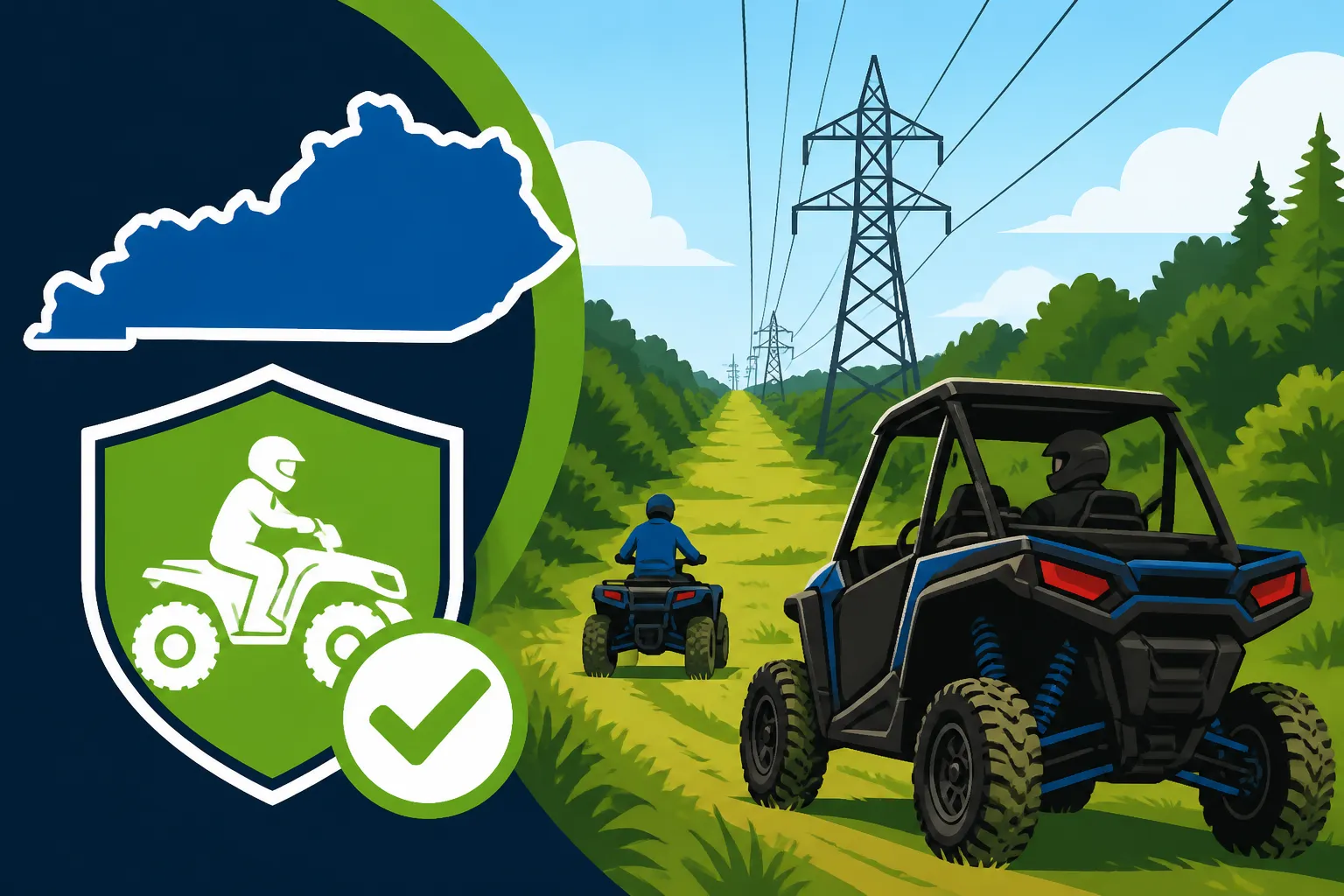
Kentucky Rules for Riding a Utility Corridor
We've all been there: you're out riding, exploring the backroads and forgotten corners of Kentucky, and you spot it. A wide, inviting clearing slicing through the dense woods, often with power lines strung overhead or a pipeline marker peeking out of the grass. It looks like a perfect, unofficial trail, a shortcut, or just an exciting new path to explore. But before you swing your ATV or UTV onto what seems like open access, let's talk about the specific and often misunderstood rules for riding utility corridors in Kentucky. This guide will help you understand the legalities, dangers, and responsible choices when these tempting paths cross your ride.
Understanding Utility Corridors in Kentucky
Utility corridors are a common sight across our beautiful state, from the rugged mountains of Eastern Kentucky to the rolling hills of the Bluegrass region. They serve a vital purpose, but their appearance can be deceiving to the casual rider.
What Defines a Utility Corridor?
At their core, utility corridors are strips of land specifically designated for the infrastructure that keeps our modern lives running. Think about the massive power lines that crisscross the landscape, carrying electricity from generation plants to our homes and businesses. The clear-cut path beneath them is a prime example of a utility corridor. Similarly, these corridors accommodate underground pipelines for natural gas or petroleum, fiber optic cables for internet and communication, or even access roads for cell towers and water treatment facilities.
These corridors often appear as wide-open, unmaintained pathways, or sometimes just narrow, less-traveled routes. They exist so utility companies can construct, maintain, and repair their infrastructure without hindrance. They need clear access, free from trees and obstructions, to ensure the reliability and safety of their systems. This means these areas are regularly cleared, sometimes mowed, and often have service roads or tracks running their length, which can look very much like an off-road trail.
Who Owns or Manages These Lands?
This is where the confusion often begins. Unlike a state park or a designated OHV area like [Black Mountain Off-Road Adventure Area in Kentucky], utility corridors are almost never public land in the sense that anyone can freely access them for recreation. The land under these corridors is typically owned by private individuals or entities, or it falls under what's called an "easement."
An easement grants a utility company the right to use a specific portion of someone else's property for a designated purpose – in this case, to install, maintain, and access their utility lines or pipelines. The underlying landowner still owns the property, but their rights are limited by the utility company's easement. The utility company, in turn, has specific rights and responsibilities for that strip of land. Neither the landowner nor the utility company generally grants permission for recreational riding, primarily due to liability concerns, safety risks, and the potential for damage to vital infrastructure. Therefore, you cannot assume that just because it's cleared, it's fair game for riding.
The Allure and the Legal Reality of Riding Utility Corridors
The magnetic pull of a utility corridor for an ATV or UTV rider is undeniable. They offer what seems like an escape, but the legal reality paints a very different picture.
Why They're So Appealing to Riders
For many riders, the sight of a utility corridor is like finding a hidden gem. They often provide long, relatively straight, and open paths that can feel exhilarating after navigating twisty, narrow trails. Sometimes, they cut through areas that would otherwise be inaccessible, offering shortcuts between different locations or leading to remote spots with scenic views. The terrain itself can be appealing, with areas of loose gravel, challenging mud holes, or steep climbs and descents where service roads might have been carved out.
Because these areas are not official trails, they can also give the impression of being "less watched" or unregulated. Riders might believe that as long as they aren't damaging anything, no one will care. This perception, unfortunately, is often far from the truth. The desire for new terrain, longer rides, or simply the thrill of an "unmarked" adventure often overshadows the critical question of legal access.
The Default Legal Status: Private Property
Here’s the plain, unvarnished truth about utility corridors in Kentucky: unless you have explicit, written permission from both the underlying landowner and the utility company, riding on a utility corridor is almost certainly considered trespassing. This isn't a gray area; it's a fundamental aspect of property law. Utility companies vigorously protect their infrastructure and access rights, and landowners are understandably protective of their property.
Trespassing carries real consequences. You could face fines, your machine could be impounded, and you might even face civil or criminal charges. It's not uncommon for utility companies to monitor these corridors, sometimes with cameras, or for landowners to report trespassers. Imagine running into a [Deputy at a Kentucky Roadside Stop] far from any designated trail, with nowhere to go. The situation quickly escalates from a fun ride to a costly legal headache. These paths are not [Kentucky Rules for Riding a County Road] or [Kentucky Rules for Riding a City Street], where specific laws govern public access. They are, in most cases, private domains with restricted access.
Navigating Access: Permits, Permission, and Partnerships
So, what if you're determined to ride a utility corridor legitimately? It's a challenging path, but not entirely impossible under very specific circumstances.
Seeking Permission from Landowners and Utility Companies
The only legitimate way to ride a utility corridor is to obtain explicit, written permission. This means identifying not just the utility company that holds the easement (often identifiable by tags on power poles or signs near pipelines), but also the private landowner who actually owns the property. You'd then need to secure permission from both parties. This process can be incredibly complex and often fruitless.
Utility companies are typically very reluctant to grant recreational access due to significant liability risks. If a rider gets injured on their easement, even with permission, the company could be held responsible. They also worry about damage to their infrastructure, environmental concerns, and the precedent it might set for other riders. Landowners, similarly, have their own liability concerns and desire for privacy. While it's worth a try if you know the parties involved, expect a lot of red tape and a high likelihood of denial.
When Utility Corridors Intersect with Public Trails
There are instances where a utility corridor might cross or run adjacent to a legally designated trail system. For example, some trails within [Leatherwood Off-Road Park in Kentucky] or [Rush Off-Road in Eastern Kentucky] might briefly utilize a section of a utility corridor. In these specific cases, you are permitted to ride only on the clearly marked, designated portion of the trail that happens to coincide with the corridor.
It is absolutely crucial not to deviate from the marked trail into the broader corridor. Just because a trail crosses a power line easement doesn't mean the entire easement is open for riding. Always stay on the established and signed routes. Riding off-trail, even within an official park, can lead to fines and expulsion, as detailed in [Kentucky Rules for Riding Off the Trail]. Always respect the boundaries and stick to the paths that are explicitly open for your enjoyment.
Safety and Environmental Concerns on Utility Corridors
Beyond the legal ramifications, riding utility corridors presents a unique set of safety hazards and environmental responsibilities that riders must consider.
Hidden Dangers and Obstacles
Utility corridors are not designed with recreational riders in mind. This means they often harbor dangers that you wouldn't find on a purpose-built trail. You might encounter ungraded surfaces with severe erosion, deep ruts from service vehicles, exposed rock ledges, or sudden, treacherous mud holes. Guy wires stabilizing utility poles can be difficult to see, especially in tall grass, and could snag a wheel or even a rider. Active construction or maintenance work might leave behind equipment, trenches, or debris. Even the utility equipment itself, like transformers or gas line markers, can pose serious hazards.
Imagine riding through a seemingly clear stretch only to hit a hidden concrete foundation or a pipe sticking out of the ground. The lack of maintenance for recreational use means conditions can change rapidly and unpredictably. For example, recent heavy rains can turn an easy path into a quagmire or cause a [Gravel Washed Onto a Mountain Road] scenario, creating new obstacles. Equipping your machine with durable, high-quality protection, like heavy-duty skid plates and A-arm guards from companies such as SuperATV, is a smart move for any type of challenging terrain, though it's no substitute for legal access and safe riding practices.
Environmental Impact and Responsible Riding
Riding off-trail or on unauthorized utility corridors can have a significant negative environmental impact. These areas, while sometimes appearing barren, are often vital habitats for specific plants and wildlife adapted to disturbed ecosystems. Uncontrolled riding can lead to severe soil erosion, especially on slopes, which can then wash into waterways, harming aquatic life. It can also compact soil, destroy vegetation, and disturb wildlife.
Responsible riders understand that preserving the natural beauty and ecological health of Kentucky is part of the privilege of riding. This includes avoiding sensitive areas, packing out all trash, and adhering to [Kentucky Trail Etiquette on Narrow Benches]. Even if you were to gain permission to ride a corridor, respecting the environment is paramount. Using durable tires and appropriate vehicle modifications, perhaps even some of the specialized suspension components from SuperATV, can help you navigate tough terrain more gently, minimizing your footprint. Remember, leaving no trace is not just a suggestion; it’s a responsibility that impacts future access for all riders.
| Feature | Designated OHV Trail | Typical Utility Corridor |
|---|---|---|
| Legal Access | Explicitly permitted, often requires a permit (e.g., [Black Mountain Permit Cost]) | Assumed private; requires explicit, written permission |
| Maintenance | Maintained for recreational use, signed, mapped (e.g., [Kentucky Trail Maps Worth Carrying]) | Maintained for utility access; not for recreation |
| Obstacles | Known and often marked; designed for challenge | Unmarked, unpredictable; can include utility equipment |
| Emergency Access | Protocols in place for rescues (e.g., [Camping at a Kentucky Trail Park]) | Often remote, difficult for emergency services |
| Environmental | Managed for sustainability and rider impact | Not managed for recreational impact; fragile ecosystems |
Ultimately, the best advice for utility corridors is to exercise caution and prioritize legal, safe riding. If you're looking for new trails, explore designated areas like [Turkey Bay OHV Area in Western Kentucky] or [Hollerwood Off-Road Park in Kentucky]. These places exist precisely so you can enjoy your machine without the risks and legal troubles associated with unauthorized riding. Always get permission or stick to established trails.
Disclaimer
This article is for general informational purposes only and does not constitute professional advice. Laws, prices and regulations vary by location and change over time. Consult a qualified professional for guidance on your specific situation.