Kentucky SPV Equipment List
If you've ever dreamed of taking your trusty ATV or UTV beyond the dirt trails and onto the pavement for a quick run to the store or to connect two favorite riding spots, you've likely run headfirst into a wall of confusion. Kentucky, like many states, has specific rules for what it calls "Special Purpose Vehicles" (SPVs) that allow some off-road machines to be street legal, but understanding exactly what equipment you need can feel like deciphering an ancient scroll. This guide is here to untangle that knot, walking you through the mandatory equipment your ATV or UTV needs to meet Kentucky's SPV standards and hit the road legally.
Understanding Kentucky's Special Purpose Vehicle (SPV) Designation
Before we dive into the nuts and bolts of equipment, let's clear up what Kentucky even means by a "Special Purpose Vehicle." This isn't just a fancy name for any ATV or UTV you own; it's a specific legal classification for off-road vehicles that meet certain criteria, allowing them to operate on designated public roads. For years, the idea of street-legal ATVs and UTVs in Kentucky felt like a pipe dream for most riders, relegated to specific farm exemptions or quick, desperate dashes across a two-lane road. The SPV designation changed some of that, creating a pathway for legitimate road use, albeit with a strict set of conditions and required modifications.
This classification is a big deal because it acknowledges that while these machines are primarily designed for off-pavement adventures, there's a practical need for limited road use. Think about connecting trails, accessing fuel, or simply getting from one side of your property to another if it's divided by a public road. Without this SPV designation and its accompanying equipment list, you'd be risking a ticket and potential fines every time a tire touched the blacktop outside of a very narrow set of exceptions. It's an important distinction that separates a casual trail ride from a regulated, road-worthy journey, and it’s often the first hurdle many enthusiasts face when considering expanding their machine's utility. You might even want to check out [Kentucky's 2025 Special Purpose Vehicle Law] for more background on this classification.
Why the SPV Designation Exists
The main reason Kentucky established the SPV designation was to create a framework for safe integration of certain off-road vehicles onto public roads where allowed. Without it, you'd have a patchwork of inconsistent local rules, or worse, outright bans, leaving riders guessing and often in violation of the law. The state wanted to ensure that if these machines were going to share the road with cars and trucks, they needed to meet a baseline of safety and visibility standards. This isn't about making ATVs and UTVs into highway cruisers; it's about making them minimally acceptable for specific, limited road travel.
Riders often express frustration because they see their side-by-side as a perfectly capable vehicle, wondering why it can't just operate like a car on a country road. The SPV rules address this by mandating equipment that brings these machines closer to traditional motor vehicles in terms of signaling, visibility, and control. It’s a compromise, allowing limited road access while attempting to mitigate the unique safety challenges that come with operating a vehicle not originally designed for paved roads.
Limitations of SPV Road Use
Even with an SPV designation and all the proper equipment, it's crucial to understand that you can't just go joyriding down Main Street in every Kentucky town. The SPV law has very specific limitations on where and how you can use these machines. For instance, cities and counties have to actively "opt-in" to allow SPV use on their roads. This means just because your machine is equipped and registered as an SPV, it doesn't automatically mean you can ride it in Lexington or Louisville. You have to check local ordinances. There are also speed limits, time-of-day restrictions, and designated road types where SPVs are permitted.
Many riders get their machine fully equipped, pass the inspection, and then discover the local roads they wanted to use haven't opted in. This is a common pitfall, and it highlights the importance of not only having the right equipment but also understanding the accompanying local laws. It's not a free pass to the highway; it's a conditional permit for specific circumstances, and you'll want to review [Kentucky Cities That Allow UTVs on Streets] to see if your favorite route is even an option.
Mandatory Lighting and Visibility Equipment
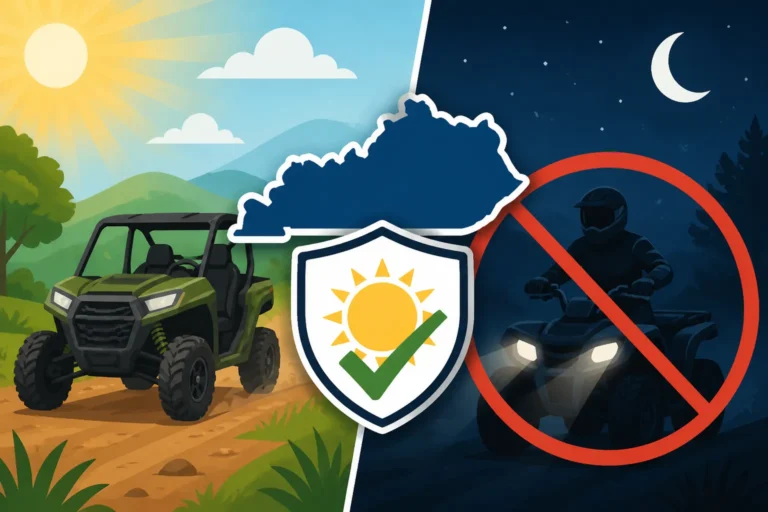
When you're aiming to make your ATV or UTV street legal as an SPV in Kentucky, the first things state officials will look at are your lights and how visible your machine is to other drivers. This isn't just about being able to see where you're going; it's crucially about being seen by others, especially slower-moving passenger vehicles and heavy trucks. The difference in size and speed between an SPV and a typical road vehicle means that visibility is paramount, and the rules are designed to ensure your machine stands out, day or night.
Think about the conditions on a Kentucky mountain road – winding turns, shaded hollers, and unexpected crests. Your off-road lights might be fantastic for illuminating a dense trail at night, but they may not meet the specific beam patterns or intensity required for road use, nor do they often include the full suite of signaling devices. This section will break down exactly what lights, signals, and mirrors are necessary to pass muster and keep you safe on public roads.
Headlights and Taillights
For starters, your SPV must be equipped with at least one headlight and two taillights. While many ATVs come with one or two headlights and a single taillight, you'll often need to add a second taillight to meet the "two taillights" requirement. These aren't just decorative; they need to function properly, providing adequate illumination forward and visible light from the rear. They must be working whenever you're operating the vehicle on a public road, regardless of the time of day if visibility is low. You can find more detail on this specific requirement in [One Headlight and Two Taillights in Kentucky].
The lights also need to be properly aimed so they don't blind oncoming traffic, much like a car's headlights. If you've got those super bright LED light bars that are amazing for tearing through a dark trail, those are almost certainly not appropriate for on-road use and could even get you pulled over if used on public roads, as they can cause significant glare. This means you might need separate, compliant headlights in addition to your off-road specific lighting setup. Many aftermarket companies like SuperATV offer DOT-compliant headlight and taillight kits specifically designed for UTVs looking to go street legal.
Turn Signals and Brake Lights
This is where many stock ATVs fall short. To be an SPV, your machine must have functional turn signals – both front and rear – and they need to be amber in color for the front and either red or amber for the rear. This isn't optional; it's a critical safety feature that allows you to communicate your intentions to other drivers, preventing potential accidents. If your ATV or UTV didn't come with turn signals from the factory, you'll be installing an aftermarket kit, which typically involves wiring in new lights, a flasher relay, and a switch.
In addition to turn signals, your SPV needs proper brake lights that illuminate when you apply the brakes. Most machines come with this, but it’s still something the inspector will check. When it comes to aftermarket kits, ensure they are durable enough to withstand the vibrations and occasional impacts that are common with off-road machines, even when operating on pavement. Poorly installed wiring can lead to intermittent failures, which is not only frustrating but also dangerous. For a deeper dive into this, consult [Turn Signals and Dual Mirrors on a Kentucky SPV].
Rearview Mirrors
Just like any other road-going vehicle, an SPV needs rearview mirrors. Specifically, you'll need at least two: one on the left side and one on the right side of the vehicle. This is non-negotiable. Many ATVs might only come with a single handlebar-mounted mirror, or none at all, especially if they’re older models or designed strictly for competitive use. For UTVs, you might have a single center mirror, but you'll still need the two side mirrors.
These mirrors aren't just for checking your buddies behind you on the trail; they are essential for safe lane changes, seeing approaching vehicles, and backing up. They need to provide a clear, unobstructed view of the road behind you. When purchasing aftermarket mirrors, look for options that are robust and can handle both the road vibrations and the occasional brush with a branch if you're transitioning from pavement back to trail. Many riders appreciate breakaway mirrors or those with a wide field of view, and you'll find plenty of options from companies like SuperATV that cater to both durability and compliance.
Safety and Operational Gear for Kentucky SPVs
Beyond just seeing and being seen, Kentucky's SPV equipment list focuses heavily on the safety and control aspects of your machine. These are the components that help protect occupants and ensure the operator has full command of the vehicle, which becomes even more critical when sharing roads with heavier, faster-moving traffic. It’s about building in a layer of protection and control that brings your off-road machine closer to the safety standards expected of on-road vehicles.
When you're converting an ATV or UTV to an SPV, you're essentially preparing it for a different operational environment. This means considering how it will react in situations like sudden stops, unexpected swerving, or even an impact. The required safety and operational gear directly addresses these concerns, aiming to make any road use as secure as possible for both the occupants of the SPV and other road users.
Roll Cages and Seat Belts
For any UTV that wants to be classified as an SPV, a factory-installed or properly designed aftermarket roll cage is absolutely mandatory. This cage provides crucial protection in the event of a rollover, which, while less common on pavement, is still a risk. Alongside the roll cage, seat belts are required for every occupant. These aren't optional; every seat in your UTV capable of holding a passenger must have a functional seat belt, and they must be worn whenever the vehicle is in motion on public roads. For single-rider ATVs, while a roll cage isn't applicable, the emphasis shifts to the rider wearing appropriate personal protective equipment, including a helmet, which we'll touch on later.
It’s important to note that if you're considering modifying your roll cage or installing an aftermarket one, ensure it meets industry safety standards. A flimsy, poorly welded cage is worse than none at all, as it can deform and become a hazard itself during an accident. The same goes for seat belts; make sure they are in good condition, properly anchored, and function correctly. Check [Roll Cage and Seat Belt Rules for an SPV] for detailed requirements.
Speedometer and Horn
Every SPV needs a functional speedometer that is clearly visible to the operator and accurately reflects the vehicle's speed. This isn't just a convenience; it's a critical safety feature that allows you to comply with posted speed limits, which are often much lower for SPVs than for regular cars. Many newer UTVs come with digital speedometers, but older models or some ATVs might require an aftermarket installation.
Equally important is a working horn. This is your primary way of alerting other drivers or pedestrians to your presence, especially in situations where you might be in a blind spot or need to signal an impending action. A little "beep-beep" bicycle horn won't cut it; it needs to be an audible, functional horn suitable for a motor vehicle. If your machine doesn't have one, adding an aftermarket horn is a relatively simple modification.
Functional Brakes
This might seem obvious, but your SPV needs to have fully functional service brakes on all wheels. The inspection will include checking that your brakes operate effectively and bring the vehicle to a safe stop. This includes ensuring your brake pads aren't worn thin, your brake lines aren't leaking, and the braking system provides consistent, reliable stopping power. An emergency brake (or parking brake) is also typically required to ensure the vehicle can be securely parked on an incline without rolling.
When you're out on the trails, you might rely more on engine braking or subtle maneuvers, but on a paved road, direct and powerful braking is essential for avoiding collisions. If your brakes feel spongy or inconsistent, it's time for a maintenance check before you even think about hitting the inspection station.
Beyond the Basics: Tires, Inspection, and Licensing
While the lights, mirrors, and safety gear cover a huge chunk of the SPV requirements, there are still a few other critical areas you need to address to ensure your machine is fully compliant. These include the condition of your tires, the all-important inspection process, and ensuring you, as the operator, are properly licensed. Skipping any of these steps could mean your hard work modifying your machine goes to waste, and you're still not legally allowed on Kentucky's roads.
It’s easy to focus on the flashy additions like turn signals and forget about the more mundane, but equally crucial, details. The state's goal is a comprehensive safety check, so every component that affects the vehicle's roadworthiness or the driver's ability to operate it safely is under scrutiny. Don't let a small oversight derail your plans for legal street operation.
Tire Requirements and Tread Depth
Your tires are the only contact your machine has with the road, making their condition incredibly important for safety and handling. Kentucky's SPV rules specify that your tires must have at least two thirty-seconds (2/32) of an inch of tread depth across the width of the tire. This is a minimum standard, and while your knobby off-road tires might have plenty of tread, the pattern might not be ideal for pavement. However, as long as they meet the depth requirement and are in good condition (no dry rot, bulges, or excessive wear), they should pass.
You'll want to ensure all four tires (or whatever your machine uses) are in similar condition and properly inflated. Running significantly different tire sizes or severely under-inflated tires can impact handling and stability, especially on hard surfaces. When you're assessing your tires, remember that while aggressive mud tires are fantastic in the slop, they can be noisy and wear quickly on pavement, so factor that into your overall SPV operational costs. You can learn more in [Two Thirty-Seconds of Tread in Kentucky].
The $25 Kentucky Inspection
Before your newly equipped SPV can hit the road, it has to pass a physical inspection. This inspection is typically performed by a certified Kentucky law enforcement officer and costs a nominal fee. They will go through a checklist, verifying that all the required equipment we've discussed is present, functional, and meets the necessary standards. This is where all your hard work pays off, or where you discover that one little thing you overlooked.
It’s not just a quick glance; they’ll check your lights, test your horn, verify your mirrors, look at your tires, and confirm your VIN. It's crucial to ensure everything is perfect before you show up for the inspection, as failing means you'll have to fix the issue and schedule a re-inspection. This inspection is a critical step in the overall process of getting your machine registered as an SPV and obtaining your special license plate. If you want to know more about the cost, see [The $25 Kentucky Inspection].
Operator's License and Insurance
Finally, let's talk about you, the rider. To legally operate an SPV on Kentucky's public roads, you must possess a valid Kentucky driver's license. This is not an optional extra; it's a fundamental requirement. You can't just be an experienced off-road rider; you need to be a licensed driver, just as if you were driving a car. This means passing the standard driver's license tests if you don't already have one.
In addition to a driver's license, you'll need to carry liability insurance on your SPV. This insurance must meet the minimum coverage requirements for motor vehicles in Kentucky. This is critical for protecting yourself and others in the event of an accident. While your off-road machine might be covered under your homeowner's policy for private property riding, road use is a whole different ballgame and requires specific automotive-style insurance coverage. Ensure your insurance provider understands your vehicle is an SPV operating on public roads to avoid any gaps in coverage. Consider checking [A License for Kentucky Highway Operation] for more details on this.
Disclaimer
This article is for general informational purposes only and does not constitute professional advice. Laws, prices and regulations vary by location and change over time. Consult a qualified professional for guidance on your specific situation.