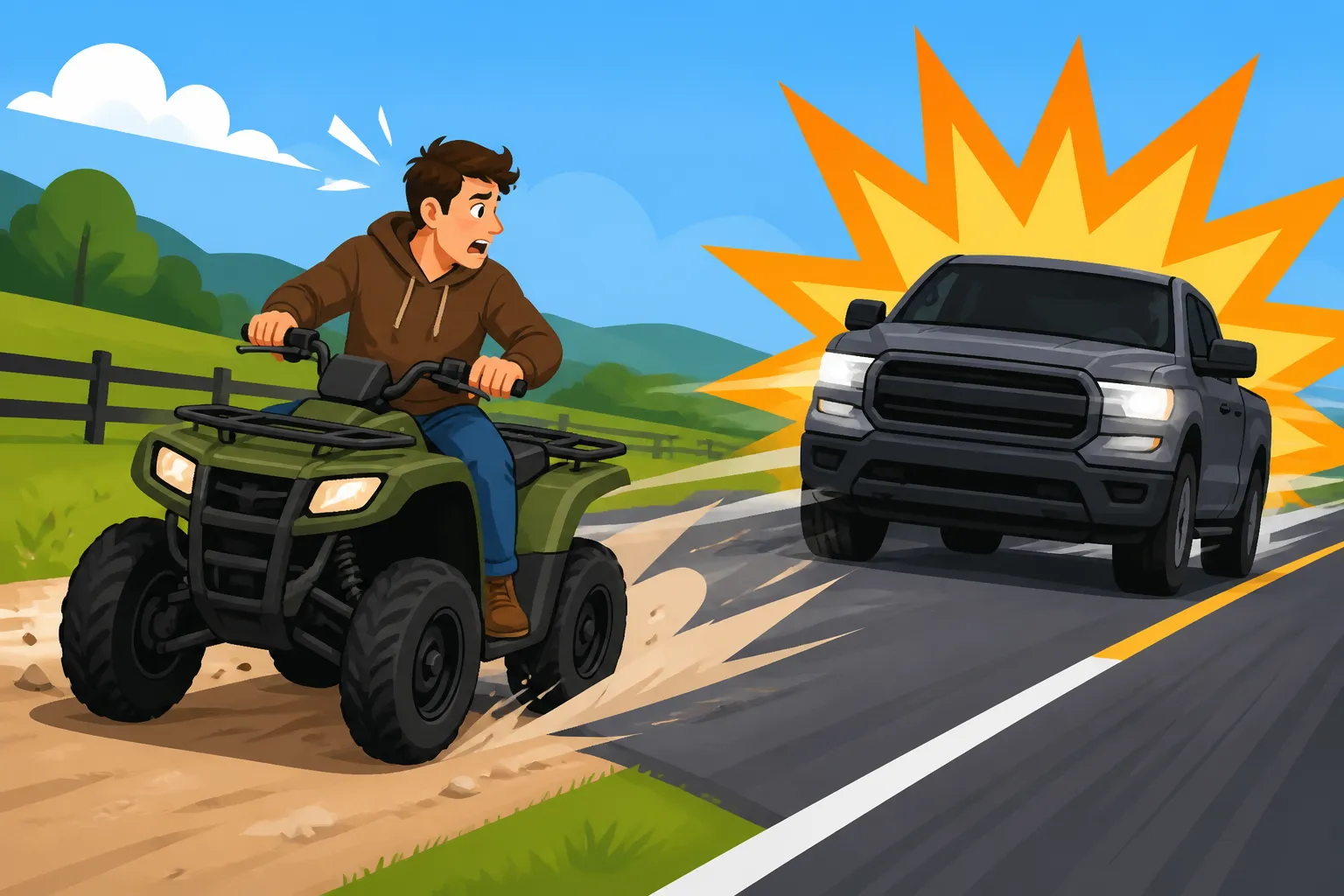
Crossing a 55 mph Road Without a Helmet
Let's talk about one of those moments that gives every Kentucky ATV or UTV rider pause: you're out on the trails, maybe coming back from a favorite spot, and you hit that short stretch of public road you have to cross. It's often a highway, maybe even a 55 mph zone, and the question hits you: do I really need to put on a helmet just for that tiny bit of pavement? It’s a common frustration, and this guide is here to untangle Kentucky's specific rules around helmets, road crossings, and those high-speed sections.
Kentucky's Baseline Helmet Rules for ATV Riders
Navigating the trails and backroads of Kentucky can be an incredible experience, from the winding paths of Black Mountain to the expansive beauty of Land Between the Lakes. But the peace of the ride can quickly be shattered by uncertainty about what’s legally required, especially regarding safety gear. The general understanding of helmet laws for ATVs can be murky, blending common sense with specific statutes. It's not just about what feels right; it's about what the law demands to keep everyone safe and out of trouble.
General Requirements for Off-Road Riding
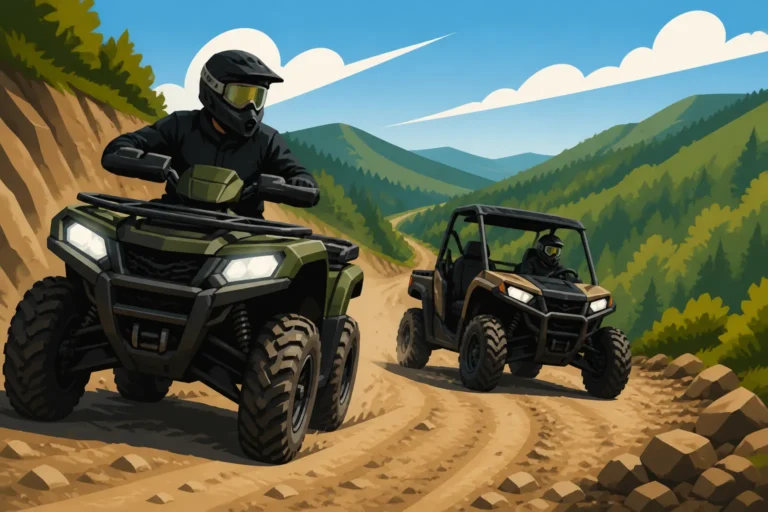
For most of us, an ATV or UTV is synonymous with off-road adventure. We picture ourselves on dirt trails, navigating through mud, or climbing rocky ascents. When you're riding on private land with permission or within designated off-road parks like Black Mountain Off-Road Adventure Area, the primary rules governing your helmet use come from state statutes, not necessarily road-specific laws. Kentucky law has a clear stance: anyone operating or riding as a passenger on an all-terrain vehicle in the Commonwealth of Kentucky must wear a helmet. This isn't just a suggestion; it's a mandate designed to protect riders from serious injury in the event of an accident. The intent behind this law is to ensure that while you're enjoying the thrill of the ride, you're also taking crucial steps to safeguard your head.
This blanket rule means that whether you're cruising a flat gravel road or tackling a challenging incline, that helmet needs to be securely fastened. It's easy to get complacent on familiar trails or when just taking a quick spin around your property, but accidents can happen anywhere, anytime. The law doesn't differentiate between easy and difficult terrain; it simply states that if you're on an ATV, you need a helmet. This is an important distinction because many riders assume the rule only applies to public land or specific trail systems, but the statute casts a much wider net. It speaks to the inherent risks of riding these powerful machines, regardless of location.
What the Law Says About Minors
When it comes to our younger riders, Kentucky's helmet laws become even more stringent and explicit. The state takes the safety of children incredibly seriously, and rightly so. For anyone under the age of 16 operating or riding as a passenger on an ATV, the helmet requirement is unwavering. There are no exceptions for riding on private property, under parental supervision, or for short distances. If a minor is on an ATV in Kentucky, they must wear a helmet. This rule is often reinforced by the [Kentucky Helmet Rules for Riders Under 16] and other specific provisions aimed at protecting this vulnerable group.
This strict rule extends beyond just wearing a helmet; it often aligns with other safety guidelines concerning engine size and supervision for young riders. Parents and guardians bear the responsibility of ensuring compliance. It's not uncommon to see park rangers or local law enforcement agencies strictly enforcing these rules, especially in popular riding areas. The rationale is simple: children, with their developing motor skills and often less experience, are at a higher risk of injury, and a helmet is their best line of defense. The law doesn't just encourage good parenting; it legally requires these protective measures to prevent tragedies.
Understanding Road Crossings and Speed Limits
So, you're on your machine, enjoying the wild side of Kentucky, and then you encounter it: that paved ribbon of asphalt that cuts across your path. Suddenly, the rules feel different. It’s no longer just about the dirt beneath your tires; it’s about sharing the road, however briefly, with cars and trucks moving at highway speeds. This is where a lot of confusion arises for ATV and UTV riders, particularly regarding helmet use on these transitional stretches.
The 0.2-Mile Rule and Helmet Implications
Kentucky law has a very specific provision for ATV and UTV use on public roads: the famous 0.2-mile rule. This rule states that you can cross a two-lane public road or highway at a ninety-degree angle, or ride along it for no more than 0.2 miles, to get from one section of private property to another. It's a pragmatic allowance for landowners and riders trying to connect trails or access different parts of their property without having to trailer their machines. However, the critical detail here is that this allowance does not automatically exempt you from helmet laws.
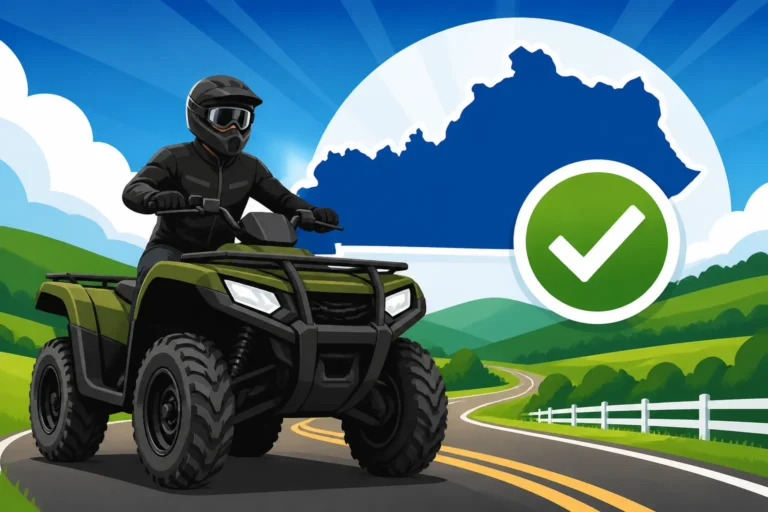
Many riders mistakenly believe that because it's a "crossing" or a "short distance," the helmet rule somehow goes away. This is a dangerous assumption. The state's general helmet requirement for ATV operation remains in effect. So, even if you're just taking that quick [Crossing a Two-Lane at Ninety Degrees in Kentucky], you are still legally required to wear a helmet. The logic is straightforward: when you're on a public road, regardless of how short the distance, you're subject to traffic laws and the inherent risks of interacting with vehicular traffic. Your speed may be lower than a car's, but the impact forces in a collision are still significant, making head protection vital. This is why you'll often see riders geared up even for these brief paved sections, understanding that safety isn't something to compromise, even for a moment.
Why a 55 mph Road Presents Unique Challenges
Now, let's talk about the specific scenario of crossing a 55 mph road without a helmet. This isn't just about the letter of the law; it's about the stark reality of physics and human vulnerability. A 55 mph road is a major artery, designed for vehicles traveling at significant speeds. The difference in speed between your ATV (which typically travels much slower on pavement) and an oncoming vehicle creates a high-risk environment. Even if you're executing a perfect ninety-degree crossing, the potential for a catastrophic accident increases dramatically.
Riding across such a road, even for the legally permitted 0.2 miles, puts you in direct proximity to vehicles moving at speeds that can be lethal in a collision. Without a helmet, you are completely exposed to the most severe types of head injuries. Law enforcement officers, understanding these risks, are often particularly vigilant about helmet use on these higher-speed roads. The penalties for non-compliance, which we'll discuss shortly, can be steep, but they pale in comparison to the potential for life-altering injury. It's not just a fine; it's your brain on the line. Thinking about safety gear, including helmets, goggles, and durable apparel, is paramount. Companies like SuperATV offer a range of accessories that can enhance safety and machine durability, but nothing replaces the fundamental protection of a good helmet.
Exemptions That Don't Apply to General Road Use
Kentucky's ATV laws, while generally strict on helmet use, do include a few specific exemptions. However, it's crucial to understand that these exemptions are typically very narrow in scope and almost never apply to the general act of riding an ATV on a public road, especially one with higher speed limits. Misinterpreting these exceptions can lead to severe legal consequences and, more importantly, put your safety at significant risk.
Farm, Mining, and Logging Exemptions
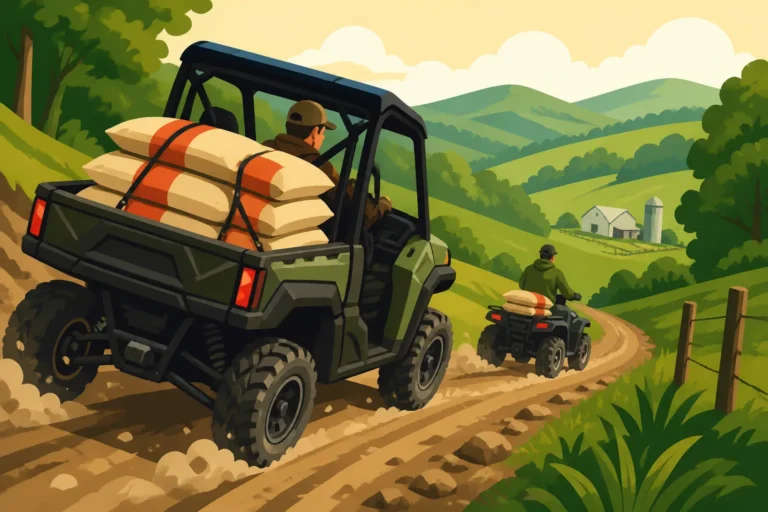
Kentucky law carves out specific exemptions for ATVs used in agricultural, mining, or logging operations. These exceptions recognize that these machines are often essential tools for work in these industries, requiring flexibility in their operation within specific worksite contexts. For instance, a farmer hauling feed down a holler road on their own property, or moving equipment between fields, might be exempt from the helmet requirement, as detailed in [Kentucky Helmet Exemption for Farm Work]. Similarly, those working in mines or logging operations might find themselves under different safety regulations relevant to their specific industry, as explained in [Kentucky Helmet Exemption for Mining] and [Kentucky Helmet Exemption for Logging].
However, the critical point here is that these exemptions are almost exclusively tied to the act of working within the specific operational parameters of a farm, mine, or logging site. They do not extend to recreational riding, even on private property, nor do they apply to crossing public roads to access these work sites unless explicitly stated otherwise and under very specific conditions. If you're a farmer just riding your ATV to town for supplies, you're not covered by the farm exemption. If you're using your ATV for pleasure, even if you own a farm, the general helmet rule still applies. These are not blanket "work exemptions" that allow you to forgo safety gear whenever you're near a field or a forest.
The "Street Legal" SPV Exception (and why it's different)
Kentucky has made some strides toward allowing certain "Special Purpose Vehicles" (SPVs), which often include UTVs, to be street legal under very specific conditions. This is a complex area of law, and it's easy to get confused. An SPV is a machine that has been modified and inspected to meet certain safety standards, making it eligible for limited road use. It's a completely different category from a standard ATV or UTV. The requirements for making a machine street legal are extensive, including specific lighting, mirrors, seat belts, and, crucially, often imply a different set of helmet rules that may align more with car or motorcycle laws, as discussed in [Kentucky Street Legal UTV Requirements].
When an SPV is properly registered and equipped for street legal use, it operates under a different legal framework than a standard ATV. However, even within the SPV rules, helmet requirements can vary based on factors like whether the vehicle has a roll cage and seat belts. And here's the kicker: just because a UTV can be made street legal doesn't mean your everyday ATV suddenly gets a free pass to ride on a 55 mph road without a helmet. Most ATVs simply don't qualify as SPVs, and attempting to ride them on major roads without a helmet is a violation of both general ATV helmet laws and potentially vehicle code violations for operating an unregistered or improperly equipped vehicle on public roads. It's a distinction that often requires a dedicated inspection and registration process, not just bolting on a few accessories.
The Risks and Realities of Riding Without a Helmet
Riding an ATV or UTV in Kentucky is an exhilarating experience, a feeling of freedom and connection with the state's rugged beauty. But with that freedom comes a significant responsibility, not just to follow the rules, but to prioritize your safety. Ignoring helmet laws, particularly when crossing high-speed roads, isn't just an act of defiance; it's an act that carries profound and potentially irreversible consequences.
Legal Penalties for Non-Compliance
Let's be brutally honest about what happens if you're caught [Getting Ticketed at Black Mountain for an Untitled Quad] or, in this case, riding without a helmet on a public road in Kentucky. The legal penalties can range from fines to more serious repercussions. While the exact fine amount can vary and may increase with repeat offenses, it's typically an immediate hit to your wallet. More importantly, it can lead to your ride being cut short, as law enforcement often has the authority to impound your vehicle or require you to trailer it off the road if you're operating it illegally. Imagine having your fun weekend ruined because of a preventable oversight.
Furthermore, a citation for a helmet violation can go on your driving record, even though you might not need a standard driver's license for off-road riding in all situations. This could potentially impact insurance rates or even future legal standing. The law is designed to deter risky behavior, and deputies, especially in areas with high ATV traffic, are well-versed in these statutes. They're not out to spoil your fun; they're out to enforce laws designed to save lives and prevent the strain on emergency services that comes from preventable accidents. A moment of perceived freedom without a helmet can translate into a lasting legal headache.
Safety First: Beyond the Letter of the Law
Beyond the fines and legal hassles, the most critical risk of riding without a helmet is the one you can't put a price on: your life and long-term health. A helmet is designed to do one primary job: protect your brain from impact. On an ATV, especially when sharing space with cars on a 55 mph road, the forces involved in an accident are immense. Even a low-speed fall can result in a concussion, while a collision with a car at higher speeds can lead to devastating traumatic brain injury, paralysis, or even death. This isn't fear-mongering; it's a stark reality acknowledged by countless accident reports and medical professionals.
Think about it: your brain is encased in a delicate skull, and it's surrounded by fluid that provides some cushioning, but it's not invincible. A sudden jolt or direct impact can cause your brain to slosh against the inside of your skull, leading to bruising, swelling, and tearing of tissue. A helmet acts as the first line of defense, absorbing and dissipating impact energy before it reaches your head. It’s an investment in your future. Many riders opt for high-quality helmets, often investing in brands known for superior protection, because they understand that while fun is important, safety is non-negotiable. Even if there were some loophole that allowed you to legally cross a 55 mph road without a helmet, common sense and self-preservation should always dictate that you wear one.
Navigating Kentucky's Varied Terrain and Rules
Kentucky's landscape is a patchwork of private farms, leased coal lands, bustling towns, and designated recreational areas, each with its own set of challenges and, often, its own rules for ATV and UTV operation. Understanding where you can ride, and what rules apply in each location, is just as crucial as knowing the state's overarching statutes. The terrain dictates not just your riding style but also the legal framework you're operating within, making helmet compliance a constantly varying consideration.
Private Land vs. Public Trails and Roads
The vast majority of ATV and UTV riding in Kentucky happens on private property, whether it's your own land, a friend's farm, or privately owned and operated trail parks. When you're on truly private land with permission, the state's general helmet laws still apply, meaning all riders must wear one. However, the enforcement might look different compared to public areas. For instance, while a sheriff's deputy might not be patrolling your back forty specifically for helmet compliance, if an accident were to occur and you weren't wearing a helmet, it could have significant implications for insurance claims or liability, as discussed in [Kentucky Rules for Riding Private Land].
On public trails, such as those within the [Black Mountain Off-Road Adventure Area in Kentucky] or Turkey Bay OHV Area, the helmet rule is strictly enforced by park personnel and sometimes by local law enforcement. These parks prioritize rider safety, and a helmet is almost always a requirement for entry and continued use of the trails. Then there are the public roads. As we've discussed, whether it's a gravel county road or a state highway you're briefly crossing, the helmet rule for ATV riders generally holds. The key takeaway is to always assume a helmet is required, unless you are absolutely certain that a specific, very narrow legal exemption applies to your particular situation and location. Err on the side of caution every single time.
When Local Ordinances Come into Play
To add another layer of complexity, some local jurisdictions in Kentucky, particularly cities and counties, have the authority to enact their own ordinances regarding ATV and UTV use, especially concerning public roads within their boundaries. While state law provides the overarching framework, local governments can sometimes create more specific or restrictive rules. For example, some cities have "opted in" to allow street-legal UTVs on certain municipal roads, but even then, they might impose specific speed limits or operating hours, as mentioned in [Kentucky Cities That Allow UTVs on Streets].
It's vital for riders to check with the specific county or city they plan to ride in, especially if any portion of their ride will involve public roads, even short crossings. What's allowed in Harlan County might be completely different from rules in a smaller town near Louisville. This means that a quick call to the county clerk's office or checking the local government's website could save you from a citation or, worse, a preventable accident. Don't assume that state laws are the only laws. The specific nuances of [Reading Louisville Metro's Ordinance] or other local codes can make a real difference in how and where you can safely and legally enjoy your machine.
Here's a quick reference for helmet requirements in various Kentucky scenarios:
| Riding Scenario | Helmet Required? | Applicable Law/Context | Primary Considerations |
|---|---|---|---|
| General Off-Road (ATV/UTV) | Yes | Kentucky State Law (KRS) | Default rule, covers most trail and private land riding |
| Minor (Under 16) on ATV/UTV | Yes | Kentucky State Law (KRS) | No exceptions, regardless of location or supervision |
| Crossing Public Road (0.2 mile) | Yes | Kentucky State Law (KRS), Road Use | General ATV helmet rule applies even for short distances |
| Street Legal SPV (UTV Only) | Varies | SPV-specific laws, vehicle modifications | Depends on roll cage, seat belts, specific SPV classification |
| Farm Work Exemption | No (specific) | KRS, limited to active farm operations | Must be directly engaged in agricultural work, not general use |
| Mining/Logging Exemption | No (specific) | KRS, limited to active industrial operations | Must be directly engaged in mining/logging, not general use |
| Riding on Public Road (Illegal) | Yes | If illegally on road, still subject to helmet law | Penalties apply for both illegal road use and no helmet |
Remember, safety is paramount. When in doubt, always wear a helmet.
Disclaimer
This article is for general informational purposes only and does not constitute professional advice. Laws, prices and regulations vary by location and change over time. Consult a qualified professional for guidance on your specific situation.