Why Kentucky’s Farm Exception Has No Limit
It's incredibly frustrating when you're just trying to get your work done on the farm, and you constantly hear conflicting information about whether you can even use your ATV or UTV on the road. Navigating Kentucky's laws for off-road vehicles can feel like trying to untangle a ball of barbed wire, especially when it comes to riding on public roads. This comprehensive guide will clear up the confusion surrounding Kentucky's farm exception, explaining why it allows for unlimited mileage on public roadways and how to ensure you're using it correctly and legally.
Kentucky's Tricky ATV/UTV Road Rules: The Default "No"
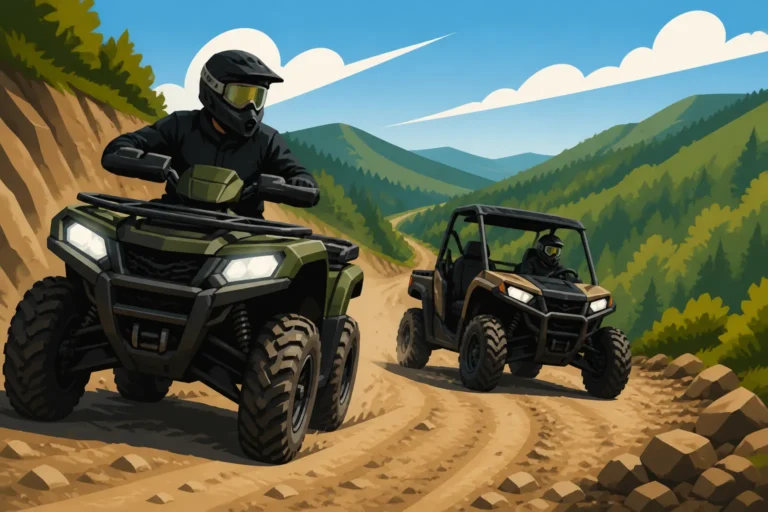
Let's face it, Kentucky isn't exactly a free-for-all when it comes to riding your ATV or UTV on public roads. In fact, the general rule is quite the opposite: these machines are typically not allowed on paved, publicly maintained roads. This often catches new riders or folks from out of state by surprise, especially if they're used to more lenient laws elsewhere. The frustration is real when you see a perfectly capable machine sitting in your driveway, but you're told it can't legally go a short distance down the road.
Why Kentucky Roads Are Closed by Default
The primary reason behind this strict stance boils down to safety and the fundamental design of ATVs and UTVs. These vehicles are engineered for off-road conditions – think dirt, mud, rocks, and uneven terrain – not for the higher speeds, traffic, and specific handling requirements of public highways. The state legislature, in its wisdom, has generally categorized them as off-road recreational vehicles, not street-legal conveyances. This is a common point of contention for many riders who feel their machine is perfectly safe for a quick jaunt, but the law errs on the side of caution. It's designed to protect riders and other motorists from potential accidents involving vehicles not built for pavement.
The Strict 0.2-Mile Crossing Rule
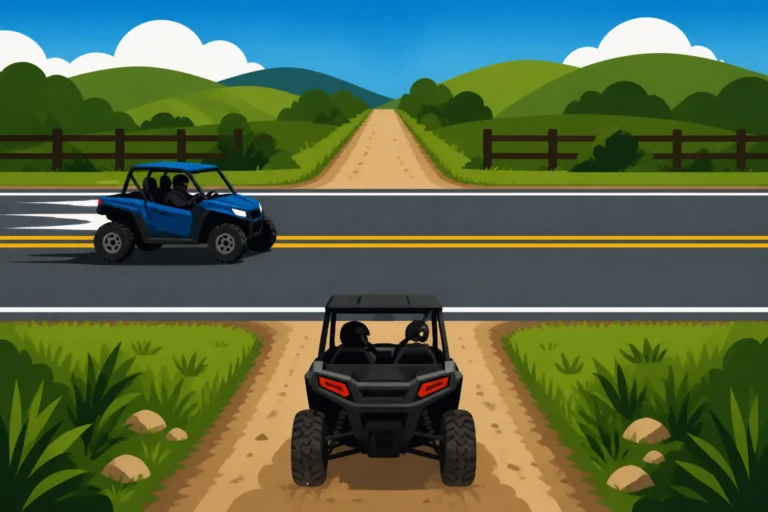
While the default is a "no," Kentucky does offer a tiny, almost blink-and-you'll-miss-it concession: the ability to cross a public road. But don't get excited; it's extremely limited. You can operate your ATV or UTV on a public road for a distance of no more than 0.2 miles, and then only to get from one section of private property to another. Imagine you have a field on one side of a county road and another field directly across from it. The 0.2-mile rule allows you to make that direct crossing. [Kentucky's 0.2-Mile Crossing Rule] explains this in more detail. It's not for cruising to the corner store, not for visiting a neighbor a few houses down, and certainly not for a scenic drive. It's a precise, short-distance transit rule, and anything beyond that boundary, even by a few yards, can land you in hot water.
Special Purpose Vehicles: The Road to "Street Legal"
For those who really want to use their UTVs, and in some cases ATVs, on public roads more extensively, there's the option of designating them as a "Special Purpose Vehicle" or SPV. This is Kentucky's legal pathway to achieving a form of street-legality for some off-road machines. However, it's not a simple sticker and go. Becoming an SPV involves a rigorous inspection process, outfitting your machine with specific safety equipment – things like turn signals, horn, rearview mirrors, and proper lighting – and then registering it with the state. [Kentucky Street Legal UTV Requirements] outlines the whole daunting list. Many riders explore aftermarket parts from companies like SuperATV to ensure their machine meets these stringent requirements, as stock machines rarely do. It’s a significant investment of time and money, proving just how serious Kentucky is about keeping non-compliant off-road vehicles off its paved surfaces.
The Farm Exception: A Crucial Lifeline for Kentucky Agriculture
Amidst all the "nos" and strict rules, there's a beacon of common sense for a specific group of Kentuckians: the farm exception. This rule acknowledges the practical realities of agricultural life, where a farmer often needs to move equipment, animals, or supplies short distances on public roads to manage their land. Without this exception, everyday farm tasks would become incredibly cumbersome, if not impossible, for many.
What Constitutes "Farm Use" in Kentucky?
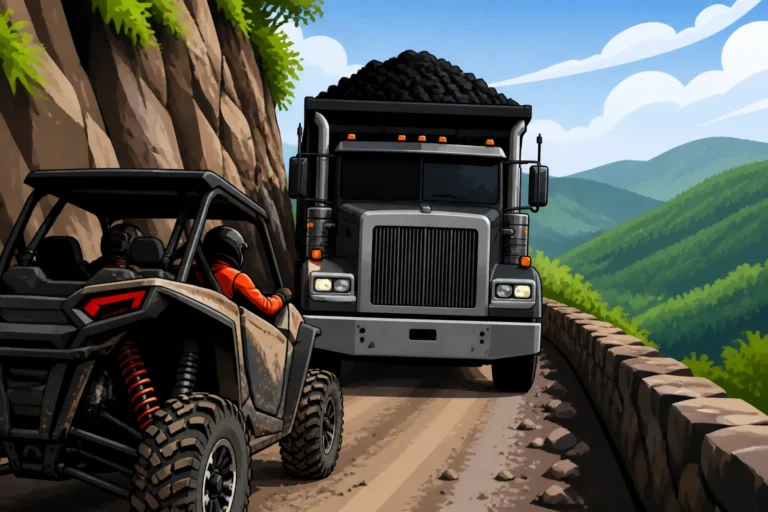
This isn't about joyriding through your back forty and then deciding to take a detour on the highway because you happen to own a farm. "Farm use" in Kentucky is generally defined by the purpose of the operation. It means you are actively engaged in planting, cultivating, harvesting, or transporting agricultural products, livestock, or farm equipment incidental to a bona fide farming operation. This could be anything from [Hauling Feed Down a Holler Road] to moving hay bales from one field to another across a state road, or even [Clearing Snow From a Neighbor's Lane] if that neighbor is part of a larger, interconnected farming enterprise that relies on clear access. It’s about the business of farming, not leisure. If you're going to use this exception, make sure your activity squarely fits this definition.
Historical Context: Why Farmers Needed This Flexibility
Think about the traditional Kentucky farm. Many properties were established long before extensive paved road networks, often with fields separated by county roads or even small state highways. Farmers frequently own or lease parcels of land that aren't contiguous, necessitating travel between them. Historically, farmers used tractors and other slow-moving equipment on these roads without issue. As ATVs and UTVs became more commonplace and useful for various farm tasks – from checking fences to transporting tools – the need for a similar allowance became apparent. The legislature recognized that forcing farmers to trailer their machines for every small road crossing would be an absurd and unnecessary burden on an industry vital to the state's economy. This exception isn't a loophole; it's a pragmatic acknowledgment of how agriculture operates.
The Practicality of Uncapped Mileage for Agricultural Work
Unlike the razor-thin 0.2-mile crossing rule, the farm exception specifically has [Kentucky's Farm Exception With No Mileage Cap]. This is the critical distinction. Why? Because farming operations aren't always neat and tidy, confined to short distances. A farmer might have a pasture five miles down the road from their barn, or need to take supplies to a distant field on the other side of town. Imagine a cattle farmer who needs to move a small herd between pastures, or a crop farmer taking a specialized implement to a different part of their acreage. These tasks might require traveling several miles on a public road. A mileage cap would effectively render the exception useless for many practical farming scenarios, turning necessary movements into logistical nightmares. It's a recognition that "farm use" might necessitate longer travel than other types of ATV/UTV road use.
Why No Mileage Limit? The Legislative Rationale
The lack of a mileage limit for bona fide farm use isn't an oversight; it's a deliberate choice rooted in understanding the unique demands of agriculture. The legislature recognized that farming isn't a recreational activity to be constrained by arbitrary distance caps when it comes to necessary road travel.
Distinguishing Farm Work from Recreational Riding
This is the absolute core of the "no limit" rule. The law isn't granting general permission for ATVs and UTVs on roads. It's specifically carving out an exception for a productive, essential industry. Recreational riding, by its very nature, is often about leisure and enjoyment, and it's typically confined to designated trails or private property. Farm work, however, is a livelihood. The machine is a tool, an extension of the farm's operations. The law understands that you're not out for a joyride; you're moving feed, checking on livestock, or getting a piece of equipment to where it needs to be. This distinction is paramount in understanding why the farm exception is treated so differently from other forms of road use.
The Nature of Farm Operations: Distances and Varied Tasks
Farms, especially in Kentucky's diverse landscape, are rarely compact, self-contained units. They often sprawl across multiple parcels, sometimes miles apart, connected by county roads and state routes. A farmer might need to transport fencing materials from the main barn to a remote pasture, drive to another property to check irrigation lines, or move a small sprayer from one field to another down a winding country road. These tasks are integral to the farm's productivity and often involve distances far exceeding a quarter-mile. Imposing a mileage limit would simply be impractical, forcing farmers to either break the law, buy multiple machines for different parcels, or invest in trailers for every movement, all of which would add significant cost and inefficiency to an already demanding profession. The farm exception's limitless nature facilitates the efficient execution of these varied, often far-flung, agricultural tasks.
Avoiding Undue Burden on Farmers
At the end of the day, the "no limit" provision is about supporting Kentucky's agricultural sector. Farmers operate on thin margins, and every additional cost or logistical hurdle impacts their ability to produce food and maintain their livelihoods. If they had to constantly load and unload an ATV or UTV onto a trailer for every road crossing or short commute between fields, it would represent a significant drain on their time, fuel, and equipment. The exception is a policy choice to ease the burden on farmers, allowing them to use the tools they rely on in a practical manner to conduct their essential work. It's an acknowledgement that sometimes, the most sensible approach is to allow utility vehicles to perform their utility function without excessive bureaucratic hurdles.
Applying the Farm Exception Responsibly and Legally
While the farm exception offers considerable flexibility, it's not a license to disregard all other rules or safety precautions. Using this exception responsibly means understanding its limits and adhering to basic safety standards.
Keeping It Strictly to Farm Business
The golden rule of the farm exception is purpose. The machine must be operated "for agricultural purposes." This means if you're using your UTV to go pick up groceries in town, or to visit a friend's house a few miles away, you are no longer covered by the farm exception, even if you own a farm. That would fall under recreational use or general transportation, which would then require your vehicle to be a fully compliant SPV, or you'd be in violation of the law. [Kentucky Rules for Riding a Farm Road] makes it clear: the use has to be directly tied to the agricultural operation. Keep your personal errands separate from your farm work if you plan on using this exemption. Law enforcement officers are well aware of this distinction, and a quick conversation at a roadside stop might reveal if your "farm errand" is actually a personal one.
Required Equipment Even for Farm Use on Roads
Even though you don't need to go through the full SPV registration for farm use, you're not completely exempt from basic safety equipment when on public roads. Kentucky law still generally requires that any vehicle operating on public roadways, including ATVs and UTVs under the farm exception, have at least one headlight and two taillights that are illuminated during operation. This is especially critical because the farm exception often only allows for [Daylight Only Under the Statute]. This ensures visibility to other motorists, which is paramount for safety. It's wise to ensure your machine is equipped with functional brakes, a horn, and decent tires (like those offered by SuperATV for various terrains, which are also often robust enough for road transitions) to handle the varied conditions. Think about the basics that make you visible and able to control your machine effectively, even for a short road stretch.
Potential Misuse and Consequences
Misusing the farm exception can lead to significant headaches and penalties. If a law enforcement officer determines that your use of an ATV or UTV on a public road is not genuinely for agricultural purposes, you could be cited for illegal operation of an off-road vehicle on a public roadway. This can result in fines and, depending on the circumstances, potentially having your machine impounded. [Kentucky Fines for Illegal ATV Road Use] can add up quickly. It’s simply not worth the risk to stretch the definition of "farm use." Adhere strictly to the agricultural purpose, and you'll protect yourself, your machine, and your wallet.
Comparing Farm Use to Other Exceptions and Road Rules
Kentucky's rules for ATVs and UTVs on public roads can feel like a patchwork quilt. Understanding how the farm exception fits into (and differs from) other allowances is key to staying legal and avoiding fines.
Farm Exception vs. 0.2-Mile Crossing Rule
While both the farm exception and the [Crossing a Two-Lane at Ninety Degrees in Kentucky] rule allow for some road use, their intent and scope are vastly different. The 0.2-mile rule is incredibly specific and restrictive: it's purely for traversing a road to access adjacent private property, with a hard mileage cap. It's not about purpose but about immediate access. The farm exception, on the other hand, is all about purpose – agricultural work – and has no mileage limit. This means a farmer can drive their machine five miles down a public road if that's what's required for their farm work, whereas someone just trying to get to a trail on the other side of a highway would be strictly limited to that tiny 0.2-mile crossing. It's critical not to confuse these two, as the consequences for misinterpreting them can be severe.
Farm Exception vs. SPV Designation
The contrast between the farm exception and the Special Purpose Vehicle (SPV) designation is stark. The SPV path is for those who want their UTV (and sometimes ATV) to be generally street-legal for broader public road use, much like a car or motorcycle. This involves extensive modifications, inspections, and annual registration. The farm exception, however, is a much narrower allowance. It doesn't make your machine "street legal" in the general sense; it simply provides an exemption for specific agricultural activities. You don't get an SPV license plate or generally accepted road privileges. Instead, you're granted a conditional right to use public roads only when performing legitimate farm tasks. The farm exception is about utility and necessity for agriculture, while the SPV designation is about broadening a machine's legal operational scope on public roads.
Other Exemptions: Mining, Logging, Emergency Services
It's also worth noting that farming isn't the only activity that gets a special carve-out in Kentucky law regarding ATV/UTV road use. Similar provisions exist for machines operated for mining, logging, or by emergency service personnel. For instance, there's a [Kentucky Helmet Exemption for Mining] or for logging operations. These exemptions, much like the farm exception, acknowledge the specific operational needs of these industries and services. A UTV being used on a mine haul road or by a search and rescue team responding to an emergency isn't held to the same strict road-use standards as a recreational rider. Each of these exemptions is narrowly tailored to its specific purpose, highlighting Kentucky's legislative approach to balancing safety with practical, industry-specific needs.
| Feature / Exemption Type | Primary Purpose | Mileage Limit on Public Roads | Equipment Requirements (on road) | Registration/Plating Required | General Helmet Rule (on road) |
|---|---|---|---|---|---|
| Farm Exception | Agricultural operations | None (for farm use) | Headlights, taillights (basic) | No (for farm use) | Generally required (unless farm work exemption applies) |
| 0.2-Mile Crossing Rule | Accessing adjacent private land | 0.2 miles (strict) | Headlights, taillights (basic) | No | Generally required |
| Special Purpose Vehicle | General public road use (UTV/some ATV) | None (within designated roads) | Extensive (signals, mirrors, etc.) | Yes (SPV plate) | Required (like motorcycle) |
| Recreational Off-Road Use | Leisure/Sport | None allowed | N/A (off-road only) | No | Recommended (required on parks/trails for under 16) |
Understanding why Kentucky's farm exception has no mileage limit really boils down to recognizing the fundamental difference between recreational riding and essential agricultural work. It's a pragmatic approach to support the state's farmers, allowing them to use their tools efficiently without getting bogged down in red tape for every necessary road transition. Just remember to always keep your use strictly agricultural and ensure your machine is visible and safe when you do venture onto a public road.
Disclaimer
This article is for general informational purposes only and does not constitute professional advice. Laws, prices and regulations vary by location and change over time. Consult a qualified professional for guidance on your specific situation.