Kentucky’s 0.2-Mile Crossing Rule
It’s a scenario many Kentucky ATV and UTV riders have faced: you're out enjoying a ride, maybe connecting two trails or just trying to get from one part of your property to another, and a public road stands in your way. That short stretch of pavement can feel like an insurmountable barrier, leaving you wondering what's legal and what's not. This guide will walk you through Kentucky's specific rule regarding the 0.2-mile crossing, helping you navigate these situations safely and legally.
Understanding Kentucky's ATV/UTV Road Rules
The open road beckons, doesn't it? For many of us who love the thrill of an ATV or the utility of a UTV, the thought of cruising down a paved road, even for a short distance, can be tempting. However, Kentucky law, like that in many other states, generally takes a pretty dim view of off-highway vehicles on public roadways. It's a common source of frustration for riders who just need to get from point A to point B, especially when those points are separated by a mere ribbon of asphalt. You see your neighbors zipping around in their side-by-sides on city streets in some states, and you think, "Why not here?" But Kentucky has its own set of rules, and understanding them is crucial to avoiding a hefty ticket or, worse, an accident.
The General Prohibition on Public Roads
Let's start with the big picture: in Kentucky, ATVs and UTVs are, by default, not street legal. This isn't a minor suggestion; it's a foundational principle of the state's vehicle code. You generally cannot operate an all-terrain vehicle or utility vehicle on public highways, streets, or rights-of-way. This rule is designed to keep everyone safe, recognizing that these machines are built for rugged terrain, not for the speeds, traffic patterns, and hard surfaces of paved roads. It can be a real bummer when you're exploring our beautiful state and hit a paved section that means you have to load up your machine, or worse, turn back. It limits spontaneity and can make connecting some of our fantastic trail systems a logistical nightmare. For a more complete overview, check out [Kentucky Rules for ATVs on Public Roads].
Imagine you're out on a leisurely Saturday ride near Pikeville, enjoying the scenic beauty of Eastern Kentucky. You come to a point where your private property ends, and another section you have permission to ride on begins, but a county road lies between the two. Your instinct might be to just hop across, it's only a few hundred feet, right? But without understanding the specific exceptions, that quick hop could land you in hot water. The law doesn't care if it's "just a short bit"; the general prohibition is quite strict. This is where many riders get into trouble, often unintentionally, simply because they aren't fully aware of the letter of the law.
The state views ATVs and UTVs as distinct from cars, trucks, or motorcycles. They lack certain safety features, like sealed cabins, airbags, or even turn signals (on many models), that are standard on road-going vehicles. Their suspension systems, tire types, and steering characteristics are optimized for off-road conditions, making them potentially unstable or unpredictable on asphalt at higher speeds. This distinction is at the heart of the "no public roads" rule.
The Spirit Behind the Restrictions
So, why are these rules in place? It's not just to make life harder for off-road enthusiasts, though it can certainly feel that way sometimes! The primary reasons revolve around safety, vehicle design, and the established legal framework for public roads. Traditional roads are built for vehicles that meet stringent safety standards, can maintain consistent speeds, and offer a certain level of protection to occupants and other road users. ATVs and UTVs, while incredibly fun and useful, often don't fit that mold. Their low-pressure tires, designed for grip on loose surfaces, can handle poorly on pavement, leading to rollovers or loss of control, especially when trying to turn at speed.
Think about the difference between navigating a rocky trail near Black Mountain and merging onto a busy state highway near Hazard. The conditions, the speeds, the sheer volume of other traffic—it’s a completely different environment. The potential for serious injury or fatality increases dramatically when an ATV or UTV is operated in a manner it wasn't designed for, particularly on high-speed roads. The legislature is trying to prevent these tragic outcomes, even if it sometimes feels overly restrictive to those of us who just want to cross a quiet country lane. This concern for public safety informs virtually every aspect of Kentucky's regulations on off-highway vehicles.
Beyond immediate safety, there's also the question of infrastructure wear and tear. While not the primary driver, off-road tires, especially those with aggressive treads, can potentially cause more rapid deterioration of paved surfaces compared to standard road tires. Furthermore, the absence of specific registration requirements for all ATVs (though titling is required for many) means the state doesn't have a reliable way to track every machine, which complicates things like accident investigations and enforcement. The rules, therefore, serve multiple purposes in maintaining order and safety on Kentucky's public thoroughfares.
Navigating the Nuances of Kentucky Law
While the general rule is "no ATVs on public roads," Kentucky law does allow for very specific, narrow exceptions. It's not a blanket ban, but it's important to understand just how narrow these exceptions are. Many riders mistakenly believe that if a road is quiet or rural enough, it’s fair game. This isn't true. The law doesn't distinguish between a bustling interstate and a forgotten gravel lane in the hollers of Perry County; if it's a public right-of-way, the general prohibition applies unless a specific exception is met. This is why you rarely see ATVs casually driving down a street outside of very specific circumstances, or within towns that have opted into [Are ATVs Street Legal in Kentucky?].
One of the most crucial and often misunderstood exceptions is the 0.2-mile crossing rule. This isn't an invitation to cruise for a fifth of a mile down every road; it's a highly constrained permission to cross a road. There are other exceptions, such as for agricultural purposes or specific utility work, but these are also tightly defined. It's really easy to get confused, especially when you hear snippets of information from other riders or see someone doing something that seems illegal without consequence. The key is to know the actual statute, not just hearsay.
The detailed legal framework can be complex, and it’s important to remember that local ordinances might further restrict what the state allows. A county or city could, for example, have stricter rules about where and how you can operate an ATV, even for permitted crossings. Always, and I mean always, check with your local county clerk's office or city government if you're unsure about the rules in a specific area. Ignorance of the law is rarely an acceptable defense when you're pulled over by a deputy.
Diving Deep into the 0.2-Mile Crossing Rule
Alright, let's get into the nitty-gritty of the 0.2-mile crossing rule, because this is where many riders try to find their loophole, and often, they misinterpret it. This rule is a very specific, limited allowance, not a general permit to use public roads for short distances. It's meant to address those inconvenient situations where a public road slices through private property, or where two legitimate off-road areas are separated by a short stretch of pavement. It's designed to be a bridge, not a highway.
What "0.2 Mile" Really Means
The phrase "0.2 mile" sounds pretty precise, doesn't it? That's about 1,056 feet, or roughly 352 yards. It's a short distance. The crucial thing to understand is that this rule allows you to cross a public highway, street, or right-of-way, not to travel along it. The intent is for you to traverse the road as quickly and directly as possible to continue your off-road journey. Think of it as a brief interruption in your off-road adventure, not an extension of it. For a more detailed breakdown of this specific distance, consider [How Far 0.2 Mile Really Gets You].
Imagine you're riding your UTV on your extensive property in Letcher County, and you need to get to another parcel of land you own on the other side of a two-lane county road. The 0.2-mile rule provides the narrow window of opportunity to do this. You wouldn't, for example, be able to ride a tenth of a mile down the road to get to your friend's driveway and then cross to their property. That would be "traveling along" the road, which is generally prohibited. The legislative intent is clear: get across, not go down.
This distance is absolute. There’s no grace for "just a little bit more." If you find yourself needing to travel even 0.21 miles, you're technically in violation. It's a firm line in the sand, or rather, on the pavement. Riders sometimes think it means "a short distance," and while 0.2 miles is short, it's not a subjective measure. You need to be aware of your exact distance, which can be tricky without a GPS or careful measurement, especially on winding country roads. It's a rule that demands precision from riders who want to stay on the right side of the law.
The "Ninety Degrees" Requirement
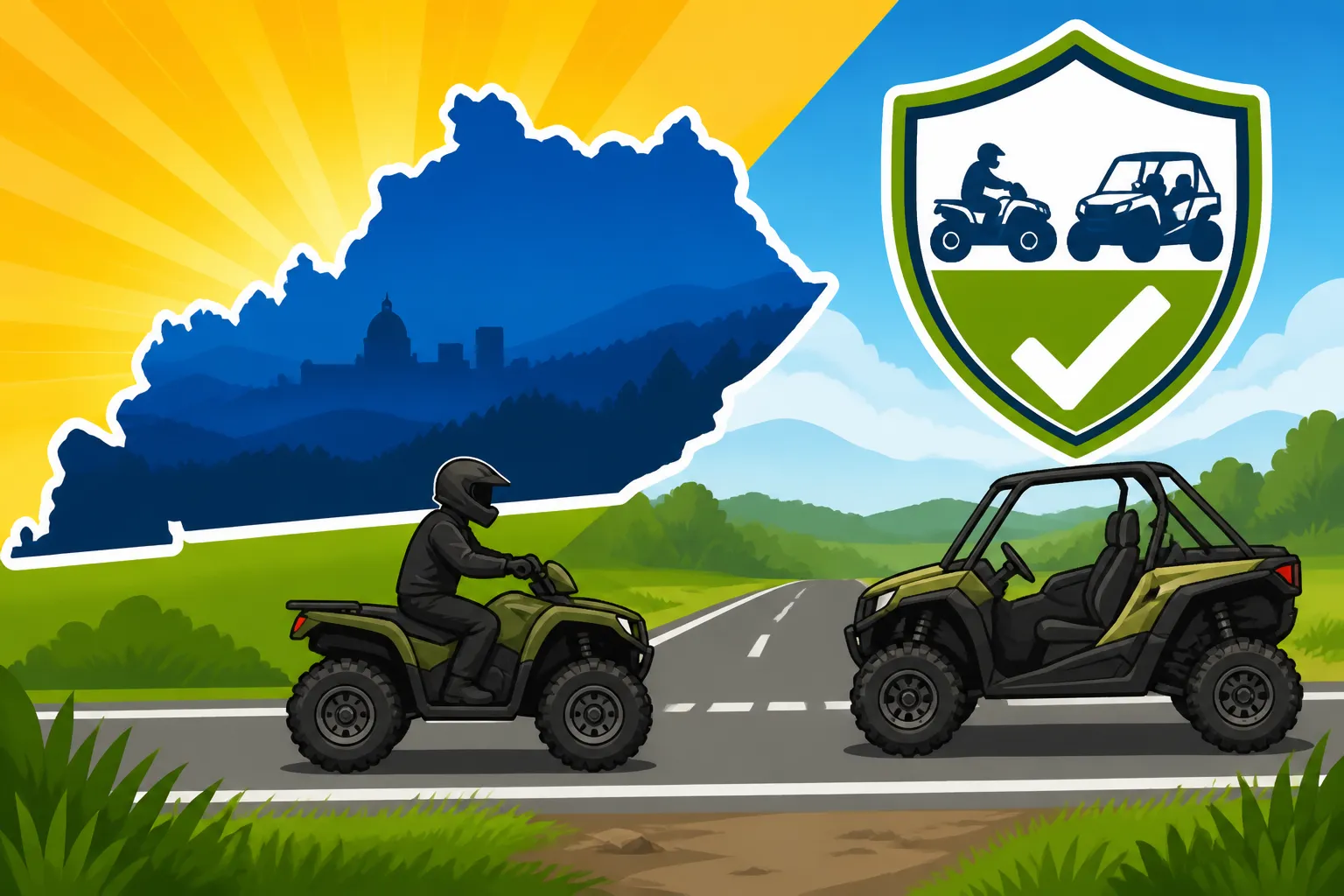
Beyond the distance, there's another critical component to the crossing rule: the "ninety degrees" requirement. Kentucky law specifies that the crossing must be made "at approximately a ninety-degree angle" to the public road. This isn't just about making things geometrically neat; it's a vital safety measure. The sharp, perpendicular angle forces you to cross the road directly, minimizing the time you spend exposed to oncoming traffic. It also makes your intentions clear to other drivers, as you're not blending into traffic flow. This specific angle is really important, and you can learn more about it in [Crossing a Two-Lane at Ninety Degrees in Kentucky].
Consider the scenario again: you're crossing a rural road. If you were to merge into traffic at a shallow angle, even for a short distance, you'd be acting like a regular vehicle, which your ATV or UTV is not. You'd also be in a more vulnerable position for a longer period. By crossing at 90 degrees, you're essentially getting on and off the road as quickly as possible, reducing the risk of a rear-end collision or a misunderstanding with a fast-moving vehicle. It's about being seen, making a clear, quick maneuver, and then getting back to the terrain your machine is designed for.
This rule means you can't angle down the road to get to a better, wider spot for crossing. You have to cross at the point where your off-road path intersects the paved road, or as close to it as safely possible, maintaining that perpendicular approach. It requires riders to be highly vigilant of traffic in both directions, making sure there's ample clear space to complete the crossing without creating a hazard. This rule often dictates where you can actually make your crossing, as not every intersection of trail and road will allow for a safe, perpendicular transit.
Why This Specific Rule Exists
The combination of the 0.2-mile limit and the ninety-degree angle isn't arbitrary. It's a carefully considered legislative compromise. Lawmakers recognize that in a state like Kentucky, with its vast tracts of private land, sprawling trail systems, and numerous small communities, public roads often serve as unavoidable dividers. To entirely prohibit any crossing would create significant logistical headaches for landowners, farmers, and recreational riders alike, essentially isolating parcels of land or segments of trails.
The rule strikes a balance: it acknowledges the practical need for limited road access while staunchly upholding the general principle of keeping ATVs and UTVs off public roads for anything more than a fleeting moment. It's a testament to the landscape of Kentucky, where a back-forty might literally be across a state route, and a simple errand could involve a quick traverse. Without this rule, the enjoyment and utility of these machines would be severely hampered in many parts of the state.
This specific, narrow allowance also aims to reduce conflicts between off-road vehicle users and traditional motorists. When an ATV or UTV is operated clearly and quickly across a road at a right angle, it's a predictable maneuver. Other drivers can easily understand the intent and react accordingly. It removes the ambiguity that might arise if off-road vehicles were allowed to merge and travel alongside traffic, even for short distances, which could lead to confusion and increased accident risk. It's all about clarity and minimizing the danger in those unavoidable intersections of the off-road and on-road worlds.
Practical Scenarios: When the 0.2-Mile Rule Applies
Understanding the letter of the law is one thing, but applying it to real-world situations is another. The 0.2-mile crossing rule, despite its specificity, can still lead to questions in the heat of the moment. It's not about finding every possible way to use a road, but understanding when it's legally permissible to bridge that gap. Let's look at some common scenarios where this rule becomes highly relevant for Kentucky riders.
Crossing a Two-Lane at Ninety Degrees in Kentucky
This is the quintessential example of where the 0.2-mile rule comes into play. You're riding your UTV, perhaps a heavily accessorized machine from SuperATV built for durability, and you need to move from a private logging road on one side of a state route to a hunting camp on the other. The state route is a typical two-lane highway, maybe with a 55 mph speed limit. Your legal options are quite limited here, and the 0.2-mile, ninety-degree crossing is probably your only legal recourse without trailering your machine.
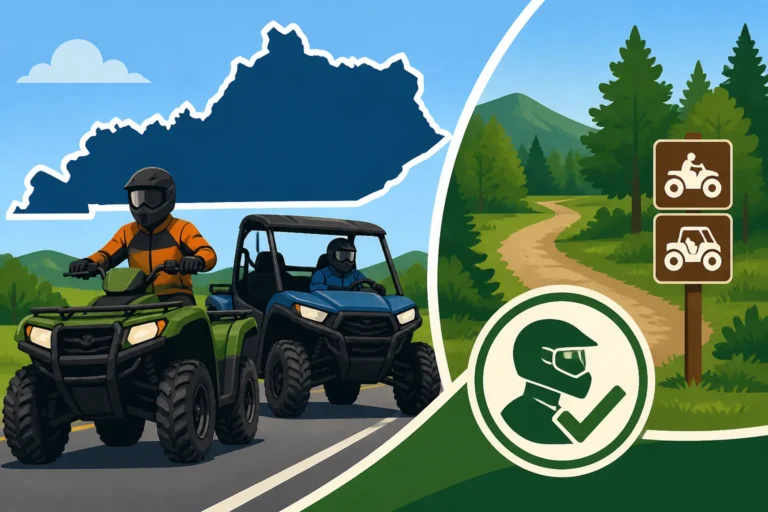
First, you'd need to bring your machine to a complete stop at the edge of the pavement, ensuring you have clear sightlines in both directions. You must wait for a sufficient gap in traffic that allows you to cross the entire width of both lanes at a near-perpendicular angle without obstructing or endangering any oncoming vehicles. This means you can't pull out if a car is close and expect them to slow down for you. You are responsible for ensuring the crossing is safe. Once clear, you'd accelerate directly across the road and immediately exit onto the logging road or camp entrance on the other side. You are not to travel down the shoulder, even for a moment. This is a quick dash, not a gentle merge. The article [Crossing a Two-Lane at Ninety Degrees in Kentucky] further elaborates on this specific maneuver.
Failing to adhere to the ninety-degree angle or taking too long (i.e., exceeding 0.2 miles of travel on the road) could result in a citation. Law enforcement officers are trained to look for these specific violations. They understand that quick crossings are sometimes necessary, but they also enforce the limits stringently to maintain safety. It's a moment where caution, quick decision-making, and adherence to the precise legal requirements are paramount.
Accessing Private Property Across a Road
Many Kentuckians own land divided by a public road, especially in rural areas. Maybe your main cabin is on one side, and your prime deer stand or timberland is on the other. Driving your truck back and forth might be inconvenient or impractical for quick trips, making the ATV or UTV a logical choice. Here, the 0.2-mile crossing rule is a lifesaver, provided you meet all its conditions.
Let's say you're on your farm near Elizabethtown, and you need to check fences in a pasture that's just across a lesser-traveled county road. This scenario perfectly fits the intent of the crossing rule. You would stage your machine at your property line, wait for traffic to clear, and then cross the road at a ninety-degree angle directly into your pasture on the other side. This rule allows you to manage your land efficiently without having to load your machine onto a trailer for a mere hundred-foot journey. This is a common and legitimate use of the exception.
However, if your property on the other side doesn't directly abut the road, meaning you have to drive a bit down the shoulder to reach an entrance, this rule would likely not apply. In such a case, you would be traveling along the road, exceeding the spirit and letter of the 0.2-mile crossing limit. This highlights the importance of understanding the exact layout of your property relative to the public road. It's about direct, perpendicular access, not convenient travel.
Connecting Trail Sections with a Road Crossing
Kentucky is blessed with incredible off-road riding opportunities, from the expansive Black Mountain Off-Road Adventure Area to numerous private trails on leased coal lands. Sometimes, these trail systems or private networks are interrupted by a public road. Riders often ask if they can just cross the road to continue on the other side. The answer, under the 0.2-mile rule, is a conditional yes.
Consider a multi-county trail system where you've been riding for hours, and the marked trail suddenly dead-ends at a county highway, with another trail marker visible directly across the pavement. This is a prime example where the crossing rule is invaluable. You would stop, ensure the crossing is safe, perform the ninety-degree traverse, and immediately re-enter the trail system on the opposite side. This allows for continuity in your ride, connecting what would otherwise be two disconnected trail segments. Many trail systems are designed with these legal crossing points in mind, acknowledging the reality of road infrastructure.
However, if the trail on the other side requires you to ride down the road for, say, a quarter-mile to reach the next trailhead, the 0.2-mile rule is not your solution. That would be illegal road travel. In such cases, you might need to find an alternative route, trailer your machine, or simply turn back. Always consult trail maps and local regulations, or contact the park authority, to identify legal crossing points and confirm whether the 0.2-mile rule applies to the specific road in question. Some parks, like Leatherwood, are expansive enough that they might have internal roads that are technically private, but crossing state or county roads requires strict adherence to this rule.
Essential Equipment and Conditions for Crossing
The right to make a 0.2-mile crossing isn't entirely unrestricted. Kentucky law imposes specific conditions and requirements to ensure even these brief moments on public roads are as safe as possible for everyone involved. It's not enough to just know the distance and angle; you also need to meet certain operational criteria, primarily concerning visibility and who is operating the machine.
Daylight Only Under the Statute
One of the most critical conditions for making a 0.2-mile crossing is that it must occur during daylight hours. Kentucky law explicitly states this, and it's a non-negotiable point. You cannot legally cross a public road, even for 0.2 miles, when it's dark, at dusk, or at dawn when visibility is impaired. The reason is simple: ATVs and UTVs, even those with aftermarket lighting from SuperATV, are inherently less visible to other motorists than standard road vehicles, especially from a distance or in low light. This rule is a fundamental safety measure.
Imagine trying to make a quick ninety-degree dash across a rural highway at night. Car headlights would make it difficult to judge distances, and your machine, even with its lights on, might not be as immediately recognizable or visible to an approaching driver until it's too late. The risks of a collision increase dramatically in low-light conditions. Therefore, if your off-road ride extends into the evening, and you know you'll need to cross a public road to get back, you need to plan to complete that crossing before it gets dark. For more specifics on this timing, see [Daylight Only Under the Statute].
This rule also means that those fantastic night rides on the trails must be carefully planned if they involve any road crossings. If you're out past sunset, you'll need to make alternative arrangements, such as trailering your machine, rather than attempting an illegal road crossing. There's no exception for "just a little dark" or "I can see fine." The statute is black and white on this point, prioritizing the safety of all road users over the convenience of a nighttime rider.
Basic Lighting Requirements for Brief Crossings
Even though you're only crossing in daylight, your ATV or UTV still needs to have functional lighting. Kentucky law requires that any ATV or UTV operated on a highway, even for a permissible crossing, must be equipped with at least one headlight and two taillights, which must be illuminated. While this seems redundant in broad daylight, it serves as an extra layer of visibility and ensures that the machine is equipped to the minimum standard should conditions unexpectedly change, or if a crossing is made closer to twilight than intended.
Having your lights on, even during the brightest part of the day, significantly increases your machine's visibility to other drivers. It helps them spot you more quickly, especially if you're emerging from a treeline or a dip in the terrain. Think of it like motorcycles that are encouraged to ride with their headlights on during the day; it's a proven safety practice. Ensure your lights are working before you even consider making a crossing. You can find more information about these specific requirements in [One Headlight and Two Taillights in Kentucky].
This requirement isn't just about having the lights; it's about having them on. A functioning headlight and taillights that aren't illuminated aren't going to help you. Make it a habit to always switch on your lights when you're preparing to approach any public road, even if it's just to check the mail or briefly cross. It's a small action that can make a big difference in preventing an accident and demonstrating your commitment to safe operation.
Driver's License and Age Requirements for Crossings
Who can actually operate an ATV or UTV on a public road, even for a 0.2-mile crossing? This is another critical area where misconceptions abound. In Kentucky, if you're operating an ATV or UTV on a public road, even for a brief crossing, you generally need to possess a valid driver's license. This means that minors, even if they're old enough to ride off-road, typically cannot legally make these crossings.
The logic here is straightforward: operating any vehicle on a public road, no matter how briefly, requires a certain level of judgment, awareness, and adherence to traffic laws that are typically associated with licensed drivers. This isn't just about controlling the machine; it's about interacting safely with other road users, understanding right-of-way, and making split-second decisions in a dynamic environment. Minors, regardless of their off-road proficiency, are generally not deemed to have this legal capacity for on-road operation. For more details on this, refer to [Do You Need a Driver's License to Cross Pavement?].
Therefore, if you're riding with younger family members who typically operate their own ATVs off-road, and you encounter a road crossing, you'll need to make specific arrangements. Either the licensed adult must operate the minor's machine across the road, or the minor's machine must be trailered. It's another aspect of Kentucky law that prioritizes safety over convenience, and it's essential for adults to understand their responsibility in these situations.
Exceptions to the General Road Ban Beyond 0.2 Miles
While the 0.2-mile rule is a very specific allowance, it's not the only scenario where an ATV or UTV might legally touch public pavement in Kentucky. There are other, broader exceptions that permit more extensive use, but these are even more narrowly defined and come with their own stringent requirements. It's crucial not to confuse these different categories, as each serves a distinct purpose and carries different legal obligations.
Why Kentucky's Farm Exception Has No Limit
One of the most significant and often utilized exceptions to the general road ban is for agricultural purposes. Kentucky, with its strong farming heritage, recognizes that ATVs and UTVs are indispensable tools for many farmers. The law allows for the operation of ATVs and UTVs on public roads for agricultural purposes, and notably, this exception has no mileage cap. A farmer can legally operate their machine on a public road to get from one field to another, or to transport equipment or livestock, without worrying about a 0.2-mile limit. This is a huge benefit for Kentucky's agricultural community.
However, this isn't a free pass for joyriding on public roads by anyone who owns an ATV. The key phrase here is "for agricultural purposes." This means the operation must be directly related to farming activities. Hauling feed down a holler road to reach livestock in a remote pasture, checking fences along a road, or moving equipment between different parcels of farmland are all legitimate uses. Taking your UTV to the local store for groceries, even if you're a farmer, would likely not fall under this exception. It's about the purpose of the trip. More on this can be found in [Why Kentucky's Farm Exception Has No Limit].
Furthermore, while there's no mileage cap, operators are still expected to drive safely and adhere to other traffic laws. They are generally required to yield to other vehicles and, where practicable, pull over to allow faster traffic to pass. The machine should also be equipped with appropriate lighting, especially if operated outside of daylight hours (though farm machinery often has specific rules for night operation that differ from the 0.2-mile crossing rule). This exception is a lifeline for many rural operations but comes with the responsibility of safe and purposeful use.
Construction, Utility, and Emergency Work
Another set of exceptions covers vehicles used for official construction, utility maintenance, and emergency response. If an ATV or UTV is being operated by personnel for highway maintenance, utility service work, or in an emergency situation (such as by police, fire, or EMS), it can legally be operated on public roads. These machines are often crucial for accessing difficult terrain or navigating congested areas during critical operations.
For example, a utility worker might use a UTV to access power lines located along a remote county road right-of-way that a full-sized truck cannot reach. Or a first responder might use an ATV to quickly reach an accident scene in a hard-to-access area. These are specialized uses for essential public services. The key here is that the operation must be in the course of official duties and often by authorized personnel. This isn't for private citizens mimicking these roles.
These exceptions recognize the practical necessity of using agile off-road vehicles for specific, often critical, tasks that benefit the public. Like the farm exception, these uses are tied to the purpose of the operation and are not a general license for recreational riding on public roads. Operators are still expected to exercise due care and operate the vehicles safely, often under specific protocols established by their respective agencies or companies.
Special Purpose Vehicle (SPV) Laws
Kentucky has also introduced laws for "Special Purpose Vehicles" (SPVs), which allow certain types of UTVs or side-by-sides to become street legal if they meet stringent equipment requirements and are operated in cities or counties that have opted into the SPV program. This is distinct from the 0.2-mile crossing rule or the farm exception. Becoming an SPV involves a state inspection, specific modifications, and annual registration. This is a much more involved process, allowing for more extensive road use in designated areas.
To qualify as an SPV, a UTV must meet a long list of requirements, including turn signals, brake lights, a horn, a lighted speedometer, specific tire tread depth, a roll cage, seat belts, and proper mirrors, among other things. Once inspected and registered, it can be operated on certain public roads within participating cities or counties, often with speed restrictions (e.g., 45 mph or less) and usually only during daylight hours. This is an option for those who truly want to make their UTV a road-capable vehicle in specific localities. For full details on this, you'll want to check out [Kentucky's 2025 Special Purpose Vehicle Law].
It's important to stress that the SPV designation is not universal. Even if your UTV qualifies as an SPV, you can only operate it on public roads in Kentucky in those cities or counties that have specifically passed ordinances allowing SPVs. You can't just drive an SPV anywhere in the state. This is why it's so critical to understand the local rules if you're considering this route. It's a significant commitment of time and money to convert a UTV to an SPV, and it's only worthwhile if you plan to ride it extensively on roads in a supportive community. Many riders also use products from SuperATV to help modify their UTVs to meet the strict SPV equipment requirements.
Common Misconceptions and Risks
The world of ATV and UTV regulations is ripe with misunderstandings, partially due to the varying laws across states and even within different jurisdictions in Kentucky. Many riders pick up bits of information from friends, online forums, or even misinterpret what they see others doing. This can lead to dangerous assumptions and costly mistakes. It’s vital to debunk these myths and understand the true risks involved in misusing public roads.
The Myth of the "Short Stretch" Exemption
Perhaps the most persistent myth is the idea of a general "short stretch" exemption. Many riders believe that if a road is quiet, or if they only need to go a quarter-mile, it's perfectly fine to hop on the pavement. This is a dangerous misconception. As we've thoroughly discussed, the only "short stretch" explicitly allowed for most recreational ATVs and UTVs is the 0.2-mile, ninety-degree crossing. There is no blanket allowance for traveling along a public road for any distance, however short, beyond this specific crossing rule. The law is quite clear: [0.2 Mile and Not a Yard More].
This misunderstanding often stems from seeing others do it without consequence, or from anecdotal stories. However, just because you haven't been caught doesn't mean it's legal. Law enforcement officers have discretion, and they might issue a warning instead of a ticket, but they are absolutely within their rights to ticket you for illegal road use if you are traveling along a road, even for a very short distance, outside of the specific exceptions. This is not an open invitation to use country lanes as connecting routes between trails.
Relying on this "short stretch" myth can lead to significant legal and financial trouble. Beyond the legal penalties, consider the increased risk of an accident. Other drivers don't expect an ATV to be traveling along a paved road, and this unpredictability can be a recipe for disaster. Always assume that if you are driving along a public road, you are doing so illegally unless you fall under one of the very specific exceptions like farm use or SPV registration in an opted-in locality.
Penalties for Violating the Crossing Rule
Ignoring Kentucky's ATV and UTV road rules, including misusing the 0.2-mile crossing or traveling illegally on public roads, can lead to serious consequences. The penalties aren't just a slap on the wrist; they can hit your wallet hard and potentially put a mark on your record. Fines for illegal operation of an ATV or UTV on a public road can be substantial, often in the hundreds of dollars for a first offense, and they can increase significantly for repeat offenses. For more specific details, you should consult [Kentucky Fines for Illegal ATV Road Use].
Beyond the monetary fine, you could also face court costs, and depending on the severity of the infraction or if other violations are involved (like reckless driving), your driver's license could even be suspended. Your machine could potentially be impounded, leading to towing and storage fees. Imagine having your prized UTV, which you've invested heavily in, including performance parts from SuperATV, hauled away because you decided to ride it down a county road for a mile to a friend's house. That's a costly mistake.
The legal ramifications are just one side of the coin. There's also the very real risk of injury or death. An ATV or UTV is simply not designed for the speeds and forces of a collision with a passenger vehicle on a paved road. Even a minor fender bender could have catastrophic consequences for the ATV operator and passengers. The rules are in place to protect you as much as they are to protect others. It's not worth risking your life, your machine, or your finances for the sake of convenience.
Insurance and Liability During Road Use
This is an often-overlooked but critical aspect: what happens if you have an accident while operating your ATV or UTV illegally on a public road? Most standard ATV or UTV insurance policies are designed to cover off-road use. If you're involved in a collision while illegally operating your machine on a public highway, your insurance company could deny your claim. This means you could be personally responsible for not only the damages to your own machine but also for any damages to other vehicles, property, and, most importantly, for any medical expenses or personal injury claims from others involved in the accident.
The financial liability can be astronomical, potentially bankrupting you. Think about hitting a brand-new truck or causing serious injury to its occupants. Without insurance coverage, you would be on the hook for everything. This is a far greater risk than any fine. Even if you have liability coverage, operating outside the terms of your policy (i.e., illegally on a public road) often voids that coverage. This is a crucial point that many riders fail to consider.
Always review your insurance policy thoroughly to understand what is covered and, more importantly, what is not covered. If you plan to make legal crossings under the 0.2-mile rule, or if you use your machine for agricultural purposes, ensure your policy explicitly covers these specific types of limited road use. For SPVs, you'll need specific "motorcycle-level" insurance. Never assume you're covered if you're doing something outside the machine's intended use or the strictures of the law. The financial and legal risks are simply too high.
Planning Your Ride Around Kentucky's Road Rules
Navigating Kentucky's beautiful landscapes on an ATV or UTV is an incredible experience, but it requires careful planning, especially when public roads intersect your path. Knowing the rules, understanding the exceptions, and preparing properly can mean the difference between a fantastic day on the trails and a frustrating encounter with law enforcement. It's all about being a responsible and informed rider.
Identifying Legal Crossing Points
The first step in planning any ride that might involve a road crossing is to identify legal crossing points beforehand. Don't just rely on intuition or guess. If you're riding in a designated trail park, consult their maps. Many parks will clearly mark legal road crossings that align with the 0.2-mile, ninety-degree rule. If you're on private land or an informal trail system, you'll need to use maps, GPS, or even scout ahead on foot or by car to determine where an appropriate and safe crossing can be made.
A legal crossing point isn't just about the distance and angle; it's also about visibility. Choose locations where you have clear, unobstructed views of approaching traffic in both directions for a sufficient distance to ensure a safe crossing. Avoid blind curves, hills, or areas with dense foliage that obscure your view. Your safety and the safety of others depend on your ability to see and be seen.
If a desirable trail segment requires you to travel along a road for more than 0.2 miles, recognize that it's an illegal connection. You'll need to find an alternative route that avoids the road entirely, or trailer your machine to the next legal access point. The thrill of an uninterrupted ride isn't worth the risk of a citation or, worse, an accident. Pre-planning your route with these legalities in mind saves a lot of headaches later.
Using Maps and Local Knowledge
Modern technology offers powerful tools for planning your off-road adventures. Utilize satellite maps, GPS devices, and dedicated off-road mapping apps to plot your route and identify potential road intersections. These tools can help you measure distances precisely and assess visibility at crossing points. Mark your legal crossing points on your map or GPS device, so you're not trying to figure it out on the fly.
Beyond digital tools, local knowledge is invaluable. Talk to other experienced riders, local outfitters, or residents in the area where you plan to ride. They might know about alternative routes, specific local ordinances, or particularly dangerous crossing spots to avoid. They can also tell you about any areas that have opted into [Kentucky Cities That Allow UTVs on Streets] if you're considering an SPV. Local knowledge often fills in the gaps that maps alone cannot provide, offering insights into terrain, traffic patterns, and community expectations.
However, always cross-reference local advice with official sources. What one person considers "safe" or "legal" might not align with the actual statute. Use local knowledge as a guide, but confirm the specifics through official channels like county clerk offices or park management. Being proactive in your research ensures you're riding not just with enthusiasm, but with accurate information.
The Importance of Local Ordinances
It's a common refrain, but one that bears repeating: state law sets the baseline, but local ordinances can add further restrictions. Just because Kentucky state law allows for a 0.2-mile crossing doesn't mean a particular city or county can't have its own, stricter rules. Some municipalities might outright prohibit any ATV or UTV presence on any public road within their jurisdiction, even for crossings. These local laws are often passed to address specific concerns in populated areas or on heavily trafficked roads.
Before you ride in a new area, especially near towns or cities, make it a point to check with the local county clerk's office or city government. A quick phone call or visit to their website could save you a lot of trouble. What's perfectly legal in one rural county might be strictly prohibited just a few miles down the road in an incorporated city. This is particularly true if you're exploring areas that might be considering SPV adoption; an area that hasn't opted in means no street riding for SPVs.
Being aware of and respecting local ordinances isn't just about avoiding tickets; it's about being a good neighbor and preserving riding opportunities for everyone. When riders disregard local rules, it often leads to stricter enforcement and, in some cases, can jeopardize access to trails or riding areas. By being informed and compliant, you contribute to a positive relationship between off-road enthusiasts and the communities they ride through.
Disclaimer
This article is for general informational purposes only and does not constitute professional advice. Laws, prices and regulations vary by location and change over time. Consult a qualified professional for guidance on your specific situation.