Kentucky ATV Title at a County Clerk Office
Many folks buying an ATV or UTV in Kentucky find themselves scratching their heads, wondering exactly where to go and what to bring to get that all-important title. It's not always as straightforward as buying a car, and the process can feel a bit opaque. This guide aims to pull back the curtain on titling your machine in Kentucky, focusing specifically on your journey to the county clerk's office, the primary hub for getting your ATV legit.
Why the County Clerk is Your Go-To for ATV Titles in Kentucky
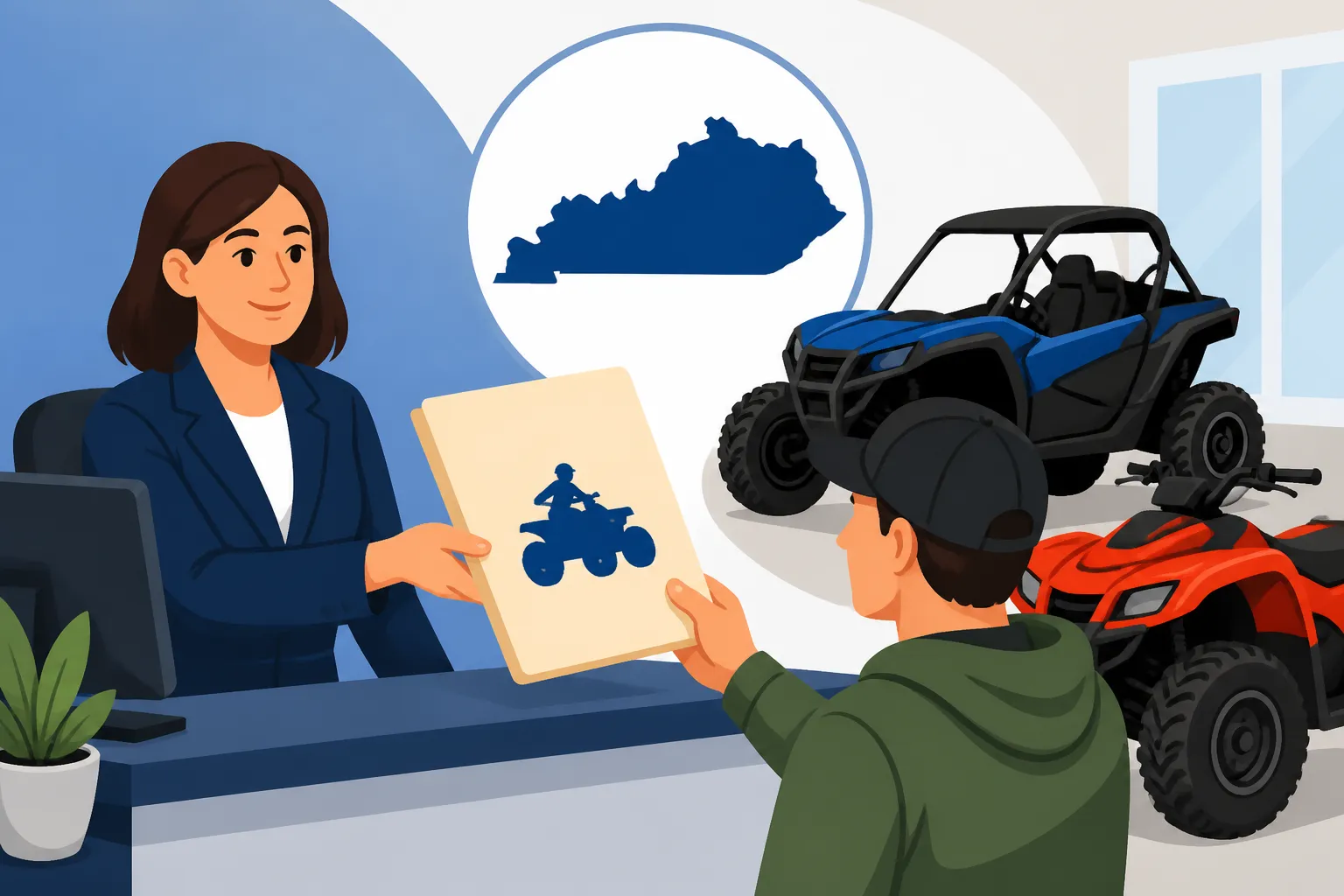
Kentucky's system for vehicle titling, especially for off-road machines like ATVs and UTVs, might seem a little different than what you'd expect. Instead of heading to a central state department, your local county clerk's office is the specific, crucial point of contact for getting your ATV titled. This localized approach is designed to make the process more accessible within your community, but it also means understanding the clerk's distinct role.
Understanding Kentucky's Unique Titling System
Kentucky's approach to titling ATVs can certainly throw people for a loop, primarily because it centralizes so much of the vehicle administration at the local level. Unlike some states where you might interact primarily with a state-level department of motor vehicles for all things vehicle-related, Kentucky delegates a significant portion of this responsibility directly to the county clerks. For ATVs, this means your first and often only stop for a title will be your local county clerk's office. This localized approach is designed to make the process more accessible and tailored to the specific county you reside in, but it can be confusing if you're not used to it. The state provides the legal framework, but the clerks are the ones on the front lines, processing the paperwork and ensuring compliance with the regulations, especially for machines bought after a certain date. This local focus also means that while the core rules are statewide, the specific atmosphere or busy times might vary from one clerk's office to another, say, from a bustling urban office to a quieter rural one in the heart of coal country.
Kentucky law, specifically surrounding ATVs and UTVs, has evolved, particularly for machines bought after July 2010. Before that date, many ATVs went untitled, leading to ownership disputes and difficulty tracking machines. The change was a big step towards formalizing ATV ownership. The county clerk's office is the specific place where these new rules come into play, as they are the authorized agents for issuing these titles. They act as the local representatives of the state's titling authority, ensuring that every machine gets properly recorded in the system. If you want to dive deeper into this, you can check out [Why Kentucky Titles Machines Bought After July 2010]. This local presence is key to the system's operation, ensuring that citizens have a direct and usually convenient place to handle these essential transactions.
What the County Clerk's Office Handles and Doesn't
Your county clerk's office is essentially the clearinghouse for all ATV titling matters in Kentucky. They are the ones who will verify your ownership documents, confirm the machine's identity, collect any necessary fees and sales tax, and ultimately issue your Kentucky ATV title. This means they'll handle the initial application for a title, title transfers when you buy or sell a machine, and even the process for getting a duplicate title if yours goes missing. They're equipped to walk you through the specifics of [Kentucky Form TC 96-182 Explained], which is a key piece of paperwork you'll encounter. They also handle the collection of sales tax, which is due at the time of titling, not at the point of sale from a private party. This can sometimes catch buyers off guard, so it’s good to be prepared for that additional cost, which is typically calculated on the purchase price or the machine's NADA value, whichever is higher.
However, it's important to understand what they don't handle. For instance, the county clerk's office does not register ATVs in the traditional sense that cars are registered. There's no annual tag or decal to display on your ATV in Kentucky, which is a common misconception. [Why Kentucky Does Not Register ATVs] explains this further. Their role is strictly about proving ownership through a title document. They also aren't responsible for enforcing riding laws, issuing trail permits (those usually come from parks or private land operators), or inspecting your machine for mechanical fitness. Their focus is solely on the administrative aspect of establishing legal ownership. So, while they're indispensable for getting your title, don't expect them to have all the answers about where you can ride or what safety gear you need; those are different regulatory domains managed by various entities, from state parks to local law enforcement.
The Documents You'll Need at the Clerk's Counter
Gathering your paperwork beforehand is probably the biggest piece of advice I can give anyone heading to the clerk's office. Showing up unprepared means a wasted trip, and nobody wants that, especially after driving to the office and possibly waiting in line. A little preparation goes a long way in making the titling process as smooth as possible.
Proving Ownership: The Signed-Over Title or Bill of Sale
This is the absolute cornerstone of your title application. When you're buying a used ATV, the most straightforward way to prove ownership is with the previous owner's properly signed-over title. This means the seller has physically signed off on the back of their Kentucky title, releasing their ownership to you, and dated it. Make absolutely sure that all names are correctly spelled and that the signatures match what's on the title. If you're buying a brand-new machine from a dealer, they'll provide you with a Manufacturer's Statement of Origin (MSO), which serves the same purpose as a title for a new vehicle. Without one of these, you’re often stuck. Sometimes, if a machine was purchased in a state that doesn't title ATVs, you might be allowed to present a bill of sale along with other proof of ownership. This is where a robust, well-detailed bill of sale becomes invaluable. You can often find templates for these online, or even use a service like LawDepot to create a legally sound document that includes all the necessary details like the VIN, make, model, purchase price, and signatures of both buyer and seller. This type of detailed document can save you a lot of grief at the clerk's counter if a formal title isn't available from a non-titling state.
If you find yourself with an older machine that predates Kentucky's titling requirements (generally, machines purchased before July 15, 2010), the situation can be trickier. [Why a County Clerk and Not a State Office] is involved in helping sort out these cases, but often you'll need a comprehensive bill of sale and possibly other supporting documents like old registrations from non-titling states or even affidavits from previous owners. The more documentation you have to establish a clear chain of ownership, the better your chances. Always remember to check for [Kentucky's Seventeen-Character VIN Rule] as this is a fundamental requirement for most modern ATVs to be titled; machines with non-standard VINs can cause delays or even refusal of a title. This proof of ownership must be pristine and leave no room for doubt about who legitimately owns the machine and from whom it was acquired.
Your Identification and Other Essential Paperwork
Beyond the proof of ownership for the ATV itself, you'll need to prove who you are. A valid, unexpired Kentucky photo ID, such as a driver's license or state-issued ID card, is universally required. This is for the clerk to verify your identity and ensure the title is being issued to the correct person. If there's more than one owner, all owners typically need to be present with their IDs, or specific power of attorney forms might be needed to act on behalf of an absent owner. You'll also need to be prepared to pay the titling fees and any applicable sales tax. The fees are typically modest, but the sales tax can add up, usually a percentage of the purchase price or the machine's NADA value, whichever is higher. [What a Kentucky ATV Title Costs] outlines these fees. It’s always best to have an approximate figure in mind before you go.
It's also prudent to bring proof of your current address, such as a utility bill, even if your ID has the correct address, just in case there's any discrepancy or an additional verification step. If you're buying an ATV from a private seller, having a carefully completed [Filling Out TC 96-182 in Kentucky] ready can speed things up, though the clerk can also assist you with filling it out on site. This form collects critical information about the ATV and its new owner, acting as the official application for the title. Also, make sure to check for any security interests or liens against the machine before you purchase it. The clerk’s office can often help verify the VIN and check for outstanding liens using the state's vehicle records, which is a crucial step to avoid inheriting someone else’s debt. A simple VIN check, perhaps even before you complete the purchase, can save significant headaches down the line. Using a reliable template from a service like LawDepot for your bill of sale can also ensure all necessary details are captured to prevent issues with identity or machine description.
The Step-by-Step Titling Process at the Clerk's Office
Okay, you've gathered your documents, you know what to expect – now for the actual visit. Knowing the steps involved in the process can make your visit to the county clerk's office much smoother and less intimidating, allowing you to move through it with confidence.
The Inspection and Verification Process
When you arrive at the county clerk's office, you'll likely take a number or get in line, just like any other government office. Patience is often a virtue in these settings. Once it's your turn, a clerk will review all your submitted documents. This is where your preparedness pays off. They'll meticulously check the signed-over title or bill of sale, ensuring all the fields are correctly filled out, especially the seller's signature and the date of sale. They will also verify your photo ID, such as the one described in [A Kentucky Photo ID at the Clerk's Counter], to make sure you're the person applying for the title. A critical step is the VIN verification. The clerk will need to confirm that the Vehicle Identification Number (VIN) on your ownership document matches the VIN physically stamped on the ATV's frame. In some offices, they might ask you to bring a rubbing of the VIN or even ask to see the machine itself if it's easily accessible in the parking lot. This is to prevent fraud and ensure that the title is being issued for the correct machine. This process is particularly important for [Kentucky's Seventeen-Character VIN Rule], as machines with shorter VINs or unclear markings can pose significant challenges.
If everything lines up, the clerk will proceed with entering the information into the state's titling system. They're essentially creating a digital record of your ownership before producing the physical title. It's a precise process, so patience is key. Any discrepancies, such as an incorrect VIN on the bill of sale versus the frame, or a missing signature, will halt the process until corrected. This is why it's so important to have all your ducks in a row before you even leave your driveway. They are looking for a clear and undisputed chain of ownership before they'll put your name on that official document, as they are ultimately responsible for the accuracy of the state's records.
Paying Fees and Receiving Your Temporary Paperwork
Once the verification process is complete and approved, the next step is the financial transaction. You'll pay the required titling fee, which is a set amount determined by the state, and the Kentucky sales tax. As mentioned before, the sales tax is typically based on the purchase price you declared on your bill of sale or the MSO, or the fair market value of the ATV, whichever is greater. It's wise to call ahead to your specific county clerk's office to confirm their accepted payment methods (cash, check, debit/credit card) and to get an estimate of the total amount, so you're not caught off guard. Some offices might have a small surcharge for credit card payments. Understanding [What a Kentucky ATV Title Costs] will help you budget appropriately for this step.
After payment, the clerk will issue you a receipt and typically a temporary registration or a temporary proof of title. This temporary document serves as your legal proof of ownership until your official, hard-copy title arrives in the mail. The official title is usually printed and mailed from a central state office, not directly from the county clerk’s office, and can take a few weeks to arrive. During this waiting period, your temporary document is crucial for proving you’re the rightful owner, especially if you get stopped or need to show ownership for any reason. Make sure to keep this temporary paperwork in a safe place, preferably not on the machine itself while riding, but somewhere easily accessible. This process aligns with [Kentucky's Fifteen-Day Titling Deadline] which mandates you complete this process quickly after purchase, often within that exact timeframe to avoid penalties.
Common Roadblocks and How to Navigate Them
Even with all the preparation, sometimes you hit a snag at the clerk's office. Understanding some of the most common issues you might encounter can help you prepare proactively or react effectively if an unexpected problem arises, saving you time and frustration.
What to Do About Missing or Incomplete Documentation
This is perhaps the most common frustration for ATV buyers heading to the clerk's office. You might arrive only to find that the bill of sale is missing critical information, the VIN on the title doesn't match the machine, or the seller forgot to sign a crucial line on the back of the title. The clerk cannot proceed if documentation is incomplete or incorrect, as their job is to ensure legal and accurate transfers of ownership. Your immediate action should be to contact the seller to get the necessary corrections or missing signatures. This might mean arranging another meeting, or if you used a service like LawDepot for your bill of sale, double-checking that all fields were thoroughly filled out and signed by both parties before you ever left the sale location. For a missing title, the previous owner would typically need to apply for [Kentucky's $10 Duplicate Title] themselves before they can properly transfer it to you. This can add significant delays to your titling process, as you have to wait for them to get the duplicate before you can complete your portion.
If the seller is unreachable or uncooperative, the situation becomes much more challenging. In some extreme cases, you might need to pursue a bonded title, which is a more complex legal process involving a surety bond to protect against claims from a legitimate owner who might appear later. This is often a last resort and should be discussed with the county clerk's office or even legal counsel, as it requires jumping through several more hoops. The goal is always to establish a clear and undisputed chain of ownership, and any break in that chain needs to be addressed before a new title can be issued. For machines with dubious histories or unclear ownership, the clerk's office will be very cautious, and for good reason – they're protecting against theft and fraud and ensuring the integrity of the state's vehicle records.
Special Scenarios: Inherited or Out-of-State ATVs
Sometimes, the ATV you're titling wasn't a straightforward purchase with a clear previous title. If you've inherited an ATV, you'll need additional documentation beyond the standard bill of sale or signed-over title. This typically includes a copy of the death certificate, the will (if applicable), and possibly an affidavit of heirship or court orders proving your legal right to the machine. [Titling an Inherited Machine in Kentucky] details this process, which can vary slightly depending on the specific legal situation and the county. The county clerk's office will guide you on the specific probate documents required in your situation. Each county might have slightly different expectations, so a call ahead to inquire about the specific documentation needed for inherited property is always a good idea.
For ATVs purchased out-of-state, especially from states that don't issue titles for ATVs, the process requires careful attention. You'll still need a robust bill of sale, often with notarization, and potentially the prior owner's out-of-state registration card if their state provides one. [Buying an Out-of-State Machine for Kentucky] clarifies these situations. The county clerk will need to be satisfied that you have legitimate proof of ownership from the previous state, even if that state's documentation is different from Kentucky's standard title. They'll also scrutinize the VIN more carefully in these cases to ensure the machine hasn't been stolen. Having extra documentation, even old insurance cards or prior repair records that link the VIN to the previous owner, can significantly strengthen your case. Being prepared for these less common scenarios can turn a potentially frustrating experience into a manageable one, demonstrating to the clerk that you've done your due diligence.
| Document Type | Purpose | Where to Get It / Notes |
|---|---|---|
| Signed-Over Title (Previous) | Proof of ownership transfer from seller | From the seller. Ensure all fields are signed and dated correctly. |
| Manufacturer's Statement of Origin (MSO) | Proof of ownership for a new machine | From the authorized dealership. |
| Bill of Sale (if no title) | Proof of ownership, especially from non-titling states | Create with seller. Use services like LawDepot for reliable templates. |
| Kentucky Photo ID | Identity verification for the buyer(s) | Valid Driver's License or State ID. Must be current. |
| Kentucky Form TC 96-182 | Application for title | Available at Clerk's office, or print online from KYTC website. |
| Payment for Fees/Taxes | Covers titling fee and sales tax | Cash, check, debit/credit (confirm accepted methods with office). |
| Death Certificate/Will (Inherited) | Proves legal right to inherited machine | From probate court or personal records, often needs certification. |
| Out-of-State Registration | Supplementary proof for out-of-state machines | From previous owner's state if applicable, for non-titled machines. |
Disclaimer
This article is for general informational purposes only and does not constitute professional advice. Laws, prices and regulations vary by location and change over time. Consult a qualified professional for guidance on your specific situation.