Kentucky Titles for a Rental Fleet
Managing a rental fleet of ATVs and UTVs in Kentucky presents a unique set of challenges, especially when it comes to the nitty-gritty of titling each machine. It’s not just about getting one title for one machine; it’s about a continuous process for multiple vehicles, each with its own paper trail and legal requirements. This guide is designed to cut through the confusion, offering a comprehensive look at how rental companies can efficiently navigate the Kentucky titling process for their entire fleet, ensuring compliance and peace of mind.
The Basics of Kentucky ATV Titling for Businesses
When you're running a business that rents out ATVs and UTVs, the administrative side of things can feel like a whole different beast compared to owning a single machine for personal use. Each unit in your fleet represents an asset, a potential revenue stream, and, critically, a legal responsibility. In Kentucky, this responsibility starts with proper titling for every single ATV and UTV you put into service.
Why Titling is Different for Rental Fleets
For an individual, titling an ATV might be a one-time event for their personal recreation vehicle. They buy it, title it, and that’s often the end of it until they sell it years later. For a rental fleet, however, the process is far more dynamic and complex. You're constantly acquiring new machines, perhaps cycling out older ones, and every single transaction, every new unit, needs to be handled meticulously. It's easy to think of a rental machine as just inventory, but in Kentucky, each of those ATVs and UTVs needs its own unique paper trail, just like your personal truck. This can feel like a mountain of paperwork when you're managing dozens of units.
The primary difference lies in volume and ongoing management. A rental company must ensure every machine is legally titled not only for its initial operation but also for critical aspects like insurance coverage, liability protection, and eventual resale or transfer. Imagine the headache if a machine in your fleet is involved in an incident, and its title isn't properly squared away – it could lead to significant legal and financial repercussions. Proper titling acts as a fundamental safeguard for your business, proving clear ownership and allowing for smooth financial transactions, like securing loans against your assets. Without it, you could face difficulties insuring your fleet, proving ownership in disputes, or even selling off depreciated assets.
Essential Paperwork for Each Rental Unit
At the heart of titling each ATV or UTV in your rental fleet is a specific set of documents, regardless of whether the machine is brand new or used. For a brand-new machine, the Manufacturer’s Statement of Origin (MSO) is paramount. This document is essentially the birth certificate of the vehicle, provided by the manufacturer to the dealer, and then to you. It confirms the machine's initial specifications and certifies that it hasn't been titled before. Losing or misplacing an MSO for a new machine can cause significant delays and headaches at the county clerk's office, potentially sidelining a brand-new rental unit when you need it on the trails.
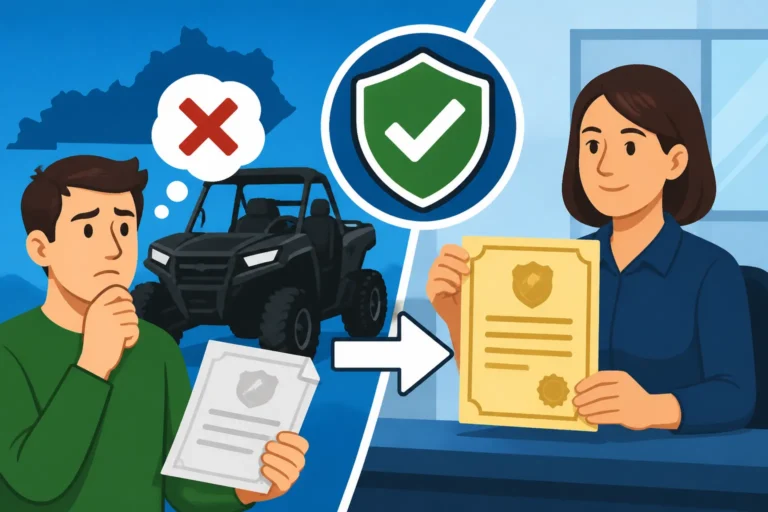
For any used machine joining your fleet, a properly assigned title from the previous owner is the most crucial document. This title must be clearly signed over, often notarized if the previous state required it, and free of any liens, or have a lien release attached. Along with the MSO or previous title, you'll need a completed application for Kentucky Certificate of Title/Registration, known as [Kentucky Form TC 96-182 Explained]. This form is your official declaration to the state about the machine and your ownership. Additionally, a robust bill of sale, even for machines purchased from a dealer, provides extra layers of documentation, detailing the transaction, purchase price, and VIN. While not always strictly required for titling a brand-new machine with a clean MSO, having a detailed bill of sale for every acquisition, especially when buying multiple units from a dealer or another rental company, creates an undeniable paper trail that can be invaluable for your internal records and in resolving any future discrepancies. A resource like LawDepot could offer various templates for purchase agreements or detailed bills of sale, allowing you to customize and standardize your internal documentation process for fleet acquisitions, adding another layer of professionalism to your operations.
Navigating the Acquisition and Titling Process for Fleet Expansion
Expanding your rental fleet is an exciting time, but the administrative burden of titling each new or used machine can quickly dampen the enthusiasm if not managed properly. Understanding the nuances of acquiring machines from different sources is key to a smooth process.
Titling New Machines from a Kentucky Dealer
When your rental company invests in a fleet of brand-new ATVs or UTVs directly from a Kentucky dealer, the process typically starts with the dealer handling some of the initial legwork. They'll complete their portion of the Manufacturer's Statement of Origin (MSO) and often guide you on the next steps. However, it’s crucial to remember that while the dealer facilitates the sale and provides the necessary initial documents, the ultimate responsibility for titling each machine at the county clerk's office still falls on your business. You might be leaving the dealership with a dozen shiny new machines, but each one still needs its individual trip through the titling system.
This means if you've purchased, say, twenty new UTVs to expand your offerings, you're looking at twenty separate titling applications that need to be processed. Each MSO must be presented along with your company's completed [Kentucky Form TC 96-182 Explained] for each unit, proof of identity for the company representative, and payment for applicable taxes and fees. Sales tax implications are also a significant consideration for fleet purchases. While dealers will typically collect sales tax at the point of sale, it's vital to confirm this and understand how it applies to your business, especially if you have any tax-exempt status or specific arrangements as a commercial entity. For more details on this process, you can refer to guidance on [Titling a Machine Bought at a Kentucky Dealer]. Mismanaging this volume can lead to a backlog of untiled machines, preventing them from generating revenue while you sort out the paperwork.
Titling Used Machines for Your Fleet
Acquiring used ATVs and UTVs for your rental fleet can be a cost-effective way to expand, but it often introduces a greater level of complexity to the titling process. Each used machine brings with it its own history, and verifying that history through proper documentation is paramount. Ideally, every used machine you purchase should come with a properly signed-over Kentucky title from the previous owner. This document is your clearest proof of the chain of ownership. The seller must endorse the title, transferring ownership to your rental company. For a clear understanding of what a valid transfer looks like, check out [A Signed-Over Title for a Kentucky Purchase].
However, the reality of the used market isn't always so straightforward. You might acquire machines from private parties, other rental companies, or even auctions. If you're buying from a non-titling state, the process becomes even more involved, requiring a bill of sale and other forms of proof of ownership, such as prior registrations. A common headache arises when a used machine lacks a clear title, perhaps advertised with phrases like "bill of sale only." This is a significant red flag for a rental company, as it can be incredibly difficult, if not impossible, to title such a machine in Kentucky without significant hurdles, potentially involving a bonded title process. This is why our advice on [Should You Buy a Quad Advertised With No Title?] is so critical for fleet managers. Scenarios like this can tie up capital in machines that cannot legally enter your rental pool. To maintain impeccable records and streamline the acquisition of used machines, even if the state title isn't perfect, utilizing document templates from services like LawDepot for internal purchase agreements or detailed condition reports can help you keep track of all relevant information and protect your business during these more complex transactions. You might even find yourself in a situation where you acquire a machine from a neighboring state, which brings its own specific requirements, as detailed in articles like [Kentucky ATV Title for a Machine Bought in Tennessee].
Maintaining Your Fleet Titles and Addressing Common Issues
Once your rental fleet is titled, the work isn't over. Ongoing maintenance of these vital documents, along with addressing inevitable issues like lost titles or lien releases, is a critical component of successful fleet management. Think of it as a rolling administrative chore that, when handled diligently, prevents future headaches and ensures your business operates smoothly.
Storing and Managing Fleet Titles
With a large rental fleet, you’re not just dealing with one or two titles; you might have dozens, or even hundreds, of physical documents. The sheer volume makes secure and organized storage absolutely essential. Imagine needing to quickly locate the title for a specific UTV that's being sold or has been involved in an incident. Scrambling through unorganized piles of paper is a scenario no fleet manager wants to face. Most businesses opt for a dual approach: secure physical storage, perhaps in a locked fireproof cabinet, for the original titles, coupled with a robust digital tracking system. A detailed spreadsheet or a specialized database can track key information for each machine, including VIN, title number, acquisition date, current status (in service, retired, sold), and even its maintenance history.
The nightmare scenario for any fleet manager is a lost title for a machine still actively in the fleet. Without the original title, selling the machine or even proving ownership can become a bureaucratic labyrinth. While Kentucky does offer a process for [Replacing a Lost Kentucky ATV Title], it involves additional paperwork, time, and fees, pulling valuable resources away from your core business. Having a well-maintained digital record, including scans of original titles, can expedite the replacement process, but it doesn't negate the need for the original document for official transactions. Proactive management, regular audits of your title inventory, and clear protocols for handling new acquisitions and sales are the best defense against this kind of disruption.
Dealing with Liens and Financing for Rental Machines
For many rental companies, financing is a necessary tool for acquiring and expanding their fleet. When you finance the purchase of your ATVs and UTVs, the lender places a lien on the title of each machine until the loan is fully repaid. This means that your title will show the financial institution as a lienholder. This is a standard practice, but it adds another layer to your titling management. Understanding [Titling a Machine With a Lien in Kentucky] is crucial from the outset. You'll still apply for the title in your company's name, but the lienholder's information will be recorded on the title itself by the county clerk's office.
The real administrative effort comes when you pay off a machine or decide to sell a unit from your fleet that still has an active lien. Before you can legally sell or transfer a machine with a lien, that lien must be officially released. This involves obtaining a lien release document from your lender once the loan is satisfied. This document then needs to be presented to the county clerk's office so they can remove the lien from the title, issuing a clean title to your company. The process of [Releasing a Lien on a Kentucky Title] can take time and requires diligence to ensure the lender provides the necessary paperwork promptly. Failure to obtain a timely lien release can significantly delay the sale of a fleet machine, costing your business time and potentially a sale opportunity. Therefore, establishing a clear process for tracking loan payments and promptly requesting lien releases is paramount for efficient fleet management.
Special Considerations for Rental Fleet Operations
Running an ATV and UTV rental fleet often involves more than just local operations. Machines might be acquired from out-of-state, or sold to buyers across state lines, and the interaction with the county clerk's office is a continuous relationship. These special considerations require careful attention to detail.
When Machines Move In and Out of State
Many rental companies, especially those located near state borders, might acquire machines from out-of-state dealers or other rental businesses. This immediately brings the intricacies of [Buying an Out-of-State Machine for Kentucky] into play. Kentucky's titling laws are specific, and a title or registration from another state does not automatically translate into legal operability in Kentucky. Each machine must be properly titled in Kentucky, regardless of its previous home. This often means presenting the out-of-state title (or bill of sale/proof of ownership from non-titling states), along with a completed Kentucky title application and often a VIN inspection. The complexities are real, and while some states might have reciprocal agreements for certain vehicle types, for ATVs and UTVs in Kentucky, it's generally a requirement to get a Kentucky title.
The lack of statewide reciprocity means you can't just operate with an Ohio or West Virginia title indefinitely if the machine is primarily based in your Kentucky rental fleet. An example of how specific the state requirements can be is detailed in [Kentucky ATV Title for a Machine Bought in Tennessee], illustrating the need to follow Kentucky's process precisely. Furthermore, if you plan to sell machines out of your fleet to buyers in other states, you'll need a clean Kentucky title to ensure a smooth transfer for them, or they will face similar out-of-state titling hurdles in their home state. This constant movement underscores the need for your business to have clear, documented procedures for handling every machine acquisition and disposition, recognizing that each state has its own unique rules.
Handling Sales and Transfers from the Fleet
Just as you bring machines into your fleet, there will come a time when units are retired, upgraded, or sold to new owners. When your rental company sells an ATV or UTV, you act as the seller, and the responsibility to properly transfer the title lies with your business. This is crucial for both legal compliance and ensuring a positive experience for your buyers. The process generally mirrors that of a private sale but on a larger, more formalized scale. You will need to properly assign the Kentucky title to the new owner, completing all the seller sections on the title certificate. This typically includes the sale date, selling price, and your company's signature (by an authorized representative).
It's imperative that the new owner receives a clean, properly endorsed title, free of any encumbrances like liens (which we discussed earlier). Any errors or omissions on the title transfer can cause significant delays for the buyer when they attempt to title the machine in their name, reflecting poorly on your business. Having a standardized sales agreement, perhaps one you've customized using a service like LawDepot, can further streamline this process. Such an agreement would go beyond just the title, clearly outlining the terms of the sale, vehicle condition, and responsibilities of both parties. This provides comprehensive documentation, adding an extra layer of protection for your rental company during the divestment of fleet vehicles. For a comprehensive overview of selling requirements, you can refer to [Selling an ATV in Kentucky], which covers the necessary steps to ensure a legal and smooth transfer of ownership.
The Role of the County Clerk in Fleet Management
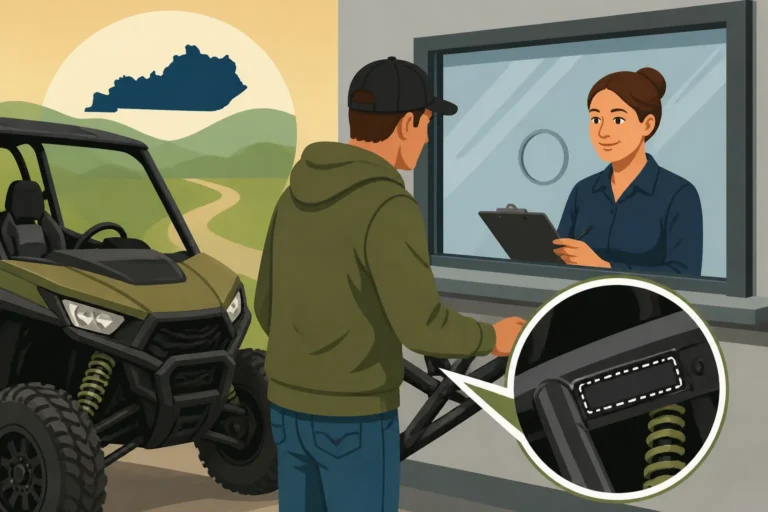
For all matters of ATV and UTV titling in Kentucky, the county clerk's office is your primary point of contact. This means that every single titling application, whether for a new acquisition, a replacement title, or a lien release, must be processed through the clerk in the county where your business is located. For a large rental fleet, this translates into potentially numerous trips to the clerk's office or designating a specific, knowledgeable staff member to handle these administrative tasks. It's not a once-a-year visit; it can be a continuous interaction.
The efficiency of your titling process hinges on presenting all documentation in perfect order for each machine. Any missing signatures, incorrect VINs, or incomplete forms will result in delays and rejection, forcing you to return later. Consistency across multiple forms is vital. Furthermore, the individual representing your business at the clerk's counter will need to present [A Kentucky Photo ID at the Clerk's Counter] to verify their identity and authority to conduct transactions on behalf of the company. Building a good working relationship with your local county clerk's office by consistently providing accurate and complete paperwork can significantly smooth the process for your fleet. Understand that they are processing countless transactions daily, and your organized approach will benefit everyone involved.
Key Documents for Kentucky ATV/UTV Rental Fleet Titling
To summarize the essential documentation needed for your rental fleet's titling process in Kentucky, here's a quick overview of the key players:
| Document Type | Purpose for Rental Fleet | Acquired From | Important Notes |
|---|---|---|---|
| Manufacturer's Statement of Origin (MSO) | Proof of ownership for brand new machines. | Vehicle Manufacturer (via Dealer) | Essential for the first title application. Keep secure. |
| Previous Kentucky Title | Proof of ownership for used machines bought in-state. | Prior Owner | Must be properly signed over by seller. Check for active liens. |
| Bill of Sale (Detailed) | Records transaction details, especially for multiple units. | Dealer, Private Seller, Auction | Critical for internal records and proving purchase. LawDepot can provide templates. |
| Kentucky Form TC 96-182 | Official application for title/registration. | Kentucky County Clerk's Office or Online | Complete accurately for each machine. |
| Lien Release | Removes a financial encumbrance from the title. | Lender (once loan is paid) | Required to obtain a "clean" title for sale or unencumbered ownership. |
| Proof of Identity (Company Rep) | Verifies the authority of the person acting for the business. | Personal ID (e.g., driver's license) | Needed by the individual presenting paperwork at the county clerk. |
| Out-of-State Documents | Proof of ownership for machines acquired from other states. | Prior Owner (Out-of-State Title/Registration) | May require additional VIN inspection for Kentucky titling. |
Effectively managing a rental fleet of ATVs and UTVs in Kentucky demands meticulous attention to detail, especially when it comes to titling. While the process for individual machines might seem straightforward, the sheer volume and dynamic nature of a fleet introduce complexities that require a strategic approach. From handling new acquisitions and ensuring proper documentation for each unit, to navigating the intricacies of used machine purchases and managing ongoing lien releases, every step is crucial for compliance and the smooth operation of your business. By understanding Kentucky's specific requirements, leveraging tools like standardized forms, and diligently managing your title inventory, you can protect your investment, minimize administrative headaches, and keep your machines generating revenue on the trails.
Disclaimer
This article is for general informational purposes only and does not constitute professional advice. Laws, prices and regulations vary by location and change over time. Consult a qualified professional for guidance on your specific situation.