A Kentucky Photo ID at the Clerk’s Counter
You've finally got your hands on that awesome ATV or UTV, whether it's a trusty workhorse for the farm or a mud-slinging beast for the trails. You’re all set to get it titled at your local county clerk’s office, only to find out there’s more to it than just the machine’s paperwork. This guide will walk you through exactly why your photo ID is so crucial for titling your ATV or UTV in Kentucky and how to make sure you have everything you need for a smooth, frustration-free visit.
Why Your Photo ID is Non-Negotiable at the Clerk's Office
It might seem like a minor detail, but your photo identification is one of the most critical pieces of paper you’ll present at the county clerk’s counter when you're ready to title your ATV or UTV. Many folks assume the machine’s title or bill of sale is the only real hurdle, but the clerk's office is tasked with a lot more than just processing documents. They're safeguarding against fraud and ensuring proper legal ownership, and your ID is their first line of defense. Without it, you’re simply not getting your title processed, no matter how perfect the rest of your paperwork might be.
Verifying Your Identity for Legal Ownership
Think of it this way: when you walk into the county clerk's office, you're not just a person with some papers; you're attempting to establish legal ownership of a piece of valuable property. The clerk needs to be absolutely certain that you are who you say you are, and that you have the legal standing to claim ownership of that ATV or UTV. This isn't just a bureaucratic hoop to jump through; it's a fundamental step in ensuring that the title is issued to the correct individual or entity. They’re essentially saying, "Prove you’re you, before we put this vehicle in your name."
This verification process helps to prevent a whole host of potential issues down the road. Imagine if anyone could walk in with a bill of sale and title an ATV in their name without proving their identity. It would be an open invitation for all sorts of mischief. The state of Kentucky, through its county clerk offices, has a vested interest in maintaining the integrity of vehicle ownership records, and that starts with confirming the identity of the person making the application. Your photo ID is the cornerstone of this entire system.
Furthermore, accurate identity verification ensures that your records are correctly linked to your legal name and address. This is vital for any future transactions, such as selling the machine, obtaining a [Kentucky ATV Duplicate Title Cost], or even dealing with issues like a lien release. If there's a discrepancy in identity early on, it can create a nightmare of paperwork and delays later, something no one wants to deal with when they're trying to enjoy their machine.
Preventing Fraud and Protecting Buyers
Fraud is a persistent concern in the world of vehicle transactions, and ATVs and UTVs are no exception. The requirement for a strong photo ID at the clerk's counter is a direct measure to combat this. Imagine a scenario where someone has stolen an ATV and forged a bill of sale. Without stringent identity checks, they could potentially title that stolen machine in their name, making it incredibly difficult for the rightful owner to recover it. The clerk's office acts as a crucial barrier, demanding proof that the person presenting the paperwork is legitimate.
This protection extends not just to the original owner, but also to future buyers. When you purchase a used ATV or UTV, you want to be confident that the seller had legal ownership and that the title transfer was legitimate. The rigorous process at the clerk's office helps to ensure that the chain of ownership is clear and documented, giving both buyers and sellers peace of mind. Without it, the market for used machines would be far riskier, rife with uncertainty and the potential for losing your hard-earned money to a fraudulent transaction. This is why having robust identity checks is so important.
Think of it as a quality control point. Every legitimate title issued by a Kentucky county clerk's office has passed this identity check, adding a layer of authenticity to the document. This meticulous process helps to keep stolen machines from being "washed" through the titling system, which benefits everyone in the ATV and UTV community by making transactions safer and more transparent. It’s a proactive step that protects you, me, and every other rider or seller in Kentucky.
The Clerk's Role as a Gatekeeper of Records
The county clerk's office isn't just a processing center; they are the official custodians of public records for vehicle titles within their jurisdiction. Each clerk's office maintains meticulous records of every ATV and UTV titled there, creating a historical log of ownership for every machine. This responsibility means they must be incredibly diligent about who they interact with and what information they record. Your photo ID is fundamental to this gatekeeping function.
When you present your ID, the clerk is confirming that the individual standing before them matches the name that will be recorded on the official title document. This precise matching is critical for maintaining accurate and reliable state records. If, for example, a problem arises years down the line—perhaps there's a question about previous ownership or a lien dispute—the clerk's office can refer back to the original titling record, complete with the identity verification that took place. This is why when you're learning [How to Title an ATV in Kentucky], presenting your ID is always at the top of the list.
It's a system built on trust and accuracy, designed to serve the public good by providing clear, verifiable ownership information. The clerk's office, by insisting on a valid photo ID, upholds its duty to both the state and its citizens. They're ensuring that the information they record is not only correct at the moment of titling but will stand up to scrutiny for years to come. So, while it might feel like another step, it's a vital part of a larger system that protects everyone involved.
What Counts as a Valid Photo ID in Kentucky
Okay, so we know why you need a photo ID. Now, let’s talk about what kind of ID the Kentucky county clerk’s office will actually accept. It’s not just any old card with your picture on it; there are specific requirements to ensure it’s a legitimate and verifiable form of identification. Having the right ID can make your visit quick and painless, while showing up with an unacceptable form can lead to a frustrating delay, sending you home to fetch the correct document.
Common Forms of Acceptable Identification
Generally, the most straightforward and universally accepted forms of photo identification at a Kentucky county clerk’s office are those issued by state or federal governments. Your Kentucky driver's license is probably the easiest and most common piece of ID to use. It’s issued by the Kentucky Transportation Cabinet, includes your photo, full name, address, and birthdate, making it a perfect fit for identity verification. If you don't drive, a Kentucky state-issued identification card works just as well; it looks similar to a driver's license but is specifically for identification purposes.
Beyond state-issued IDs, a valid U.S. passport or passport card is also an excellent option. These are federal documents and are widely recognized as definitive proof of identity and citizenship. For military personnel, a valid U.S. military ID card is typically accepted. The key takeaway here is that the ID must be current, contain a clear photograph of you, and have your full legal name matching the other documents you're presenting, such as your [A Signed-Over Title for a Kentucky Purchase]. Sometimes, a clerk may even look for a signature on the ID to compare with your signature on the application.
It's also worth noting that the ID must be the original document. A photocopy or a picture on your phone, no matter how clear, will not be accepted. The clerk needs to visually inspect the physical card for security features and ensure it hasn't been tampered with. So, always remember to bring the actual card with you when you visit the counter.
What to Do If Your ID is Expired or Missing
This is where things can get a little tricky and often leads to unexpected delays. An expired photo ID is generally not considered valid for titling purposes. The reason is simple: an expired ID no longer serves its primary function as current proof of identity. The clerk needs to verify that the person in front of them is the current holder of that identity, and an outdated card doesn't offer that assurance. If your Kentucky driver's license or state ID has expired, your first stop needs to be the Department of Motor Vehicles or relevant state office to get it renewed before heading to the county clerk for your ATV title.
If your ID is missing altogether, whether it's lost or stolen, you'll also need to address this before you can title your machine. You'll likely need to go through the process of obtaining a replacement ID from the issuing authority. This can take some time, so it's best to plan ahead. In some very specific, rare circumstances, a county clerk might accept a combination of secondary forms of ID (like a utility bill with your name and address, coupled with an official birth certificate), but this is highly dependent on the individual clerk's office policy and is definitely not something to rely on. The safest bet is always to have a current, primary photo ID.
Always call your specific county clerk's office in advance if you have any doubts about your ID's validity or if you're in a unique situation. They can provide precise guidance based on their local policies and state regulations. It's much better to spend a few minutes on the phone beforehand than to make a wasted trip.
Special Considerations for Minors or Those Without a Driver's License
Not everyone titling an ATV or UTV will have a driver’s license. This is especially true for younger riders whose parents might be putting the machine in their name, or for individuals who simply don't drive. In these cases, a Kentucky state-issued identification card is the primary alternative. This card serves the same purpose as a driver's license for identification but doesn't grant driving privileges. It contains all the necessary photo and personal information the clerk needs for verification.
For minors, the situation is a bit different. While a minor might legally own an ATV, the titling process usually involves an adult guardian or parent. The adult will need to present their own valid photo ID. If the minor is also listed on the title, and they have some form of photo ID (like a student ID if accepted by the clerk, or a state ID card if they're old enough to get one), it’s always good to bring it along. However, the primary identity verification will fall to the adult responsible for the titling. Always check with your specific county clerk for their exact requirements when a minor is involved, especially regarding documents like [Kentucky Titles for a Youth Machine].
If you're someone who doesn't possess a driver's license or state ID, perhaps because you're new to the country or have simply never needed one, you'll need to work with the Kentucky Department of Motor Vehicles to obtain a state ID card. This is a crucial step that must be completed before you can proceed with titling your ATV or UTV. The county clerk's office needs a clear, government-issued photo ID to complete the process, ensuring that every title is linked to a verifiable individual.
The Broader Paperwork Puzzle: Beyond Just Your ID
While your photo ID is crucial, it’s just one piece of the much larger puzzle you’ll need to solve when titling your ATV or UTV in Kentucky. The county clerk’s office requires a specific collection of documents, all designed to legally establish ownership, prove the machine's origin, and ensure all applicable taxes and fees are paid. Missing even one of these vital documents can bring the entire titling process to a screeching halt, no matter how valid your ID is.
The Critical Role of Form TC 96-182
One of the absolute foundational pieces of paperwork for titling an ATV or UTV in Kentucky is Form TC 96-182, also known as the "Application for Kentucky Certificate of Title/Registration." This isn't just a suggestion; it's a mandatory form that you will need to fill out completely and accurately. Think of this as the official request to the state of Kentucky to put your name on the title for your machine. It collects all the pertinent information about you, the buyer, and the ATV or UTV itself.
This form requires details such as your full legal name, address, and contact information, which the clerk will cross-reference with your photo ID. It also asks for extensive information about the machine, including its make, model, year, and most importantly, its [Kentucky's Seventeen-Character VIN Rule]. You'll need to know the purchase price and the date of sale, as this information is vital for calculating sales tax. Many folks find it helpful to fill out this form in advance, but be careful not to sign it until you are actually at the clerk's counter, as some sections may require a notary or the clerk's witness.
You can often find this form on the Kentucky Transportation Cabinet website or pick up a physical copy at your local county clerk's office. Taking the time to read through it thoroughly before your visit can save you a lot of time and potential errors. It's designed to capture all the information necessary for a legal title, so every blank needs to be filled in correctly. You can learn more about its nuances in [Kentucky Form TC 96-182 Explained].
Proof of Ownership: Titles, Bills of Sale, and Affidavits
Beyond your photo ID and the application form, you must provide undeniable proof that you are the legal owner of the ATV or UTV you wish to title. This is often the most complex part of the process, as the specific documents required can vary depending on where and how you acquired the machine.
If you purchased a new ATV or UTV from a licensed dealer in Kentucky, they will typically handle much of the initial paperwork and provide you with the Manufacturer's Statement of Origin (MSO) or Manufacturer's Certificate of Origin (MCO). This document is essentially the "birth certificate" of your machine and is paramount for its first titling.
For used machines, the process usually involves a properly [A Signed-Over Title for a Kentucky Purchase] from the previous owner. The seller must sign the title over to you in the designated section, and often the signature needs to be notarized. This is a critical step; a title that isn't correctly signed over will be rejected by the clerk. If the machine was purchased in a state that doesn't issue titles for ATVs, you'll typically need a detailed bill of sale and possibly a verification from that state's DMV that titles aren't issued. In these cases, [Using a Bill of Sale From a Non-Titling State] becomes crucial. Resources like LawDepot can be quite helpful here, as they provide customizable bill of sale templates that can meet state requirements.
In some unique situations, like an inherited machine where the original title is missing or unclear, you might need to present a court order or an affidavit of ownership. These are more complex scenarios and often require legal advice to ensure you have the correct documentation. No matter the scenario, the clerk needs a clear and unbroken chain of ownership established through official documents.
Understanding Sales Tax and Other Fees at the Counter
Titling an ATV or UTV in Kentucky isn't just about paperwork; there are financial obligations too. When you title your machine, you will almost certainly be required to pay Kentucky sales tax on the purchase price. This tax is typically collected by the county clerk's office at the time of titling. The percentage rate is set by the state, and it’s applied to the fair market value or purchase price of the machine, whichever is higher, to prevent undervaluing vehicles for tax purposes.
In addition to sales tax, there are a few other fees you should anticipate. There will be a titling fee for the actual certificate of title. While these fees are generally modest, they are non-negotiable and must be paid at the time of application. You might also encounter a small processing fee. It’s always a good idea to call your specific county clerk's office ahead of time to confirm the exact fees and acceptable payment methods. Most offices accept cash, checks, or debit/credit cards, but policies can vary. Knowing the total amount due beforehand means you won't be caught off guard and can ensure your visit is productive. This understanding is key to grasping the full [What a Kentucky ATV Title Costs].
Remember, these fees are part of the legal and administrative process of getting your ATV or UTV officially recognized by the state. They contribute to the operation of the titling system and state revenue. Having all your documents in order, including proof of ownership and your photo ID, ensures that these fees are correctly applied to your legitimate transaction.
Common Pitfalls and How to Avoid Them at the Clerk's Office
Even with the best intentions and most meticulous preparation, sometimes things can go sideways at the county clerk’s counter. Titling an ATV or UTV, especially if it’s your first time or if the machine has a complex history, can present unexpected challenges. Being aware of the most common pitfalls can help you sidestep them, saving you time, frustration, and another trip back to the office.
Mismatched Names and Address Discrepancies
One of the quickest ways to get your titling application rejected is to have inconsistencies in your personal information across your documents. For instance, if your driver’s license shows "William Smith" but your bill of sale lists "Bill Smith," the clerk may flag this discrepancy. Even a seemingly minor difference can cause an issue because the clerk's job is to ensure absolute accuracy for legal records. Your photo ID, the application Form TC 96-182, and your proof of ownership (like a title or bill of sale) must all reflect the exact same legal name.
Address discrepancies can also be a problem. If your photo ID lists an old address, but your application form shows your current residence, the clerk will likely require you to update your ID first. The address on your ID should match the address you wish to have on your ATV or UTV title. It’s not just about proving who you are, but also proving where you officially reside for record-keeping purposes. Before you even head to the clerk's office, take a moment to review all your documents and make sure your name, address, and any other identifying information are consistent across the board. If you find a mismatch, rectify it with the appropriate agency first.
This attention to detail helps maintain the integrity of the state’s vehicle records. It ensures that mail related to your ATV title reaches you, and that in the event of any legal inquiries, your ownership is clearly traceable. It's a small step, but it's a critical one for a seamless titling experience.
Forgetting Essential Documents or Copies
You've got your photo ID, your application, and what you think is all the necessary paperwork, but sometimes it's the little things that get overlooked. Forgetting even one essential document can mean going home empty-handed. This could be anything from the original signed-over title, a complete and correctly filled out [Kentucky ATV Bill of Sale Requirements], or the Manufacturer's Statement of Origin for a new machine. The clerk cannot proceed without every required piece of the puzzle.
Sometimes, people bring only copies of documents, especially if they're trying to protect valuable originals. However, the county clerk's office almost always requires the original documents for verification. They need to see the official signatures, seals, and security features that are often absent or less clear on a photocopy. While you might keep copies for your own records, always present the originals at the counter.
It's also a common mistake to assume that if you're buying from a private seller, a simple handwritten note might suffice as a bill of sale. While a basic bill of sale can work, it needs to contain specific information: the full names and addresses of buyer and seller, the VIN of the ATV/UTV, the purchase price, and the date of sale. Using a template from a reputable source like LawDepot can help ensure you don't miss any critical details. Double-check your checklist of required documents before you leave home to avoid a wasted trip.
Navigating Complex Ownership Scenarios
Titling an ATV or UTV isn't always a straightforward buy-and-sell transaction. Complex ownership scenarios can throw a wrench into the process, requiring additional documentation and patience. For example, if you're [Titling an Inherited Machine in Kentucky], you'll likely need to provide the death certificate of the previous owner, a copy of the will (if applicable), and potentially a court order or affidavit of heirship to prove your legal right to the machine. These situations are more involved and require more than just the standard set of documents.
Another common complex scenario involves machines with outstanding liens. If you purchase an ATV that still has a lien recorded on its title, you'll need proof that the lien has been satisfied. This typically comes in the form of a lien release document from the bank or financial institution that held the lien. Without this, the clerk cannot transfer a clear title to your name. Understanding how to navigate [Releasing a Lien on a Kentucky Title] is critical in these situations.
For machines that have been bought and sold multiple times without proper titling in between, or for older machines that may never have been titled, you might face even greater hurdles. Some older machines, particularly those bought before July 2010, may not have a title, and proving ownership can require a sworn affidavit or a detailed history of ownership with bills of sale from previous transactions. In such cases, the clerk might request additional documentation or even a bond to guarantee ownership. These situations are best handled by calling your county clerk’s office beforehand to understand their specific requirements.
Preparing for a Smooth Titling Experience
Nobody wants to spend more time than necessary at a government office, especially when you're eager to hit the trails or put your new work machine to use. A smooth titling experience at the county clerk’s office for your ATV or UTV is entirely possible with a bit of foresight and preparation. It's all about making sure you have every 'i' dotted and 't' crossed before you even walk through the door.
Making an Appointment and Checking Office Hours
While some county clerk offices operate on a walk-in basis, others, especially in more populated areas, may offer or even require appointments for vehicle titling. It’s always a good practice to check with your specific county clerk's office regarding their policy. Calling ahead can save you from a long wait or a wasted trip if they're appointment-only or have limited hours for certain services. You can often find this information on their website or by giving them a quick call.
Beyond appointments, be mindful of their general office hours. Many county clerk offices have specific hours for vehicle services that might differ from their general administrative hours. They also observe state holidays, and sometimes local holidays, which could mean unexpected closures. Imagine driving an hour only to find the "Closed for Holiday" sign on the door – a truly frustrating experience! Knowing their exact schedule, including any lunch breaks or early closing times on certain days, ensures you arrive when they're ready to serve you. This simple step can make a huge difference in your overall experience and ensure your [Kentucky ATV Title Deadline] is met.
Some offices might even have a "rush hour" for titling services, perhaps right when they open or close, or during lunch. If you have the flexibility, try to schedule your visit during off-peak times to avoid unnecessary queues. A quick call or website check is a small investment for a much calmer visit.
Organizing Your Documents in Advance
This is perhaps the single most impactful step you can take to ensure a smooth titling process. Gathering all your documents is one thing; having them neatly organized and readily accessible is another. Imagine fumbling through a stack of papers at the counter while people wait behind you – it’s stressful and inefficient. Instead, create a dedicated folder and arrange your documents in the order you expect the clerk to ask for them.
A typical order might be: your valid photo ID, the completed Form TC 96-182 (unsigned in the signature section if notarization is required at the counter), the original title or MSO/MCO, any bills of sale, lien releases, and proof of insurance (if required, though often not for titling ATVs directly). Make sure all signatures are present where needed, and that any notarization required on your documents (like on a bill of sale or older title) has been completed before your visit. Using a checklist, perhaps one you create yourself or find online, can be incredibly helpful here.
Also, consider making a copy of all your documents for your own records before you go. This way, the original paperwork is ready for the clerk, and you have a backup of everything you've submitted. A well-organized packet of documents signals to the clerk that you’re prepared and serious, often leading to a more efficient and positive interaction.
What to Expect During Your Visit
When you arrive at the county clerk’s office, you’ll typically take a number or be directed to a specific counter for vehicle titling. Have all your organized documents in hand, along with your photo ID. When it’s your turn, the clerk will greet you and ask for your purpose, at which point you’ll state you're there to title an ATV or UTV. They will then systematically review your documents, starting with your photo ID to verify your identity. This is A Kentucky Photo ID at the Clerk's Counter in action!
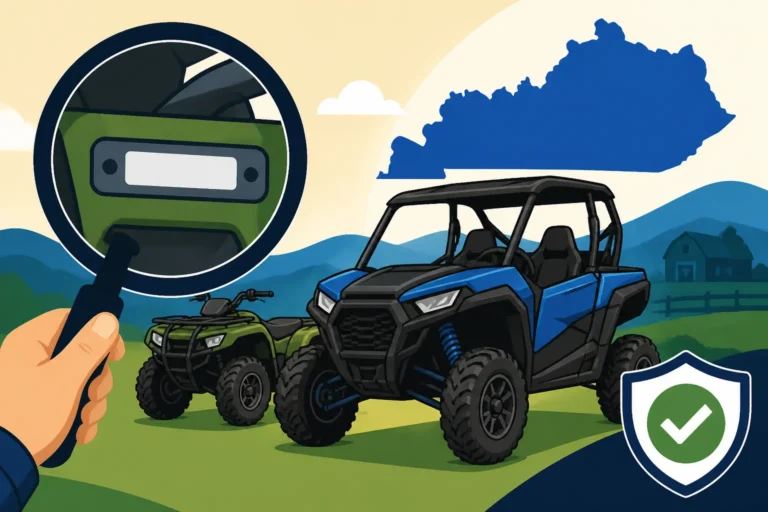
They will scrutinize the VIN on your documents against any physical inspection they might perform (though physical inspections of ATVs are less common than for cars, it can happen if there are VIN discrepancies). They will verify the signatures, especially on the title transfer or bill of sale. Be prepared to answer any questions they might have about your purchase, the machine's history, or specific details on your paperwork. If there are any discrepancies or missing information, they will inform you at this point.
Once all documents are approved and the fees, including sales tax, are calculated, you will typically be asked to pay. After payment, the clerk will process your application, and you'll receive a receipt and often a temporary registration or a copy of the processed application. The official certificate of title will usually be mailed to you within a few weeks. The entire process, assuming all your paperwork is in order, can take anywhere from 15 minutes to an hour, depending on the office's busyness and the complexity of your situation. Patience and politeness go a long way in ensuring a pleasant experience.
Disclaimer
This article is for general informational purposes only and does not constitute professional advice. Laws, prices and regulations vary by location and change over time. Consult a qualified professional for guidance on your specific situation.