Kentucky Rules for a Rider Aged 12
A 12-year-old may be able to ride an ATV in Kentucky, but age alone does not settle the question. The machine’s manufacturer age recommendation, adult supervision, where the ride takes place, and the park’s rules all matter. Use these checks before handing over the controls, booking a rental, or setting out on a trail.
Start with the machine’s age recommendation
A 12-year-old should not be cleared to ride simply because the ATV looks small or an adult thinks the child can handle it. Check the manufacturer’s age recommendation on the machine and in its owner’s manual. Kentucky’s rules make that recommendation an important part of deciding whether a young rider may operate the ATV. If the machine is labeled for an older rider, do not treat it as suitable for a 12-year-old.
The label is a starting point, not a skills test. A child who meets the listed age may still lack the strength, judgment, or coordination needed for that machine. Pay attention to whether the rider can reach and operate the controls, steer without stretching, use the brakes firmly, and keep a stable position while moving. A machine that is too large or powerful can be difficult to control even on a familiar patch of ground.
Check the label on the actual vehicle rather than relying on the model name or a seller’s description. If the label is missing, damaged, or hard to read, consult the owner’s manual or ask the manufacturer or dealer to identify the recommended age for that exact model. Do not assume that removing or replacing a label changes the machine’s suitability or the applicable rules. For more on this issue, see Reading a Manufacturer’s Age Label and The Manufacturer’s Age Label as Kentucky’s Age Rule.
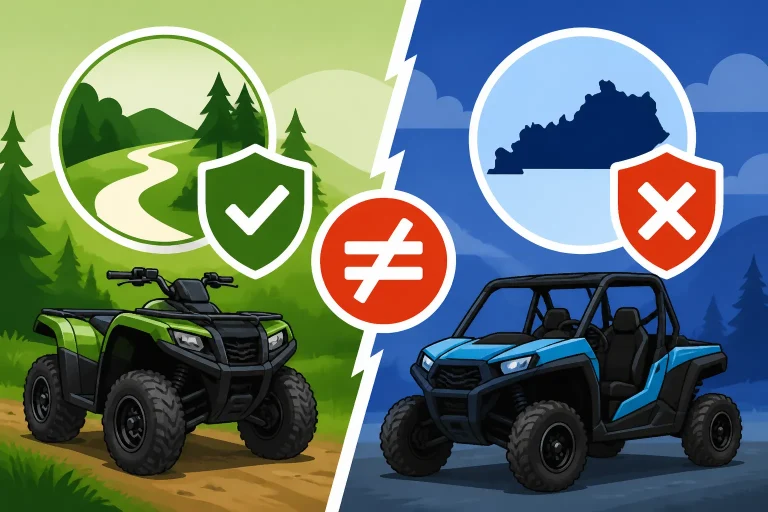
A 12-year-old’s status also depends on the vehicle type. An ATV is not the same as a side-by-side UTV: the seating, controls, restraint system, and intended use differ. A child who can safely operate one machine is not automatically ready to operate another. For a UTV, make a separate decision about whether the child is an appropriate operator and whether the model’s age recommendation allows it.
| Before the ride | What to check | Why it matters |
|---|---|---|
| Age suitability | The age recommendation for the exact machine | A child’s age does not override the machine’s stated recommendation |
| Adult supervision | Whether a responsible adult can supervise directly | A nearby adult can see the ride and respond if something goes wrong |
| Riding location | Whether the landowner, park, or public-land manager allows the ride | Access rules and age requirements vary by location |
| Equipment | Helmet, protective clothing, and required safety gear | A permitted ride can still be unsafe without proper protection |
| Permit or admission | Whether the riding area requires a pass or separate permit | Kentucky does not have one statewide trail permit that covers every place |
Adult supervision needs to be active
For a young rider, “supervision” should mean more than an adult being somewhere on the property or reachable by phone. The adult should be close enough to observe the child, understand the route and conditions, and intervene promptly. The exact legal standard can depend on the circumstances, so do not rely on a loose interpretation of the word “supervised.”
Before the engine starts, agree on where the child may ride, what signals mean stop, and what to do if the machine stalls or the rider becomes separated. Keep the first ride in a controlled area with good visibility and no traffic, steep drop-offs, deep water, or blind turns. An adult should remain focused on supervising rather than riding ahead beyond sight or dividing attention among several children.
Supervision also means setting limits that match the child’s ability. A 12-year-old who is new to riding should start slowly and on manageable terrain. Mud, loose rock, steep climbs, creek crossings, and narrow trail edges can turn a basic ride into a demanding one. A child’s confidence may grow faster than their judgment, so the adult should choose the route and pace.
A useful pre-ride routine is:
- Confirm that the child meets the machine’s age recommendation.
- Check the ATV or UTV for working brakes, throttle, tires, and controls.
- Fit the helmet and other protective gear before starting the engine.
- Explain the riding boundary, stop signal, and emergency plan.
- Demonstrate the route or practice area at a slow pace.
- Stay close enough to observe the child throughout the ride.
For a fuller explanation of what active oversight involves, see What Direct Parental Supervision Actually Means on a Trail and Kentucky Supervision Rules for Young Riders. The adult does not necessarily have to be the child’s parent for supervision to matter, but the responsible adult should know the rules, be capable of responding, and take charge of the riding plan.
Public trails, private land, and permits are separate questions
Permission to ride is not the same as permission to ride a particular place. A child may satisfy the age and supervision requirements but still be barred from a trail, park, or public riding area by that location’s rules. Before loading the machine, check the current rules for the specific property, including age limits, required equipment, trail closures, and any permit or admission requirements.
Private land is not a blanket exemption from safety or permission requirements. Get permission from the landowner or the person who controls the property, and clarify which routes are allowed. A field or farm lane may be a more appropriate practice area than a public trail, but the adult still needs to choose terrain suitable for the child and machine. For public land, follow the rules of the managing agency or park rather than assuming that an ATV allowed on one trail system is allowed on another.
Kentucky does not issue one statewide trail sticker that automatically covers every riding area. A park or public riding site may require its own permit, and a pass from one location should not be assumed to work elsewhere. The rider’s age and the adult’s supervision do not replace a site’s permit rules. Start with Do You Need a Permit for Kentucky Trails? and Why Kentucky Has No Statewide Trail Sticker, then check the particular riding area directly.
A 12-year-old passenger in a UTV also needs a separate check. Confirm that the vehicle is designed for the number of people riding, that the child can sit correctly and use the available restraint, and that the site permits the child as a passenger. Do not carry a passenger on an ATV unless the machine is designed for one and the relevant rules allow it. A passenger’s age does not make an unsuitable seat or unsafe setup acceptable.
Safety equipment deserves attention even when a park’s rules are not immediately clear. Check the riding site’s helmet requirements and any other protective-gear rules before departure. A correctly sized helmet should fit securely and stay in place; borrowed or oversized gear may not protect a child as intended. See Kentucky Helmet Rules at a Trail Park for more about checking site-specific helmet requirements.
Rentals and a practical go-or-no-go check
A rental company can set conditions that are stricter than the minimum rules for operating on a particular property. It may restrict who can drive, who may ride as a passenger, which machine a younger rider can use, and whether a parent or guardian must sign forms. Never assume that a child can operate a rented machine because the child is permitted to ride a similar ATV at home. Ask the rental business about age restrictions before booking and confirm that the machine and route suit the child. [Kentucky Rules for Riding a Rented Machine] is a useful starting point.
When you call a rental provider or riding area, ask direct questions:
- Can a 12-year-old operate this specific machine?
- Does the age recommendation on the machine allow a 12-year-old to ride?
- Must an adult ride alongside the child, or is supervision from a nearby staging area acceptable?
- Are there separate rules for passengers in a UTV?
- What helmet and protective gear are required?
- Does the permit or admission cover the child, the machine, or both?
- Are any trails or sections closed to younger riders?
A “yes” to one question does not answer the others. For example, a park may allow children but still require adult supervision, a particular permit, or specific gear. A rental company may also refuse to hand over the controls to a 12-year-old even where a family-owned machine could be operated under the applicable rules.
Use a simple go-or-no-go decision before each ride:
- Go only if the machine’s age recommendation fits the child, the child can control it safely, an adult can supervise directly, and the land or riding site allows the activity.
- Stop and check first if the label is missing, the site’s age rule is unclear, a permit is required, or the machine is unfamiliar.
- Do not ride if the machine is recommended for an older rider, the child cannot reliably operate the controls, supervision is not available, or the route is beyond the child’s ability.
Those checks apply whether the ride is a short practice session or a full day at a trail park. If the destination is a national forest or other managed public land, confirm that area’s rules as well; [Kentucky Rules for Riding a National Forest] can help identify the questions to verify.
The practical takeaway is straightforward: a 12-year-old’s ability to ride in Kentucky depends on more than age. Match the rider to the manufacturer’s age recommendation, provide close adult supervision, and confirm the rules for the exact machine and riding location. When any of those pieces is uncertain, wait until you have verified them rather than trying to sort it out at the trail gate.
Disclaimer
This article is for general informational purposes only and does not constitute professional advice. Laws, prices and regulations vary by location and change over time. Consult a qualified professional for guidance on your specific situation.