Do You Need a Permit for Kentucky Trails?
A trail permit can be easy to overlook when you are planning a Kentucky ride, especially if you assume one pass covers the whole state. It does not. Kentucky has no single statewide ATV trail sticker, and the pass you need depends on the land or trail system you plan to use. Here’s how to identify the right permit before you haul your machine.
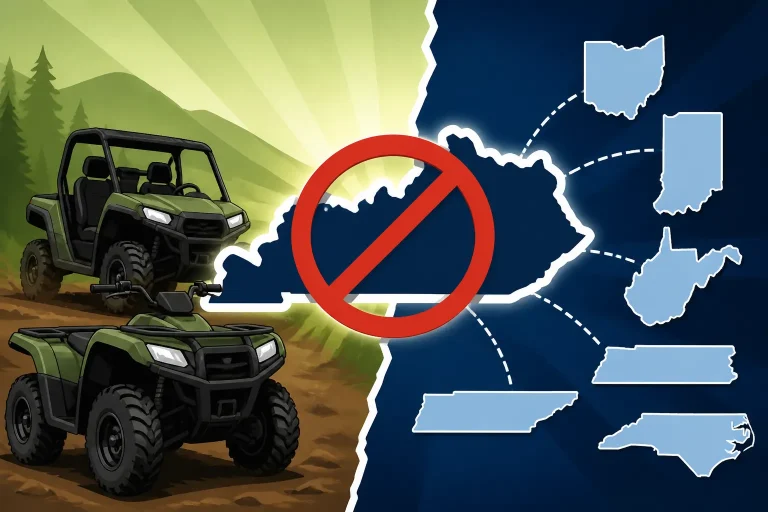
Kentucky does not have one permit for every trail
A permit is generally a land-access or trail-use requirement set by the place you ride. It is different from an ATV title, registration, or permission to operate on a road. Kentucky does not issue one statewide off-road permit that automatically grants access to every public riding area or private park.
That means a pass for one park may not be accepted somewhere else. A permit for a national forest trail system may also have different terms from a park pass. Each riding area can set its own rules about who needs a permit, which machines it covers, how long it lasts, and whether it must be displayed.
This is why the answer to “Do I need a permit?” is usually: check the rules for the exact place you intend to ride. The trail’s owner or operator is the authority on access. A permit from another park, another state, or a previous visit should not be assumed to count.
Why Kentucky Has No Statewide Trail Sticker explains the statewide distinction in more detail. For a broader overview of what different systems may require, see Kentucky Trail Permits Explained.
A permit also does not replace other requirements. You may still need to follow rules for machine type, age, supervision, helmets, noise, designated routes, and riding hours. If you plan to travel on a public road, that raises a separate set of legal questions; a trail pass does not make an ATV or UTV street legal. Check Are ATVs Street Legal in Kentucky? if road use is part of your plan.
What a trail permit usually covers
Depending on the property, a permit may grant access to a defined trail network for a limited period. It may be issued for a specific machine, a person, a group, or a particular type of visit. Some places may require a separate permit for each rider or passenger; others may structure access differently.
Read the permit conditions rather than relying on the word “permit” alone. Confirm:
- Which trails and areas it covers
- Whether it applies to an ATV, UTV, or both
- Whether the permit is tied to a rider, a machine, or a group
- When it expires and whether it is valid for multiple visits
- Whether passengers need their own authorization
- Whether it must be attached to the machine or carried by the rider
- Whether the area has separate camping, parking, or event requirements
A permit normally does not give permission to ride beyond the authorized boundary. Stay on signed or designated routes, and do not treat nearby roads, private property, or other trail networks as included unless the operator confirms they are.
How to find the right permit for your destination
Start with the name of the exact riding area, not just the nearest town or county. A region can contain several trail systems with different owners and rules. Search for the current permit instructions from the land manager or park operator, then verify that the information applies to your planned date and machine.
A useful process is:
- Identify the trail system. Confirm the official name and the entrance or staging area you plan to use. Nearby trails may be managed separately.
- Find the operator’s current rules. Use the official park, land-manager, or recreation-area information. If the details are unclear, contact the office or gatehouse before traveling.
- Check who needs a permit. Determine whether the requirement applies to every rider, each machine, passengers, or some combination.
- Confirm the permit’s coverage and validity. Check the dates, designated trails, machine eligibility, display instructions, and any conditions for repeat visits.
- Ask about closures and access limits. A valid pass does not necessarily mean every trail is open. Weather, maintenance, seasonal restrictions, or temporary closures can affect access.
- Carry proof as instructed. Keep the permit or confirmation available in the format the operator accepts, and follow any display requirements.
- Recheck before loading. Rules and operating conditions can change, so confirm the details shortly before the ride.
A phone call is worthwhile when you are bringing a wide UTV, riding with children, using a rental, or planning a multi-day visit. Those situations can involve additional rules that a general permit page may not spell out clearly.
| Where you plan to ride | What to verify | Important caution |
|---|---|---|
| A private off-road park | The operator’s permit, rider and machine coverage, operating dates, and access rules | A pass from another park may not be accepted |
| A national forest riding area | The applicable OHV pass, designated routes, vehicle eligibility, and current closures | A forest pass does not authorize riding on every forest road or trail |
| Land Between the Lakes | The current OHV permit and the rules for the specific riding area | Do not assume a different Kentucky park pass applies |
| A leased or privately managed trail system | Who controls riding access and what permit or permission is required | Nearby public land does not make a private trail open |
| A road or road crossing | Whether the route is legally open to your machine and what road rules apply | A trail permit is not road authorization |
The table is a starting point, not a substitute for the operator’s current instructions. If you are unsure whether two nearby areas share a permit, ask directly and get the answer before you ride.
Permits differ between parks, forests, and other riding areas
Kentucky riding destinations do not all operate under one permit system. The land manager, park operator, and type of trail can affect the permit process. Do not assume that a pass is transferable just because two areas are in the same state or close together.
Private parks
A private off-road park sets its own access conditions. It may issue permits for a day, a longer visit, or another defined period, and it may have separate rules for riders and passengers. Some parks handle access at an entrance or office, while others may provide different ways to obtain authorization. Check with the park about current availability, payment methods, machine requirements, and whether you need to buy in advance.
Also ask whether the permit covers the trails you intend to use. A park might have separate zones, operating hours, or restrictions for certain machines. A valid permit does not make a closed trail available, and it does not replace requirements such as wearing protective equipment or following posted directions.
National forest routes
National forest riding is not the same as unrestricted riding anywhere on public land. A permit or pass may apply to designated OHV routes, while other roads or trails may be closed to motorized use. Route designation matters: stay on routes where your machine is allowed and check for current restrictions before setting out.
If your destination is within the Daniel Boone National Forest, review Buying and Using the Daniel Boone Forest OHV Pass and confirm the route rules for the area you plan to visit. The pass and route authorization are related, but having a pass should not be read as permission to ride every road or trail in the forest. [Kentucky Rules for Riding a National Forest] offers more context on that distinction.
Land Between the Lakes
Land Between the Lakes has its own recreation rules and permit process for OHV use. Do not treat a permit from a private Kentucky park or national forest area as a substitute. Check the current requirements for the specific OHV area, including which machines are eligible, what the permit covers, and whether any seasonal or operating restrictions apply.
For details focused on that system, see How the Turkey Bay OHV Permit Works. Turkey Bay’s rules are specific to that riding area; they should not be applied to other parks without checking.
Leased land and other managed trails
Some trail networks operate on land where access is managed through a lease or other arrangement. The landowner and operator may have separate conditions for authorized riding. A trail’s proximity to a public road or other recreational area does not establish access rights.
Follow posted boundaries and ask the operator if the permit information does not clearly identify the property it covers. For general advice on checking access and conditions before a trip, see Kentucky Trail Closures to Check.
What to carry and what to confirm before the ride
Once you have identified the correct permit, make sure you can show that you are authorized to ride. Follow the operator’s instructions about whether the permit must be displayed on the machine, carried by the rider, or kept available as a receipt or confirmation. Do not assume a photograph or screenshot will be accepted unless the operator says it is.
Before leaving home, confirm the following:
- The permit is valid for your planned riding dates.
- It covers the correct park or trail system.
- It applies to your machine and the people riding or riding as passengers.
- The designated routes you plan to use are open.
- You know where the permit must be displayed or stored.
- You have checked rules for riding hours, speed, noise, and required equipment.
- Your machine meets any width, age, or other eligibility limits.
- You have a plan for checking updates if weather or trail conditions change.
For a rental, ask the rental company whether the permit is included, who is responsible for obtaining it, and whether passengers require separate authorization. Do not assume that a rental reservation automatically includes trail access. The rental provider may cover the machine while the trail operator has separate requirements for the people using it.
For a multi-stop trip, check each destination individually. If you plan to ride two parks during one weekend, contact both operators and ask whether separate permits are needed. Build the cost into your trip budget only after confirming the current amount with the provider; permit prices and terms can change.
Weather and closures deserve a last-minute check. Wet ground, maintenance, seasonal schedules, or other operating decisions can close some routes even when the area is otherwise open. Check the operator’s current notices before loading and again if conditions shift during your trip.
The simplest rule is to treat each riding area as its own system. Find the exact destination, verify its current permit requirements, and confirm where that permit is valid. That prevents a common and frustrating mistake: arriving with a perfectly valid pass that does not cover the trails you planned to ride.
Disclaimer
This article is for general informational purposes only and does not constitute professional advice. Laws, prices and regulations vary by location and change over time. Consult a qualified professional for guidance on your specific situation.