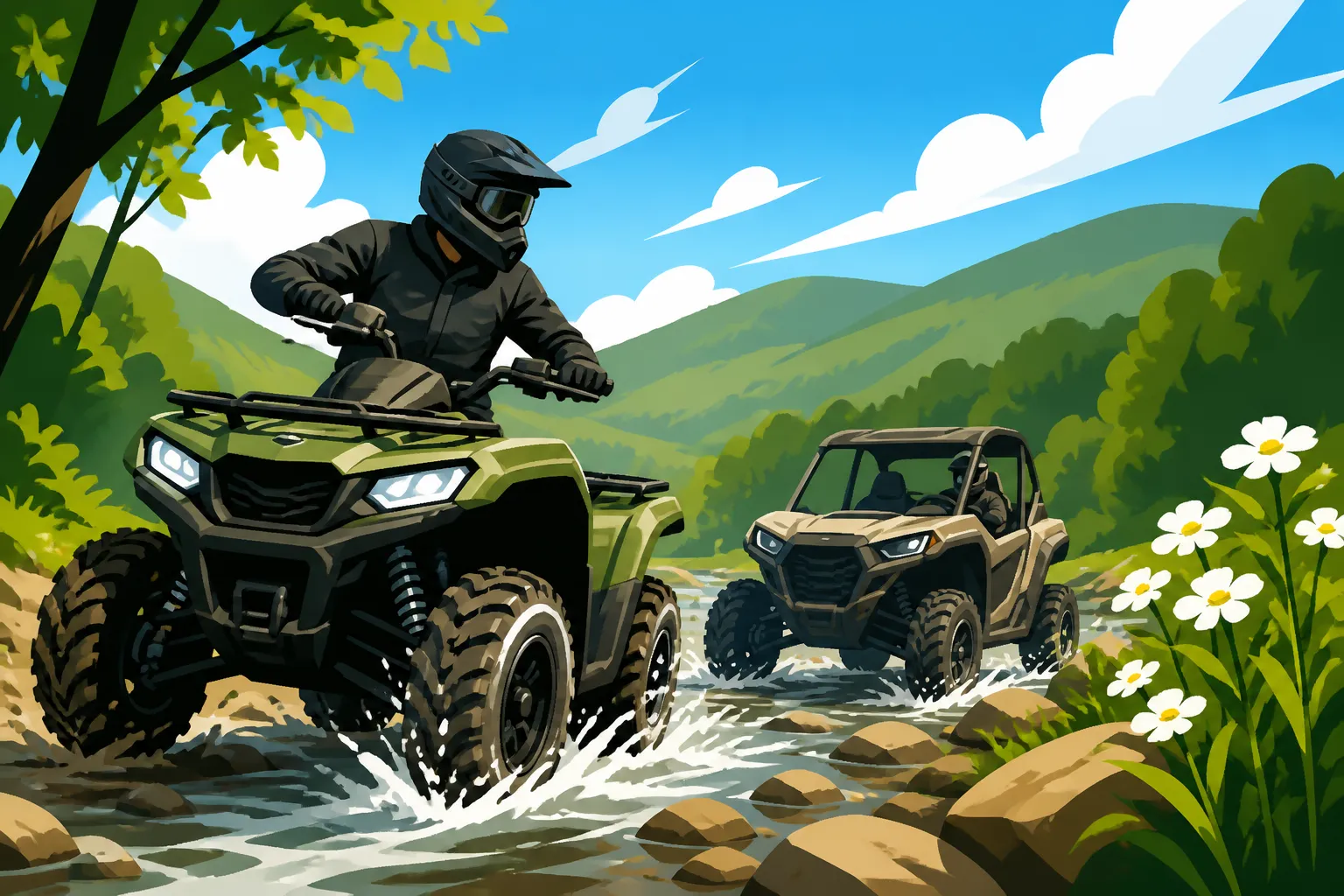
Riding White Sulphur in June
A June ride at White Sulphur can mean comfortable trail time, green mountain scenery, and long daylight—but warm weather, recent rain, and changing trail conditions can complicate the day. This guide helps you plan for the season, choose a sensible pace, prepare your ATV or UTV, and avoid arriving at the trailhead without the information or gear you need.
What June riding at White Sulphur is like
Expect summer conditions, not guaranteed dry trails
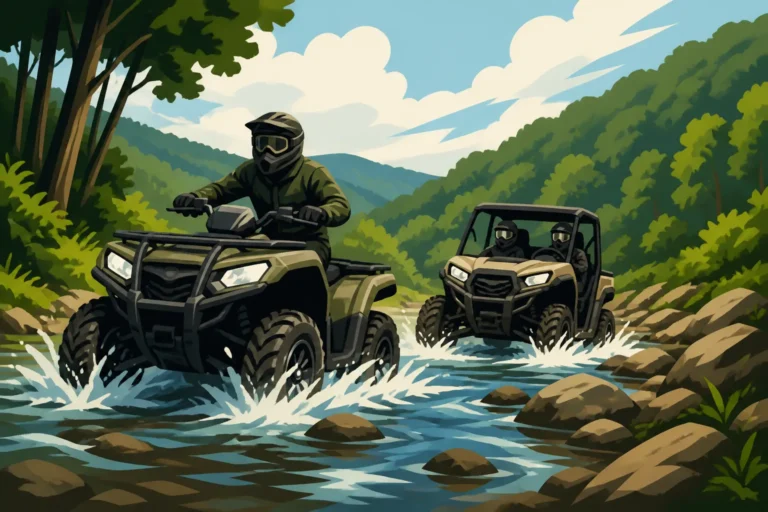
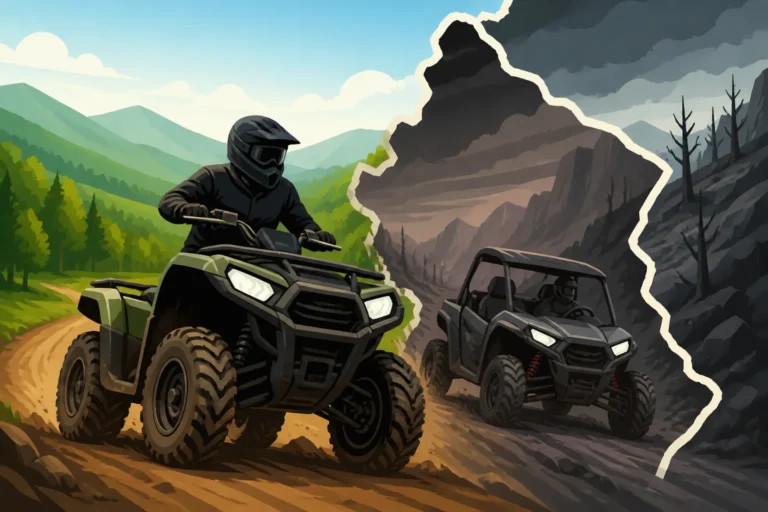
June is a useful month to ride because the season is underway and daylight gives you room to plan a substantial outing. But a sunny forecast does not tell the whole story. A storm the night before can leave slick sections, muddy low spots, or water moving through a crossing even when the sky is clear by morning. In a shaded hollow, the ground may stay wet longer than it does on an exposed ridge.
The most practical approach is to plan for a mix of surfaces. Bring clothing that can handle mud and damp brush, and keep a dry layer in a sealed bag. If the trail is dusty instead, eye protection and a face covering can make the ride more comfortable. Conditions can shift over the course of a day, especially if showers pass through.
Before you haul your machine, check for notices from the land manager or trail operator. Ask whether routes are open, whether recent rain has changed access, and whether there are any restrictions or temporary closures. A seasonal opening does not guarantee that every route is available every day. For background on the operating season, see [White Sulphur's Season From May in Kentucky] and [Why White Sulphur Shuts December First].
Use the daylight as a planning tool
Longer June days can make a ride feel less rushed, but they are not a reason to start without a return plan. Decide on a turnaround time before you leave the staging area. A slow climb, a stuck machine, a puncture, or a break to let a hot engine cool can stretch a route much longer than expected.
Build some flexibility into the day. If your group includes newer riders, children, or passengers, leave extra time between stops and avoid planning a route that only works if everything goes smoothly. A route that looks short on a map can be tiring when it includes steep grades, rough ground, frequent regrouping, or a passenger who needs breaks.
| June factor | What it can mean on the trail | A useful response |
|---|---|---|
| Recent rain | Slick ground, muddy low spots, or changing water levels | Check conditions before travel and avoid pushing into uncertain crossings |
| Warm weather | More fatigue and a greater need for water and rest | Carry water where riders can reach it and schedule breaks |
| Longer daylight | More time available, but also temptation to ride too far | Set a turnaround time and keep enough daylight for the return |
| Dusty stretches | Reduced comfort and visibility between machines | Leave space between riders and use suitable eye protection |
| Changing route access | A planned trail may be closed or restricted | Confirm current notices and carry a map for alternatives |
Plan your route before unloading
Check trail status and maps together
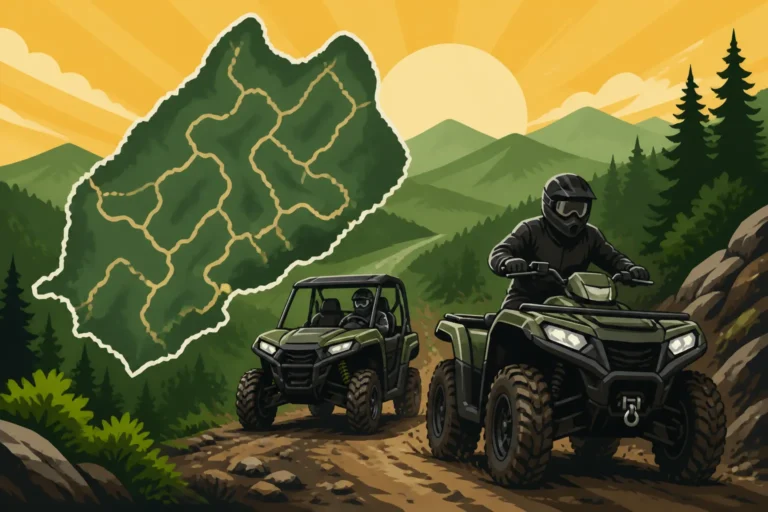
Use current trail information to confirm that the area is open and that your intended routes are available. A map is most useful when you have already checked whether the route is permitted and passable; it should not be treated as proof that a trail is open. Pay attention to posted signs and follow any temporary directions at the trailhead.
A phone map can help you understand where your group is and how routes connect, but cell service may be unreliable in wooded or hilly terrain. Download maps for offline use before leaving home and carry a backup plan that does not depend on a live signal. onX Offroad can be useful for reviewing routes and saving map information in advance, but compare what you see in the app with official maps and signs on site.
For a broader pre-trip checklist, use [Kentucky Trail Conditions Before You Ride], [Kentucky Trail Closures to Check First], and [Kentucky Trail Maps Worth Carrying]. These are especially helpful if your group is traveling a long distance and a closed route would change the day’s plan.
Choose a route that fits the least experienced rider
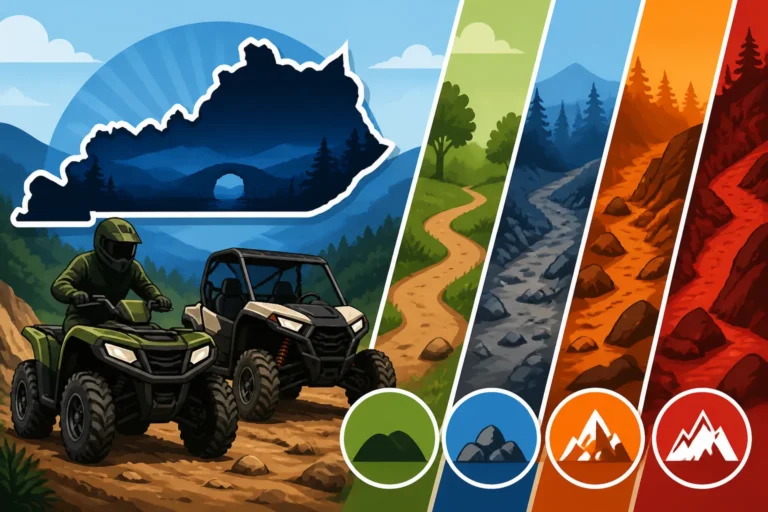
It is tempting to choose a route based on the most experienced person in the group. That can leave newer riders trying to keep up on terrain that feels uncomfortable or unsafe. Instead, agree on a route the least experienced rider can manage, then make the outing more challenging only if everyone is comfortable and the trail conditions support it.
Before starting, talk through how the group will handle a narrow section, a steep hill, or a rider who needs to stop. Keep enough space between machines for visibility and room to react. On a narrow bench or tight trail, avoid bunching up around a blind turn. If someone stops, the riders behind should stop where they can do so safely rather than crowding the machine ahead.
Use [Kentucky Trail Etiquette on Narrow Benches] as a reminder to keep the group predictable and considerate. onX Offroad can help you review the shape of a route before the ride, but decisions on the ground should still reflect posted rules, visibility, surface conditions, and the abilities of the riders with you.
Prepare the machine and the people riding it
Do a simple pre-ride inspection
A quick inspection before loading and another before leaving the staging area can catch problems while they are still manageable. Check tires for visible damage and confirm that they are properly inflated for the machine and the terrain. Look for loose fasteners, damaged controls, fluid leaks, and anything that could interfere with steering or braking. Make sure lights work if your ride could run later than planned.
Carry basic tools and equipment appropriate to your machine, along with a first-aid kit and a way to contact help. A spare belt or tire-repair gear may make sense for some machines, depending on the model and the trip. Keep essentials secured so they cannot shift, fall off, or interfere with the rider. A phone should be protected from moisture and secured where it can be reached safely when stopped.
For a longer route, consider fuel range before you start. Do not assume that a convenient fuel stop will be available near the trail. If your route could take more time than expected, plan conservatively and avoid setting out with just enough fuel for the ideal version of the trip.
Dress for heat, mud, and changing weather
Warm June weather can make heavy gear feel uncomfortable, but protective equipment still matters. Choose a helmet and other protective gear suited to the machine, the conditions, and the rules that apply at the riding area. Eye protection is important when dust, mud, branches, or debris could reach your face. Wear footwear and clothing that protect you without making it harder to control the machine.
Bring more water than you expect to need, especially if your group is riding in the heat or climbing for extended periods. Take breaks in a safe place rather than waiting until someone feels unwell. A wet towel, light rain layer, and dry change of clothes can help after a shower or a muddy section. Keep food and medication, if needed, accessible to the person who needs them.
Before leaving, make sure everyone understands the plan: who is leading, who is following, where the group will stop, and what to do if machines become separated. Newer riders may be reluctant to say they are tired or uncomfortable. Make it clear that asking for a break is normal and that no one needs to keep pace at the expense of control.
Handle rain, closures, and unexpected delays calmly
Treat heavy rain as a reason to reassess
Rain changes more than how muddy a trail looks. It can reduce traction, hide holes, increase stopping distance, and make water crossings harder to judge. A familiar route can feel different after a storm, especially where water runs off higher ground into a hollow. If you cannot see the bottom or assess the current safely, do not ride into it simply because another group has gone through.
If rain begins while you are out, stop somewhere safe and decide whether continuing makes sense. Avoid riding onto closed routes or around a barrier; a closure may protect riders, the trail surface, or both. If conditions deteriorate, shorten the ride and return by a known route rather than improvising through unfamiliar ground. More detail on this kind of decision-making is available in [Kentucky Riding After Heavy Rain].
Keep a backup plan for a changed riding day
A closure, a mechanical issue, or an unexpected delay does not have to turn a trip into a stressful scramble. Before you leave home, identify a conservative alternative route and know where your group can regroup. Save map information offline, and make sure someone outside the riding group knows where you plan to go and when you expect to check in. onX Offroad may help you keep a planned route available without relying on cell service, but it is still wise to carry an additional way to orient yourself.
If a machine breaks down, move the group to a safe location and assess the problem before anyone attempts a recovery. Do not leave a rider alone on a remote section without a clear plan. If you need outside help, provide the most specific location you can, using trail markers or recognizable features where available.
Be willing to change the plan. A shorter ride in good control is better than pressing on because the group drove a long way to get there. Conditions and access can vary, so check current information before departure and follow the posted instructions when you arrive. For details about seasonal operation and winter access, see [Hiking Where You Rode in Summer].
Disclaimer
This article is for general informational purposes only and does not constitute professional advice. Laws, prices and regulations vary by location and change over time. Consult a qualified professional for guidance on your specific situation.