Kentucky Multi-Day Trail Rides
A Kentucky multi-day ATV ride can mean very different things: several days based at one trail park, a weekend split between riding areas, or a longer trip that includes camping and mountain-town stops. The hard part is coordinating trail access, lodging, fuel, weather, and machine transport. This guide helps you build a practical itinerary without assuming every park uses the same rules or permits.
Choose a ride area that fits your trip
Stay at one park for a deeper ride
For a first multi-day trip, basing yourself at one riding area is usually the least stressful option. You avoid repeatedly loading machines, relocating camp, and learning a new trail system every morning. That matters in Eastern Kentucky, where mountain roads can make a short-looking drive take longer than expected.
Black Mountain Off-Road Adventure Area near Evarts and Harlan is one option for a trip focused on coal-country riding. Leatherwood Off-Road Park, near the Perry and Letcher County area, is another possibility for riders who want a multi-day base. Each place has its own trail network, access arrangements, and operating rules, so read [Kentucky Trail Parks on Leased Coal Land](Kentucky Trail Parks on Leased Coal Land) and check the park’s own information before choosing your dates.
A single-park itinerary can still feel varied. Plan one day around easier or familiar routes while you get oriented, then choose longer or more technical rides once you understand the terrain and your group’s pace. On Black Mountain, for example, a route that climbs away from the trailhead may take longer than the map suggests because of steep grades, stops, or changing conditions. Give yourself enough daylight to return without turning the last stretch into a race.
Compare parks before building a multi-stop route
A trip that changes parks can be rewarding, but it is not automatically a better one. Turkey Bay OHV Area in western Kentucky is part of a very different landscape and trip-planning context from the mountain parks in the east. Rush Off-Road is another Eastern Kentucky option to consider. Before combining areas, check the driving time between them, access and permit rules, available camping or lodging, and whether your group is comfortable spending part of the trip on the road instead of on the trail.
Permits are often specific to a place rather than interchangeable across the state. A pass or permit for one area should not be assumed to cover another. Review [Kentucky Trail Permits Explained](Kentucky Trail Permits Explained) and [Why One Park's Permit Does Not Travel](Why One Park's Permit Does Not Travel), then confirm the requirements directly with each riding area. Also check whether any passenger needs a separate permit and whether a rental package includes park access.
| Trip style | What works well | Main planning challenge |
|---|---|---|
| One park for several days | Less packing and more time learning the trails | You need enough route variety for the whole group |
| Two nearby riding areas | Adds variety while limiting travel between bases | Separate access rules and permits may apply |
| Eastern and western Kentucky | Creates a broader state trip | Long transfer drives can take time away from riding |
| Park ride with nearby town lodging | Useful for riders who prefer a room to camping | Confirm machine parking, trailer space, and access logistics |
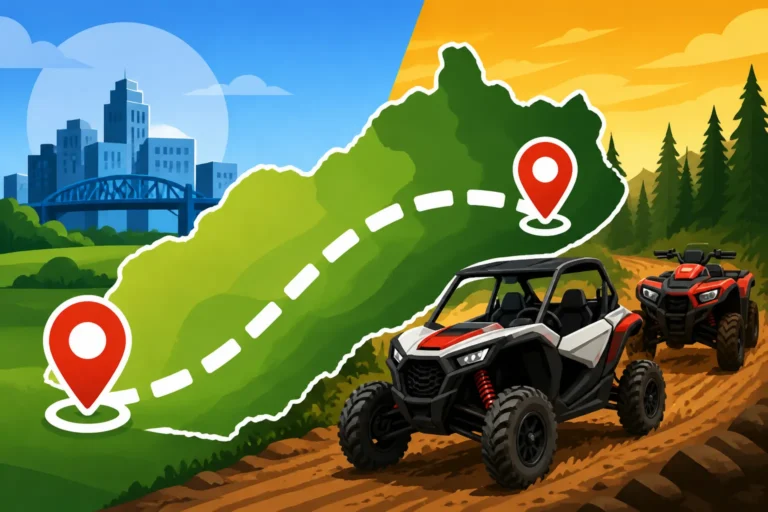
Use the park’s location and the group’s priorities to decide. If the main goal is long days on trails, a stable base is often best. If everyone wants to see more of Kentucky, include a transfer day rather than expecting to ride a full day at one park, drive across the state, and start fresh at another the next morning.
Build a realistic day-by-day itinerary
Match route length to the slowest rider
A multi-day plan should reflect how your group actually rides, not how far the most experienced rider thinks the machines can travel. Stops for photos, lunch, minor repairs, trail intersections, and regrouping all add time. A route that looks manageable for two confident riders may become an exhausting day with children, newer riders, a wide side-by-side, or mixed machine speeds.
Start with a modest first day. Use it to learn the trail markings, check how everyone handles climbs and descents, and get a sense of how quickly the group moves. Then plan later days with that experience in mind. If one rider is new, consider [Kentucky Trails for Beginners](Kentucky Trails for Beginners) and [Kentucky Trail Difficulty Ratings](Kentucky Trail Difficulty Ratings) as useful planning topics, while still checking the specific park’s current trail descriptions and signs.
Build in a turnaround point rather than insisting on completing a loop at any cost. If rain arrives, a machine develops a problem, or the group is tiring sooner than expected, a flexible route lets you head back before conditions become uncomfortable. A downloaded map can help with orientation when phone coverage is weak; onX Offroad can be one tool for organizing map information before the ride, but do not treat a phone app as a substitute for park rules, posted signs, or an offline backup.
Leave room for weather and recovery
Kentucky trail conditions can change quickly after rain, especially on steep, exposed, or heavily used routes. Mud may slow a group considerably, and water can affect creek crossings and low-lying sections. Before each riding day, check for park notices and ask staff or local operators about recent conditions. For more background, see [Kentucky Riding After Heavy Rain](Kentucky Riding After Heavy Rain) and [Kentucky Trail Closures to Check First](Kentucky Trail Closures to Check First).
Do not fill every day from morning to night. A multi-day ride becomes less enjoyable when a late return leaves no time to clean machines, refuel, eat, or deal with a small repair. A practical plan might include a shorter first ride, two fuller days, and a final day with an early return or a route close to the base. That leaves room for weather delays and helps the group finish the trip in good shape.
Treat recovery and rest as part of the itinerary, not as evidence that the plan failed. A rest morning can give riders time to inspect tires, tighten or replace loose equipment, and recover from a demanding climb. If your group is staying several days, also identify who to contact if a machine is disabled and understand the park’s procedures for getting assistance. Do not assume every trail is accessible to a recovery vehicle.
Sort out permits, maps, transport, and supplies
Confirm access rules before you haul
Call or check the official information for each riding area before loading the trailer. Confirm operating days, entry procedures, permitted machine types, trail access, parking, and any seasonal restrictions. Conditions and operations can change, so a trip plan based on an old forum post or a friend’s last visit may leave you at a closed gate or on a route that is not appropriate for your machine.
Keep the distinction between state rules and park rules clear. Kentucky does not have one universal trail permit that automatically grants access to every riding area. A park may have its own permit process, visitor requirements, or rules for passengers. Read [Why a Kentucky Park Permit Is Not a State Permit](Why a Kentucky Park Permit Is Not a State Permit) and verify each stop directly. If you are riding a national forest or another public area, check that area’s own access rules too.
Maps are useful, but trail maps are not permission to ride wherever a line appears. Stay on authorized routes, follow signs, and do not use a road, utility corridor, or private track simply because it looks like a convenient connector. Download or save information before heading into areas with patchy reception. onX Offroad may help you prepare a route and keep map details available on your device, but check the park’s rules and posted trail information as your final authority.
Prepare machines and people for several days out
Inspect each ATV or UTV before the trip and repeat a quick check each morning. Look at tires, wheels, brakes, lights, controls, fuel, and visible leaks. Carry the tools and basic supplies that match your machine and your repair skills. A spare belt may matter for some side-by-sides, while tire repair equipment, a compact air source, and basic hand tools are helpful for many groups. Bring only what you can secure safely and use appropriately.
Plan fuel conservatively. Mountain routes, low gears, mud, steep climbs, and extra weight can affect consumption. Do not assume a fuel stop will be beside the trail or open when your group arrives. Identify likely fuel options before the trip, fill up before a long ride, and make a turnaround plan that leaves a sensible reserve. [Fuel Between Eastern Kentucky Towns](Fuel Between Eastern Kentucky Towns) and [Planning Fuel Across a Mountain Loop](Planning Fuel Across a Mountain Loop) are useful topics to consider when planning a route in the eastern part of the state.
Prepare riders, too. Pack water, food, weather-appropriate layers, gloves, eye protection, and a first-aid kit. Agree on a lead rider, a sweep rider, and a regrouping plan before leaving the staging area. If the group separates, riders should know where to stop and how to reconnect rather than continuing farther into unfamiliar terrain. For longer routes, tell someone at camp or lodging where you expect to ride and when you plan to return.
Make lodging and transport part of the route plan
Choose a base that supports riding days
A convenient place to sleep is not necessarily a convenient riding base. Ask whether the campground, cabin, or lodging option has room for your trailer, a safe place to park machines, and a practical way to reach the trailhead. If you are camping, check the site’s rules about machine use, quiet hours, fuel storage, and sanitation. If you are staying in town, confirm that the property allows trailers and has suitable parking before you arrive with several machines.
Near Harlan and Evarts, a base close to a Black Mountain access point can reduce morning driving. Around Leatherwood, look into the distance between lodging and the park’s access area rather than relying only on a broad regional label. For Turkey Bay, confirm the relationship between your camping choice, the riding area, and any gate or access procedures. The details can affect whether you can leave early, return for lunch, or need to pack food and water for the whole day.
The right base depends on your group’s habits. Families may value a place to rest and prepare meals, while a larger group may prioritize trailer parking and room to handle minor maintenance. If you are renting, ask whether the rental location, trail permit, fuel arrangements, and drop-off process fit your itinerary. Do not assume a machine rented near one town can be taken into a particular park without the operator’s approval.
Plan the transfer day as its own day
When your itinerary includes more than one park, give the drive a place in the schedule. Allow time to load, secure machines, stop for fuel, and check in at the next destination. Mountain roads, narrow access routes, and a long trailer can add friction even when the map shows a straightforward drive. If the transfer is substantial, plan a short ride or no ride that day instead of expecting the group to arrive, unload, and complete a demanding route.
Use a simple trip checklist before departure:
- Confirm access, operating information, and permits with every park.
- Check weather and trail notices before loading.
- Verify trailer tires, lights, tie-downs, and the tow vehicle.
- Save maps and contact details where you can access them offline.
- Set a fuel plan and a daily return time.
- Share the itinerary with someone who is not on the ride.
- Keep a flexible route option for fatigue, weather, or mechanical trouble.
If you are combining areas, revisit the plan a day or two before each move. A trail closure or weather change may make a different riding day more sensible. onX Offroad can help keep route notes and map planning in one place, but confirm access with the destination itself and follow signs when you arrive.
A good Kentucky multi-day ride is not the itinerary with the most miles packed into it. It is the one that gives your group enough time to ride, eat, rest, adapt to conditions, and get back safely. Pick a base that suits your experience, verify each area’s rules, and leave breathing room in the schedule.
Disclaimer
This article is for general informational purposes only and does not constitute professional advice. Laws, prices and regulations vary by location and change over time. Consult a qualified professional for guidance on your specific situation.