Kentucky ATV Title for a Machine Bought in West Virginia
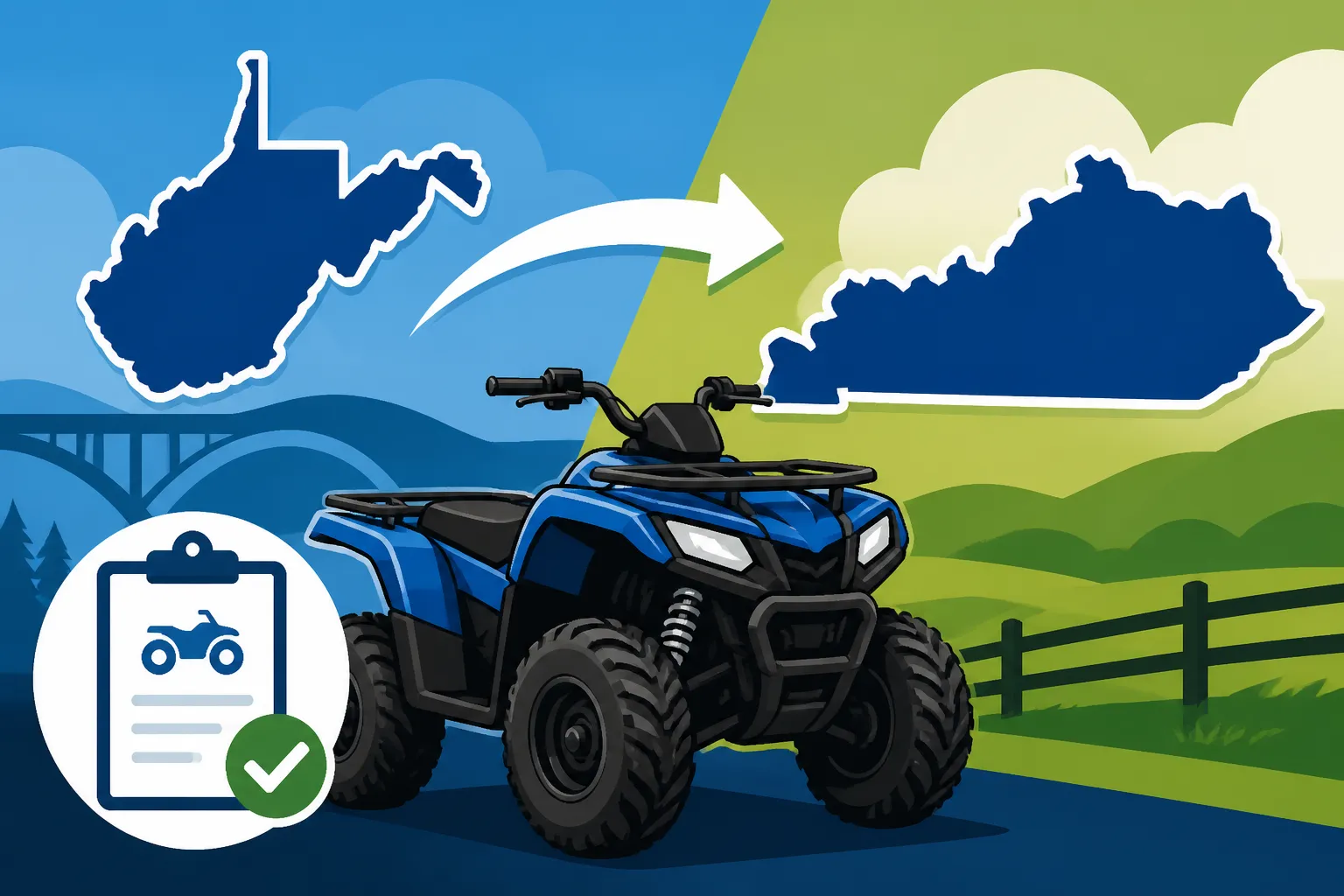
It can be incredibly frustrating to find the perfect ATV just across the border in West Virginia, only to realize that their titling practices might be completely different from what Kentucky requires. You've got the machine, the cash has changed hands, and now you're wondering how on earth you get that West Virginia-sourced quad officially recognized here in the Bluegrass State. This guide is here to walk you through the often-confusing process of obtaining a Kentucky ATV title for a machine purchased in West Virginia, helping you gather the right documents and understand what your local county clerk will be looking for.
Understanding West Virginia's ATV Titling Culture
Let's be honest, Kentucky has its own quirks when it comes to ATV titles, and West Virginia has theirs. Historically, West Virginia hasn't always required titles for all ATVs, especially older models or those used strictly off-road. This can create a significant headache for a Kentucky buyer who's used to the idea that every vehicle, even an ATV, should come with a paper title in hand. You might encounter a West Virginia seller who genuinely doesn't have a title for their machine, and that's not necessarily a red flag of anything nefarious; it's often just a reflection of their state's past regulations.
Imagine you're at a country auction in Mingo County, West Virginia, and you snag a fantastic deal on a well-maintained quad. The seller hands you a simple bill of sale, perhaps even handwritten, and smiles. You drive back across the border, excited about your new toy, only to later learn that Kentucky wants more than just a handwritten note. This is a common scenario, and it's why understanding the nuances between the states is so important. Don't beat yourself up for not knowing; it's a difference that catches many riders off guard.
When you're looking at a machine in West Virginia, always ask about the title situation upfront. If the seller has a West Virginia title, that's generally the easiest path forward, as it proves a clear chain of ownership. However, if they don't, you need to be prepared for what Kentucky considers acceptable proof of ownership. This is where a robust bill of sale becomes your best friend and can often bridge the gap between two different state systems.
Kentucky's Stance on Out-of-State ATV Purchases
Kentucky's primary goal when you're trying to title an ATV, regardless of where it came from, is to establish clear and legal ownership. Since July 1, 2010, Kentucky has required titles for all ATVs and UTVs (that fit the specific definition of an ATV). So, if you're buying a machine that was originally purchased new after that date, it absolutely should have a title, even if it's an out-of-state one. The trick comes with older machines, or those from states like West Virginia that might not have issued titles at all. For more on Kentucky's general rules, check out [Titling an ATV in Kentucky].
The Kentucky Transportation Cabinet (KTC) and, by extension, your local county clerk's office, understands that not all states operate under the same titling laws. They have procedures in place for machines coming from "non-titling states" or situations where a title was never issued. The crucial part for you, as the buyer, is to provide sufficient documentation to satisfy Kentucky's requirements. This often means you'll need a combination of documents, especially if a traditional title isn't available. Remember, the county clerk is there to help, but they also have strict rules to follow.
One thing to always keep in mind is that Kentucky considers an ATV a specific type of off-road vehicle. It's usually a machine designed for off-highway use, has four low-pressure tires, handlebars for steering, and a seat designed to be straddled by the operator. If your "ATV" is actually a side-by-side (UTV), the titling process is essentially the same, but it's always good to confirm your machine fits Kentucky's definition. You can learn more about what Kentucky considers an ATV by looking at [What Kentucky Counts as an ATV].
Essential Paperwork for a West Virginia ATV in Kentucky
Bringing your West Virginia-bought ATV to Kentucky for titling means you need to be meticulous with your paperwork. This is often where people run into delays or rejections at the county clerk's office. The key is to gather everything you might need before you even set foot in the door.
The All-Important Bill of Sale
If your West Virginia seller doesn't have a traditional title, a comprehensive bill of sale becomes paramount. This isn't just a scribble on a napkin; it needs to be a detailed document that clearly establishes the transfer of ownership from the seller to you. Think of it as your primary proof of purchase. Services like LawDepot offer templates for bills of sale that can ensure you're including all the necessary information. A good bill of sale should include:
- The full legal names and addresses of both the buyer and the seller.
- A clear description of the ATV, including make, model, year, and most importantly, the Vehicle Identification Number (VIN).
- The purchase price and date of sale.
- A statement that the seller is the legal owner and has the right to sell the machine, and that it is free of liens (if applicable).
- Signatures of both the buyer and seller.
- Ideally, notarization, though not always legally required by Kentucky for ATVs, it can certainly add weight and credibility to the document, especially when dealing with an out-of-state purchase lacking a title.
Kentucky even has its own form, TC 96-182, the Affidavit of Kentucky Ownership, which can be useful in certain situations, particularly if the chain of ownership is murky or you're trying to title an older machine. But for a straightforward purchase, a strong bill of sale is your first line of defense. For more details on this form, you can refer to [Kentucky Form TC 96-182 Explained].
The Vehicle Identification Number (VIN)
Every ATV and UTV should have a 17-character VIN. This number is like the machine's fingerprint, and it's absolutely critical for titling in Kentucky. The county clerk's office will need to verify this VIN, sometimes even requiring a physical inspection or a pencil tracing to ensure it matches the paperwork and hasn't been tampered with. Make sure the VIN on your bill of sale (and any other document) exactly matches the VIN stamped on the ATV's frame. If the VIN is missing, altered, or shorter than 17 characters (which can happen with very old machines or imports), you might face significant hurdles. This is a crucial step in [Checking a VIN Before a Kentucky Purchase].
| Document Type | Required for Kentucky Title (West Virginia Purchase) | Purpose |
|---|---|---|
| West Virginia Title | Yes (if issued by WV) | Primary proof of ownership. If the WV seller has one, ensure it's properly signed over to you. |
| Bill of Sale | Absolutely Essential (especially if no WV title) | Establishes transfer of ownership. Must include VIN, buyer/seller info, purchase price, and date. Consider using a template from a service like LawDepot. |
| Kentucky Form TC 96-182 | Potentially (if ownership chain is unclear or no title exists) | Affidavit of Kentucky Ownership. Can sometimes be used in conjunction with a bill of sale to clarify ownership history, especially for older machines or those from non-titling states. |
| Photo ID | Yes | To prove your identity at the county clerk's office. |
| Proof of Residency | Yes (if not on ID) | Utility bill, bank statement, etc., if your ID doesn't show your current Kentucky address. |
| VIN Verification | Yes | County clerk or law enforcement may need to physically inspect and verify the 17-character VIN. This confirms the machine's identity and helps prevent fraud. Learn more about [Kentucky's Seventeen-Character VIN Rule]. |
| Odometer Disclosure | No (typically not required for ATVs) | Generally only for vehicles with odometers. ATVs usually do not require this. |
| Payment for Fees | Yes | Title fee, sales tax (if applicable), and any other associated processing fees. Kentucky sales tax is usually 6% of the purchase price or the NADA value, whichever is higher. See [Kentucky ATV Sales Tax at Titling] for more info. |
Navigating the Kentucky County Clerk's Office
Once you've got all your ducks in a row with the paperwork, your next stop is your local Kentucky County Clerk's office. This is where the magic (or sometimes the frustration) happens. It's always a good idea to call ahead to your specific county clerk's office to confirm their hours and any unique requirements they might have, as practices can vary slightly from one county to another. You can find more general information about this process in [Titling at a Kentucky County Clerk].
When you arrive, be prepared with all the documents listed above, especially your bill of sale, any signed-over West Virginia title (if applicable), and your photo ID. The clerk will review your paperwork to ensure it meets Kentucky's standards. If you're coming from a non-titling state, or the seller didn't have a title, they will scrutinize your bill of sale very carefully as proof of ownership. They want to be sure you're the rightful owner and that the machine isn't stolen. This is why a professional-looking bill of sale, perhaps generated using a platform like LawDepot, can make a real difference.
Beyond just ownership, the clerk will collect Kentucky sales tax, which is typically 6% of the purchase price or the NADA value, whichever is higher. This tax is due at the time of titling. You'll also pay a small title fee. Don't forget, Kentucky has a [Kentucky's Fifteen-Day Titling Deadline] from the date of purchase to get your ATV titled. Missing this deadline can sometimes result in late fees, though these are less common for ATVs than for road-going vehicles.
Common Pitfalls and How to Avoid Them
- Incomplete Bill of Sale: This is probably the most frequent reason for rejection. Make sure all fields are filled out, signatures are present, and the VIN is accurate.
- Missing VIN: If the ATV is so old or damaged that the VIN is unreadable or missing, you might have a very difficult time getting it titled. The clerk needs that 17-character VIN for the system.
- Unclear Chain of Ownership: If the West Virginia seller wasn't the person listed on the last title (if one existed), or if there are gaps in the ownership history, the clerk may require additional documentation or affidavits. [Proving Kentucky ATV Ownership] can be a complex endeavor if you don't have a clear path from the manufacturer to you.
- Assuming West Virginia Rules Apply: Remember, you're titling in Kentucky. While the origin matters for paperwork, the destination determines the rules. Don't argue West Virginia law with your Kentucky county clerk; politely provide what they ask for.
- Not having a physical VIN inspection: Some county clerks might require a law enforcement officer or even the clerk themselves to physically inspect the VIN on the machine. This is less common for ATVs than cars but can happen, especially with out-of-state purchases. Prepare for this possibility by bringing the ATV to the clerk's office if they offer that service, or be ready to have an officer come to you.
Once all the paperwork is submitted, fees are paid, and everything is approved, your Kentucky ATV title will typically be mailed to you within a few weeks. Until then, the receipt from the county clerk's office serves as your temporary proof of application. Enjoy your new ride, knowing you've navigated the sometimes-tricky waters of cross-border ATV titling!
Disclaimer
This article is for general informational purposes only and does not constitute professional advice. Laws, prices and regulations vary by location and change over time. Consult a qualified professional for guidance on your specific situation.