Campgrounds Beside a Kentucky Trailhead
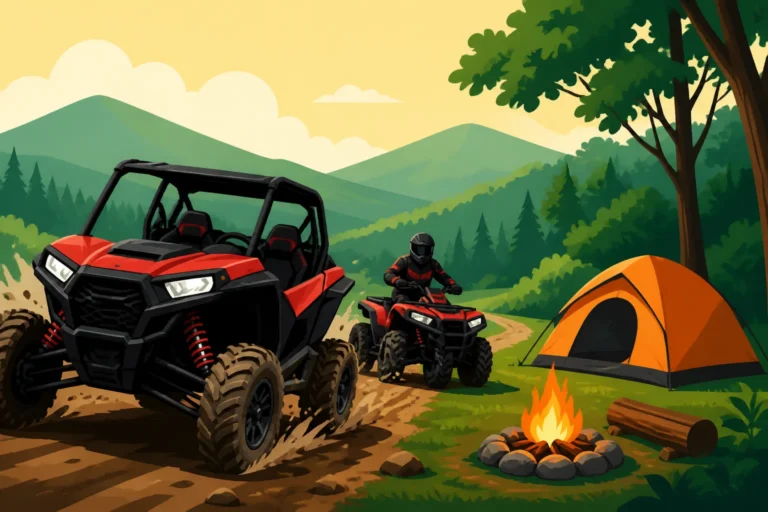
Finding a campground beside a Kentucky ATV trailhead can save you a long tow, a rushed morning, and the headache of figuring out where to park a trailer after dark. The catch is that “near the trails” does not always mean you can ride straight from your campsite to the trail system. This guide explains what to check before you book.
What “Beside the Trailhead” Really Means
On-site, nearby, and ride-in access are different
A campground may sit at a trail entrance, within a short drive of one, or simply in the same general area. Those can all be convenient, but they are not interchangeable. If you stay near Putney in Harlan County, for example, the campground’s relationship to the Black Mountain trail access is an important part of planning. The Harlan County Campground at the Putney Trailhead is a useful starting point when comparing places to stay around that trailhead.
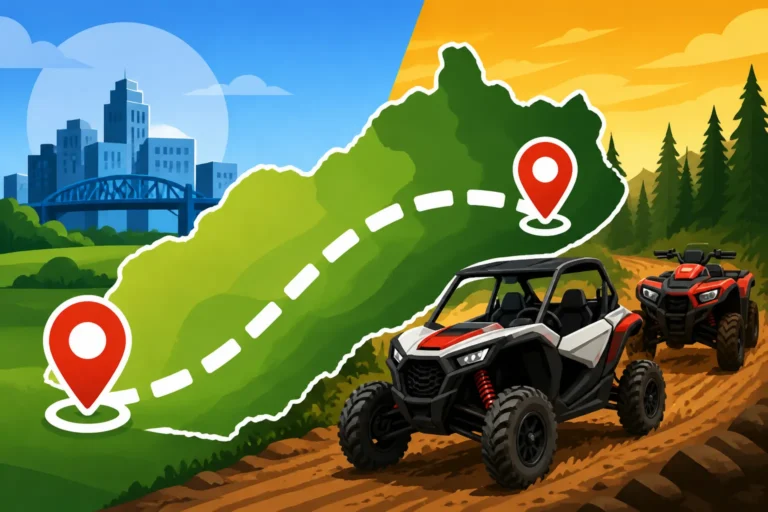
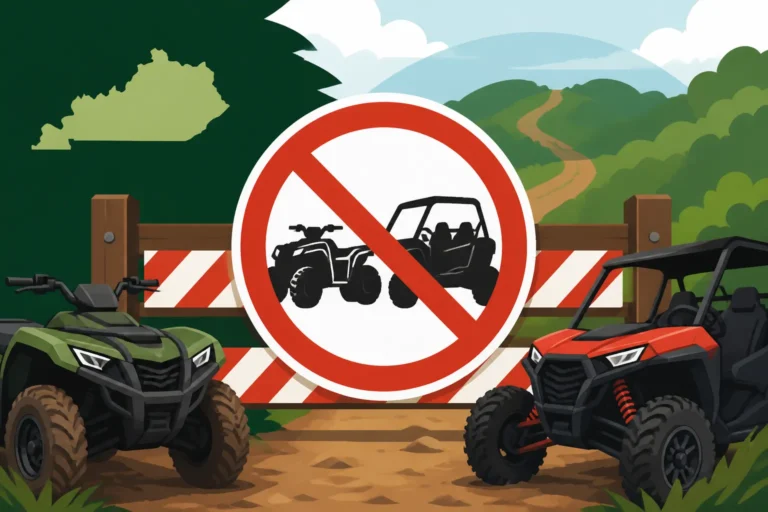
Before you reserve, ask whether you can take your ATV or UTV from the campsite to the trail entrance. Some campgrounds allow that on designated routes; others require you to trailer the machine, even if the trailhead is close by. A short distance on a map can still involve a public road, a private road, or a route where riding is not permitted.
Also clarify what “trail access” means in the listing. It could mean a trail is visible from the property, that a trailhead is nearby, or that an approved route connects the campground with the riding area. Ask for the actual route and any restrictions rather than relying on a broad description.
Check what your group needs at camp
A site that works for a tent and a small vehicle may not work for a long trailer and a four-seat side-by-side. Ask about the space available for your tow vehicle, trailer, and machine, and whether you can leave the trailer parked during the day. If your group is arriving with several rigs, confirm that everyone can park without blocking other guests or campground roads.
Then ask about the essentials you care about: electrical hookups, potable water, restrooms, showers, dump facilities, and whether fire rings or picnic tables are available. Amenities vary, and the word “campground” alone does not tell you what the site provides. If you need a particular setup—such as power for a medical device or a place to rinse muddy gear—confirm it directly before booking.
For a wider overview of options and planning considerations, see Camping Near Kentucky ATV Trails. It helps to compare camping as part of the whole ride plan, rather than choosing a site based only on distance to a trail.
Confirm that the campground and riding area fit together
The campground and the riding area may have separate rules, check-in procedures, and operating schedules. Ask who handles camping reservations and who handles trail access. A campground reservation does not necessarily include a riding permit, and a trail permit may not cover your campsite.
If you are headed to Land Between the Lakes, check the relationship between your chosen camping area and Turkey Bay OHV Area before loading the trailer. Confirm whether the campground you plan to use permits the kind of machine you are bringing and how you are expected to get it to the riding area. The Turkey Bay's Season and Gatehouse Hours Explained page is a helpful companion when you are sorting out the trip’s timing.
Comparing Kentucky Trail Areas for Camping
The best base depends on the kind of ride you want, how much you want to tow between camp and trail, and what sort of overnight setup your group needs. The table below is a planning starting point, not a substitute for confirming access and facilities with the campground and trail operator.
| Riding area | Camping approach to investigate | Best questions to ask |
|---|---|---|
| Black Mountain near Putney and Evarts | Look at camping around the Putney Trailhead and nearby Harlan County options | Can you ride from camp to approved trail access? Where can a trailer be parked? |
| Turkey Bay in Land Between the Lakes | Compare nearby camping with the campground options used by riders in the area | Is your camping reservation separate from trail access? How do you transport the machine to the riding area? |
| Leatherwood near the Perry, Leslie, and Letcher County area | Check nearby lodging or camping that fits your group and trailer | How far is the actual trail entrance, and is riding between lodging and trails allowed? |
| Rush Off-Road in eastern Kentucky | Check the riding area’s current camping or nearby lodging options | What overnight options are available, and where can you stage a trailer? |
| Hollerwood near Stanton | Compare nearby camping and lodging with your planned trail access | Is the route to the park rideable, or will you need to trailer? |
Black Mountain and the Putney area
Black Mountain draws riders to the hills around Harlan County, where a campsite close to Putney can make mornings much easier. You can unload, organize your group, and get ready without starting the day with a long drive from a distant motel. Still, don’t assume that staying near a trailhead grants permission to ride on every road between camp and the park.
Ask the campground whether the trail connection is approved, whether any gates or check-in steps are involved, and where trailers should be left while you ride. If your group plans a long day on the mountain, it is also sensible to ask about arrival and departure procedures, especially if you expect to return after the office or campground staff have left.
For a fuller look at the local camping setup, read Where to Camp Near Black Mountain. If you are planning around the Putney entrance specifically, Why a Kentucky Trailhead Campground Matters explains why a close base can make a practical difference—not just a shorter commute.
Turkey Bay and Land Between the Lakes
Turkey Bay is a natural candidate for riders who want to explore western Kentucky, but trip planning should account for both the OHV area and where you will sleep. Do not assume a nearby campsite is part of the riding area or that a camping reservation automatically settles trail access. Confirm which organization handles each piece of your trip and ask what is allowed for your particular vehicle.
Before hauling to the area, check for current operating information and any trail or ground conditions that could affect your plans. A wet-weather closure, an access restriction, or a change in how the campground handles vehicles can alter the day. Calling Before You Haul to Turkey Bay is a useful reminder to make that call before the trailer is loaded and the drive is underway.
Leatherwood, Rush, and Hollerwood
For Leatherwood, Rush, or Hollerwood, think in terms of the exact property and access point rather than the nearest town name. A place to stay may be convenient for meals and supplies but still require a drive to the riding entrance. Ask for the street address, approximate drive route, and trailer parking details so you can judge the real convenience.
If a property advertises trail access, get specific. Ask whether access is direct, whether it applies to your machine type, and whether the connection is open to overnight guests. If the answer is unclear, plan to trailer rather than count on riding from camp. Where to Stay Within Driving Distance of Leatherwood can help frame that comparison for a trip in the Leatherwood area.
How to Choose the Right Campground for Your Trip
Match the site to your trailer and machine
A campground can be close to the trail and still be a poor fit if you cannot comfortably park or turn around. Measure the approximate length of your tow vehicle and trailer, and ask whether the site can accommodate both. If your machine is wide or your trailer is long, mention that when you call; “RV-friendly” does not necessarily mean easy access for every trailer combination.
Ask about the surface and layout, too. A narrow entrance, steep approach, or tight campsite can become a bigger problem when the ground is wet or you arrive after dark. If your group is bringing more than one trailer, confirm whether there is room to park together. It is far less stressful to sort that out before departure than to discover the sites are scattered or too small once you arrive.
Think about muddy gear, fuel storage, and where to secure helmets and riding equipment overnight. You may not need special facilities, but it helps to know whether there is room to keep riding gear organized and whether the campground has rules about storing fuel or washing machines.
Compare comfort with proximity
Some riders want the shortest possible trip from campsite to trail. Others are happy to drive a little farther for more space, a quieter setting, or the kind of lodging their family prefers. Decide what matters most before comparing listings. For a group with young children or non-riding companions, a comfortable place to spend downtime may matter as much as being close to the trail entrance.
If you are riding for multiple days, consider how much recovery time your plan allows. A cramped campsite and a long trail day can wear everyone down. A little extra room for drying clothes, preparing food, or taking a break between rides can be worth a short drive in the morning—provided you have a clear plan for getting the machines to the park.
Compare the total trip logistics, not just the nightly accommodation. Include the drive from camp to the trailhead, trailer parking, permits, food and fuel stops, and any separate check-in requirements. Parking a Trailer at a Kentucky Trailhead is worth reviewing if your tow setup is a major part of the decision.
Ask direct questions before you reserve
A quick call can prevent several common surprises. Ask whether the campground allows ATVs or UTVs on the property, whether riding from the campground to the trails is permitted, and where the approved route begins. Confirm whether you need to trailer the machine and whether there is a designated staging or parking area.
Also ask what happens if weather changes your plans. Find out how the campground communicates closures or access changes, and check the trail operator’s own updates before leaving home. Kentucky mountain roads and trails can be affected by heavy rain, while low-lying areas may hold water longer than expected. For practical pre-ride checks, see Kentucky Trail Conditions Before You Ride and Kentucky Trail Closures to Check First.
Plan for a Smooth Camping and Riding Weekend
Make a simple arrival plan
Before you leave, save the campground’s address, the trailhead location, the check-in instructions, and a phone number for the people managing each location. If your campsite and trail access are handled by different operators, keep those details separate. That way, a question about a reservation does not turn into a last-minute scramble to reach the wrong office.
Arrive with enough daylight to find your site, park the trailer, and check the route you will use in the morning. If you are arriving late, ask in advance whether late check-in is possible and what instructions you need. Do not assume that a locked office means you can simply pick an open site or unload wherever there is room.
Carry a map that helps you understand the local roads and trail layout, but use official park information for current rules and closures. Some riders use onX Offroad as a planning aid for viewing routes and keeping trip information organized. Use it as a companion to official trail maps and posted guidance, not as proof that a route is open or that riding is allowed. The guide Kentucky Trail Maps Worth Carrying offers more context on preparing maps before you head out.
Keep trail access and permits separate in your planning
A common mistake is treating the campground booking as if it covers every part of the ride. Verify what is included and what is separate: camping, trail access, permits, parking, and any required check-in. If you are renting a machine, ask the rental provider whether the permit is included and whether it covers each rider or passenger. The campground may not be able to answer those questions.
Keep confirmation details accessible, but do not rely on a screenshot or a saved map as a replacement for the official instructions. Before each riding day, check notices from the park or land manager. Trail access can be affected by weather, maintenance, or local restrictions, so a route that appeared usable when you booked may not be appropriate when you arrive.
Leave room in the schedule for weather and fatigue
A weekend in the hills rarely goes exactly to plan. Rain can make a route slower, a mechanical issue can shorten the day, and a tired group may be better off returning to camp early. Avoid building the whole trip around squeezing in one more loop before dark. Decide in advance how your group will handle a breakdown or a change in conditions.
Respect campground quiet hours and other guests, especially when returning with muddy machines or unloading late. Follow marked routes, avoid riding through unauthorized areas, and keep speeds low around camp. A convenient campground stays convenient only when riders use it in a way that works for the people who live and camp nearby.
Disclaimer
This article is for general informational purposes only and does not constitute professional advice. Laws, prices and regulations vary by location and change over time. Consult a qualified professional for guidance on your specific situation.