Riding Black Mountain for a Weekend
A weekend at Black Mountain can turn into a scramble if you arrive without a trail plan, underestimate mountain terrain, or discover your chosen route is closed after you’ve unloaded. This guide helps you organize a safer, smoother trip around Harlan County, from picking a staging area and preparing your machine to planning fuel, lodging, and backup options.
Plan the weekend around your starting point
Choose a staging area before you leave home
Black Mountain Off-Road Adventure Area sits in southeastern Kentucky’s Harlan County, where steep terrain and winding mountain roads make a little advance planning worthwhile. Many riders organize their trip around the Evarts or Putney trailhead. Your choice affects where you unload, how you approach the trails, and where you may want to stay overnight.
Before setting out, confirm which access point suits your plans and what you need to do when you arrive. Check the park’s current guidance on access, permits, operating conditions, and trail closures. Those details can change with weather or maintenance, and an old trip report may not reflect what you’ll find at the gate. For a closer look at the area, read [Black Mountain Off-Road Adventure Area in Kentucky] and [Starting From the Evarts or Putney Trailhead].
The starting point also shapes your weekend’s rhythm. If your lodging is closer to one trailhead, choosing the other can add a drive before you even begin riding. If your group plans to split up or meet later, agree on a specific place and time rather than relying on a vague “we’ll meet back at the trailhead.” Mountain terrain can make cell service unreliable, so a simple rendezvous plan matters.
Match the plan to your group and machine
A weekend route should fit the least experienced rider and the least capable machine in your group—not just the person who knows the area best. Black Mountain includes long climbs, rocky sections, and narrow mountain routes. A route that feels manageable to one rider may be stressful for someone new to steep terrain or for a wide side-by-side with limited turning room.
Talk through expectations before choosing a loop. Is the goal to explore at a relaxed pace, cover more ground, or seek out challenging features? How comfortable is everyone with steep descents, loose surfaces, and backing up in tight spaces? Be candid. Nobody enjoys being pressured into a difficult trail because the group did not discuss skill levels beforehand.
Use the park’s trail information and posted signs to check whether your machine is appropriate for a planned route. A navigation app such as onX Offroad can help you review route options and keep track of your position, but it should support—not replace—local signs, current park information, and good judgment. If there’s uncertainty about a trail’s condition or suitability, choose an easier alternative or ask park staff before heading out.
Build a realistic two-day ride plan
Keep the first day deliberately flexible
After towing into Harlan County, unloading, checking in, and getting everyone organized, it’s tempting to start with an ambitious ride. Resist the urge to make the first outing the biggest one. A shorter, easier first ride gives the group time to get familiar with the terrain, check machine handling, and adjust equipment before committing to a longer route.
Use the first day to confirm that everyone is comfortable with the machine and the group’s pace. Pay attention to how long breaks actually take, how much fuel the machines use in steep terrain, and whether anyone is tiring faster than expected. If a route feels more demanding than the map suggested, turn around or choose a simpler option rather than treating the original plan as a commitment.
It also helps to agree on a turnaround time. That decision is especially useful when the group is enjoying the ride and losing track of the afternoon. A planned return window leaves room for delays, changing weather, or a machine issue. Riders considering a longer outing can also read [Riding 150 Miles of Trail Above Evarts] and [Starting a Ride at the Putney Trailhead] for more trip-planning context.
Save the more ambitious ride for day two
Once everyone has a better feel for the terrain, you can decide whether a longer route makes sense for the second day. That does not mean every weekend needs a miles-covered target. On a mountain trail system, a modest distance can take longer than expected when the group stops for views, navigates rough sections, waits for another machine, or works through a slow climb.
Choose a route with sensible exit or turnaround options. If a rider is uncomfortable, the group has a mechanical concern, or weather begins to change, you want a way to shorten the day without creating pressure to push onward. Keep the group together at junctions and make sure everyone knows the next meeting point before the lead rider moves on.
The following table can help you decide what kind of day fits your group. Treat it as a planning aid, not a statement about specific trail ratings; use current park maps and signage to confirm what is appropriate.
| Group or trip situation | A sensible approach | What to confirm |
|---|---|---|
| First visit to Black Mountain | Start with a shorter, conservative ride | Access point, current closures, and suitable routes |
| Mixed experience levels | Let the least experienced rider set the pace | A route everyone can manage and a clear turnaround plan |
| Long weekend ride | Plan a longer outing only after checking conditions | Fuel needs, daylight, weather, and return options |
| Wide side-by-side | Review route suitability before entering narrow sections | Posted restrictions, machine fit, and turning space |
| Uncertain weather | Keep a shorter alternative ready | Park updates and safe places to stop or turn back |
Prepare for mountain conditions
Check the forecast, trail notices, and navigation
Weather can change the character of a ride. Rain may make climbs slippery, wash loose material onto a route, or create muddy sections that slow the group. Fog can reduce visibility, especially on exposed or winding stretches. Before leaving your lodging, check the forecast and any park notices, then reassess if conditions are different from what you expected.
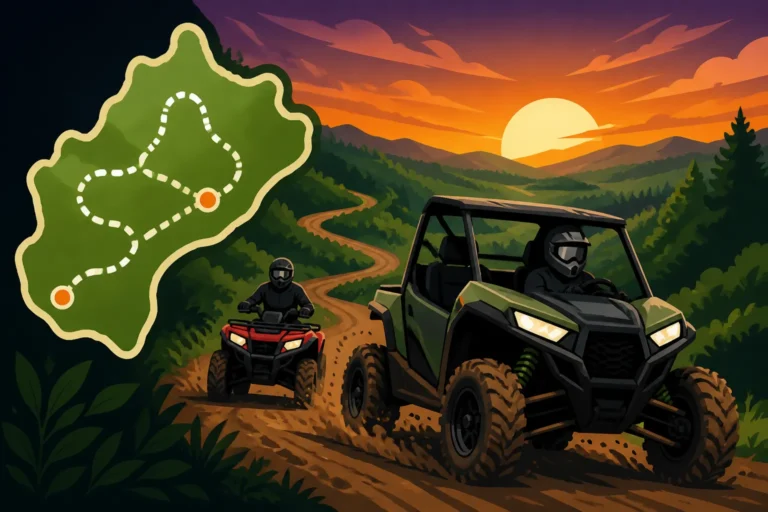
Download or save useful maps before you ride, since cell reception may be spotty in hollers and on remote parts of the trail system. onX Offroad can be helpful for viewing routes and keeping a location reference available, but do not assume a digital map shows every current closure or field condition. Carry a paper map or another offline option if available, and know how to use it before you need it.
At trail junctions, follow posted signs and local directions rather than relying solely on a screen. If the map and a trail notice appear to disagree, stop and resolve the question before continuing. Planning also includes checking whether the park is open and what rules apply that day. For related preparation, see [Kentucky Trail Conditions Before You Ride] and [Kentucky Trail Closures to Check First].
Pack for delays, not just the planned ride
Even a well-planned ride can run late. A puncture, a stuck machine, a slow group, or an unexpected closure can change the schedule. Carry the supplies your machine and route require, and make sure someone in the group knows how to use them. A repair kit that nobody understands is less useful than a smaller kit the group can actually use.
Bring water, weather-appropriate layers, food, basic first-aid supplies, and a charged phone. A power bank can help, but it does not solve the problem of having no signal, so tell someone who is not riding where you plan to go and when you expect to return. If your group has radios, agree on a channel and a simple way to regroup before starting.
Fuel deserves special attention. Steep climbs and slow, technical riding can affect consumption differently from an easy cruise on flat ground. Start with a full tank, know your machine’s range in the conditions you expect, and plan conservatively. Do not assume you can find fuel close to the trail when you need it. For additional practical advice, read [Planning Fuel Across a Mountain Loop] and [Cell Dead Zones in a Holler].
Sort out lodging, trail etiquette, and the ride home
Pick lodging that supports the trip
For a weekend in Harlan County, compare lodging by how it fits your ride plan, not only by the room itself. Consider the distance to your chosen trailhead, whether there is a suitable place to park a truck and trailer, and whether the property has rules about machines, washing, or late arrivals. A place that saves time each morning can make the weekend feel less rushed.
Ask lodging providers about practical details before booking. A group with multiple machines may need more parking space than a standard vehicle-only reservation suggests. If you are staying at a campground or a place with shared facilities, clarify where trailers can be left and whether machines can be kept there overnight. Do not assume trail access or a riding permit is included in a lodging arrangement; confirm each separately.
If your plans include camping, consider how you will handle rain, muddy gear, food storage, and drying out riding clothes. Having a clean set of clothes for the drive home makes a real difference after a wet ride. For more ideas, see [Where to Camp Near Black Mountain] and [Camping Near Kentucky ATV Trails].
Ride thoughtfully and leave time to load out
Black Mountain is not just a route on a map; it is a place where groups share narrow trails and changing terrain. Leave space between machines, slow down when visibility is limited, and avoid stopping in a spot where another rider cannot see you in time. At a blind corner or narrow section, communicate clearly and move deliberately rather than assuming everyone can pass.
Stay on marked routes and follow the posted rules. Do not ride around a closure or create a new path to get around a difficult obstacle. That can damage the area and put other riders at risk. If you come across a group moving more slowly, be patient. If you need to stop, choose a visible place that does not block the trail.
Leave enough time at the end of the day to return, inspect your machine, and load safely. A rushed departure in fading light can turn a good weekend into a stressful one. Check for loose gear, secure the trailer load, and clean mud or debris where appropriate without washing it into sensitive areas or violating a property’s rules. Before you head home, make sure everyone knows the next stop and has a chance to rest after the ride.
A smooth Black Mountain weekend usually comes down to a few practical choices: select an access point that fits your lodging, plan a conservative first ride, verify conditions before each outing, and leave room in the schedule for mountain terrain to slow you down. Keep current park guidance in front of you, use maps as a planning aid rather than a substitute for judgment, and make sure the whole group is comfortable with the route.
Disclaimer
This article is for general informational purposes only and does not constitute professional advice. Laws, prices and regulations vary by location and change over time. Consult a qualified professional for guidance on your specific situation.