Kentucky Trails With Rock Crawling
Rocky Kentucky trails can be exciting until a ledge, loose stone, or steep shelf turns a fun ride into a recovery job. The right destination depends on your machine, experience, and appetite for technical terrain—not just a park’s reputation. This guide compares Kentucky riding areas, explains how to prepare for rock crawling, and helps you choose routes that suit your group.
What rock crawling means on Kentucky trails
Expect mixed terrain, not a rock garden from start to finish
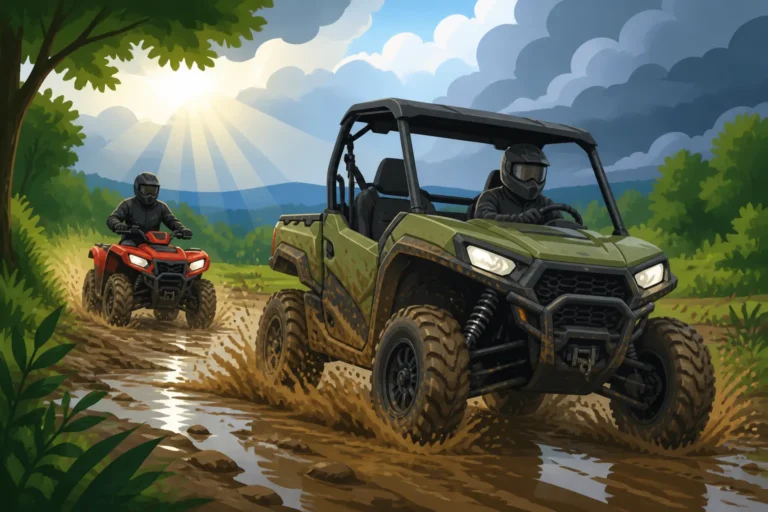
In Kentucky, a trail that challenges your machine may combine exposed rock, uneven steps, loose gravel, mud, and steep grades. That’s different from a purpose-built rock-crawling course where obstacles are concentrated in a small area. A route can feel manageable on a dry day and much more demanding after rain, when tires lose grip and runoff changes the surface.
It also helps to separate “rocky” from “technical.” A rocky trail might have plenty of stone but still offer a broad, relatively smooth line around the roughest sections. A technical route may have narrow choices, abrupt ledges, awkward approaches, or limited room to turn around. When a trail description uses words such as challenging or expert, ask what that means for the particular route and machine you plan to ride.
That distinction matters when you’re riding with a mixed group. One person’s capable side-by-side and another rider’s shorter-wheelbase ATV may handle the same obstacle very differently. Before choosing a destination, look beyond dramatic photos and find out whether the trail system has route ratings, one-way sections, bypasses, or posted restrictions. [Kentucky Trail Difficulty Ratings] can help you think through how a rating relates to your group’s comfort level.
Check whether your machine suits the route
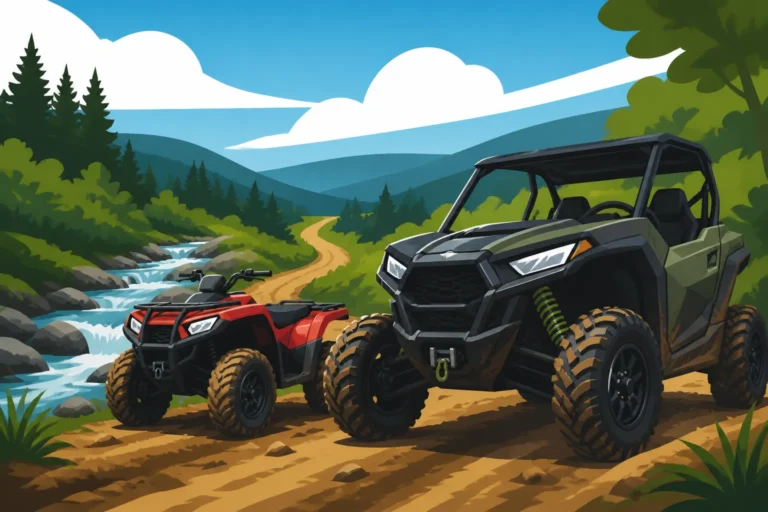
A powerful engine doesn’t automatically make a machine a good fit for technical terrain. Ground clearance, wheelbase, tire choice, steering, suspension travel, and overall width can all affect how comfortably a UTV or ATV works through rocky sections. A wide machine may have a harder time on a tight line; a long machine may be more likely to contact a crest or ledge underneath.
Before you commit to a route, consider the weakest link in the group: the least experienced rider, the machine with the least clearance, or the passenger who may not be comfortable with steep or uneven ground. A sensible plan is to start with easier trails, assess how the machines handle, and only progress if everyone feels in control. If riders are separated, agree in advance where to stop and regroup rather than letting the faster machines disappear around a blind bend.
Don’t assume every trail park has a dedicated rock-crawling area just because it has rugged terrain. The available routes, their condition, and what is permitted can change. Check the park’s current trail information before hauling out, and follow posted closures and difficulty guidance once you arrive. [Kentucky Trail Conditions Before You Ride] and [Kentucky Trail Closures to Check First] are useful starting points for planning around those uncertainties.
Kentucky riding areas to consider for rocky terrain
Black Mountain Off-Road Adventure Area
Black Mountain in Harlan County is a natural candidate for riders looking for a mountain setting and varied off-road terrain. It can be a good place to investigate if your group wants a substantial trail day and is prepared for changing grades and surfaces. But don’t treat the name of a park—or an impressive overlook photo—as proof that every route is suitable for rock crawling or for every machine.
Before you choose a trail, study the available map and ask park staff which routes match your experience and equipment. Be specific: explain whether you’re riding an ATV or UTV, how wide the machine is, and whether your group has experience on ledges or steep, uneven ground. If you’re new to the area, build your plan around a conservative route with room to turn back rather than aiming for the hardest terrain on your first outing. [Black Mountain Off-Road Adventure Area in Kentucky] has more background on the destination.
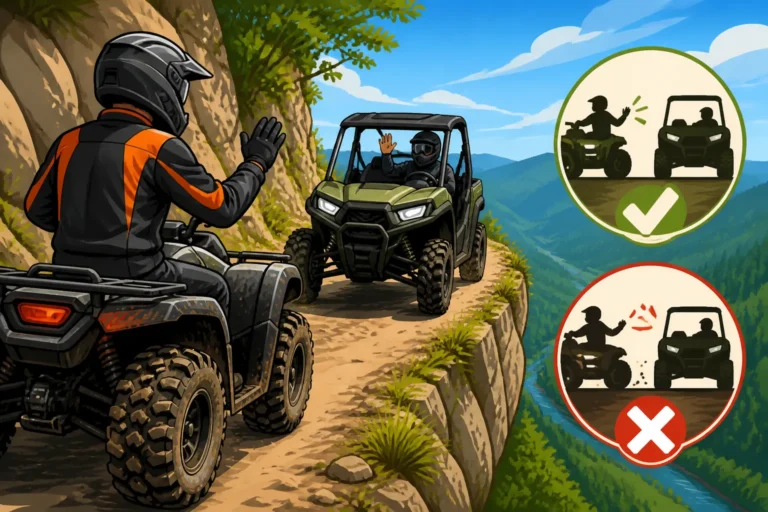
Mountain conditions can make route choice especially important. A shaded rocky section may stay slick when another part of the trail feels dry, and runoff can move loose stone onto the track. Leave extra time for slow travel, stops, and regrouping. In a narrow section, avoid crowding another machine or trying to pass where there isn’t clear space.
Rush Off-Road and Leatherwood
Rush Off-Road in eastern Kentucky is another place riders may consider when they want a rugged trail day. Its setting makes it worth researching for a group interested in varied off-road riding, but “rugged” still doesn’t tell you whether a particular route has the kind of rock obstacle you want—or whether it is appropriate for your machine. Check the current map and ask about trail difficulty before you set out.
Leatherwood is also worth comparing if your group is planning a trip in Kentucky’s mountain country. As with any park, don’t rely only on a broad description of the property. Ask about specific routes, surface conditions, available easier lines, and whether a particular obstacle is passable for the machine you’re bringing. A phone call before loading can prevent a long drive followed by a disappointing mismatch between the trail and your group’s abilities.
| Riding area | Why it may suit a rocky-terrain search | What to confirm before riding |
|---|---|---|
| Black Mountain in Harlan County | Mountain setting and varied off-road riding | Route ratings, machine suitability, conditions, and closures |
| Rush Off-Road in eastern Kentucky | A destination to research for a rugged trail day | Current maps, difficulty, and any machine-width limits |
| Leatherwood | Another option to compare for a mountain-area ride | Specific route character, access, conditions, and bypasses |
| Redbird Crest Trail | A different kind of riding experience to investigate | Permitted machines, trail conditions, and whether the route meets your technical goals |
The table is a shortlist for research, not a promise that a park has a particular obstacle or that a route is open. The best choice depends on current park information and your own experience. For more destination comparisons, see [Best Places to Ride an ATV in Kentucky] and [Kentucky Trails With Rock].
When a scenic trail is not a rock-crawling destination
Some riding areas are better suited to a scenic or cross-country outing than a day focused on technical obstacles. Redbird Crest, for example, is a trail system to research for its route experience, but don’t assume that a long trail automatically offers concentrated rock-crawling challenges. A long route and a technical route are not the same thing.
Turkey Bay at Land Between the Lakes is another destination riders may come across while searching for Kentucky OHV areas. Compare its current trail information with your goals rather than choosing it based on a general assumption about Kentucky terrain. If your main aim is slow, careful obstacle work, ask whether the available routes and rules fit that style of riding. [Where to Ride an ATV in Kentucky] can help broaden the search beyond one park or one type of terrain.
The key is to match your expectations to the actual trail system. If the park’s route descriptions focus on mileage, scenery, or general trail riding, that may still make for a great trip—but it may not be the technical rock-crawling outing you had in mind. Call ahead, study the route descriptions, and be ready to choose another area if the information doesn’t line up.
Plan a safer rock-crawling ride
Prepare the route before leaving home
Start with the park’s own current map and rules. Identify your intended trail, likely bailout points, and any sections that might be beyond your group’s comfort level. If the map shows route ratings, use the most cautious interpretation when you’re uncertain. Online trail apps can be helpful for organizing and reviewing routes; onX Offroad, for example, may help you examine mapped trail information and plan where to ride. Still, an app should supplement—not replace—official park directions, signs, or staff guidance.
Save information you may need when cell service is weak, and tell someone outside your riding group where you expect to be and when you plan to return. In the mountains, a route that looks simple on a screen can take longer than expected because of slow technical sections, stops, weather, or a machine issue. Plan with a generous time buffer rather than counting on finishing every trail you marked.
Before the ride, make sure everyone understands the plan. Decide on a lead rider and a sweep rider, agree on a regrouping procedure, and establish that nobody attempts an obstacle alone without the group’s agreement. onX Offroad can be one planning aid for reviewing mapped routes, but riders should still check that the route is open and permitted for their type of machine.
Set up the group for slow, deliberate riding
Rock crawling rewards patience. Approach an unfamiliar obstacle slowly enough to assess the surface and line, and don’t let pressure from a waiting group push you into a rushed decision. If a spotter is useful, choose one person to give clear directions and make sure the driver can see or hear them. Everyone else should stand well clear of the machine’s path, tires, and potential roll or slide area.
Avoid sudden throttle, sharp steering inputs, and unnecessary wheel spin. Those reactions can make it harder to maintain control and may damage the trail. If the route looks beyond the machine or rider, backing out is a sound decision—not a failure. Before proceeding, consider whether there is a safe, legal bypass or turnaround. Never create a new line around an obstacle by cutting vegetation or leaving the marked route.
A group’s pace should reflect its least experienced rider. Give each person enough room to make a careful attempt without another vehicle crowding the obstacle. If someone is uneasy, stop and talk through the options. A good ride is one where everyone gets home safely, not one where the group checks off the hardest obstacle on the map. [Kentucky Trail Etiquette on Narrow Benches] covers practical considerations that matter on tight routes.
Bring recovery gear and know when to stop
Before leaving, inspect tires, steering, brakes, lights, and the parts of the machine that may take a hit on uneven ground. Carry water, basic tools, a first-aid kit, and communication equipment suitable for the area. Recovery equipment should match your vehicle and your knowledge: carrying a strap or winch is not enough if nobody in the group knows how to use it safely.
Avoid standing downhill or directly in line with a tensioned recovery strap. Keep bystanders away, use appropriate equipment, and follow its instructions. If the machine is unstable, damaged, or wedged in a way that creates a risk of rollover, don’t improvise a recovery just to keep moving. Pause, assess the situation, and get qualified help if needed.
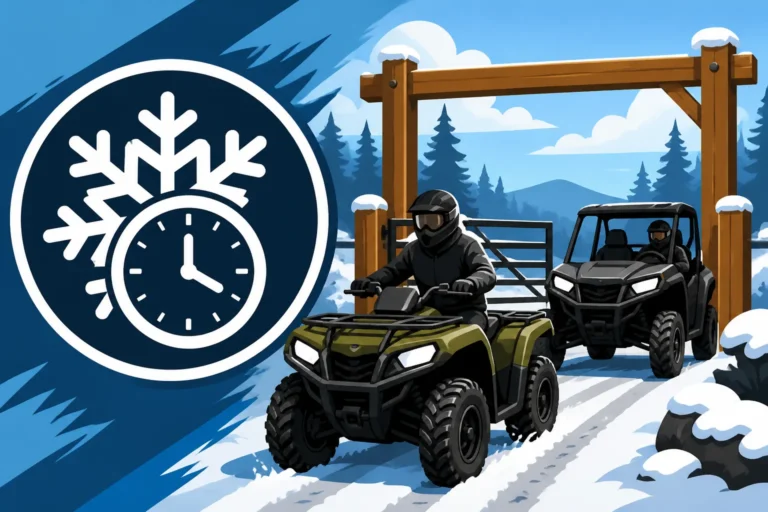
Weather can change the character of a rocky route quickly. Rain may make stone slick, wash loose material across a trail, or raise water levels in nearby crossings. Stop if conditions make the route unsafe, and respect closures even if the trail appears passable. Planning around weather and trail notices is part of choosing a route—not an inconvenience to work around. [Kentucky Riding After Heavy Rain] offers more context for thinking through wet-trail conditions.
Choose a route that fits your whole group
Use a practical checklist before you commit
Before reserving time for a trip or towing into the mountains, answer a few basic questions: Is the route open? Is the machine allowed? Does its width and clearance fit the trail? Is the difficulty appropriate for the least experienced rider? Are there easier alternatives or safe turnarounds? If you can’t get clear answers, choose a more predictable route or contact the park before you travel.
It’s also worth checking whether your plan depends on a specific kind of obstacle. If the group wants slow, technical rock work, say so when asking for advice rather than simply asking whether the park is “hard.” Staff may be able to distinguish a rough scenic route from a route with more demanding obstacles. Keep the question practical and specific, and confirm that the details apply to the route you actually intend to ride.
For navigation, onX Offroad may help you keep mapped routes organized, but no map should be treated as permission to ride a closed or restricted trail. Park rules and signs take priority. If a mapped line conflicts with posted directions, stop and follow the official guidance.
Make the trip enjoyable even if the hardest route is out
A good outing doesn’t have to depend on completing the most difficult section. Build in time for easier trails, scenic stops, and breaks. If the conditions are slick or the group’s confidence is lower than expected, changing the plan can turn a stressful day into a satisfying one. On a multi-day trip, consider saving the more demanding route until everyone has had a chance to get familiar with the terrain and the machines.
If you’re choosing between several parks, compare the whole experience: how far you’ll travel, what kind of trail information is available, how comfortable your group is with the terrain, and what happens if conditions change. The park with the most dramatic reputation is not automatically the best fit. A route that suits your group is more likely to deliver the kind of challenge you want without turning every obstacle into a high-pressure decision.
Rocky Kentucky riding can be rewarding when the route, machine, and group match. Research the specific trail instead of relying on broad labels, check conditions before you go, and leave room to turn around. For broader planning, see [Kentucky Trail Maps Worth Carrying] and [Kentucky Riding Areas Near a Town].
Disclaimer
This article is for general informational purposes only and does not constitute professional advice. Laws, prices and regulations vary by location and change over time. Consult a qualified professional for guidance on your specific situation.