Kentucky Trails With Lodging on the Route
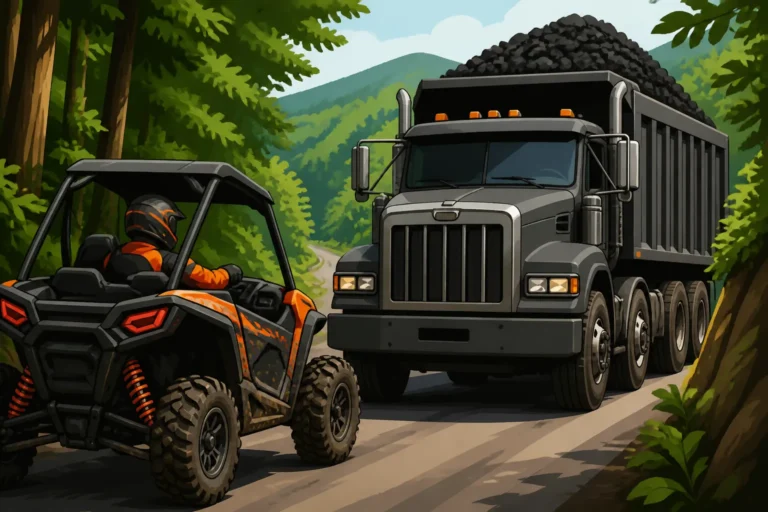
Kentucky’s best ATV and UTV rides often lead deep into coal country, forest roads, and places where lodging is not right beside the trail. That can make a multi-day trip tricky: you need somewhere practical to sleep, a legal way to reach the riding area, and a backup plan if weather or closures disrupt your route. This guide explains how to match Kentucky trails with nearby lodging.
What “lodging on the route” means in Kentucky
A place to stay near the trail is not always a place you can ride from
In Kentucky, “lodging on the route” can mean a cabin beside a trail system, a campground near a staging area, or a motel in a nearby town that serves as your base. Those options are not interchangeable. A lodging property may be close to an off-road park without being connected to it by a trail you can legally ride.
That distinction matters when you are hauling a machine. A cabin that looks close on a map might still require you to load up and drive to the trailhead. Public roads are not automatically legal ATV or UTV routes, and a short connection on pavement can create a real problem if you assume you can ride it. Check the park’s access rules and the specific road rules before planning to ride between places.
When comparing places to stay, ask whether trail access means direct access from the property, a short drive to a designated staging area, or simply a location within the broader riding region. If the answer is unclear, plan on trailering. It is much less frustrating to discover that before unloading than after you have arrived with a full machine and a group ready to ride.
For broader trip planning, start with [Where to Ride an ATV in Kentucky] and [Kentucky Trails With Lodging on the Route]. Then check the individual park’s current trail access, closures, and lodging arrangements before you book.
Choose a base around your riding style and group
A group that wants long days on steep, rocky trails may prefer to stay close to a major riding area, even if the accommodation is simple. A family with mixed riding experience may be happier with a town-based hotel, restaurants, and a short drive to the trailhead. And if your group plans to ride for several days, having a place to wash muddy gear, dry clothes, and store food can matter as much as being a few minutes closer to the trails.
Think about your group’s daily routine. Are you bringing children who need breaks? Does someone need a quiet place to rest while others ride? Are you traveling with a wide UTV, a trailer, or more than one machine? These details affect whether a small cabin, campground, or motel is actually convenient.
A location that looks ideal on a map may also have limited services nearby. In remote areas, fuel, groceries, and repair supplies can be farther away than expected. Use a route-planning tool such as onX Offroad to review the broad geography and identify the roads and trail areas you need to verify. Treat any map as a planning aid, not permission to ride a route.
Kentucky trail areas with nearby places to stay
Black Mountain and the Harlan area
Black Mountain Off-Road Adventure Area is a natural choice for a multi-day trip in southeastern Kentucky. The riding area is associated with the Harlan and Evarts region, where visitors can look for campgrounds, cabins, and other lodging options within driving distance of the trail system. Some travelers prefer to stay close to a trailhead; others choose accommodation in or near a town and drive to the staging area each day.
Before reserving, find out exactly where you will park your trailer and whether the property can accommodate the size of your group and equipment. A room that works for two people may not work for a family hauling a trailer, multiple machines, and muddy gear. Ask about outdoor parking, where to keep equipment overnight, and whether there is a suitable place to rinse off boots and riding clothes.
Do not assume that “near Black Mountain” means the machine can be ridden directly from the lodging to the trail. Confirm the access arrangement with both the lodging provider and the riding-area operator. For a first visit, [Camping Near Black Mountain] and [Harlan County Campground at the Putney Trailhead] are useful topics to explore. You can also read [Starting a Ride at the Putney Trailhead] to understand why knowing your staging point is part of the lodging decision.
Leatherwood, Turkey Bay, and other riding regions
Leatherwood Off-Road Park is another area where lodging plans deserve a close look. Visitors can compare staying near the park with using accommodation in a surrounding community, then account for the drive to the riding area and the time needed to unload. If your group is planning several riding days, ask whether your chosen lodging is equipped for trailers and whether there is a secure, practical place to leave them.
At Turkey Bay OHV Area in western Kentucky, trip planning involves the Land Between the Lakes region as well as the riding area itself. Check the available camping and nearby lodging options, and confirm access arrangements before choosing a base. Weather-related closures and ground conditions can affect a riding plan, so avoid building an entire trip around an assumption that every trail will be open.
Other riding areas, including Rush Off-Road, Hollerwood, and the Redbird Crest Trail region, may suit different trip styles. Some visitors prioritize a campground or cabin; others prefer a town stay and daily drives to a trailhead. Use [Where to Stay Within Driving Distance of Leatherwood], [Turkey Bay Camping at Land Between the Lakes], and [Kentucky ATV Parks With Cabins] to compare the kinds of stays that may fit your route. The best option depends on the specific area, your vehicle and trailer, and the season.
| Riding area | Lodging approach to investigate | Planning detail to confirm |
|---|---|---|
| Black Mountain near Harlan and Evarts | Campground, cabin, or lodging in a nearby community | Whether the property is close to your intended staging area and can handle your trailer |
| Leatherwood | Stay near the park or use a nearby community as a base | Whether the lodging offers direct trail access or requires trailering |
| Turkey Bay and Land Between the Lakes | Campground or lodging in the surrounding region | Current riding access, camping arrangements, and any weather-related closures |
| Rush Off-Road | Nearby lodging or a town-based stay | Drive time to the park, trailer parking, and the park’s current operating information |
| Hollerwood and Redbird Crest region | Cabin, campground, or community lodging | Which trailhead you will use and whether the accommodation is convenient for that access point |
The table is a starting point, not a guarantee of specific lodging availability. Check details directly with the accommodation and riding area before making a reservation.
How to plan lodging around a multi-day ride
Match your overnight stops to the route you can actually drive
Start with the riding area, not the accommodation search. Pick the park or trail system, identify the staging point, and estimate how you will get there with your trailer. Then choose lodging that makes the drive manageable. This is especially important in Eastern Kentucky, where mountain roads and narrow valleys can make a short-looking distance take longer than expected.
Build your plan around legal travel. If your lodging and trailhead are separated by public roads, assume you will transport the machine unless you have confirmed that the route is legally open to your type of vehicle. Never rely only on a colored line on a map or a route another rider mentioned. Rules can vary by road, property, and local requirements.
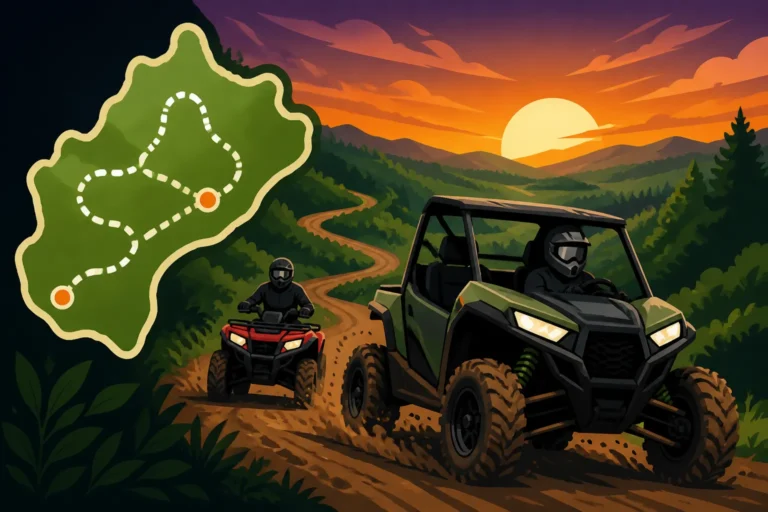
A mapping app such as onX Offroad can help you orient yourself, review terrain, and keep track of places you want to check. Before the trip, compare the planned route with the park’s official information and ask questions when access is uncertain. Save essential details offline where possible, because cell coverage can be unreliable in a holler or mountain valley.
If your trip involves multiple parks, do not assume one lodging reservation creates an easy riding connection between them. You may need to trailer from one area to another, and each destination may have its own access rules, permits, and operating conditions. [Riding Two Kentucky Parks in One Trip] and [Kentucky Trail Maps Worth Carrying] can help you think through those transitions.
Ask practical questions before booking
Before you reserve a cabin, campground, or hotel, explain that you are bringing an ATV or UTV and a trailer. Ask whether there is enough room to turn around, whether the parking surface is suitable for a loaded trailer, and whether the machine can be stored overnight on the property. If you are traveling with several vehicles, confirm that the group can park together.
Ask about arrival and departure logistics, too. Some groups reach a trailhead early to make the most of a riding day; others may return after a long ride when the office or check-in desk is closed. Find out how late you can arrive, where to leave the trailer, and what to do if weather delays your drive. If the stay includes shared facilities, ask whether there is a designated place to clean gear rather than assuming you can wash mud wherever is convenient.
It is also worth checking the cancellation policy and what happens if the trail area is closed or conditions change. A lodging reservation and a riding plan are separate decisions: a park closure may not automatically change your accommodation booking. Keep contact information for both the lodging provider and the riding area, and check conditions close to departure.
Use onX Offroad to help organize your route notes, but confirm road access and lodging details directly. That small bit of preparation can prevent a frustrating late-night search for a place that can take a trailer or an unexpected drive to a different staging area.
Make the trip easier once you arrive
Pack for mud, weather, and limited services
Kentucky trail conditions can change quickly, especially after heavy rain. Pack spare clothes, waterproof layers, towels, sturdy footwear, and bags that keep muddy gear separate from clean items. If you are camping, think through how you will dry clothing and protect bedding from wet equipment. A cabin or motel stay can be more comfortable, but it still helps to bring a way to contain mud and dust.
Carry basic supplies for the machine and the group, including water, food, and the tools you normally need for a day ride. In remote areas, a quick stop for fuel or a replacement item may involve a longer drive than you expect. Plan fuel around the route and your machine’s range rather than assuming a nearby business will be open when you need it.
Download maps and save the lodging address, trailhead location, and emergency contact details before leaving a reliable service area. onX Offroad can be useful for organizing your map view and route notes, but no app replaces checking park notices or following posted signs. Keep a paper backup or offline directions for the drive to your accommodation and staging area.
For weather-sensitive planning, consult [Kentucky Riding After Heavy Rain] and [Kentucky Trail Closures to Check First]. A flexible schedule is especially useful when you have paid for lodging and traveled a long way: a rest day, a shorter ride, or a different approved riding area may be better than trying to force a plan in unsafe conditions.
Keep lodging, trail access, and permits separate in your checklist
Before you leave home, confirm three separate things: where you will sleep, where you will stage, and what permissions or permits you need to ride. A campground reservation does not necessarily include a trail permit, and a permit for one riding area does not necessarily work at another. Ask the specific park what is required for your machine and each rider.
When you arrive, follow posted access instructions and stay on authorized routes. Do not ride across private property, through a campground, or along a public road just because it appears to connect two places. If you are uncertain, stop and ask the property owner or riding-area staff rather than taking a chance.
A little extra planning makes Kentucky’s trail-and-lodging trips much more enjoyable. Choose a base that fits your group, verify the trailer and access details, and keep a backup plan for weather or closures. With those pieces settled, you can spend less time sorting out logistics and more time enjoying the ride.
Disclaimer
This article is for general informational purposes only and does not constitute professional advice. Laws, prices and regulations vary by location and change over time. Consult a qualified professional for guidance on your specific situation.