3,000 Acres Near the Gorge
A day near the Red River Gorge can go sideways fast if you assume every trail, forest road, and off-road park follows the same access rules. Hollerwood Off-Road Park near Stanton offers a large riding area in the Gorge region, but a good trip still takes planning. Here’s how to prepare, choose suitable terrain, and avoid common navigation and access mistakes.
What to know about Hollerwood near the Gorge
The riding area and its location
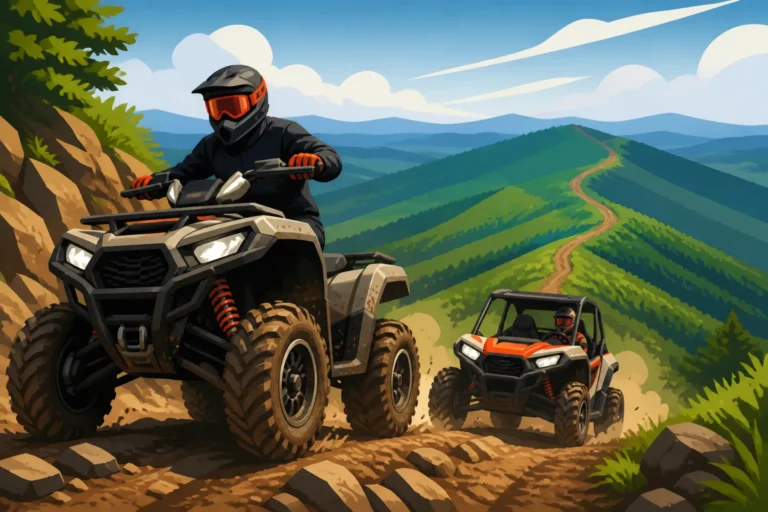
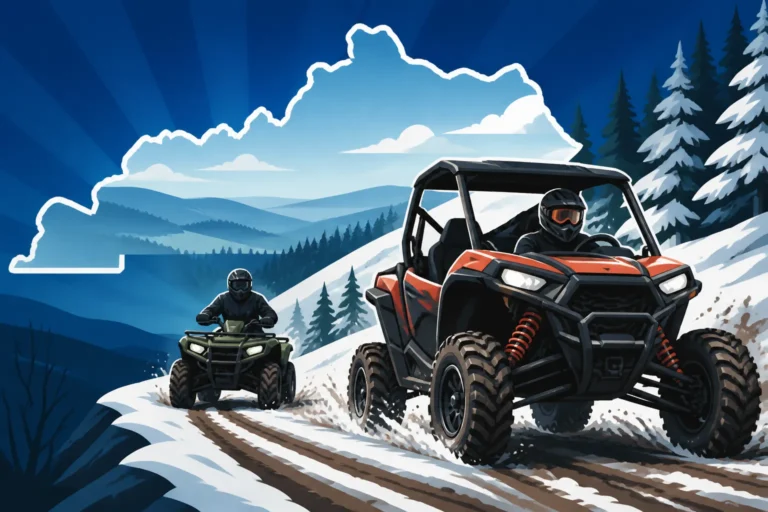
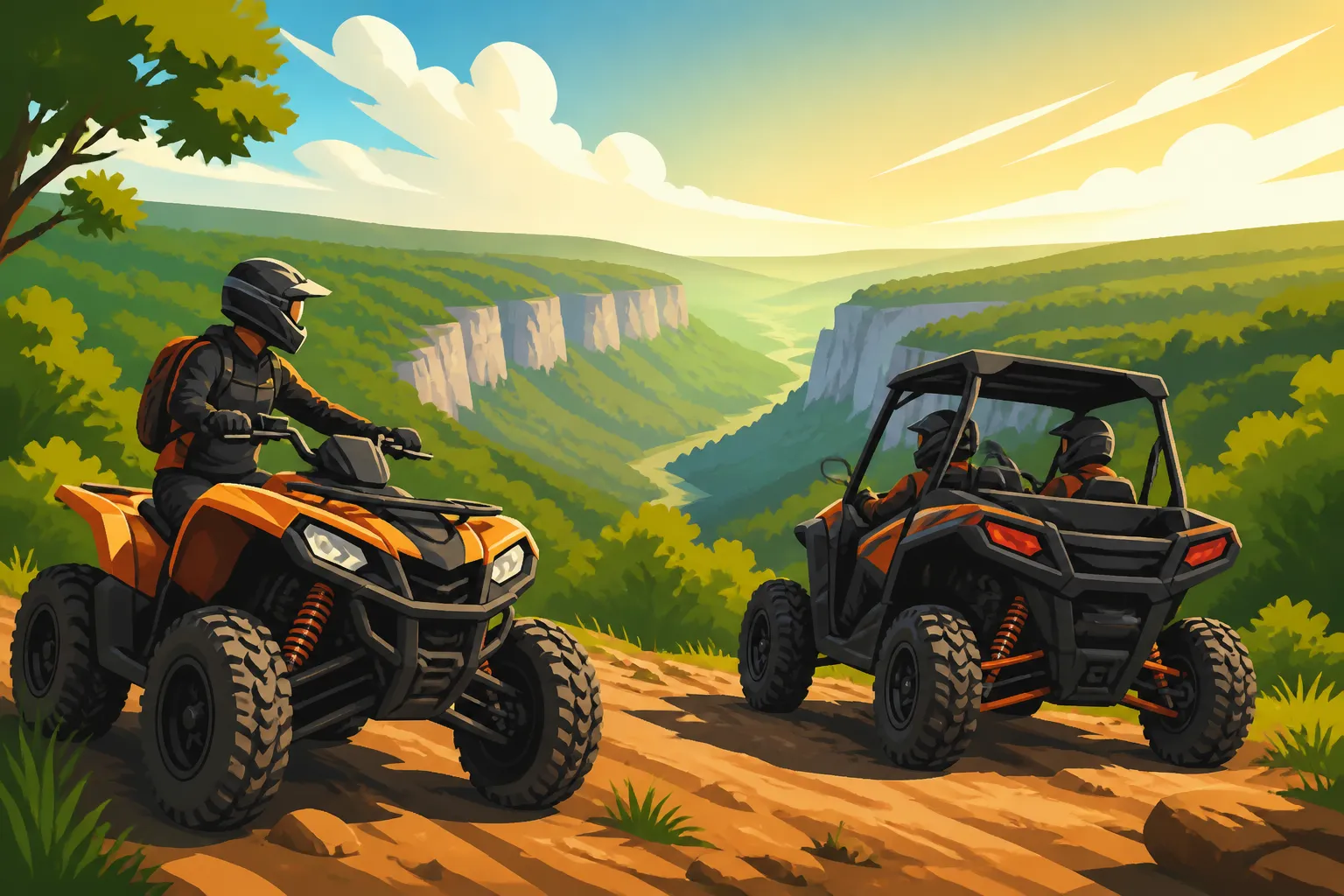
Hollerwood Off-Road Park is associated with roughly 3,000 acres of riding terrain near Stanton, Kentucky, in the broader Red River Gorge region. That makes it a destination for riders who want a dedicated off-road outing while visiting eastern Kentucky. The landscape is mountainous, so expect a very different experience from a flat, open riding field: elevation changes, wooded surroundings, and trails that may feel more demanding than their map length suggests.
The park is not interchangeable with every nearby public recreation area. Being near the Gorge does not mean that a route entering a forest, park, or other property is automatically open to ATVs or UTVs. Stay within the riding area’s authorized routes and check the operator’s current directions, admission process, and rules before setting out. For an overview of the destination, see [Hollerwood Off-Road Park in Kentucky] and [Riding Hollerwood at Stanton].
Why acreage does not tell the whole story
A figure such as 3,000 acres describes the scale of a property, not the number of miles you can ride or the difficulty of every route. Terrain, trail layout, closures, weather, and the park’s operating rules all affect what is available on a particular visit. A large property can still have trails that are unsuitable for a novice rider, a wide side-by-side, or a machine without the right tires and clearance.
It helps to think about the area in terms of ride choices rather than acreage alone. Before unloading, ask which routes are open, how trails are classified, and whether there are sections you should avoid with your machine or experience level. If this is your first visit, the practical guide to [Kentucky Trails for Beginners] can help you prepare questions and set realistic expectations.
Plan your route and navigation before riding
Use park information as your primary guide
Start with the park’s own current map and notices. Confirm where check-in happens, which routes are open, whether one-way travel applies anywhere, and what the operator expects riders to do if they encounter a closed gate or a blocked trail. If printed maps or posted signs are provided, keep them accessible rather than relying on memory after a few turns.
A GPS app can be a useful backup, especially in wooded or hilly terrain where it is easy to lose your sense of direction. onX Offroad can help riders review routes and save map information for use when cellular service is weak, but it should not replace park-authorized maps or signs. Map coverage and displayed routes do not, by themselves, establish permission to ride a trail.
Before leaving home, review [Kentucky Trail Maps Worth Carrying] and [Kentucky Trail Closures to Check First]. If you use onX Offroad, download the information you need while you have a reliable connection, then compare it with current park guidance at the trailhead. Keep enough battery for the ride back and consider carrying a paper map or written directions as a backup.
Match your route to your machine and group
A route that feels manageable on a short, narrow ATV may be awkward for a wider UTV. Before choosing a trail, consider the machine’s width, turning space, ground clearance, tires, and whether everyone in the group is comfortable with hills and uneven ground. If your group includes new riders, avoid making the most challenging route the day’s first ride.
Ask the park which trails suit your vehicle and experience. Do not rely on a trail’s name or a short distance on a map as a reliable difficulty rating. For more help thinking through vehicle fit, see [Kentucky Trails for a Wide Machine]. If you are navigating with onX Offroad, treat the map as a planning aid: verify access and difficulty with park staff before committing to an unfamiliar route.
| Planning question | Why it matters | What to do |
|---|---|---|
| Is the trail open today? | Closures can change with conditions or park operations. | Check current notices and ask at check-in. |
| Will my machine fit? | Tight turns and narrow routes may not suit every UTV. | Confirm width and route suitability with the park. |
| Is the route right for my group? | Hills and uneven ground can challenge inexperienced riders. | Start conservatively and choose a route within the group’s ability. |
| Will my phone have service? | A lost signal can make online directions unreliable. | Save maps beforehand and carry a backup. |
| Can weather affect the ride? | Rain, fog, and mud can change traction and visibility. | Check conditions and be ready to shorten or postpone the ride. |
Prepare for mountain riding conditions
Expect weather to change the ride
Eastern Kentucky’s hills and wooded terrain can make a ride feel different from what the forecast suggests. Rain may reduce traction and leave muddy sections, while fog or low cloud can make it harder to see turns, other riders, and changing terrain. A route that seemed straightforward in dry conditions may demand more patience after wet weather.
Call or check with the park before hauling your machine, particularly after heavy rain or when the forecast is unsettled. Ask whether conditions have affected access, whether specific trails are closed, and whether the park recommends particular routes. The practical advice in [Kentucky Riding After Heavy Rain] and [Riding a Mountain Park in Fog] can help you think through conditions that are easy to underestimate.
Plan a turnaround option before you start. If visibility drops, a trail becomes slippery, or someone in the group feels uncomfortable, stopping or turning back is a sensible decision—not a failure to finish the route. Leave enough daylight and energy for the return to the staging area, and avoid pressing ahead simply because the group has already ridden a long way.
Pack for the ride, not just the drive
A short drive from lodging or a trailhead can create a false sense that a ride needs little preparation. Carry water, weather-appropriate layers, basic first-aid supplies, a charged phone, and any machine-specific tools or recovery equipment appropriate to your trip. Secure loose items so they do not fall onto the trail, and make sure passengers know where the group plans to meet if riders become separated.
Discuss simple group rules before starting: who leads, who rides last, what to do if the group stops, and how to handle a mechanical problem. Keep a comfortable distance between machines, slow down where sightlines are limited, and avoid stopping in a spot where another rider may not see you in time. [Kentucky Trail Etiquette on Narrow Benches] offers useful reminders for sharing confined trail sections.
Access, safety, and a smoother visit
Confirm permissions and park rules
A visit to Hollerwood is a visit to a specific riding property, not a general invitation to ride anywhere nearby. Do not follow an unmarked track off the authorized route because it appears on an app or looks like an old road. A line on a map can be outdated, private, closed, or intended for a different use. When in doubt, stop and ask rather than treating uncertainty as permission.
Check the park’s current requirements before you travel. Confirm operating arrangements, permitted machines, rider rules, and any requirements for passengers or safety equipment directly with the operator. Kentucky also has separate rules and permits for different riding settings, so do not assume that a park’s admission or rules substitute for requirements elsewhere. [Do You Need a Permit for Kentucky Trails?] explains why it is important to distinguish park access from other trail systems.
If you are combining a ride with sightseeing, keep the activities separate in your plan. The Gorge region includes destinations with their own access rules and recreation policies; an off-road park visit does not grant vehicle access to nearby protected lands. Confirm where you can ride, where you can park, and how you will travel between locations before you set out.
Make arrival and departure part of the plan
Before loading the trailer, confirm where the park directs visitors to enter and stage. Check whether parking space is appropriate for your trailer and machine, and whether there are specific check-in procedures. If you are traveling with a group, agree on a meeting point and make sure everyone knows the address or directions for the correct entrance. [Parking a Trailer at a Kentucky Trailhead] covers practical details that can prevent a frustrating arrival.
Give yourself time to unload, complete any required check-in, review trail information, and get familiar with the controls before riding. At the end of the day, allow time to clean or secure your machine as required, load safely, and check that no gear has been left behind. It is also wise to confirm where fuel, food, and supplies are available along your travel route rather than assuming every service will be close to the park.
A little flexibility makes the day easier. If a route is closed or weather changes, switch to an approved option, shorten the ride, or save the outing for another day. The best trip is not the one that covers the most ground; it is the one where everyone knows the rules, rides within their ability, and gets back safely.
Disclaimer
This article is for general informational purposes only and does not constitute professional advice. Laws, prices and regulations vary by location and change over time. Consult a qualified professional for guidance on your specific situation.