Kentucky Trails That Fill Up on Holidays
A holiday ride can start with a long tow and end with a full staging lot, a slow-moving trail, or a wait at the gate. Kentucky’s popular ATV areas draw extra visitors on long weekends, but crowding varies by park, weather, and time of arrival. This guide helps you choose a destination, plan around busy periods, and avoid preventable delays.
Why Kentucky ATV trails get busy on holidays
Long weekends concentrate arrivals
Memorial Day, Independence Day, and Labor Day weekends are natural draws for riders with a day or two off work. Popular fall weekends can be busy too, especially when mountain roads and forests are showing autumn color. The result is not always a single dramatic line at the entrance. It may be a slow check-in, crowded trailer parking, or more machines meeting on a narrow trail than you expected.
The busiest stretch is often around the start of the day, when riders arrive, unload, handle permits or paperwork, and head out together. Later in the day, traffic can bunch up at trail junctions, overlooks, creek crossings, and other places where everyone naturally stops. If you are towing from out of town, remember that the drive to a park is only one part of the schedule; the check-in and unloading process take time too.
Crowds are not the same everywhere, and a busy holiday at one park does not mean every Kentucky riding area will be packed. Access, the park’s operating schedule, weather, and available camping all shape demand. Before choosing a destination, compare the parks in [Kentucky Pay-to-Ride Parks Compared] and check the latest conditions rather than assuming last year’s experience will repeat.
Rain can change the crowd picture
A dry forecast may bring more riders out, but heavy rain can complicate the day in a different way. Some parks may limit access, close particular routes, or shut down when conditions are too wet to protect the trail surface. That can send riders toward other open areas, increasing pressure on destinations that remain available.
This is especially relevant in eastern Kentucky, where steep terrain, narrow hollers, and unpaved access roads can make wet conditions more consequential than a little mud on the tires. At Turkey Bay in Land Between the Lakes, ground conditions can affect access, so check directly before loading up. The guide [Why Turkey Bay Shuts When the Ground Is Saturated] explains why a weather-related closure is about more than whether a machine can get through.
Look beyond the general forecast for the nearest town. A sunny afternoon in Harlan does not guarantee that every trail is dry, and weather can differ across a large riding area. Check the park’s own updates and review [Kentucky Trail Conditions Before You Ride] so you are not relying on an old post or an assumption based on conditions somewhere else.
Crowds affect more than trail speed
A busy day can change the kind of ride you get. You may spend less time moving steadily and more time yielding, waiting for a group to clear a junction, or keeping pace with slower machines. That is not necessarily a bad day, but it can be frustrating if you planned a long loop and assumed the trails would be quiet.
Crowding also makes basic trail courtesy more important. Give other riders room to pass where it is safe, avoid blocking intersections while regrouping, and do not ride around a closure or create a new route to bypass a queue. On a narrow bench road, a meeting between machines can require patience and clear communication. [Kentucky Trail Etiquette on Narrow Benches] is useful preparation for the kind of tight passing situations that can come up on mountain routes.
Kentucky riding areas to plan around
Black Mountain near Evarts and Putney
Black Mountain Off-Road Adventure Area, in Harlan County, is a major draw for riders exploring Kentucky’s coal country. Visitors stage around the Evarts and Putney areas, and a holiday weekend can bring a mix of day riders, families staying nearby, and groups hauling machines in from farther away. A full lot or a queue at check-in can make an early arrival worthwhile.
Plan your route and meeting point before the group spreads out. If your party has different experience levels, agree on a comfortable pace and a place to regroup that does not block traffic. When the staging area is busy, unloading efficiently helps everyone. [Staging Early at Black Mountain] covers why getting organized before the main arrival rush can make the start of the day smoother.
Do not assume that arriving early guarantees an empty trail or a particular parking space. Check the park’s current instructions, operating details, and trail notices before you leave. If your group is staying overnight, confirm the arrangements separately rather than expecting a campsite or nearby accommodation to be available just because the park is open.
Turkey Bay at Land Between the Lakes
Turkey Bay OHV Area sits within Land Between the Lakes in western Kentucky. It can be an appealing destination for riders looking to combine off-highway riding with a broader outdoor trip, but holiday visitors may be sharing the area with campers, boaters, and other recreationists. That can affect roads, parking, and nearby services even when the riding area itself is operating normally.
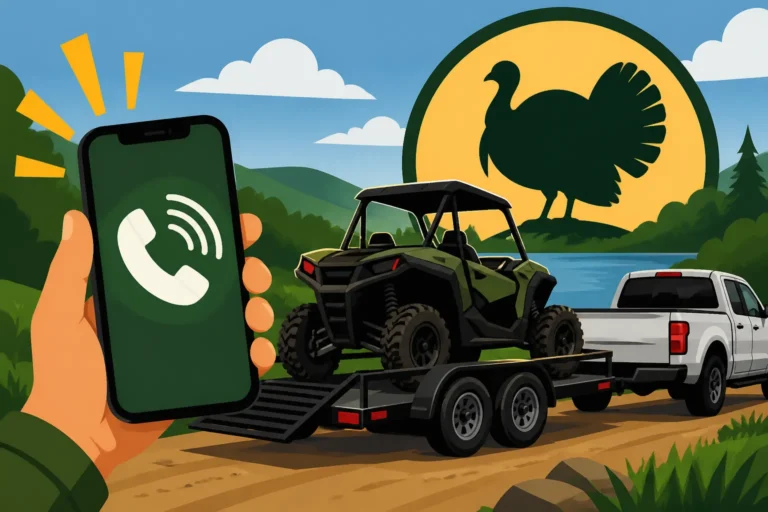
This is a place where a pre-trip check is especially sensible. Contact the gate or relevant park office before towing, particularly after substantial rain or when your travel dates fall on a major holiday. [Calling Before You Haul to Turkey Bay] offers a practical reminder: a quick check can save you from discovering a closure or changed access situation after you have already made the drive.
If you are planning to camp, read the current rules and make your arrangements early. A riding permit, camping arrangements, and access to other facilities may be handled separately. Keep [Camping Near Kentucky Trail Parks] in mind when comparing overnight options, and do not count on finding a convenient spot at the last minute.
Rush, Leatherwood, and Redbird Crest
Rush Off-Road in northeastern Kentucky, Leatherwood in the southeastern part of the state, and the Redbird Crest Trail system each offer a different kind of outing. Their locations and operating arrangements are not interchangeable, so check the specific destination you intend to visit. A route that suits a local day ride may not be the best choice for a long holiday weekend with a large group and several trailers.
At a managed park, confirm the current access, check-in, and trail information with the operator. For a trail system with different access points, identify your intended starting point and make sure every driver knows where to meet. The broader guide to [Kentucky Trail Closures to Check First] can help you build a last-minute verification routine, but the park or land manager’s own notice should guide your final decision.
| Riding area | What may complicate a holiday visit | A practical planning move |
|---|---|---|
| Black Mountain near Evarts and Putney | Busy staging, check-in, or narrow trail sections | Arrive organized and agree on a regrouping plan |
| Turkey Bay at Land Between the Lakes | Weather-related access changes and broader holiday recreation traffic | Check directly before towing and confirm camping separately |
| Rush Off-Road | Higher demand at a popular managed riding destination | Verify current operating details and allow time to unload |
| Leatherwood | Travel logistics, group pace, and checking the correct access information | Confirm arrangements with the operator and share plans with your group |
| Redbird Crest | Choosing the right trailhead and checking current trail notices | Identify the start point and review land-manager updates |
How to avoid the worst holiday delays
Choose your date and arrival time carefully
If your schedule is flexible, consider riding on a weekday or choosing a less popular edge of a holiday period instead of arriving at the busiest time. That is not a guarantee of solitude; local events, weather, and seasonal demand can still bring people out. But changing your date or arrival time may reduce the pressure at check-in and staging.
For a weekend visit, build a realistic buffer into the morning. Factor in the drive, fuel, unloading, safety checks, and any steps required before you can ride. A group that agrees to meet at the entrance at the exact time the first trailer arrives can quickly fall behind if someone needs fuel or has paperwork to sort out. Share a meeting location and a latest-arrival time before the trip.
Before leaving home, check [Kentucky Trail Closures to Check First] and then verify the park’s own update. The information you need may include whether the area is open, which routes are available, where to enter, and whether any special procedures apply. A map app can help you understand your route, but it cannot replace a current closure notice from the operator or land manager.
Make parking and unloading less stressful
A holiday staging area can feel chaotic when several groups arrive at once. Prepare your equipment before you reach the entrance: secure loose items, check tie-downs, and make sure each rider knows what they need to carry. If one person is handling check-in while another keeps the trailer organized, agree on that division in advance.
Think through where the tow vehicle and trailer will go once the machine is unloaded. Follow posted instructions and avoid taking up more room than necessary. Do not park in a way that blocks a lane, gate, or access route, even for a quick group photo or a last-minute gear adjustment. [Parking a Trailer at a Kentucky Trailhead] is worth reviewing if your group is bringing multiple rigs or towing a larger trailer.
Keep your unloading area tidy and move out of the way once you are ready. On a crowded day, small delays can ripple through the line behind you. A little preparation—checking straps before arrival, keeping helmets accessible, and having a designated driver move the truck—can make the process less stressful for your whole group and the riders waiting behind you.
Keep the ride flexible
A busy holiday is not the best day to insist on a tightly timed itinerary. Allow extra time for trail traffic, stops, and changes in conditions. If your group includes newer riders, children, or people on different types of machines, agree on a route and pace that everyone can manage. The most capable rider should not set a speed that leaves less experienced people feeling pressured.
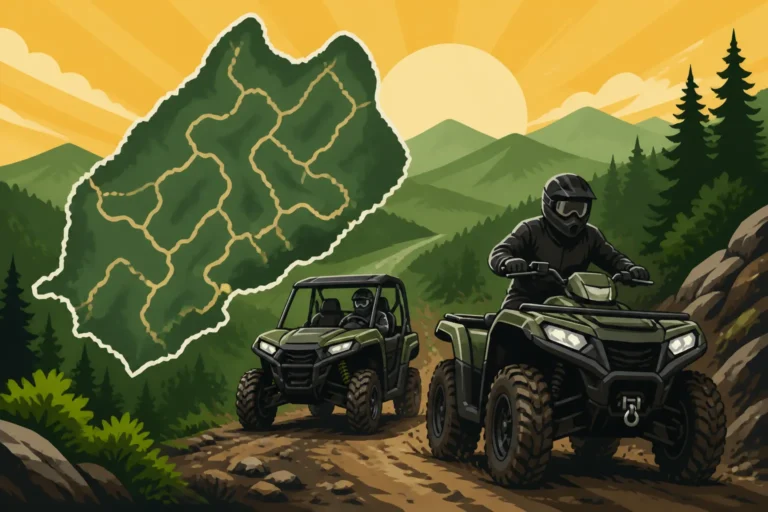
Consider carrying a reliable navigation option. onX Offroad can help riders review routes and keep track of their planned ride, but download or prepare the information you need before entering an area with weak cell service. Check the map against posted signs and official updates, and do not treat a mapped route as permission to ride somewhere that is closed or restricted.
A second option can rescue the day if the first plan is too crowded or unavailable. That might mean changing the start time, shortening the loop, or choosing a different approved riding area after checking that it is open and suitable for your group. onX Offroad can be useful for comparing route possibilities ahead of time, while a direct call to the park answers questions about current access and rules. Use both kinds of information for what they can actually tell you.
A practical holiday-trip checklist
Before you load the trailer
Start with the destination, not the gear pile. Confirm that the riding area is open on your intended date, check any special holiday schedule, and ask about current conditions if the forecast has been wet. Confirm access and camping separately when your trip depends on an overnight stay. Do not assume that a permit, reservation, or facility arrangement at one location applies at another.
Next, make sure everyone in the group knows the plan. Share the meeting point, arrival window, intended trailhead, and a backup contact method. Cell service can be unreliable in mountain hollers and remote sections, so agree on what to do if someone gets separated. Save maps and essential details before you lose coverage. onX Offroad may assist with route planning, but posted signs and official instructions take priority on the ground.
Finally, check the machines and towing setup. A holiday crowd is a poor time to discover a loose tie-down, a dead battery, or a missing essential item. Confirm that each rider has appropriate protective gear and understands the group’s pace and turnaround plan. If a machine needs repair, arrange it before the trip rather than hoping to find help at a busy trailhead.
At the park and on the trail
Follow the entrance instructions, display or carry whatever the operator requires, and ask staff if a rule or route marking is unclear. Conditions can change, and a trail that appears open on a saved map may have a current restriction. Never bypass a gate, ride around a closure, or follow tracks into an unmarked area simply because other riders have gone that way.
On the trail, leave room between machines and slow down when visibility is limited. Be especially cautious at bends, crests, intersections, and narrow sections where oncoming traffic may be difficult to see. If you stop to regroup, move somewhere that leaves the route clear. Patience matters more when there are many riders sharing the same space.
If the day becomes more crowded or difficult than expected, adjust the plan. Turn around before fatigue or frustration affects judgment, take a longer break, or head back earlier than planned. A successful holiday ride is not measured by how many miles you cover. It is one where everyone gets back safely and the trail remains in good condition for the next group.
How to decide whether to go
Use a simple decision process: verify the area is open, check the conditions, confirm your group’s access and logistics, and decide whether the expected crowd suits the kind of ride you want. If you are traveling a long distance or towing several machines, call before you leave. If you cannot confirm a key detail, have a backup rather than betting the entire trip on an assumption.
A quieter date may be a better fit for riders who want long uninterrupted loops, beginners who feel uneasy around traffic, or families who would rather avoid a rushed staging area. A holiday can still work well for experienced groups that plan early, stay flexible, and accept a slower pace. onX Offroad can support advance route preparation, while park updates and direct communication help answer the operational questions that maps cannot.
Disclaimer
This article is for general informational purposes only and does not constitute professional advice. Laws, prices and regulations vary by location and change over time. Consult a qualified professional for guidance on your specific situation.