Hollerwood Off-Road Park in Kentucky
Hollerwood Off-Road Park gives riders a chance to explore wooded hills and winding trails near Stanton, Kentucky, but a fun day can turn stressful if you arrive without checking access, trail conditions, or machine rules. This guide explains how to plan a visit, choose suitable routes, prepare your ATV or UTV, and ride thoughtfully in the Red River Gorge region.
What to expect at Hollerwood Off-Road Park
Location and riding environment
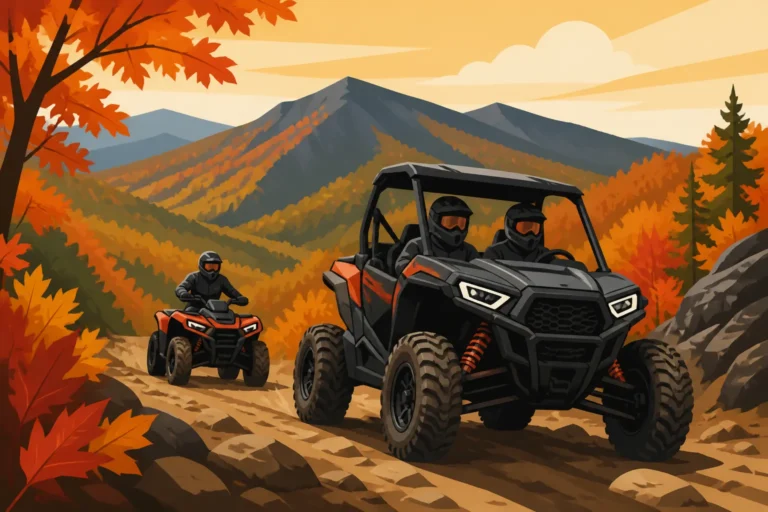
Hollerwood is near Stanton in Powell County, in eastern Kentucky’s Red River Gorge country. The setting is part of the appeal: riders can experience forested hills, changing elevations, and the kind of rugged landscape that feels very different from a flat, open riding area. If you are traveling from outside the region, remember that a short drive on a map may still involve narrow, winding roads once you get close.
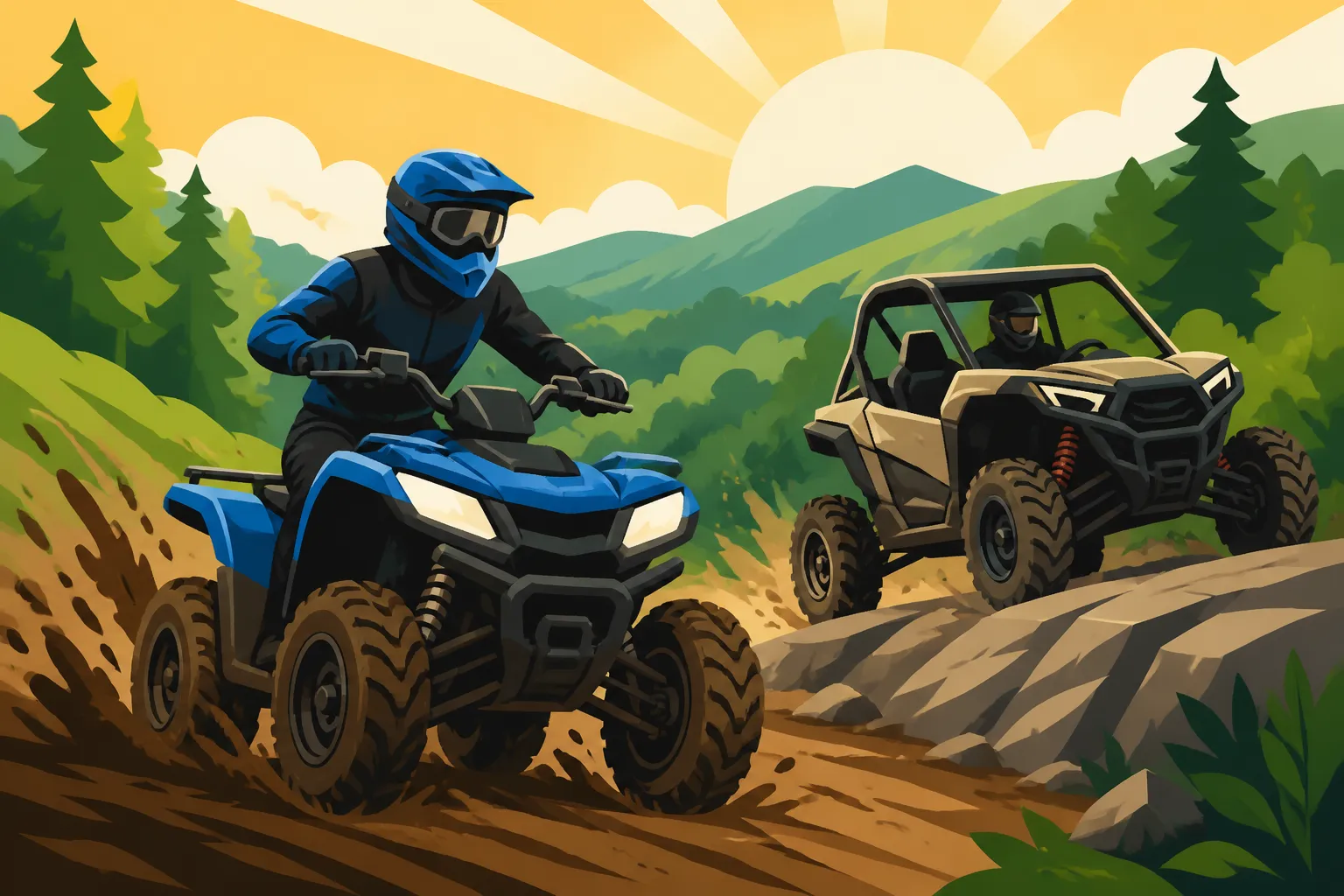
The park is commonly associated with steep terrain, wooded routes, rocky sections, and muddy conditions after rain. Those features can make the ride exciting, but they also mean that difficulty may change quickly. A trail that looks straightforward in dry weather can become slick or challenging when water runs across it. Do not assume that a route will feel the same from one visit to the next.
Hollerwood is a designated riding area, not an invitation to explore every nearby forest road or piece of private property. Stay within the park’s authorized riding area and follow posted signs, gate instructions, and staff directions. For a broader look at what the local landscape offers, see [Riding Hollerwood at Stanton] and [Riding Kentucky's Red River Gorge Country].
Who may enjoy the park
Hollerwood may appeal to riders who like a mix of wooded scenery and varied terrain, rather than a predictable loop on level ground. Experienced riders may enjoy planning a longer day around changing trail character. Newer riders can still have a good visit, but should be deliberate about choosing easy, marked routes and resisting the urge to follow a group onto a trail that exceeds their comfort level.
The park is not automatically a good fit for every machine or every rider. A full-size side-by-side, a smaller ATV, and a youth machine can handle the same trail very differently. Width, ground clearance, turning room, tire setup, and rider experience all matter. If you are unsure whether your machine is suitable for particular routes, ask the park before riding rather than trying to judge from a trail entrance.
It also helps to set expectations with your group before unloading. A rider who wants a relaxed scenic day may not enjoy a route chosen by someone looking for steep climbs and technical obstacles. Agree on a pace, a turnaround plan, and a route difficulty that works for the least experienced person in the group.
Plan your visit before you haul
Check access, conditions, and park rules
Before loading your machine, confirm that the park is open and ask about the details that can change: operating hours, permitted machine types, trail access, check-in procedures, and any temporary closures. Wet weather can affect trail conditions and access, and a park may close or restrict certain routes to protect the land or keep riders safe. Do not rely on an old social post or a past visit as proof that a particular trail is open today.
Check for any requirements that apply to your machine and riding group. Parks can have their own rules for helmets, passengers, sound, speed, trail direction, and equipment. These are separate from general state requirements and can be more specific to the riding area. Read the rules before you arrive so you are not trying to sort out paperwork or restrictions at the gate.
It is worth checking both the park’s current notices and the weather forecast for the area. A forecast for a nearby town may not capture conditions on higher or shaded trails. For a useful pre-trip checklist, review [Kentucky Trail Conditions Before You Ride] and [Kentucky Trail Closures to Check First].
Compare navigation options
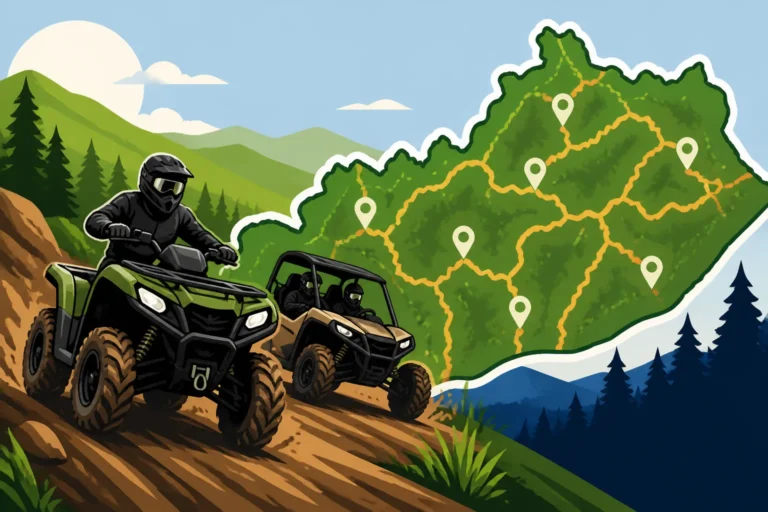
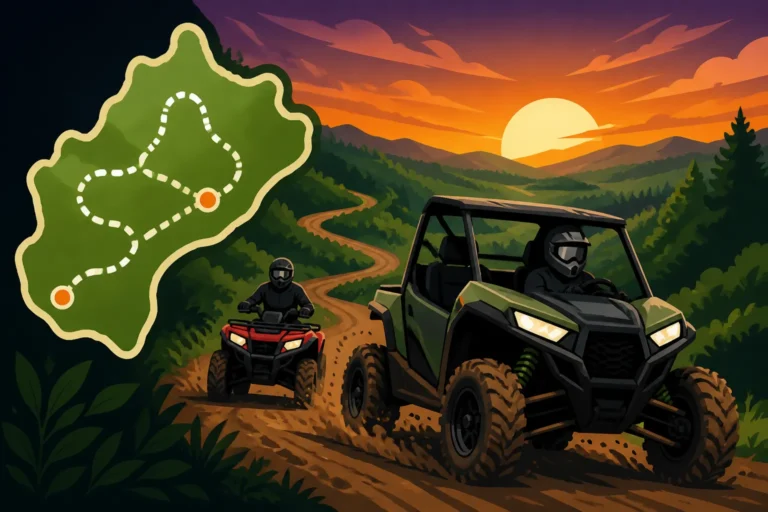
Carry the park’s current trail information and know how you will navigate if your phone loses service. A printed map can be useful as a backup, especially when the group splits up or a device battery runs low. If the park provides a map or route guidance, use that as your primary reference for understanding authorized trails and restrictions.
Digital mapping tools can help with planning and orientation, but they should not override signs or park instructions. onX Offroad may be useful for preparing a route and checking map information before you arrive; save what you need ahead of time if you expect weak cell coverage. Confirm that the information you are using matches the park’s permitted riding area. An app map is a planning aid, not permission to ride a route that is closed or outside park boundaries.
| Planning item | What to confirm | Why it matters |
|---|---|---|
| Park access | Opening status and check-in process | Prevents a wasted trip or confusion at arrival |
| Trail access | Which routes are open and permitted | Conditions and closures can change |
| Machine rules | Allowed machine types, width, and equipment | Avoids bringing a machine that cannot use the intended routes |
| Group needs | Rider experience, passengers, and pace | Helps everyone stay on suitable terrain |
| Navigation | Park map, backup map, and saved directions | Cell service may be unreliable in hilly or wooded areas |
| Weather | Recent rain and forecast for the riding area | Wet ground can change traction and difficulty |
For more guidance on preparing maps and checking trail access, see [Kentucky Trail Maps Worth Carrying]. Using onX Offroad alongside the park’s own information can help you stay oriented, but it is sensible to carry a backup and agree on a meeting point before anyone rides.
Choose a machine and route that suit your group
Match the machine to the terrain
A machine that feels easy to handle on a wide gravel road may feel awkward on a narrow, uneven trail. Before the trip, inspect tires, brakes, steering, throttle response, lights, and any protective equipment required by the park. On a UTV, check the seat belts and doors or restraints. On an ATV, make sure the controls and tires are in good condition and that the rider can handle the machine confidently.
Think about size as well as power. A wide UTV may be comfortable for passengers but less convenient on tight routes. A smaller ATV may fit narrower trails, but its rider still needs the skill and judgment to manage uneven ground. Do not choose a machine only because it looks capable in a video or because another group member owns one. Ask the park whether your machine is permitted and suitable for the routes you hope to ride.
If you are renting, read the rental agreement closely and ask what is included. Clarify whether the rental permits access to Hollerwood, what safety equipment is provided, what areas are excluded, and what to do if the machine develops a problem. Rental rules and park entry rules are not necessarily the same thing. See [Kentucky Rules for Riding a Rented Machine] for related considerations.
Select trails by ability, not by bravado
Start with the easiest suitable route and use it to get a feel for the ground, visibility, and how your machine responds. This is especially helpful for first-time visitors, riders returning after a long break, and groups with children or mixed experience. Make the first part of the day a skills check: can everyone stop smoothly, turn safely, maintain space, and communicate when the group needs to pause?
Avoid treating a trail rating as a promise that every section will be easy. A marked route may include different surfaces or short features that challenge a rider who is new to off-road terrain. If a section looks beyond your ability, stop somewhere safe, assess it, and turn around if needed. You do not owe the group a risky attempt just because someone else is confident.
A simple group rule is to choose routes for the least experienced rider, not the most adventurous one. If experienced riders want a harder route, split into groups only if the park allows it and everyone has a clear plan, working communication, and a reunion point. [Kentucky Trail Difficulty Ratings] can help you think through how to match route choice to experience.
Ride safely on Hollerwood’s changing trails
Prepare for weather and visibility
Rain changes more than the look of the trail. It can reduce traction, hide ruts, loosen soil, and make slopes harder to climb or descend. Mud can also obscure rocks and holes. If recent rain has left the ground saturated, be ready to slow down, choose a less demanding route, or postpone the ride if conditions are poor. Spinning tires through soft ground can damage trails and make recovery harder.
Visibility can also change in wooded areas. Tree cover, sharp turns, slopes, dust, and changing light can limit how far ahead you can see. Keep a pace that lets you stop within the distance you can see clearly. Leave room between machines so the person behind has time to react if the rider ahead slows suddenly.
Pack for a full day rather than the ideal version of one. Bring water, suitable clothing, basic first aid supplies, a charged phone, and any repair items appropriate for your machine. Tell someone outside the riding group where you will be and when you expect to check in. If a route takes longer than planned, that person should know how to respond.
Keep the group together and respect trail etiquette
On narrow trails, avoid crowding the machine ahead. Dust, mud, and sudden stops can make close following dangerous. Use established pull-offs or safe open areas to regroup rather than stopping around a blind turn or on a steep section. If your group becomes separated, follow the meeting plan rather than riding faster in an attempt to catch up.
Be courteous when meeting other riders. Slow down, make space where possible, and follow any posted right-of-way or traffic direction. Do not leave the marked route to pass around mud, a fallen branch, or another obstacle. Going around can widen the trail, damage vegetation, or take you into an unauthorized area. [Kentucky Trail Etiquette on Narrow Benches] offers useful principles for sharing tight routes responsibly.
A little restraint makes a difference for everyone. Avoid excessive wheelspin, loud or disruptive behavior, and riding beyond the posted boundary. If a trail appears damaged or unsafe, do not assume it is your job to clear or alter it. Report the issue to park staff when you can do so safely. Responsible riding helps keep routes usable and protects the experience for the next group.
Make the day easier from arrival to return
Build a practical ride plan
For a first visit, plan a shorter initial ride than you think you need. Check in, unload, review the current map, and let the group settle before heading out. Choose a modest route, then reassess how everyone is doing. Fatigue can creep up during a long day, particularly when riders are concentrating on uneven terrain or dealing with heat, cold, or rain.
Agree on a few details before starting: who leads, who rides last, where you will regroup, and what everyone should do if the group separates. Make sure passengers know how to communicate with the driver and that younger riders understand the group’s rules. If someone feels uncomfortable, the plan should make it easy to stop or turn back without pressure.
Leave a buffer before the park’s closing or check-out time. A minor delay, a slow section, or a machine issue can stretch the ride. Starting a difficult route late in the day leaves less time to respond calmly if conditions change. For a trip that includes an overnight stay, check nearby lodging and camping options separately; do not assume that a trail park permits overnight stays just because accommodation is available in the region. [Camping at a Kentucky Trail Park] explains what to verify.
Think through common first-visit problems
The trail looks harder than expected. Stop in a safe place and decide together whether to continue, turn back, or select another permitted route. Do not let embarrassment push a rider into a climb or obstacle they are not ready to handle. A conservative choice is often the one that keeps the day enjoyable.
Your phone has no service. Use the map and meeting points you prepared before riding. If the group has not agreed on a regroup location, stop somewhere safe and follow the park’s guidance rather than taking an unfamiliar route to search for others. This is one reason it helps to download or carry map information in advance. onX Offroad can be part of that preparation, but keep the park’s official directions and boundaries in view.
The ground is wetter than expected. Slow down and reconsider the route. If the trail is slick, visibility is poor, or you are leaving deep ruts, turn around or ask staff which areas remain appropriate. A day of riding is not worth damaging a trail or creating a recovery situation.
A machine develops a problem. Move out of the way if it is safe, keep the group together, and contact park staff using the procedure they provide. Do not attempt a repair on a steep or exposed section if you can move to safer ground. Photographing the machine’s condition before departure and reporting a problem promptly can also help avoid confusion if you are using a rental.
Hollerwood can be a rewarding destination when you plan for the terrain instead of treating the visit as an improvised ride. Check current access and rules, choose routes that suit the least experienced rider, and keep a backup navigation plan. If you are comparing destinations across the state, [Best Places to Ride an ATV in Kentucky] can help you consider other areas alongside Hollerwood.
Disclaimer
This article is for general informational purposes only and does not constitute professional advice. Laws, prices and regulations vary by location and change over time. Consult a qualified professional for guidance on your specific situation.