Riding Home After a Kentucky Sunset
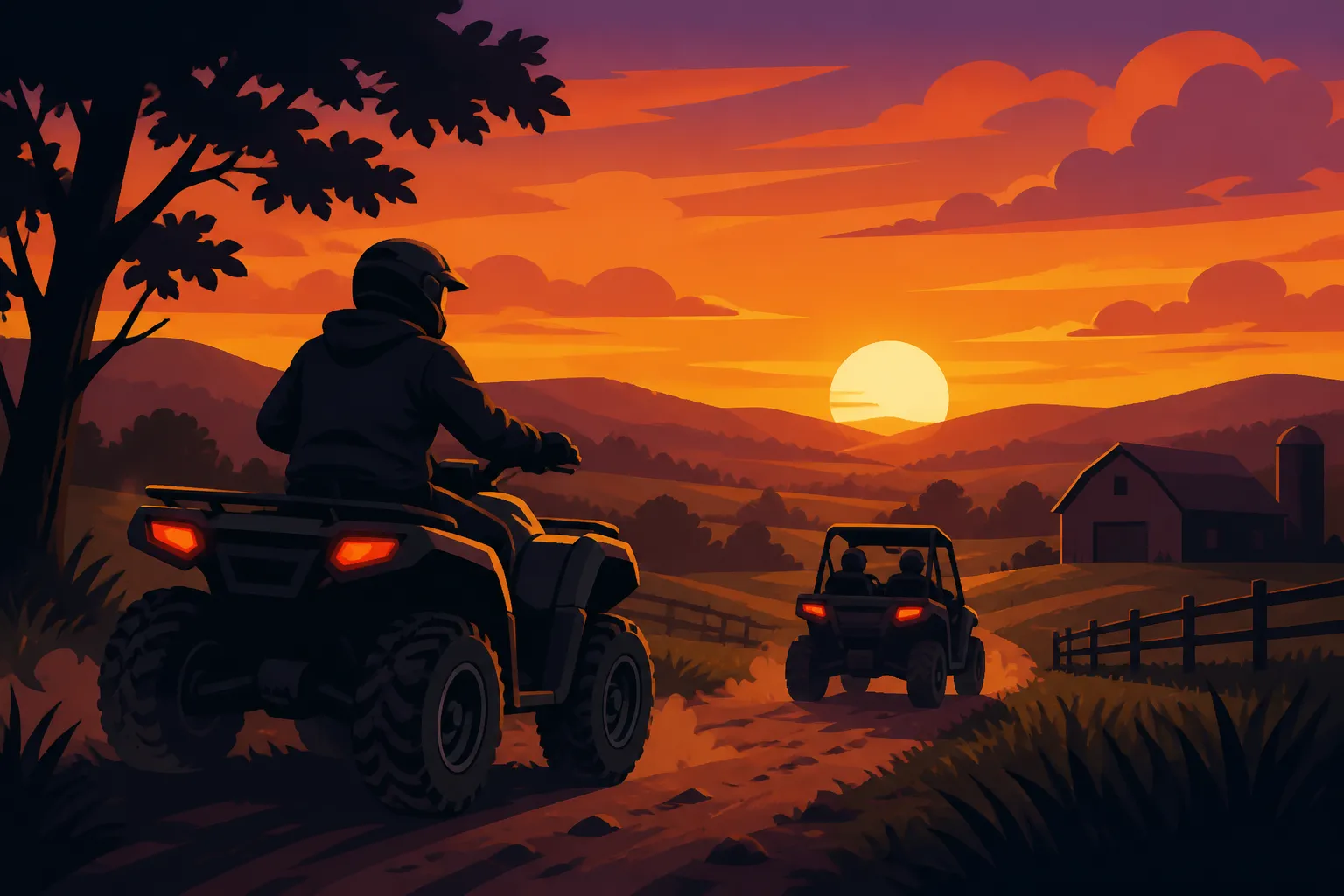
There's nothing quite like a Kentucky sunset, especially when you're out on the trails or exploring the backroads on your ATV or UTV. The way the light softens, the colors explode over the ridges, and the air cools down—it's pure magic. But then, as quickly as it arrived, that magic fades, and you're left facing a fast-approaching darkness. Suddenly, that tranquil ride home turns into a scramble against rapidly diminishing light, and for many riders, it brings up a lot of questions and even a little anxiety about navigating roads safely and legally after dark. This guide is here to walk you through exactly what you need to know about riding home after a Kentucky sunset, focusing on the legalities, essential equipment, and smart strategies to keep you safe and clear of trouble.
The Reality of Riding After Dark on Kentucky Roads
When the sun dips below the horizon in Kentucky, especially in those deep hollers or winding mountain passes, the world changes fast. What was a clear, visible path just moments before can become a confusing maze of shadows and indistinct terrain. This sudden shift in visibility has serious implications for ATV and UTV riders, particularly if your route home involves any stretch of public road. It's not just about seeing where you're going; it's about being seen by others, and that's where Kentucky's specific rules come into play.
Why Sunset Changes Everything for ATV/UTV Riders
Think about it: during the day, your ATV or UTV is usually pretty visible. The sun is out, colors pop, and other drivers can spot you relatively easily, even if you’re just crossing a short paved section. But once that sun sets, your machine practically disappears into the background unless it's properly lit. The frustration for many of us is that we're often just trying to get from one section of private land to another, or back to our truck and trailer after a great day of riding. That short hop on a county road, which felt completely innocuous in broad daylight, can suddenly feel like a high-stakes gamble when it's pitch black. You’re not just battling the darkness; you're battling the unexpected deer that might dart out, the potholes that seem to swallow light, and the inattentive motorist who simply isn't looking for a smaller, often less-lit vehicle like an ATV.
The contours of Kentucky's landscape only amplify this problem. Those beautiful, tree-lined trails and dense forests that offer such amazing shade during the day become light-absorbing tunnels at dusk. A "holler" that seemed friendly and familiar suddenly feels isolating when the ambient light vanishes. It’s a common scenario: you’ve ridden a bit too long, chasing one last view, and now you’re trying to make it back to camp or your vehicle, and that last mile or two involves a brief stint on a paved or gravel county road. Suddenly, road rules, which might have seemed like a secondary concern earlier in the day, become the absolute priority, because that's where the biggest legal and safety risks lie.
Understanding Kentucky's "Daylight Only" Rule for Road Use
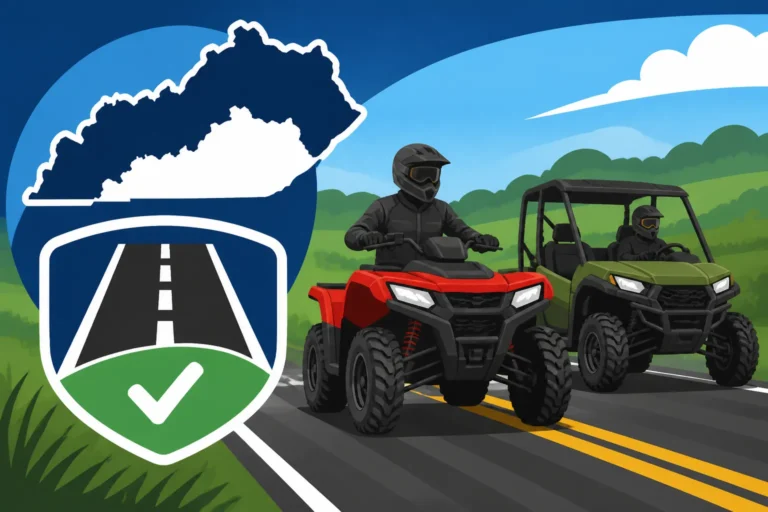
Here's the tough pill to swallow: generally speaking, ATVs and UTVs are not considered street-legal vehicles in Kentucky. The state law primarily views them as off-road machines. This means that riding on public roads—whether it's a state highway, a county road, or even a city street—is largely prohibited. There are, however, a few specific exceptions that many riders try to leverage, but here's the critical catch when it comes to riding after dark: most of these exceptions often carry a strict "daylight only" caveat.
For instance, Kentucky law allows for very limited road crossings, often cited as the "0.2-mile" rule, which means you can cross a two-lane highway at a ninety-degree angle for no more than two-tenths of a mile to get from one private property to another. Similarly, there are specific exemptions for farm work, mining operations, and logging, where machines can use public roads for direct tasks. However, the statutes governing these allowances are frequently very clear: they generally apply only during daylight hours. This is why [Daylight Only Under the Statute] is such an important concept for riders to understand. Even if you're pulling a trailer of hay for a quick farm errand, or just making a short dash across a county road from one section of your hunting lease to another, doing so after sunset can put you squarely in violation of the law.
The implication is stark: if you're trying to ride home after a Kentucky sunset and you encounter any public road, you need to assume you are operating illegally unless your machine has undergone a full street-legal conversion as a Special Purpose Vehicle (SPV), which we'll discuss later. Otherwise, that deputy who pulls you over as you try to make it the last hundred yards to your driveway will not care that you were just trying to get home safely. He'll see an off-road vehicle on a public road after dark, which usually translates to a citation. You might think, "It's just a little county road, who cares?" But law enforcement, especially after dark, is often looking for anything out of the ordinary, and an ATV without proper lighting on a public road certainly fits that description. For more general rules, check out [Kentucky Rules for Riding a County Road].
Essential Lighting and Equipment for Night Riding
Even when you're riding strictly off-road on private property or designated trail systems, riding after dark demands a significant upgrade in your machine's lighting and your personal visibility. The factory headlights on many ATVs and UTVs are fine for basic daylight riding or maybe getting you back to camp at dusk, but they often fall far short of what you truly need for safe, confident night riding. And if you're even contemplating legal road use after dark, the requirements become much more stringent.
Beyond the Headlight: What You Really Need
Let's be honest, the single headlight or pair of small factory lights on your ATV or UTV often feels more like a suggestion of light than actual illumination. For serious night riding, whether on challenging trails or considering any road interaction, you need to go far beyond the bare minimum. You're not just trying to make out the trail directly in front of you; you need to see what's around the bend, spot that fallen log before you hit it, or avoid that deer standing just off the trail. This is where auxiliary lighting becomes your best friend. Powerful LED light bars, floodlights, or spot beams can transform your night riding experience, turning sketchy shadows into clear visibility. Companies like SuperATV offer a fantastic range of aftermarket lighting solutions, from compact pod lights that can be mounted virtually anywhere to full-width light bars that turn night into day on the trail.
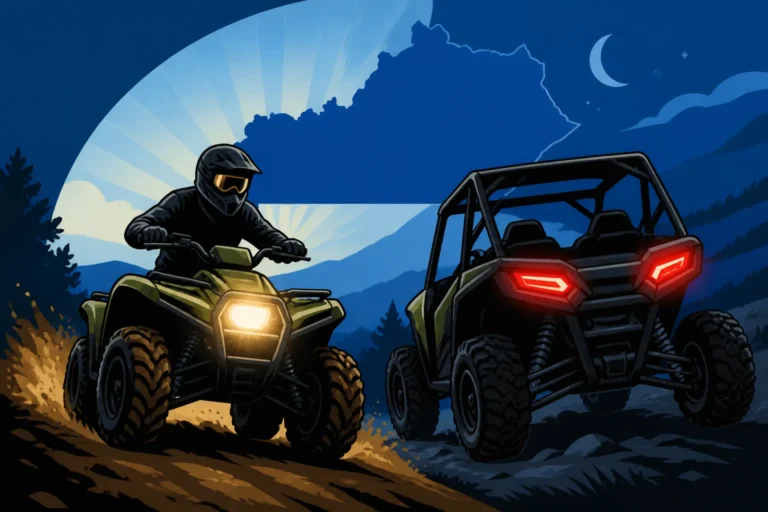
Beyond just raw forward illumination, think about your rear visibility. Your taillights and brake lights are crucial, not only for legal compliance on roads (where [One Headlight and Two Taillights in Kentucky] outlines basic requirements) but also for your riding buddies. Imagine riding in a group at night, and the rider in front of you has dim, mud-caked taillights. It's a recipe for a rear-end collision. Brighter LED taillights, perhaps even an auxiliary brake light, can make a huge difference in ensuring those behind you know exactly where you are and when you're slowing down. Don't overlook the importance of these often-underestimated components; they're vital for both safety and preventing an unexpected ticket.
Reflectors, Visibility Gear, and Machine Maintenance
Visibility isn't just about projecting light; it's also about reflecting it. Even with powerful lights, adding reflective tape to strategic points on your machine—like the front forks, rear fenders, or the sides of your UTV—can dramatically increase your visibility to other vehicles, especially those approaching from angles where your primary lights might not be fully effective. Think of it as an extra layer of passive safety. And it's not just your machine; what you wear matters too. A reflective vest or jacket, especially one with high-visibility colors, can make you much more noticeable to others, whether you're on the trail or dismounting briefly to check your surroundings.
Beyond adding accessories, the maintenance of your existing lighting system is paramount. It sounds obvious, but dirty headlight and taillight lenses drastically reduce their effectiveness. A quick wipe-down before a night ride, or even carrying a small cleaning cloth, can make a significant difference. Ensure all your bulbs are working, and check your wiring for any loose connections or corrosion that could lead to intermittent failures. Moreover, your machine's electrical system, particularly the battery and stator, needs to be in top shape to power all those extra lights. A weak battery can quickly leave you stranded in the dark, a situation no one wants to be in. Ensuring robust battery health is critical for sustained lighting and overall machine reliability after dark. [Kentucky Lighting Requirements for ATVs] typically refer to minimums, but for true night riding, more is always better.
Navigating the Legal Landscape When the Sun Goes Down
This is where riding home after a Kentucky sunset gets particularly tricky for ATV and UTV enthusiasts. Kentucky's laws are generally quite restrictive about off-highway vehicles on public roads, and these restrictions tighten considerably once daylight fades. It's a common misconception that if you're just "crossing the road" or "going a short distance," you'll be fine. While that might sometimes fly under the radar during the day, the risks multiply exponentially after dark, both in terms of safety and legal consequences.
When a Short Road Stretch Becomes a Big Problem
Imagine this all-too-common scenario: you’ve been riding all day on leased land or at a private hunting camp. The sun has dipped below the last ridge, and the shadows are long and deep. You know there’s a county road, maybe only a quarter-mile long, that connects you directly back to your truck and trailer, saving you an extra hour of winding through the dense woods. During the day, you might have just zipped across it. But now, in the near darkness, that short stretch of pavement becomes a minefield. Your off-road machine isn't designed for road speeds, its lights are probably inadequate for highway use, and other vehicles aren't expecting you.
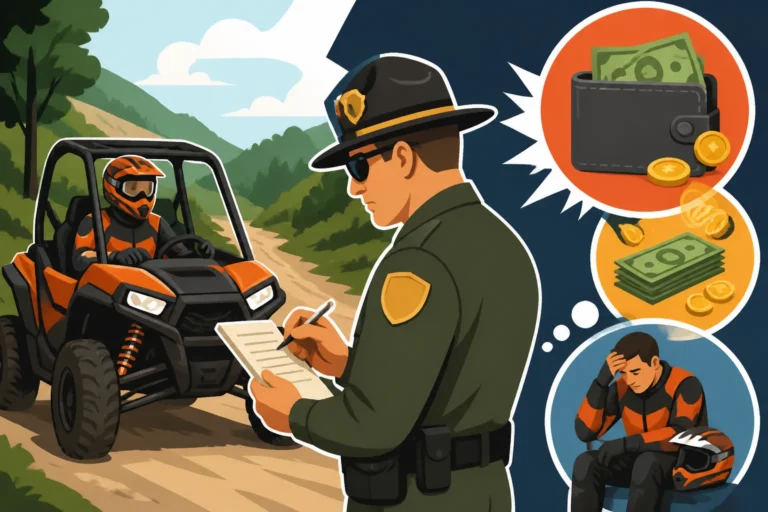
This is precisely the situation where you become highly vulnerable to both accidents and citations. A deputy, especially on night patrol, will be much more vigilant for anything that looks out of place. An ATV or UTV without proper road-legal lighting (which is distinct from off-road lighting) on a public road after dark is a clear violation. Even if you argue you were "just trying to get home," that excuse won't negate the fact that you were operating an unregistered, uninspected off-road vehicle on a public roadway after hours. The potential for [Kentucky Fines for Illegal ATV Road Use] can be significant, and nobody wants that kind of expense or hassle after an otherwise enjoyable day of riding. This is why having [A Deputy at a Kentucky Roadside Stop] is a scenario you want to avoid, especially when you're already operating in a legal gray area or worse.
The Street-Legal Conversion: Your Best Bet for Night Road Use
For those who absolutely need to use public roads, even briefly, after sunset, the most secure legal pathway is to convert your UTV (unfortunately, ATVs typically don't qualify) into a "Special Purpose Vehicle" or SPV. This designation allows a UTV to be legally operated on certain public roads in Kentucky, including after dark, provided it meets a strict set of equipment and registration requirements. This isn't a simple bolt-on job; it involves a comprehensive conversion process and an inspection to ensure your machine meets all the necessary standards.
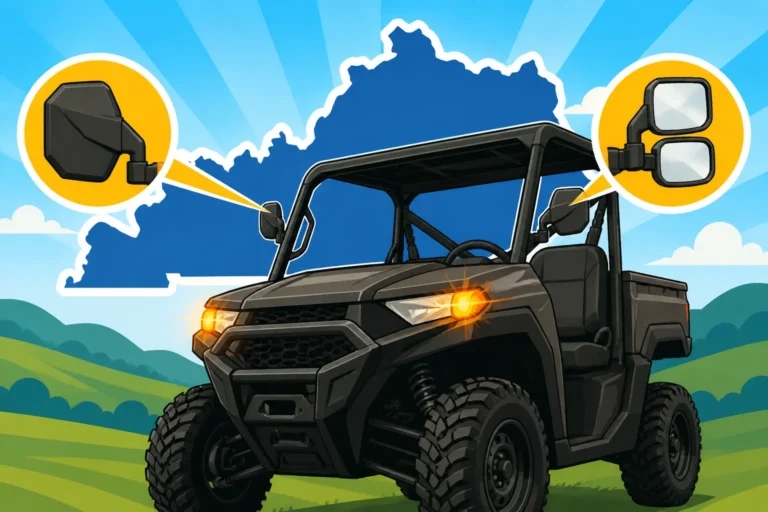
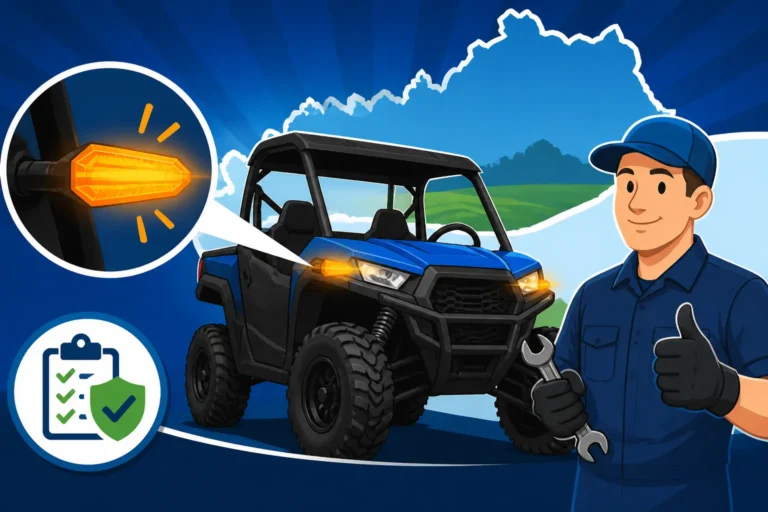
The SPV conversion demands specific lighting that goes far beyond what comes stock on most UTVs. This includes functional turn signals, a horn, dual rearview mirrors, an illuminated speedometer, DOT-approved tires, and often a windshield. The idea is to make your UTV as visible and controllable as a standard vehicle. You'll need to pass an inspection, get it titled, and register it, much like a car or motorcycle. While it's an investment in time and money, a proper SPV conversion provides the peace of mind that comes with legal road use, even after dark. Companies like SuperATV offer various kits and components that can help you meet these requirements, from street-legal kits to specific lighting and safety accessories. Understanding the [Kentucky Street Legal UTV Requirements] is your first step. Remember, meeting the [Kentucky SPV Equipment List] and having things like [Turn Signals and Dual Mirrors on a Kentucky SPV] are non-negotiable for legal night-time road operation.
Practical Tips for Riding Home Safely After Sunset
Beyond the legalities and equipment, there are practical steps every rider can take to ensure a safer journey when the sun starts to set and you're making your way back home. A little foresight and a change in riding habits can go a long way in preventing an accident or an unexpected run-in with law enforcement.
Planning Ahead and Communicating Your Route
The best defense against getting caught in the dark on an unfamiliar or legally precarious route is proactive planning. Before you even head out for the day, check the sunset time for your location. If you anticipate being out late, factor in extra time for your return trip and plan a route that minimizes any necessary public road interaction, or ensures you're off the trails and loaded up well before dusk. Sharing your intended route and estimated return time with a friend or family member is always a smart move, giving them a heads-up if you're unexpectedly delayed.
Carrying essential gear is also crucial. A fully charged cell phone (though reception can be spotty in some Kentucky hollers) is a must. Beyond your machine's lights, a good headlamp or powerful flashlight can be invaluable for navigating off-machine, checking fluids, or making minor repairs in the dark. It also serves as a backup light source if your primary machine lights fail. Think about [Riding Home After a Kentucky Sunset] as a specific objective, and prepare for it accordingly. It's not just about what to do when it happens, but how to ensure it's a smooth, controlled transition from daylight to dark.
Adapting Your Riding Style to the Darkness
Riding at night, even with excellent lighting, requires a completely different approach than daytime riding. The first and most critical adjustment is speed. Everything looks different in the dark, and your depth perception is significantly reduced. What looked like a small dip in daylight could hide a sizable rut at night. Slowing down gives you more reaction time to spot obstacles, wildlife (which are often more active at dusk and dawn), and other vehicles, especially on those unexpected road crossings. Increase your following distance if you're riding with a group, as dust kicked up during the day can become a blinding cloud in headlight beams at night.
Be extra vigilant for any changes in terrain or unexpected hazards. Keep your eyes scanning further ahead than you would in daylight, and use your peripheral vision to pick up on movement or changes in shadows. If you're on a trail you know well, don't let familiarity breed complacency; the trail might have changed since your last ride. If you're using any public roads, even legally as an SPV, be acutely aware of other traffic. They might not expect you, and their headlights can make it difficult for you to see them or even your own path. Avoid any unfamiliar trails or high-risk maneuvers when the visibility is compromised. The goal is to get home safely, not to push your limits.
Table: Lighting Requirements for Kentucky ATV/UTV Road Use
This table outlines the typical differences between standard off-road machine lighting and what's required for a UTV to be legally operated as a Special Purpose Vehicle (SPV) on Kentucky roads after dark. Remember, ATVs rarely qualify for SPV conversion.
| Feature | Standard Off-Road ATV/UTV (Daylight-Only Road Exceptions) | Street-Legal SPV UTV (Night-Time Road Use) |
|---|---|---|
| Headlights | Often one or two, adequate for off-road visibility. | Must have two, white, securely mounted, and conform to state vehicle lighting standards. |
| Taillights | One or two, typically red. | Must have two, red, visible from 500 feet to the rear. |
| Brake Lights | Typically integrated with taillights, activates on braking. | Must be functional, brighter than taillights, and activate upon braking. |
| Turn Signals | Not typically required. | Required, front (amber) and rear (red or amber), visible from 100 feet. |
| Horn | Not typically required. | Required, audible from 200 feet. |
| Mirrors | Not typically required. | Required, at least one left-side mirror, often dual rearview mirrors for SPVs. |
| Speedometer | Not typically required. | Required, clearly visible and illuminated at night. |
| DOT-Approved Tires | Off-road specific tread, not DOT-rated. | Required, rated for highway use. |
| Reflectors | May have some, not always regulated. | Required, amber on front sides, red on rear sides. |
| Windshield | Not typically required. | Required for SPVs to operate legally on roads. |
Disclaimer
This article is for general informational purposes only and does not constitute professional advice. Laws, prices and regulations vary by location and change over time. Consult a qualified professional for guidance on your specific situation.