Motorcycle-Level Insurance for a Kentucky SPV
Navigating the confusing world of ATV and UTV laws in Kentucky can be a real headache, especially when you're trying to figure out what it takes to get your machine legally on certain roads. Many folks assume a basic off-road policy is all they need, only to discover that if their Special Purpose Vehicle (SPV) is going to touch pavement, the Bluegrass State demands something much more robust. This guide is here to untangle the specific insurance requirements for your Kentucky SPV, focusing on what "motorcycle-level insurance" actually means for you and your machine.
The Basics of Kentucky's Special Purpose Vehicle SPV Designation
Before we dive deep into insurance, it's crucial to understand what Kentucky considers an SPV in the first place. This isn't just a fancy name; it's a specific classification that dictates everything from how you title your machine to the safety equipment you need and, yes, the kind of insurance you must carry. Without this designation, your beloved ATV or UTV is, by default, an off-road only vehicle in the eyes of the law when it comes to public roads.
What Exactly Qualifies as a Kentucky SPV?
Kentucky's SPV designation isn't a catch-all for any off-road vehicle. It's a specific category for machines like UTVs and some larger ATVs that meet certain criteria, allowing them to be operated on approved public roads. Generally, these are machines designed for off-road use but can be modified and inspected to meet safety standards for limited street use. We're talking about machines that typically have a steering wheel, side-by-side seating, and are often equipped with features that make them feel more like a small car than a traditional ATV. The core idea is that they bridge the gap between pure off-roaders and street-legal vehicles, offering a compromise for rural and community transportation.
To qualify as an SPV, your machine must typically pass an inspection conducted by the Kentucky State Police. This inspection ensures it meets specific safety and equipment requirements like proper headlights, taillights, brake lights, turn signals, and mirrors, among others. Without this inspection and the subsequent SPV registration, your vehicle remains an off-road machine, regardless of how many street-legal modifications you've bolted on. It’s a process that can feel a bit like jumping through hoops, but it’s absolutely essential if you plan to hit those approved paved surfaces.
Why the SPV Designation Matters for Road Use
The SPV designation is the golden ticket for operating your ATV or UTV on certain public roads in Kentucky. Without it, you're limited to private property, designated trail systems like [Black Mountain Off-Road Adventure Area in Kentucky], or very specific, narrow exceptions like farm use. It creates a legal framework that acknowledges the utility of these machines for things like running errands in rural communities, accessing hunting camps, or connecting trail segments.
However, it's important to remember that even with the SPV designation, you don't get free rein on all roads. Kentucky law still places restrictions on where and how an SPV can be operated. For instance, these machines are generally not allowed on interstates or state parkways. Many cities and counties also have to "opt-in" to allow SPVs on their local roads, meaning you can't just assume every street is fair game. This patchwork of regulations can be confusing, making the SPV status a necessary but not always sufficient condition for your desired road use. Always check local ordinances and stay informed about [Kentucky Rules for Riding a County Road] or [Kentucky Rules for Riding a City Street] before you head out.
Understanding Kentucky's Insurance Requirements for SPVs
Once your machine qualifies as a Kentucky SPV, the insurance game changes significantly. You can't just rely on a basic ATV or UTV policy anymore. The state demands a higher level of coverage, mirroring what's required for more traditional on-road vehicles. This mandate is in place to protect everyone on the road, recognizing the increased risks associated with operating an off-road machine in a public traffic environment.
The "Motorcycle-Level" Mandate: What Does It Mean?
When Kentucky law specifies "motorcycle-level insurance" for SPVs, it's essentially saying your UTV or ATV, when designated for road use, must carry the same minimum liability coverage as a motorcycle. This isn't just a suggestion; it's a legal requirement for [Kentucky SPV Registration Cost]. What this typically means is coverage for bodily injury liability per person, bodily injury liability per accident, and property damage liability per accident. These are the foundational protections that kick in if you're found at fault in an accident and cause injury to another person or damage to their property.
Think about it: if you're involved in an incident on a public road, the potential for serious injury or significant property damage is much higher than a fender bender on a dirt trail. A standard off-road policy might have much lower liability limits, or even none at all if it's primarily designed for private land use. The "motorcycle-level" mandate ensures that if an unfortunate incident occurs, there's adequate financial protection for anyone impacted, preventing you from being solely on the hook for potentially devastating costs. This level of coverage is fundamental to responsible road sharing.
Comparing SPV Insurance to Standard ATV/UTV Policies
The difference between a standard off-road ATV/UTV policy and the required SPV insurance is substantial, largely due to the exposure to public roads and the legal liabilities that come with it. A typical off-road policy might focus on physical damage to your machine while on trails, often including things like collision, comprehensive, and perhaps some limited medical payments coverage for the rider. Liability coverage, if it exists, might be minimal, assuming a lower risk environment.
| Feature | Standard ATV/UTV Policy (Off-Road Only) | Kentucky SPV Insurance (Motorcycle-Level) |
|---|---|---|
| Primary Use | Private land, designated trails | Approved public roads, private land, trails |
| Liability Coverage | Often optional, lower limits, or trail-specific | Mandatory, higher limits (state minimums for motorcycles) |
| Physical Damage (Comp/Coll) | Often available, but priced for off-road risks | Available, priced for on-road and off-road risks |
| Medical Payments | May be included for rider/passenger | May be included, broader coverage options |
| Uninsured/Underinsured | Less common, often an add-on | Highly recommended, often available |
| Inspection Required | No | Yes, for SPV designation |
| Registration Required | Title only, no road registration | State SPV registration with plate |
When you transition to an SPV policy, the emphasis shifts dramatically to liability coverage. The state isn't just worried about your machine; it's concerned about your impact on other motorists, pedestrians, and property. While you can still add comprehensive and collision coverage to protect your own SPV, the core requirement is that robust liability. This means higher premiums, but it also means a far greater peace of mind knowing you're adequately protected when your machine ventures out onto asphalt alongside cars and trucks. Companies like Progressive, Dairyland, and Geico are often good places to start looking for this specialized coverage.
Diving Deep into Motorcycle Insurance Coverage
Since Kentucky mandates "motorcycle-level" insurance for SPVs, understanding what that entails is crucial. It's not just a single policy type; it's a suite of coverages designed to protect you, your machine, and others in various scenarios. Getting familiar with these components will help you make informed decisions when choosing your SPV policy.
Liability Coverage: Protecting Others (and Yourself from Claims)
Liability coverage is the bedrock of any motor vehicle insurance policy, and it's particularly important for your Kentucky SPV. This coverage is designed to protect you financially if you are at fault in an accident that causes injury to another person or damage to their property. It’s typically broken down into two main components: bodily injury liability and property damage liability. Bodily injury liability covers medical expenses, lost wages, and pain and suffering for the injured party, while property damage liability covers the cost to repair or replace damaged vehicles, fences, mailboxes, or other property.
Kentucky, like most states, has minimum liability limits you must carry. These minimums might be expressed as three numbers, such as 25/50/25: meaning $25,000 for bodily injury per person, $50,000 for bodily injury per accident (if more than one person is injured), and $25,000 for property damage per accident. While these are the minimums to be legally compliant, many insurance professionals will tell you that carrying higher limits is a wise decision. An accident can quickly exceed these minimums, leaving you personally responsible for the difference, which could be financially ruinous. Always consider purchasing limits that provide a stronger safety net, especially with the unique risks an SPV presents on public roads.
Collision and Comprehensive: Protecting Your Investment
While liability covers damage to others, collision and comprehensive coverages are all about protecting your own SPV. Collision coverage pays for damage to your machine if it collides with another vehicle or object, or if it rolls over. This is the coverage that will help repair your UTV after a fender bender with a pickup truck, or if you misjudge a turn on a gravel road and hit a ditch. It's an invaluable part of your policy, especially considering the cost of repairs for modern ATVs and UTVs.
Comprehensive coverage, on the other hand, steps in for damage to your SPV that isn't caused by a collision. This can include a wide array of perils such as theft, vandalism, fire, natural disasters (like hail or floods), or hitting an animal. If your SPV is stolen from your garage or vandalized while parked at a trailhead, comprehensive coverage is what you’ll be relying on. Given the value of many SPVs today, and the common practice of accessorizing them with items from brands like SuperATV, having both collision and comprehensive coverage is highly recommended. These are usually optional coverages, but they are crucial for protecting your investment, whether you’re riding on pavement or exploring the trails.
Uninsured/Underinsured Motorist Coverage: An Essential Layer
Imagine you're carefully navigating a county road in your SPV, and another driver, who either has no insurance or insufficient insurance, causes an accident that injures you and damages your machine. Without uninsured/underinsured motorist (UM/UIM) coverage, you could be left footing the bill for your medical expenses and repairs. This type of coverage is designed precisely for these unfortunate situations. Uninsured motorist coverage protects you when the at-fault driver has no insurance, while underinsured motorist coverage kicks in when their liability limits aren't enough to cover your damages.
This coverage is particularly important because, despite legal requirements, many drivers on the road operate without adequate insurance. Adding UM/UIM to your Kentucky SPV policy provides an essential layer of protection, safeguarding your financial well-being in scenarios beyond your control. It covers your medical bills, lost wages, and potentially even damage to your SPV, depending on your specific policy and the state's regulations. While it's often an optional add-on, considering the prevalence of uninsured motorists, it’s a wise investment for any SPV owner planning to operate on public roads.
Factors Influencing Your Kentucky SPV Insurance Premiums
Just like with any other vehicle, the cost of your Kentucky SPV insurance isn't a one-size-fits-all number. Several factors come into play, influencing how much you'll pay for that crucial motorcycle-level coverage. Understanding these elements can help you identify ways to manage your premiums and ensure you're getting the best value for your specific situation.
Your Machine's Specs and Modifications
The type of SPV you own plays a significant role in determining your insurance premium. Generally, newer, more powerful, or more expensive machines will command higher premiums, simply because they cost more to repair or replace. A brand-new, top-of-the-line UTV equipped with all the latest features will inherently be more expensive to insure than an older, more modest ATV that just barely meets the SPV criteria. The cost of parts and labor for these machines also factors in; specialty parts, particularly those from aftermarket suppliers like SuperATV, might be more expensive to source.
Furthermore, modifications can also impact your rates. While many SPV owners customize their machines for performance or aesthetics, certain modifications might increase the risk of theft, damage, or even alter the vehicle's safety characteristics in the eyes of an insurer. It’s always a good idea to inform your insurance provider about any significant aftermarket additions. Some companies might even offer specific coverage for custom parts and accessories, but it’s an important discussion to have upfront to avoid any surprises after a claim.
Your Riding History and Location
Your personal driving record and where you live also heavily influence your SPV insurance rates. A clean driving history, free of accidents, traffic violations, or prior claims, will almost always result in lower premiums. Insurers view a responsible rider as a lower risk. Conversely, a history of tickets, at-fault accidents, or DUI convictions will likely lead to significantly higher rates, as you're perceived as a greater risk on the road.
The location where your SPV is primarily garaged and ridden also matters. If you live in an area with a high rate of vehicle theft, or a region with frequent accidents, your premiums might be higher. Similarly, if your primary riding areas involve challenging terrain or high-traffic roads, this could factor into the risk assessment. Insurance companies use complex algorithms that consider local crime rates, weather patterns, and traffic density to calculate risk, so your geographic location is definitely a piece of that puzzle. This is why a rider in a quiet rural Kentucky holler might pay a different rate than someone in a more populated area.
Choosing the Right Deductibles and Coverage Limits
Another major factor in your premium is the deductible you choose and the coverage limits you select beyond the state minimums. A deductible is the amount of money you agree to pay out-of-pocket before your insurance coverage kicks in for collision or comprehensive claims. Opting for a higher deductible typically results in a lower monthly or annual premium, because you're taking on more of the initial financial risk. However, be realistic about what you can afford to pay if you do need to make a claim.
Conversely, choosing higher liability limits, while increasing your premium, provides greater financial protection. As discussed, Kentucky's minimums are just that – minimums. If you cause an accident with significant damages or injuries, those minimums can be quickly exhausted, leaving your personal assets vulnerable. Striking the right balance between affordable premiums and adequate protection by carefully selecting your deductibles and coverage limits is a personal decision, but one that warrants careful consideration to ensure you’re adequately covered for your riding habits and the value of your machine.
Navigating the Insurance Market for Your SPV
Finding the right insurance for your Kentucky SPV can feel like a daunting task, especially with the specific "motorcycle-level" requirement. However, by knowing where to look and what questions to ask, you can secure a policy that meets both legal mandates and your personal needs.
Reputable Insurers Offering SPV Policies in Kentucky
Not every insurance company that offers car or home insurance will necessarily offer specialized SPV or motorcycle-level UTV policies. It's a niche market, but several reputable insurers do provide this type of coverage in Kentucky. Major national carriers like Progressive, Dairyland, GEICO, and Farmers often have dedicated motorcycle and powersports divisions that are well-versed in state-specific requirements for SPVs. These companies have established networks and typically offer a range of coverage options, from basic liability to comprehensive packages that include accessories from companies like SuperATV.
Beyond the national players, you might also find local or regional insurance agencies that specialize in powersports. These smaller agencies sometimes have a deeper understanding of the local riding culture and specific state laws, and they can offer personalized advice. Regardless of who you approach, always be upfront about your machine's SPV designation and your intention to operate it on public roads. This ensures you get an accurate quote and a policy that truly covers you for your intended use, avoiding any nasty surprises down the line.
Tips for Getting the Best Quotes and Discounts
Getting multiple quotes is perhaps the single most important step in finding the best insurance rate for your Kentucky SPV. Don't settle for the first quote you receive. Contact at least three to five different providers to compare their offerings side-by-side. This not only helps you find the most competitive price but also allows you to compare the nuances of each policy, such as deductible options, additional coverage features, and customer service ratings. Many insurers also offer online quote tools that can give you a preliminary estimate quickly.
Beyond comparison shopping, look into potential discounts. Many insurers offer a variety of ways to save. Common discounts include:
- Multi-policy discount: Bundling your SPV insurance with your car, home, or life insurance.
- Safety course discount: Completing an approved ATV or motorcycle safety course, even though [Does Kentucky Require an ATV Safety Course?] is not universally true, taking one can still benefit your premiums.
- Good driver/rider discount: A clean driving record can significantly reduce your rates.
- LoJack/anti-theft device discount: If your SPV has an approved anti-theft system.
- Organization/association discount: Being a member of certain riding clubs or professional organizations.
- Paid-in-full discount: Paying your annual premium upfront instead of monthly installments.
Always ask your insurance agent about all available discounts. Sometimes, a few small discounts can add up to significant savings, making that motorcycle-level SPV insurance more affordable.
Beyond the Policy: What Else You Need to Know for Street Legal SPV Operation
Having the right insurance policy is a critical piece of the puzzle for legal SPV operation in Kentucky, but it's not the only one. Operating an SPV on public roads involves a confluence of legal requirements that extend beyond just your insurance card. Understanding these interconnected rules is crucial for staying compliant and enjoying your machine without fear of fines or citations.
The Interplay of Insurance with Other SPV Requirements
Your motorcycle-level insurance policy is directly linked to other mandatory aspects of Kentucky's SPV program. For instance, you absolutely cannot obtain [Kentucky SPV Registration Cost] and a license plate without proof of this specific type of insurance. It's a foundational requirement that clerks at the county office will verify before issuing your registration. This means you need to secure your policy before heading to the County Clerk's office to complete the registration process.
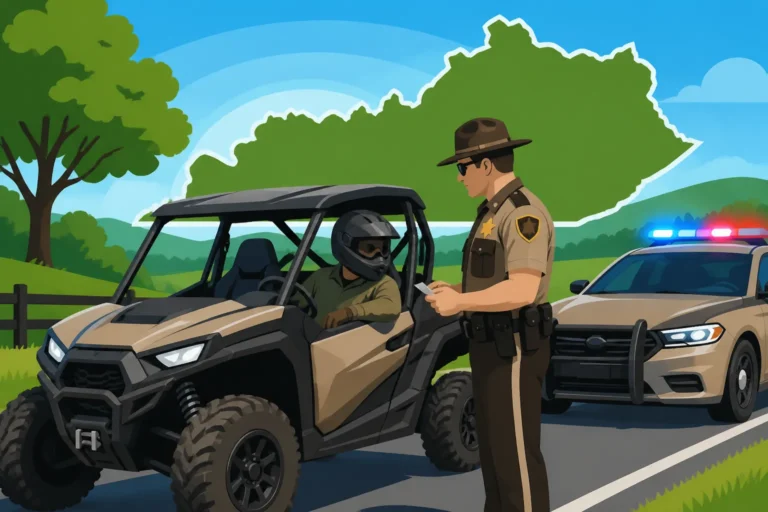
Beyond registration, carrying proof of insurance is essential whenever you're operating your SPV on a public road. Just like with a car or motorcycle, a law enforcement officer can request proof of insurance during a traffic stop. Failing to provide valid proof can lead to fines, suspension of your driving privileges, and even impoundment of your machine. This interconnectedness emphasizes that SPV operation on roads is a serious matter, requiring adherence to a comprehensive set of regulations, not just picking and choosing which ones you like.
Keeping Your Policy Current and Compliant
Insurance policies are not static; they require ongoing attention to ensure they remain current and compliant with Kentucky law. Your SPV registration is often renewed annually, and with that renewal comes the renewed requirement for valid insurance. If your policy lapses or is canceled for any reason, your SPV registration could become invalid, and you would then be operating an uninsured vehicle on public roads, which carries significant penalties.
It's also important to regularly review your policy to ensure it still meets your needs. Have you added significant modifications to your SPV, perhaps some new heavy-duty bumpers or a lift kit from SuperATV? Your current policy might not fully cover the value of these additions. Has your riding habit changed, perhaps you're using your SPV more frequently on roads for commuting? Your coverage limits might need an adjustment. Life changes, and so should your insurance. Make it a habit to check in with your insurance provider annually, or whenever there's a significant change to your machine or how you use it, to confirm you're adequately protected and in full compliance with Kentucky's evolving SPV regulations. This proactive approach ensures you can continue to enjoy your SPV on Kentucky's roads and trails with complete peace of mind.
Disclaimer
This article is for general informational purposes only and does not constitute professional advice. Laws, prices and regulations vary by location and change over time. Consult a qualified professional for guidance on your specific situation.