Titling a Machine You Traded For
Trading in an ATV or UTV for another machine can feel like a fantastic way to upgrade or change things up without breaking the bank, but when it comes to the official paperwork here in Kentucky, it can sometimes feel like you're navigating a winding holler road with no clear signs. Many folks assume that because no cash directly changed hands, the titling process is somehow simpler, or even different, than a regular purchase. This guide will walk you through the precise steps and necessary documents to successfully title a machine you acquired through a trade, ensuring you don't hit any unexpected bumps on your way to legal ownership.
Understanding the Kentucky Titling Basics for Traded Machines
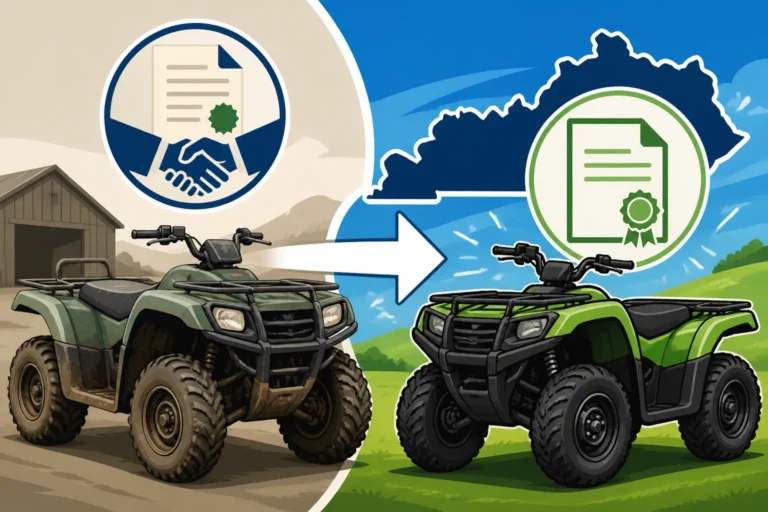
When you trade one ATV or UTV for another here in Kentucky, the Commonwealth generally views this transaction much like two separate sales. You're "selling" your old machine and "buying" a new one, even if the only currency involved is the other vehicle itself. This is where a lot of confusion can creep in, especially when it comes to establishing value for sales tax purposes and ensuring both parties have clear documentation. Ignoring these details can lead to delays, unexpected fees, or even legal headaches down the road.
Why a Trade is Treated Like Two Sales
Imagine you're swapping your older, but still perfectly good, quad for a side-by-side that better suits your family's trail adventures. From Kentucky's perspective, you've essentially "sold" your quad to the other person, and they've "sold" their side-by-side to you. This distinction is vital because it means each machine involved in the trade still needs its ownership properly transferred. This isn't just a casual handshake deal; it's a legal exchange of assets. Each transfer requires specific documentation to prove the change in ownership and, importantly, to assess any applicable sales tax. It’s not about the cash changing hands, but the change of hands on the machine itself.
When you head to your local county clerk's office, they'll be looking for clear evidence of ownership for the machine you're bringing in to title. This includes a properly signed-over title from the previous owner (the person you traded with). If that machine was titled in Kentucky, this process is generally straightforward, assuming all the details match up. However, if the machine came from a state that doesn't issue titles for ATVs, or if it's an older Kentucky machine that wasn't previously titled, you'll have specific hurdles to clear, as outlined in our guide on [Why Kentucky Titles Machines Bought After July 2010].
Establishing Value for Sales Tax in a Trade
One of the trickiest parts of a trade-in is determining the "value" for sales tax, especially when there's no money exchanged. Kentucky law generally requires sales tax to be paid on the fair market value of the machine you acquire, regardless of how you acquired it. So, if you traded your older ATV worth $3,000 for a newer UTV worth $8,000, you'd typically be responsible for paying sales tax on that $8,000 value. It's not about the difference; it's about the value of the machine you are now titling.
The county clerk's office will use a recognized valuation guide, or sometimes a bill of sale, to determine this fair market value. If you and the other party assigned a specific trade value to each machine on a bill of sale, that might be taken into consideration. However, clerks often default to an established value if there's a significant discrepancy or no value stated. It’s crucial to be transparent and realistic about the values involved to avoid any surprises. Remember, this isn't about avoiding tax, but accurately reporting the transaction.
Navigating the Paperwork for an ATV Trade-In
Just like any other vehicle transaction, a trade-in requires specific documents to prove ownership and facilitate the title transfer. Missing even one piece of paper can send you back home, frustrated, and delaying your ability to hit the trails with your "new" machine. Getting all your ducks in a row before you visit the county clerk is absolutely paramount.
The All-Important Bill of Sale
Even though no cash is being exchanged, a detailed bill of sale is incredibly important for a trade. Think of it as your official record of the transaction. For Kentucky purposes, it should clearly state:
- The full names and addresses of both parties involved in the trade.
- A complete description of both machines, including make, model, year, and the all-important Vehicle Identification Number (VIN) for each. Make sure to check [Kentucky's Seventeen-Character VIN Rule] to ensure the VINs are complete and accurate.
- The agreed-upon "trade value" or "fair market value" for each machine. Even if you're just swapping, assigning a value helps clarify the transaction.
- A statement that the machines are being traded, with no additional money changing hands (if that's the case), or specifying any cash difference.
- The date of the trade.
- Signatures of both parties.
Many individuals find it helpful to use a standardized template for this document. Resources like LawDepot offer customizable bill of sale templates that can be adapted for trade-in scenarios, ensuring you don't miss any critical information. Having this clear documentation protects both you and the other party and makes the titling process smoother when you go to [Titling at a Kentucky County Clerk].
The Original Signed-Over Title (or Equivalent)
This is perhaps the single most critical document you'll need. The person you're trading with must provide you with the original title to their machine, properly signed over to you. This usually involves signing in designated areas on the back of the title certificate.
Here are the key things to look for on the title you receive:
- Seller's Signature: The previous owner (the person you traded with) must sign the title exactly as their name appears on the front of the title. If there are two names, both typically need to sign, unless the names are joined by "or" (meaning either can sign).
- Buyer's Information: Your name and address should be clearly printed in the "buyer" section.
- Odometer Reading: While ATVs and UTVs aren't typically subject to odometer disclosure laws like cars, some titles might still have a space for it. If present, it's good practice to fill it in accurately.
- Purchase Date/Trade Date: The date of the trade should be entered.
- Sales Price/Trade Value: Even for a trade, the agreed-upon value (or "consideration") should be written in this section. This value is what the county clerk will use to calculate sales tax.
If the machine you're acquiring was previously titled in Kentucky, getting a clean, signed-over title is the ideal scenario. However, sometimes you might be trading for a machine that never received a title, such as an older model bought before Kentucky's titling law for ATVs took effect in July 2010. In such cases, you might need a [Kentucky Form TC 96-182 Explained] along with other proof of ownership, such as a bill of sale from a previous owner, an out-of-state registration, or a manufacturer's certificate of origin. This form is often used when a title is unavailable, but you can still prove a clear chain of ownership. It’s always best to prepare for the possibility of needing more than just a simple bill of sale if the other machine isn't coming with a clean title.
Here’s a quick overview of essential documents for titling a traded machine in Kentucky:
| Document | Purpose | Provided by Whom | Notes |
|---|---|---|---|
| Original Signed Title | Proof of legal transfer of ownership for the machine you acquired | Previous owner (the person you traded with) | Must be properly signed over; check for liens. |
| Bill of Sale (for your acquisition) | Official record of the trade details and value you received | Both parties (you and the person you traded with) | Crucial for establishing taxable value and transaction date. LawDepot has templates. |
| Kentucky Form TC 96-182 | Affidavit of ownership when a title is unavailable | You (with supporting documents) | Required for older Kentucky machines or those from non-titling states. |
| Photo ID | To verify your identity at the county clerk's office | You | Government-issued, current photo identification. |
| Proof of Residency | To confirm you reside in the county where you are titling | You | Utility bill, lease agreement, etc., if ID doesn't suffice. |
| Payment for Fees/Taxes | For title fees, transfer fees, and sales tax | You | Check with your county clerk for exact costs. See [What a Kentucky ATV Title Costs]. |
Common Pitfalls and How to Avoid Them When Trading
Trading machines can be a convenient way to get what you want, but it also opens the door to several unique challenges if you're not careful. These aren't necessarily malicious attempts to defraud you, but rather common misunderstandings or oversights that can turn a smooth transaction into a frustrating ordeal. Being proactive and informed is your best defense.
Dealing with Untitled or Non-Titling State Machines
One of the biggest headaches can arise when the machine you're receiving in trade either has no title (because it's an older Kentucky machine purchased before July 2010 or one that somehow slipped through the cracks) or comes from a state that simply doesn't title ATVs or UTVs. Kentucky's titling laws are specific, and if the machine doesn't have a seventeen-character VIN, or if there's no clear paper trail, you might find yourself in a bind.
If the machine is from Kentucky and was acquired before July 2010, the previous owner might not have a title. In this scenario, you'll need a robust paper trail, including a detailed bill of sale from the person you traded with, and ideally, bills of sale from previous owners all the way back to the original purchase, if possible. The [Kentucky Form TC 96-182 Explained] will be your best friend here, as it acts as an affidavit of ownership. You'll sign this form, swearing under oath that you are the rightful owner and detailing how you acquired the machine. You might also need other supporting documents, such as an old registration, a Manufacturer's Certificate of Origin (MCO), or even a previous owner's affidavit.
If the machine is from out-of-state and their state doesn't issue ATV titles, you'll need to use alternative proof of ownership. This typically involves [Using a Bill of Sale From a Non-Titling State] from the previous owner, along with any previous registrations or a Manufacturer's Certificate of Origin. The county clerk will examine these documents carefully to ensure a clear chain of ownership can be established. Always remember to get a clear [Kentucky ATV Bill of Sale Requirements] even for a machine from a non-titling state to bolster your case.
Verifying Ownership and Liens Before You Trade
Before you even agree to a trade, it is absolutely vital to verify that the person you're trading with is the legal owner of the machine they're offering and that there are no outstanding liens against it. Imagine trading your pristine machine for another, only to find out later that a bank still holds a lien on the "new" one. You could lose your newly acquired machine and be out your old one.
You should always inspect the title the other party presents. Check for any lienholder information printed on the front of the title. If there's a lien listed, you'll need to get a lien release document from that financial institution. Without it, the county clerk will not transfer the title to your name.
Furthermore, it's wise to perform a VIN check. You can ask the county clerk's office if they can perform a quick check for outstanding liens or theft records using the machine's VIN. This small step can save you immense trouble and financial loss. Always take the time for [Checking a VIN Before a Kentucky Purchase]. Don't just take someone's word for it; verify everything.
Adhering to the Titling Deadline
Kentucky has a strict [Kentucky's Fifteen-Day Titling Deadline] from the date of purchase (or trade, in this case) to get your machine titled in your name. While there might not be a penalty for late titling of ATVs/UTVs like there is for cars, delaying the process can leave you vulnerable. If you're pulled over while transporting or riding the machine, and it's not yet titled in your name, you could face questions about ownership.
It's tempting to put off a trip to the county clerk, but make it a priority. Gather all your documents, including the signed-over title, bill of sale, and any other necessary forms, within those first two weeks. Procrastination here can lead to more stress and potential issues if a document goes missing or an issue arises that needs the previous owner's cooperation. Remember, [Proving Kentucky ATV Ownership] is much easier with all the paperwork in order and on time.
What Happens After You Submit Your Paperwork?
Once you've diligently gathered all your documents, filled out the necessary forms, and made your way to the county clerk's office, you're on the home stretch. But what exactly happens when you hand over your stack of papers, and what can you expect afterward?
The County Clerk's Review and Processing
When you present your documents at the county clerk's counter, the clerk will meticulously review everything you've provided. They'll check the integrity of the signed-over title, ensuring all signatures are present and correct, and that there are no alterations. They'll scrutinize your bill of sale to confirm the VIN matches the title, the trade date is clear, and the declared value aligns with their valuation standards for sales tax calculation. This is also where they'll apply the [Kentucky ATV Sales Tax at Titling] based on the established value of the machine you received.
If you're using [Kentucky Form TC 96-182 Explained] for an untitied machine, they'll verify any supporting documentation you've supplied to establish a clear chain of ownership. They'll also check your photo ID to ensure you are who you say you are. Don't be surprised if they ask you a few clarifying questions; they're just doing their due diligence to ensure a legitimate transfer of ownership. If everything is in order, they'll process the title transfer, collect all applicable fees, which include the [Kentucky ATV Title Cost], and issue you a temporary registration or receipt.
Receiving Your New Title in the Mail
After the county clerk's office processes your title application, they will typically mail you the official new title certificate. This usually takes a few weeks, but the exact turnaround time can vary depending on the volume of work at the county office and the state processing center. While you wait, the receipt or temporary registration provided by the clerk serves as your proof that the titling process is underway and that you are the legal owner.
It's important to keep this temporary documentation in a safe place, ideally with you when you're operating or transporting the machine, until your official title arrives. This temporary proof is your safeguard against any questions about ownership during the waiting period. If your title doesn't arrive within a reasonable timeframe (usually 4-6 weeks), don't hesitate to contact your county clerk's office for a status update. Knowing [When a Kentucky County Clerk Files Your Title] can help you set expectations for when your physical title will arrive. Once you have that shiny new title in hand, securely stored away, you'll know your trade-in transaction is officially complete, and you can ride with full peace of mind.
Disclaimer
This article is for general informational purposes only and does not constitute professional advice. Laws, prices and regulations vary by location and change over time. Consult a qualified professional for guidance on your specific situation.