Why a Kentucky Clerk Rejects an Engine Number
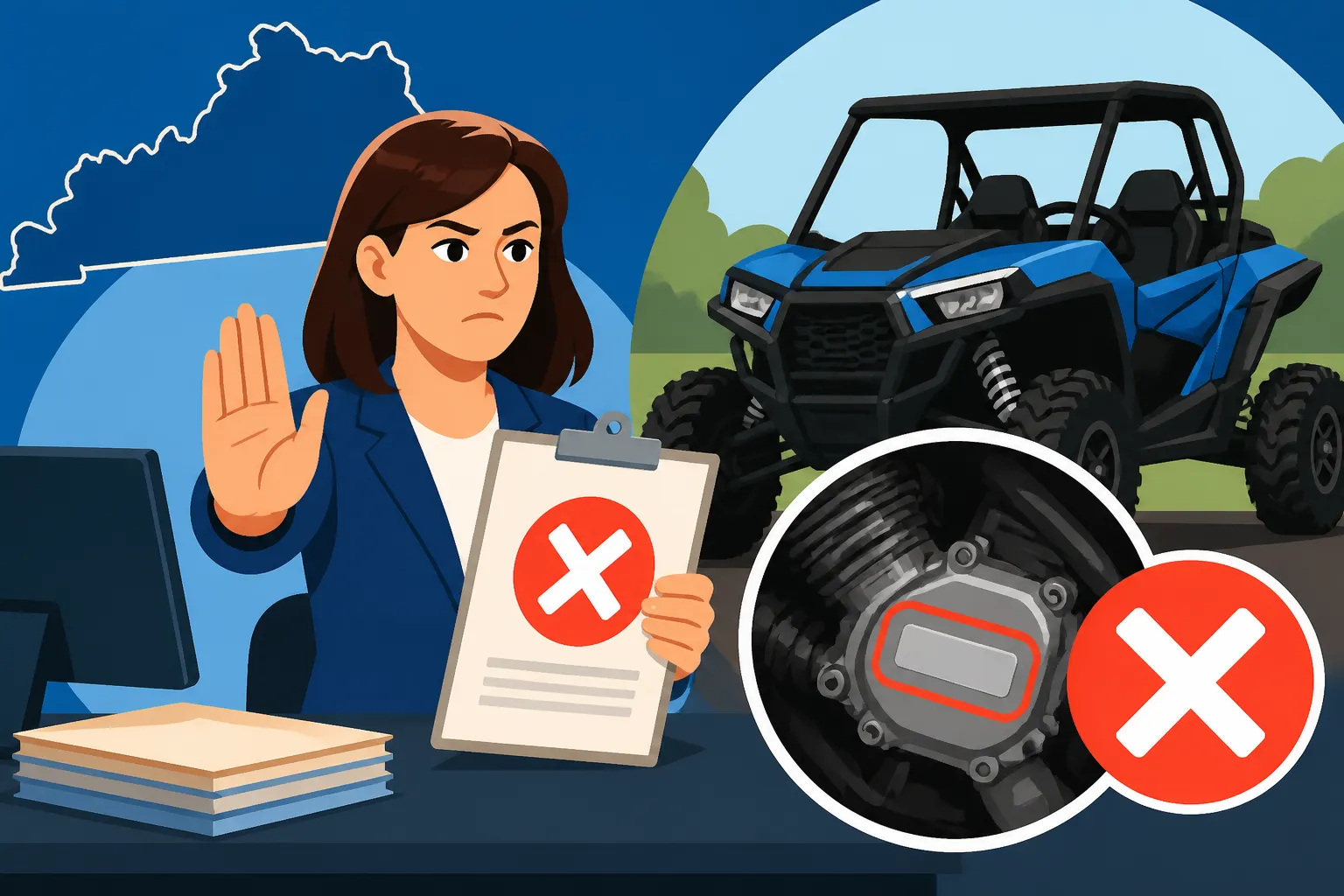
It's incredibly frustrating, isn't it? You've got your ATV, maybe you've owned it for years or just picked it up, and you figure showing the engine number ought to be enough to prove it's yours. Then you head to your local Kentucky County Clerk's office, full of good intentions, only to be met with a polite but firm "no." This guide is here to walk you through exactly why a Kentucky Clerk can't accept just an engine number for titling your ATV and what you do need to bring to get that title in your hand.
The Core Problem: Why an Engine Number Isn't Enough
Let's be real, many of us grew up thinking that the number stamped on the engine was the ultimate identifier for a vehicle. It just feels right, doesn't it? You can see it, it's physically on the machine, and it seems unique. However, when it comes to the official process of titling an ATV in Kentucky, an engine number simply doesn't meet the legal requirements.
The biggest reason for this rejection boils down to a fundamental difference: the engine number identifies the engine itself, not the entire vehicle. Think about it—engines can be swapped out, rebuilt, or even come from a different manufacturer than the rest of the ATV. If the engine number were the primary identifier, it would create a massive headache for tracking ownership, preventing theft, and generally knowing which specific ATV is which. The state needs a single, universal identifier that stays with the chassis of the machine for its entire lifespan, regardless of what parts might be changed out.
This is where the Vehicle Identification Number, or VIN, comes into play. The VIN is a standardized 17-character code that is permanently stamped on the frame of the ATV. It's designed to be unique to that specific machine and provides a wealth of information about its manufacturer, model year, and features. Kentucky, like most states, relies heavily on this VIN for all titling and ownership records. Without it, the system can't confidently track the machine. You can learn more about this standard by checking out [Kentucky's Seventeen-Character VIN Rule].
What Your Kentucky County Clerk Actually Needs
When you walk into your local County Clerk's office, the staff there are operating under very specific state statutes and guidelines. Their job isn't to make exceptions; it's to ensure that every ATV titled in Kentucky meets these legal requirements, which are designed to protect both the buyer and the state. They're looking for clear, unambiguous proof of ownership tied to the vehicle's unique VIN.
First and foremost, if your ATV was manufactured after July 2010, Kentucky law absolutely requires a title. This title, typically signed over by the previous owner, is the primary document the clerk needs. It contains the VIN, the previous owner's information, and provides a clear chain of custody. If you bought your machine from a dealer, they would have handled most of this for you, but for private sales, it falls to you to make sure you have that properly signed-over document. [Why Kentucky Titles Machines Bought After July 2010] goes into more detail on this cutoff.
Secondly, you'll almost always need a completed Kentucky Application for Title/Registration, also known as Form TC 96-182. This form is your official request to the state to issue a new title in your name. It asks for all the crucial details about you and your ATV, including, you guessed it, the VIN. Clerks use this form to input your information into the state's titling system. Filling it out accurately and completely before you go can save you a lot of time and frustration at the counter. [Kentucky Form TC 96-182 Explained] offers a full breakdown of this essential document.
Finally, a bill of sale, while not always the primary document for titling, is incredibly important, especially for machines purchased privately or those bought before the July 2010 cutoff date where a title might not exist. A bill of sale acts as a contract between you and the seller, detailing the sale price, date, and, crucially, the VIN of the machine. It demonstrates that you legally acquired the ATV. For private sales, if the seller doesn't have one, or you need to formalize a transaction, using a service like LawDepot can help you generate a clear, concise bill of sale that includes all the necessary details. This document, combined with other proofs of ownership, can be vital for the clerk.
Here's a quick comparison of what the clerk is looking for:
| Document Type | Purpose | Why a Clerk Cares |
|---|---|---|
| Kentucky Title | Official state record of ownership, includes VIN. Required for machines manufactured after July 2010. | Provides direct proof of ownership transfer and VIN verification. |
| Form TC 96-182 | Your application for a new title, provides your information and ATV details. | Initiates the titling process, gathers necessary data for state records. |
| Bill of Sale | Contract between buyer and seller, detailing transaction and VIN. Supplements a title or establishes proof of purchase. | Confirms legal acquisition, especially for private sales or older machines. |
| Photo ID | Verifies your identity as the applicant. | Ensures the title is issued to the correct, legal owner. |
| Engine Number | Identifies the engine component itself. | Does not identify the entire vehicle; cannot be used as the primary identifier. |
| Motor Number | Another term for engine number, often used generically. | Same as engine number; insufficient for vehicle identification. [Why a Kentucky Clerk Rejects an Engine Number] elaborates on this. |
Navigating Common Scenarios for Titling
It’s easy to feel overwhelmed when you’re standing at the counter and realize you don’t have exactly what they’re asking for. But don't despair! Many people encounter challenges, and there are often pathways to success, even if it means a little extra legwork.
Perhaps you've bought an ATV from a state that doesn't issue titles for off-road vehicles. This is a common situation, especially if you've crossed state lines for a good deal. In these cases, your Kentucky County Clerk will still need proof of ownership that can establish a clear chain. This often involves the bill of sale from your purchase, potentially supplemented by a bill of sale from previous owners if you can track them down. Sometimes, an out-of-state registration document can help prove the previous owner's lawful possession, even if it's not a title. For these specific situations, understanding [Using a Bill of Sale From a Non-Titling State] is crucial.
Another common scenario involves older ATVs, particularly those manufactured before July 2010. As mentioned, these machines weren't initially required to have titles in Kentucky. This means you might legitimately own a machine with no prior title history. Here, a robust bill of sale (again, LawDepot can be helpful for creating a professional one if you're dealing with a casual sale) becomes paramount. You'll need to demonstrate to the clerk's satisfaction that you are the rightful owner. They might also look for things like old registration documents (if any were ever issued) or even sworn affidavits from previous owners. The goal is to build a strong case for ownership in the absence of a formal title. If you're dealing with a machine from before this date, be sure to look into [Machines Bought Before July 2010 in Kentucky].
What if the VIN on your machine is damaged, unreadable, or doesn't meet the 17-character standard? This is a tough spot, but not always a dead end. For machines that are supposed to have a 17-character VIN but it's obscured or missing, you might need to involve law enforcement to verify the VIN or conduct an inspection. In some rare cases, the Kentucky State Police may be able to assign a new VIN after a thorough inspection to confirm the machine isn't stolen. For older machines that predate the 17-character VIN standard, the clerk will often look for alternative identifiers and rely more heavily on bills of sale and other proof of ownership to establish legal possession. [Why a Kentucky Clerk Rejects an Engine Number] can help clarify the difference between what's needed and what won't work.
Steps to Take When Your ATV Has No Proper VIN
Discovering your ATV's VIN is missing or unreadable can feel like hitting a brick wall. But take a deep breath; there are steps you can take to move forward. The key is thoroughness and patience.
-
Triple-Check for the VIN: Before you assume it's missing, scour your ATV's frame. VINs are typically located on the frame, often near the steering head (where the handlebars connect), under the seat, or along a frame rail. Sometimes they're obscured by dirt, paint, or even aftermarket accessories. Clean the area thoroughly and use a flashlight. Don't give up after a quick glance!
-
Gather All Existing Documentation: Collect every piece of paper you have related to your ATV. This includes:
- Any bill of sale, even if it's handwritten.
- Old registration cards (from Kentucky or another state).
- Maintenance records with the VIN or other identifying numbers.
- Insurance documents.
- Owner's manuals.
- Receipts for parts or repairs that might list identifying numbers.
- Even if a document lists an engine number, keep it. While not sufficient alone, it can be part of a larger ownership story.
-
Contact Previous Owners (If Possible): If you know who owned the ATV before you, reach out to them. They might have a copy of an old title, registration, or a bill of sale that you never received. Their testimony or an affidavit could be valuable in establishing the chain of ownership. This is often the strongest way of [Proving Kentucky ATV Ownership].
-
Consider a State Police Inspection: If the VIN is truly unreadable or appears altered, you may need to contact the Kentucky State Police for a vehicle identification inspection. They can verify the existing VIN or, in some cases, determine if a new VIN needs to be assigned. This process is designed to ensure the machine isn't stolen and can be legally identified. Be prepared for a detailed inspection and potentially some waiting time.
-
Prepare a Comprehensive Bill of Sale: As discussed, a solid bill of sale is critical, especially when other documentation is sparse. Make sure it includes:
- Your full name and address.
- The seller's full name and address.
- The date of sale.
- The purchase price.
- A detailed description of the ATV (make, model, year, color, any identifying numbers you do have, like the engine number).
- Crucially, a statement that the seller confirms they are the legal owner and have the right to sell the machine.
- Both your and the seller's signatures, preferably notarized for extra legal weight.
- Services like LawDepot can provide excellent templates for these, ensuring you don't miss any critical details that your County Clerk will be looking for.
-
Visit Your County Clerk's Office Prepared: Once you've gathered everything, head to your local County Clerk. Explain your situation calmly and present all your documentation. They deal with these challenges regularly and can often guide you through the specific steps required in your county. Be patient, bring a positive attitude, and be ready to follow their instructions, even if it means another trip. Remember, they are there to help you navigate the process, even if the initial answer to an engine number is "no."
Disclaimer
This article is for general informational purposes only and does not constitute professional advice. Laws, prices and regulations vary by location and change over time. Consult a qualified professional for guidance on your specific situation.