Why a Loan Gave an Older Quad a Title
It can be incredibly confusing and frustrating to navigate ATV ownership in Kentucky, especially when dealing with older machines. You might have a quad from before 2010 that has no title, and then hear about someone else with a similar vintage machine that does have one, leaving you wondering why yours is missing that crucial piece of paper. This guide is here to unravel that mystery, explaining why a loan or other security interest was often the unexpected catalyst for an older ATV to receive a Kentucky title, long before it became a general requirement.
Kentucky's ATV Titling History: Before July 2010
For many years, Kentucky's approach to titling All-Terrain Vehicles (ATVs) was, to put it mildly, inconsistent with how it handled other vehicles. This historical context is absolutely key to understanding why some older machines ended up with a title and others didn't.
The General Rule: No Title Needed
Before July 15, 2010, the Commonwealth of Kentucky generally did not require ATVs to be titled. Think about that for a moment: if you bought a brand-new quad back in 2005 from a local dealer, chances are you walked out with a bill of sale and the keys, but no official state-issued title. For many folks, this seemed perfectly normal. An ATV wasn't meant for the road, so why would it need a road-vehicle title? It was just a recreational or work machine, right?
This lack of a universal titling requirement meant that countless ATVs changed hands over the years with nothing more than a handwritten bill of sale, or sometimes just a verbal agreement. While this might have seemed convenient at the time, it created a huge headache for subsequent owners. Without a clear chain of title, proving ownership for machines bought before this cutoff date can be a real challenge. You might find yourself in a situation where you're trying to sell a perfectly good machine, but the buyer is hesitant because there's no official state document to back up your claim. This is a common frustration for many Kentuckians who own older machines, and it’s why understanding [Machines Bought Before July 2010 in Kentucky] is so important.
The Lender's Dilemma: Securing Their Investment
Now, imagine you wanted to buy a new ATV in 2007, but you didn't have the cash to pay for it outright. Like many people, you might have gone to a bank or a credit union to get a loan. This is where the plot thickens. Lenders, whether a large financial institution or a smaller community bank, operate on a fundamental principle: they need to protect their investment. When they lend you money to buy something, they want a way to ensure that if you stop making payments, they can repossess the item to recoup their losses. This is known as securing their interest.
For vehicles like cars and trucks, this is straightforward: the lender's name is simply placed on the vehicle's title as a lienholder. If you default, the title clearly shows the bank's claim, making it easier for them to take possession and sell the vehicle. But what happens when the collateral—in this case, an ATV—doesn't typically have a title? This created a significant dilemma for lenders. How could they confidently loan money for an asset that had no official state record of ownership that they could attach their lien to? It was a major hurdle for consumer financing of ATVs in Kentucky during that era, and it often meant that only very robust, comprehensive financing agreements or specific workarounds could get these deals done.
How a Security Interest Sparked a Title
The lender's need for security was the primary driver behind many older Kentucky ATVs ending up with a state-issued title, even when most other ATVs of the same vintage did not. It wasn't about public safety or road use; it was about financial protection.
The Power of the UCC and Lender Requirements
The solution for lenders often lay in the Uniform Commercial Code (UCC), a comprehensive set of laws governing commercial transactions across the United States. While the UCC itself doesn't mandate titles for ATVs, it provides the legal framework for "secured transactions." In simple terms, this means a creditor can take a "security interest" in a debtor's personal property to ensure the debt is repaid.
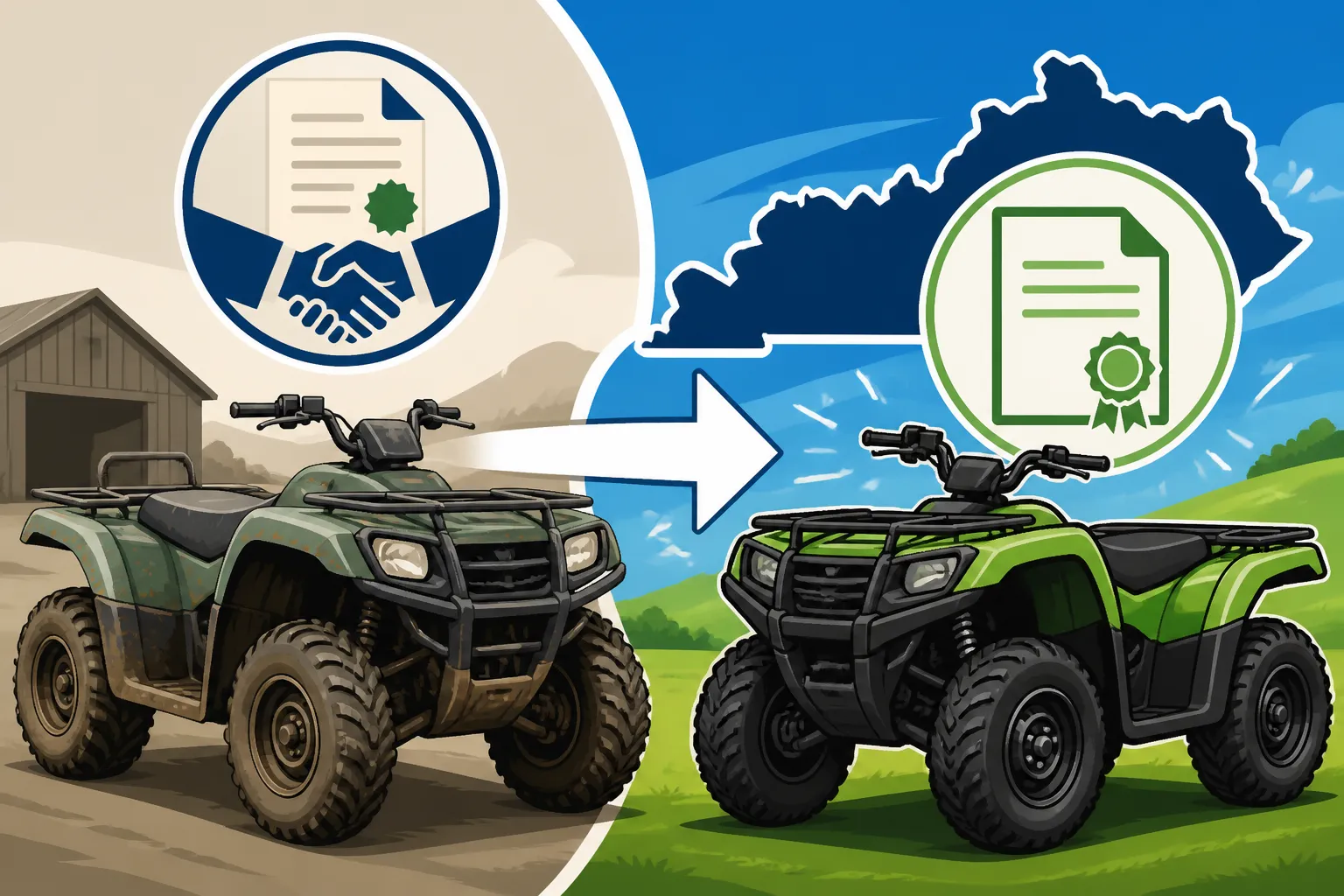
To make this security interest concrete and legally enforceable, especially against other potential creditors or future buyers, lenders needed a way to publicly record their claim. And what's the most effective, universally recognized public record for vehicle ownership and liens? A title. So, even though Kentucky didn't generally require an ATV title for a machine sold pre-2010, the county clerks were equipped to issue one if there was a legitimate reason, such as recording a lien. Lenders would insist that as a condition of the loan, the ATV would be titled in the borrower's name, with the lender officially listed as the lienholder. This wasn't merely a suggestion; it was a non-negotiable term for securing the financing.
Think of it this way: the state provided the legal mechanism (the ability to issue a title for a vehicle) and the financial institutions provided the motivation (the need to protect their loan). This created a pathway for ATVs that would otherwise remain untitled to enter the official state records. Understanding these types of financial forms can be tricky, but resources like LawDepot offer templates and explanations for various legal documents, including those related to security interests or comprehensive bills of sale that might have been part of these transactions.
The Mechanics of Getting That Special Title
The process for obtaining one of these "loan-generated" titles wasn't complicated, but it was initiated by the financing arrangement rather than a state mandate. When a person purchased an ATV through a dealership and financed it, the dealership or the lending institution would often handle the titling process. They would submit the necessary paperwork to the local county clerk's office, requesting a title for the ATV. This request would specifically include the lender's information, ensuring their security interest was officially recorded.
The county clerk, acting within the existing legal framework for vehicles (even if ATVs weren't always explicitly in the spotlight), would then issue a Certificate of Title. This title would list the owner of the ATV and, crucially, list the lending institution as a lienholder. This title served as undeniable proof of ownership for the borrower and, more importantly from the bank's perspective, undeniable proof of the bank's claim on the machine until the loan was paid off. This is a perfect example of why [Why a County Clerk and Not a State Office] handles these transactions, as they are the local point of contact for titling and registration. It's a localized process that ensures these critical documents are processed efficiently within each Kentucky county.
This system effectively allowed the financing of ATVs to proceed more smoothly, as lenders had a clear, state-backed document to secure their collateral. For the borrower, it meant access to credit to purchase their machine. For the ATV itself, it meant that an older model, which might otherwise have existed only on a bill of sale, now had an official Kentucky title—a significant piece of paper that would later become universally required for newer machines.
Identifying and Handling a Loan-Generated Title
So, you're looking at an older Kentucky ATV, perhaps one advertised for sale, and the seller presents a title for a machine manufactured well before 2010. Your first thought might be, "Wait, I thought those didn't have titles!" This section will help you understand what you're seeing and how to proceed.
What to Look For on an Older Kentucky ATV Title
When you encounter a title for a pre-July 2010 ATV, the key detail to scrutinize is the presence of a lienholder, or evidence that a lien was once present and has since been released.
Here's what to check:
- Lienholder Section: Look carefully at the section of the title designated for "Lienholder" or "Security Interest." If a bank, credit union, or other financial institution is listed there, it's a strong indicator that the title was issued because of a loan.
- Lien Release: If a lienholder was listed, check for a "lien release" signature and date. This is typically a stamp or signature from the lienholder, indicating that the loan has been paid in full and their claim on the ATV has been satisfied. Without this release, the lien is still active, and the seller doesn't have clear ownership to transfer to you.
- Issue Date: Compare the issue date of the title with the ATV's model year. If the ATV is, say, a 2006 model, and the title was issued in 2006 or 2007, it aligns perfectly with a purchase made through financing before the 2010 titling mandate.
- No Lienholder Listed (but pre-2010): Sometimes, if the loan was paid off quickly and the lien released, or if the title was issued at the very beginning of the financing arrangement before the lien was formally recorded (less common, but possible), the current title might show no lienholder. However, the very existence of a state-issued title for a pre-2010 machine strongly suggests a past financial transaction requiring formal collateral.
These titles are just as valid as any other Kentucky vehicle title when it comes to proving ownership and facilitating transfer. The main difference is the reason for their existence. For more on the paperwork involved, checking [Kentucky Form TC 96-182 Explained] can give you an idea of the types of forms a clerk's office uses for titling.
Implications for Buying or Selling an Older ATV
Having a loan-generated title for an older ATV makes buying or selling a much smoother process compared to dealing with a completely untitled machine from the same era.
If you are buying:
- Proof of Ownership: A title, even one generated by a past loan, is gold. It provides clear, official proof of the seller's ownership. This eliminates many of the headaches associated with trying to establish a chain of ownership for older, untitled machines.
- Lien Status is Paramount: If the title shows an active lien, do not proceed with the purchase until the seller provides a signed and dated lien release from the financial institution. Otherwise, you could buy a machine that legally belongs to a bank, not the person you paid! Understanding [Releasing a Lien on a Kentucky Title] is critical here.
- Transfer Process: The transfer process will be similar to any other titled vehicle. The seller will sign over the title to you. You'll then take the signed-over title, along with a bill of sale, to your county clerk's office to have it transferred into your name. A clean, signed-over title streamlines everything.
- Additional Documentation: While the title is the primary document, it's still smart to get a comprehensive bill of sale. This document can outline the purchase price, condition of the ATV, and any warranties (or lack thereof). Resources like LawDepot provide customizable bill of sale templates that can help you create a robust record of your transaction, adding an extra layer of protection.
If you are selling:
- Added Value: Having a title for your pre-2010 ATV significantly increases its appeal and can command a better price. Buyers are often wary of untitled machines due to potential ownership disputes or difficulties reselling down the road.
- Clear the Lien First: If there's an active lien on your title, you must pay off the loan and obtain a lien release before you can legally transfer ownership to a buyer. Trying to sell a machine with an active lien is a recipe for legal trouble.
- Prepare Your Paperwork: Make sure your title is properly filled out, with any liens released. Be prepared to provide a valid bill of sale to the buyer. You can find helpful templates on sites like LawDepot, ensuring all transaction details are recorded.
In essence, a title generated by a loan for an older ATV is a blessing for anyone involved in a transaction. It provides clarity and legitimacy that many other pre-2010 machines lack. This is a crucial aspect of [Proving Kentucky ATV Ownership].
The Shifting Landscape: Post-July 2010 Titling
While the focus here is on those unique loan-generated titles for older ATVs, it's important to understand how Kentucky's titling laws evolved to affect all ATVs after a certain point. This provides context and highlights why those older titles are so distinct.
The Mandate for Newer Machines
The landscape for ATV ownership in Kentucky underwent a significant change starting July 15, 2010. From that date forward, all new ATVs purchased in Kentucky were required to be titled. This was a broad, statewide mandate, not just an exception for financed machines. This change meant that if you bought a brand-new quad from a dealership in late 2010 or any time since, you would automatically receive a Kentucky title for it.
This shift was a game-changer. It brought ATVs more in line with how other vehicles are treated in the state, aiming to create a clearer record of ownership and facilitate sales, prevent theft, and help resolve disputes. So, if you're looking at a machine from 2011 or later, you should absolutely expect it to have a title. If it doesn't, that's a red flag that needs immediate investigation. This directly relates to [Why Kentucky Titles Machines Bought After July 2010].
Why the Distinction Still Matters for Older Quads
Even with the statewide titling mandate for newer machines, the history of those pre-2010 "loan-generated" titles remains relevant for a few key reasons:
- Historical Proof of Ownership: For a machine manufactured before July 2010, the presence of a title (even one that once had a lien) is a strong piece of evidence for its ownership history. It offers a level of legitimacy that many untitiled machines from that era simply cannot match. If you're pondering [Should You Buy a Quad Advertised With No Title?], the answer is almost always no, unless you can navigate the complex process of proving ownership without one.
- Avoiding Confusion: Understanding why some older ATVs have titles (due to loans) helps to clear up confusion when comparing them to other untitiled machines of the same vintage. It explains the "exception" without suggesting that all pre-2010 ATVs should have titles.
- Streamlined Transfers for Older Machines: For those fortunate enough to own a pre-2010 ATV with a loan-generated title, the process of selling or transferring ownership is significantly easier than trying to establish ownership for a machine that has never had any official state documentation. This makes the older titled machines generally more desirable in the used market.
In summary, the specific circumstances surrounding loans and security interests created a unique subset of titled ATVs in Kentucky before the universal titling law came into effect. These titles are historical artifacts that still carry significant weight in proving ownership and facilitating legal transactions today.
Here's a quick comparison of the different titling scenarios:
| Feature | Pre-2010 ATV (No Loan) | Pre-2010 ATV (With Loan/Security Interest) | Post-July 2010 ATV |
|---|---|---|---|
| Titling Requirement | Generally not required | Not required by state, but mandated by lender for collateral | Required by state law |
| Reason for Title (if any) | None (typically bill of sale only) | Lender protection/security interest | Statewide legal mandate |
| Likelihood of Title | Low | High (if financed) | High (if new purchase after 2010) |
| Ownership Proof | Bill of sale, informal records | Official state title | Official state title |
| Lienholder on Title | N/A | Likely, then released upon payoff | Common if financed, then released |
| Transfer Difficulty Today | High (without clear paper trail) | Low (with proper title transfer) | Low (with proper title transfer) |
Disclaimer
This article is for general informational purposes only and does not constitute professional advice. Laws, prices and regulations vary by location and change over time. Consult a qualified professional for guidance on your specific situation.